How many times a day do you receive a notification on your phone? We are all digitally overstimulated, and our attention span is becoming shorter. Digital multitasking and being connected with the world constantly are other crucial factors of this modern attention crisis. So, when it comes to digital overstimulation and ADHD, how do you know which of these two refers to you?
Considering that ADHD has become one of the buzzwords on social media, it might be challenging to have an idea if you really have this condition or if you are just spending too much time on your phone. Knowing the difference between digital overstimulation and ADHD is key to supporting your mental health better and improving the overall quality of your life.
Understanding Digital Overstimulation
Digital overstimulation is a cognitive overwhelm caused by excessive digital input, whether that is social media, apps, online work, alerts, or something else. Being exposed to excessive and constant streams of digital information can lead to a feeling of being overwhelmed and can negatively impact mental health by increasing anxiety.
To better understand digital overstimulation, let’s look into its common symptoms:
- Short-term forgetfulness
- Reduced attention span after heavy screen exposure
- Mental fatigue and irritability
- Difficulty transitioning from one task to another
- Sleep disruption
- Sensory overload after prolonged device use
Most of today’s apps have a dopamine-driven design. This means such apps leverage elements like instant rewards, satisfying visuals, and interactive feedback, while interacting with them leads to mental fatigue. Constant switching between apps and taps makes us feel like we’re multitasking, but in reality, we are overloading our brains with information and sensory input.
Understanding ADHD
Many definitions of ADHD exist, but they all imply that it is a neurodevelopmental condition with long-term patterns of attention dysregulation. Unlike digital overstimulation, ADHD is not a choice. It is a condition that can worsen when exposed to digital content.
ADHD can show up through a range of symptoms, of which all of them fall into either the inattention, hyperactivity, or impulsivity category, or can appear as a combined presentation.
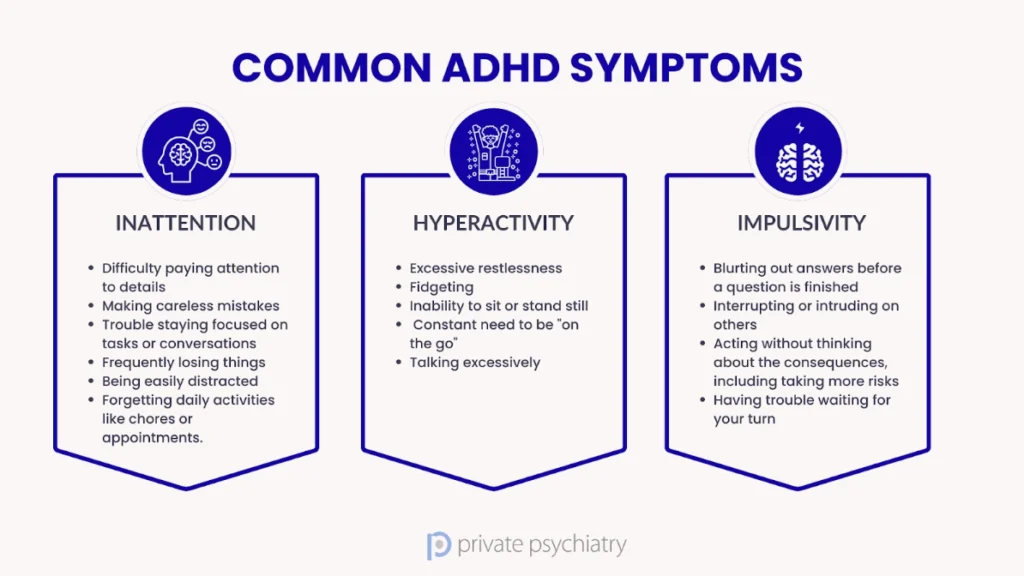
To be diagnosed with ADHD, five or more of these symptoms must be present, which also have a negative impact on one or more areas of your life for a significant period of time. A private ADHD assessment and diagnosis are based on the number, severity, and duration of your ADHD symptoms, among other factors.
Why Digital Overstimulation Looks Like ADHD
Without a proper evaluation by a private psychiatrist or other medical professional trained in ADHD, it can get confusing when trying to distinguish digital overstimulation from ADHD. After all, they both have certain shared symptoms, such as short attention span, task-switching exhaustion, procrastination, and sensory overwhelm.
Because of how much technology is shaping our behaviour today, ADHD-like symptoms appear even in neurotypical individuals. However, the root cause of these habits can differ from one person to another.
A much simpler and accessible way to get a better idea of whether or not you have ADHD is by doing a quality online ADHD test. You can respond to these questions from the comfort of your home, and once you have the results, consider if it would make sense to contact a private psychiatric clinic to evaluate you for ADHD. Still, it is essential to say that online tests for ADHD are not replacements for diagnosis.
How to Tell Whether It’s ADHD or Digital Overload
As much as some symptoms seem confusing, others might provide more clarity. For instance, the duration of digital overstimulation’s symptoms fluctuates depending on screen exposure. ADHD, on the other hand, shows consistent patterns since childhood.
If you believe you are digitally overstimulated, you will notice improvement when taking breaks, spending time in nature, or practising mindfulness techniques. An adult with ADHD will experience their symptoms in the same way, even after taking some time to rest and disconnect from the world.
The Role of Lifestyle, Mental Health, and Environment
Your habits and environment play a crucial role in both digital overstimulation and ADHD.
Sometimes, burnout and stress can make you confuse ADHD with a high workload or chronic stress. When you are sleep deprived and exposed to too much blue light, you could also notice certain cognitive symptoms that resemble ADHD.
However, ADHD will not go away if you spend less time on your phone and engage more in outdoor activities, whereas digital overstimulation probably will. As much as an ADHD adult needs to implement healthy lifestyle habits, they can only support their recovery. Still, it cannot replace proper assessment and treatment.
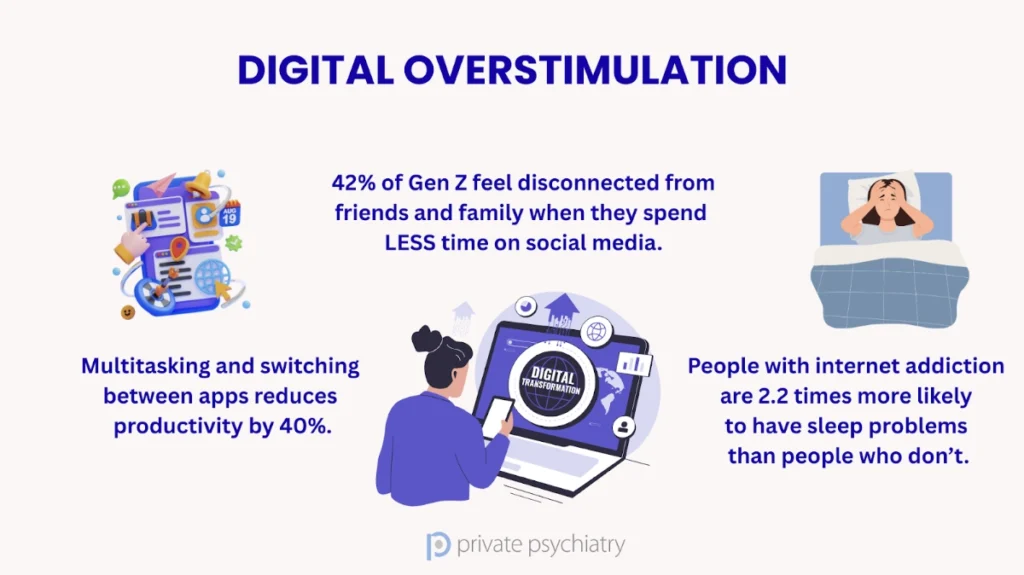
If you feel digitally overstimulated, start with a mini digital reset lasting anywhere from 12 to 48 hours. Instead, focus on moving your body, getting sunlight, resting, and hydrating. Your brain will benefit if you start doing only one task at a time, because multitasking reduces productivity by 40%.
Your Next Steps
Doing a digital reset, scheduling your screen breaks, managing your notifications, and going to bed early should help you recover from digital overstimulation. It should also help you clarify whether the symptoms you are experiencing are related to digital overstimulation or ADHD.
If you notice that the symptoms persist even after you’ve implemented all these changes to your everyday life, it is possible that you have ADHD or another condition, such as anxiety, depression, or sleep disorders. With undiagnosed ADHD, digital self-regulation will feel extremely challenging, and you might even waste time trying ineffective solutions. Only an ADHD psychiatrist or trained medical professional can provide you with the right diagnosis and suggest a personalised treatment plan based on your symptoms.
Conclusion
Distinguishing digital overload from ADHD is essential, but it is almost impossible to do alone. By answering the ADHD questionnaires online and tracking your symptoms, you can only get an idea about this condition. Besides the evaluation and treatment, a private psychiatric clinic can also provide medication options when appropriate, therapy tailored to real-life challenges, and guidance on digital habits and long-term well-being.
When diagnosed with ADHD or another condition, individuals notice almost immediate emotional relief from being able to comprehend better what is happening to them. A diagnosis also provides insight into how your brain works and helps you reclaim focus, productivity, and mental peace.
Understanding the difference between self-diagnosis and ADHD assessment opens the door to effective support. If you are in London, Private Psychiatry can guide you through every step of that journey.
Frequently Asked Questions
How can I tell if my lack of focus is caused by digital overstimulation or ADHD?
Digital overstimulation usually comes and goes depending on your screen habits. If you focus better after rest, time offline, or reducing notifications, the issue is likely tech-related. ADHD, on the other hand, shows up consistently across situations and has been present since childhood, even without screens.
Can digital overstimulation make ADHD symptoms worse?
Excessive screen time can intensify ADHD-related issues like impulsivity, distractibility, and emotional reactivity. For individuals with ADHD, the constant dopamine hits from digital devices make self-regulation harder and deepen executive function challenges.
Can you have ADHD and digital overstimulation at the same time?
Having ADHD makes you more vulnerable to digital overload because your brain will seek stimulation and novelty constantly. Such vulnerability can create a cycle where ADHD leads to increased screen use, and overstimulation worsens your ADHD symptoms.
- About the Author
- Latest Posts

Our Editorial Team are writers and experts in their field. Their views and opinions may not always be the views of Wellbeing Magazine. If you are under the direction of medical supervision please speak to your doctor or therapist before following the advice and recommendations in these articles.