A daughter whose worldview is shattered by her father’s misdeeds and heals herself through yoga …. A hyper-critical upbringing that leaves an author emotionally “disabled” until she finds solace in pop music … A love affair that curdles from romantic to obsessive to destructive … A lifelong struggle with depression that prompts a woman to take a trip halfway around the world …a podcaster and writer grappling with her famous mother’s worsening dementia … These five must-read memoirs offer lessons in self-discovery and self-acceptance. Moving and relatable, they’re written with heartfelt clarity and humanity. Their authors remind us that vulnerability, resilience, and healing also make for amazing true stories. For some uplifting perspective, they’re followed by a gorgeous book (and audiobook) on navigating change through the lens of Tibetan and Buddhist teachings.
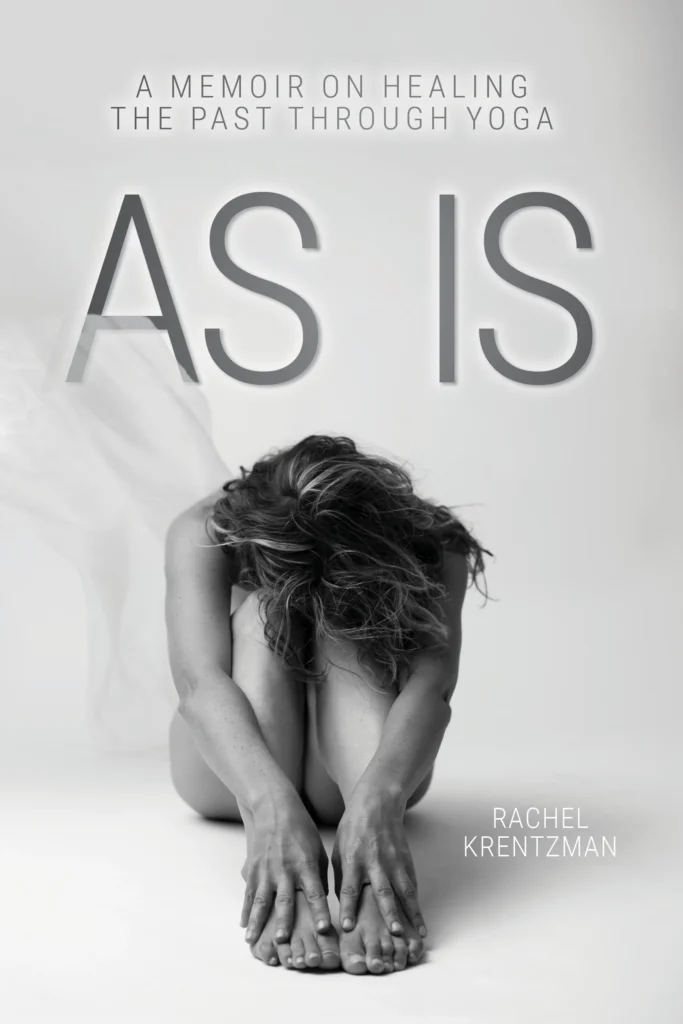
As Is: A Memoir on Healing the Past Through Yoga by Rachel Krentzman traces a fascinating journey from a traditional Orthodox Jewish upbringing to a life rebuilt through openness, self-discovery, and the transformative power of helping others. Krentzman, the dutiful daughter of a respected rabbi, followed every rule (and there were many) until her father’s shocking arrest shattered her world. She discovers just how deeply trauma can live in the body, often hidden for decades.
As Krentzman learns how to help others with yoga and physical therapy, she often uncovers her own pain, and begins her own deep mind–body healing. She delves into yoga—the physical practice and more importantly, its philosophy and principles. Gradually she sheds old beliefs, reconnects with her inner voice, and overcomes longstanding emotional and physical pain. Living with scoliosis, she eventually develops her own therapeutic method—a blend of yoga, physiotherapy, and Hakomi somatic psychotherapy, a model she uses to help patients around the world. This is a book of personal reckoning, but it’s also an insider’s guide to deep mind-body healing.
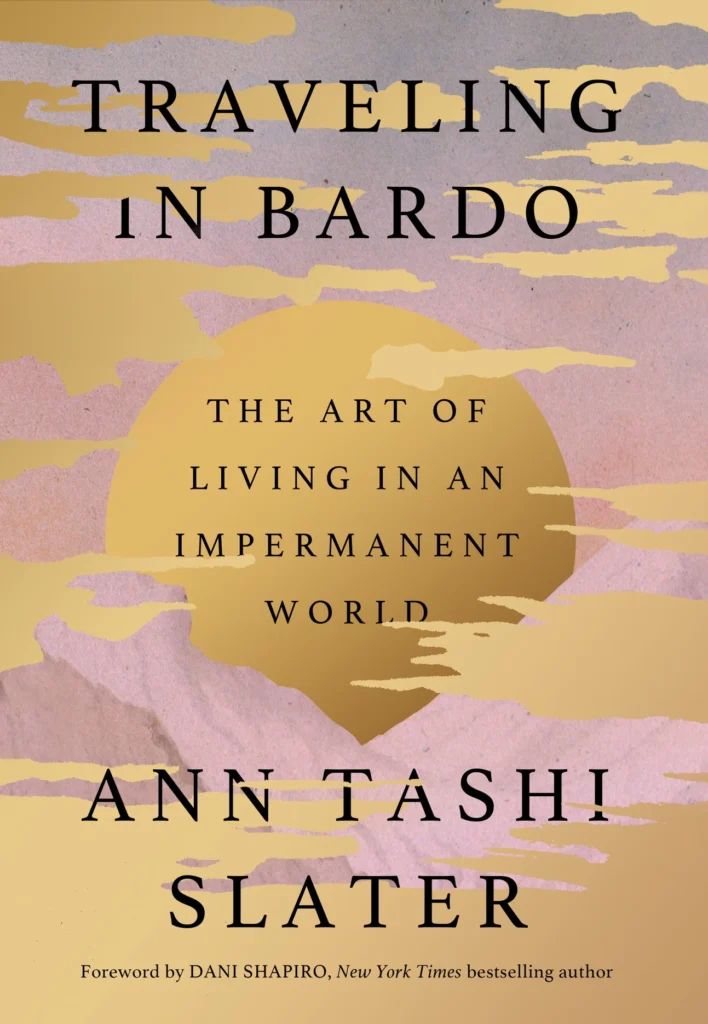
Traveling in Bardo: The Art of Living in an Impermanent World by Ann Tashi Slater isn’t technically a memoir, but it has the same warmth and immediacy. The audiobook version is narrated by the author, which adds to the effect, but the book resonates the same way. Ann Tashi Slater’s warm narration feels—and reads—like you’re being invited to bear witness to someone’s true story of their own life. Her gorgeous observations are grounded in her own experience, as well as that of her ancestors. Slater is a Tibetan-American and an expert on Tibetan Buddhism who writes for Tricycle, has interviewed Malcom Gladwell, and was blurbed by none other than Elizabeth Gilbert. In Traveling she draws on the wisdom of her Tibetan ancestors and on Buddhist teachings to explore the everchanging nature of life.
The nuanced concept of the bardo in Tibetan belief has surprising relevance to our modern existence. It’s the interval between death and rebirth, the intermediate state between birth and death, and those periods in life when the reality we know comes to an end, whether it’s due to a major loss, a sudden and unexpected move, a career shift, or any number of changes we truly have no control over. Slater points out that in bardo lies the chance to reshape, reinvent, or reframe ourselves, and find joy and beauty by accepting the nature of impermanence. Given the stories told in the memoirs on this list, this is a perfect coda.
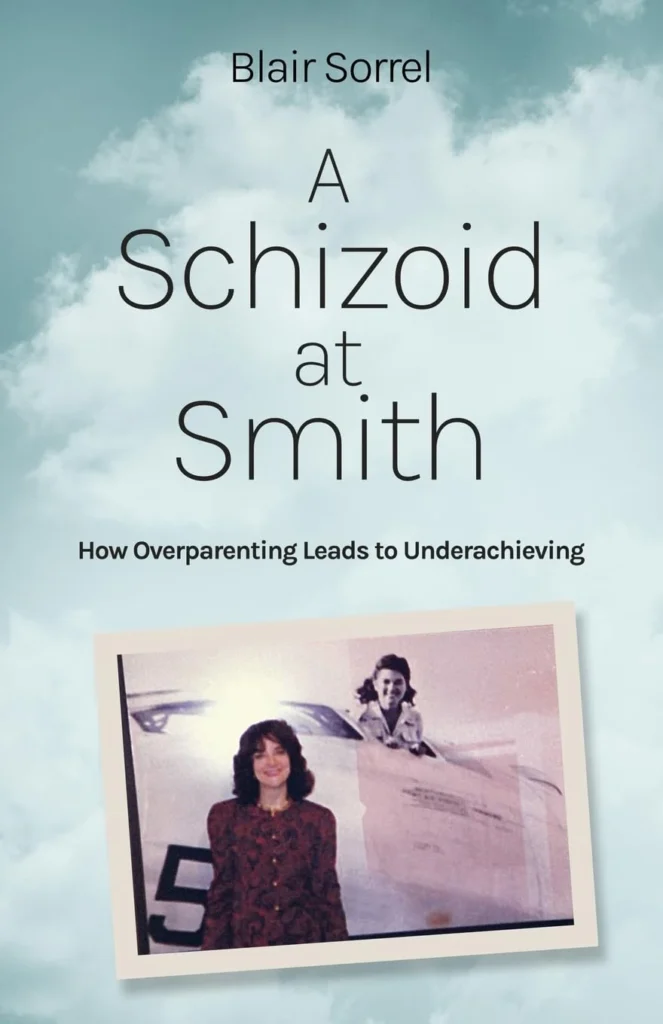
A Schizoid at Smith by Blair Sorrel is an unflinching memoir with a remarkably unique voice. Sorrel offers a rare, first-person account of what it’s like to live with schizoid personality disorder (SPD), tracing how rigid overparenting fractured a promising life despite an elite education.
Sorrel writes with literary precision and dark humor, weaving cultural touchstones from the Beatles to JFK. She paints a vivid picture of growing up in the late 20th century—pre digital, marked by hit songs that evoked the imagination, and clearly not headed on the usual path. The book offers valuable insight into a condition so rarely discussed that sufferers seldom seek help, and offers up an engaging, page-turning blend of heart, nostalgia, and discomfort, and candor.
All the Way to the River by Elizabeth Gilbert is the latest blockbuster from the much beloved author of Eat Pray Love and Big Magic. It chronicles a love story that becomes a vortex of addiction and self-destruction, by turns rhapsodic and terrifying. When Gilbert falls in love with her best friend they’re both married to men; they ditch the marriages and embark on a passionate relationship that veers from breathtaking to suffocating to worse. Then Rayna’s terminal diagnosis sends them on a bender of dangerous risk-taking, as if it might be better to insist on breaking their own hearts (and each other’s) before the inevitable loss does it first.
But this is a Gilbert book: the love that drives it (and her) is enormous and intense, the sense of spirit and memory is powerful. When Gilbert breaks free, the loss makes space for a profound awakening and a glorious, if imperfect, redemption.
High Hopes: A Memoir by Anne Abel is the true story of a 60-year-old’s woman’s Hail Mary. After she quits a teaching job that’s become dangerous and thankless, she realizes the loss of routine and focus could trigger a plunge into the depression she’s dealt with her whole life. She has to do something — and fast. What she does is book tickets to follow Bruce Springsteen on a multi-city Australian tour.
This is a woman who dislikes being alone, hates to travel, and has no idea how she’s going to navigate eight concerts in five cities in 26 days. She hadn’t even heard of Springsteen until she went to a concert with her family the year before. But she knows she needs a better plan than medications that don’t work for her and harrowing treatments (like electro-convulsive shock therapy, which she’s already had three times) that don’t stick. The book is part chronicle of living with depression, part travelogue, and utterly enthusiastic, whether Abel is turning strangers into friends or getting wildly inspired by Springsteen’s energy, warmth, and music. The moral of the story: book those tickets. Take the chance. As Abel (now a storyteller and TikTok star) points out, she didn’t go to change herself. She went to survive. But she came back transformed, stronger, with new self-confidence, and a new sense of what she needs to feel truly alive.
How to Love Your Mother: A Daughter’s Memoir by Molly Jong-Fast is a great read. Jong-Fast, now a renowned political commentator, savvy pundit, and prolific writer, is the daughter of Erica Jong, an intensely famous writer whose books include the 1970s seismic, culture-changing Fear of Flying. This is a book about being mothered by a sort of anti-mother, a blazingly glamorous celebrity author and single mother who was absent most of the time. It’s also about what happens when, decades later, the tables are turned, and the daughter has to come to her mother’s aid.
Jong tended to populate her books with a fictional version of her daughter, which led to uneasy encounters with people who seemed to know everything, Jong-Fast notes. With fierce intelligence, Jong-Fast renders her upbringing and the force of nature in its center as accurately as she can, but knows that this is her perspective; it’s her story. As an adult with her own family, children and brilliant success, she still longs for the emotional connection and tenderness that she rarely got. But as her mother’s dementia grows worse, the chances for that drift farther and farther away. This is a poignant, ironic, knowing, and also loving mother-daughter story. It’s also funny and wildly entertaining, proving that humor and hindsight have equally healing powers.
Ranging from straightforward to bravura prose to inspiring reflections, these six offerings all bring something refreshing, honest, and true to the world. Whether newly discovered or well-established authors, all offer different angles on the same themes: love, life, death, and legacy. They remind us that telling our own stories is its own form of self-discovery, growth, and healing. In reading others’ journeys, we can better map—and celebrate—our own.
- About the Author
- Latest Posts

Rachel Branson is the Founder of Haywood Media and Editor-in-Chief of Wellbeing Magazine, where she has spent more than twenty years exploring the relationship between health, wellbeing and the environments in which we live. Her passion for housing began growing up in her family’s estate agency, where her grandfather, father and uncles worked as a Chartered Surveyor specialising in commercial, residential property and new homes. She later became Head of Communications for a social housing provider, working closely with communities and new developments. Bringing together experience across property, housing, communications and wellbeing, Rachel is developing a new body of work focused on how homes and neighbourhoods can be designed to support healthier, happier lives through every stage of life.