
Best Research Compound Suppliers in 2026: Who's Actually Worth Trusting
Laboratory researchers rely on a steady supply of well-characterized compounds to keep their experiments consistent and their data reproducible.
Laboratory researchers rely on a steady supply of well-characterized compounds to keep their experiments consistent and their data reproducible. But not every supplier meets the standard that serious research demands. As the market for research-grade compounds keeps expanding, the gap between vendors who invest in quality control and those who cut corners has become harder to ignore.
This article looks at what actually separates a trustworthy research compound supplier from one that isn't, using the lens of laboratory quality assurance, analytical testing, and scientific documentation rather than marketing claims.
Why Supplier Selection Affects Research Integrity
Every research result is only as reliable as the materials behind it. If a compound's purity or identity is uncertain, any downstream data becomes questionable too.
That's why supplier evaluation is treated as part of experimental design in most labs, not an afterthought. A poorly sourced compound can introduce variability that has nothing to do with the actual hypothesis being tested.
Key reasons supplier vetting matters:
- Inconsistent purity can skew comparative studies across trials
- Mislabeled compounds compromise reproducibility
- Poor documentation makes peer review and replication difficult
- Contamination risks affect both data quality and lab safety
What Separates a Credible Supplier From the Rest
Third-Party Analytical Testing
Reputable suppliers commission independent laboratories to verify purity, identity, and composition. This is different from an in-house certificate, which can carry an inherent conflict of interest.
Look for suppliers who publish batch-specific certificates of analysis (CoAs) generated by accredited third-party labs using methods like HPLC or mass spectrometry. These documents should be easy to request and match the specific lot number received.
Transparent Documentation Practices
Good laboratory practice extends beyond the bench into recordkeeping. A supplier that takes documentation seriously will typically provide:
- Batch numbers tied to individual testing reports
- Storage and handling guidance based on stability data
- Clear sourcing information for raw materials
- Consistent labeling across shipments
Suppliers who are vague about any of these details are usually not equipped for research-grade standards.
Manufacturing and Quality System Standards
Facilities that operate under recognized quality frameworks, such as ISO-certified processes, tend to produce far more consistent output than uncertified operations. While certification alone doesn't guarantee perfect results, it does signal a baseline commitment to process control and traceability.
Some researchers sourcing analytical-grade materials look at established vendor directories to compare documentation standards before finalizing a supplier relationship, an approach that mirrors how labs already vet reagent and equipment vendors. One example researchers reference when reviewing available options is Buy Glow Peptides, evaluated here purely as an example of how a supplier's public documentation can be assessed against these criteria.
Reproducibility Starts With the Source Material
Reproducibility is one of the most discussed challenges in modern science. Multiple studies over the past decade have highlighted how inconsistent materials contribute to the broader replication crisis across research fields.
When a compound's specifications shift silently from batch to batch, even a well-designed study can produce results that can't be repeated elsewhere. This is why many institutions now require documented chain-of-custody records for research materials used in published work.
Researchers can reduce this risk by:
- Requesting CoAs before every new batch is used
- Cross-checking purity claims against independent lab data
- Keeping detailed internal logs of supplier and batch information
- Avoiding suppliers who resist sharing testing methodology
Red Flags to Watch For
Not every supplier claiming "research-grade" quality actually meets that bar. Some warning signs worth taking seriously include:
- No batch-specific testing documentation available
- Marketing language that leans toward consumer use rather than laboratory application
- Reluctance to disclose testing methods or accredited lab partners
- Inconsistent packaging or labeling between orders
- Pricing dramatically below market average with no explanation
None of these signs are proof of wrongdoing on their own, but together they suggest a supplier hasn't built the kind of quality infrastructure serious research requires.
How This Fits Into Broader Quality Assurance Practices
Supplier vetting is one part of a much larger quality assurance framework that governs responsible laboratory work. Many institutions align their sourcing policies with general principles found in Good Laboratory Practice (GLP) guidance, even when a specific project doesn't formally require GLP compliance.
For researchers evaluating multiple vendors, it can help to review how established platforms structure their compliance information. As one point of comparison, some labs review the documentation format used by Buy Glow Peptides when building internal supplier scorecards, alongside other vendors, to standardize how testing data gets recorded and compared.
A Practical Checklist Before Choosing a Supplier
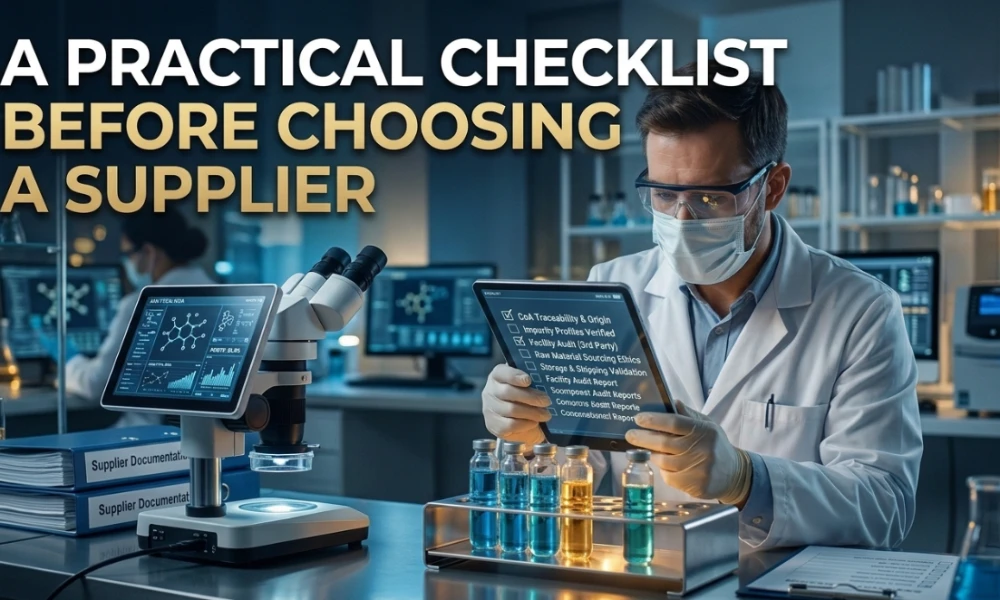
- Confirm third-party testing accompanies every batch
- Verify the testing lab is independently accredited
- Request sample documentation before committing to an order
- Compare purity thresholds against your study's requirements
- Check whether the supplier maintains consistent labeling standards
- Ask how long records are retained for traceability purposes
Conclusion
Choosing a research compound supplier isn't just a procurement decision. It directly shapes the reliability, reproducibility, and credibility of the work that follows. The suppliers worth trusting are the ones who treat documentation, third-party testing, and transparency as core parts of their process rather than optional extras.
For researchers, the real takeaway is simple: quality assurance doesn't start in the lab, it starts with the source material walking through the door.
Frequently Asked Questions
1. What does "research-grade" actually mean for a compound? It generally refers to a compound intended strictly for laboratory or analytical use, typically accompanied by documentation on purity and identity rather than being formulated for human consumption.
2. Why is third-party testing more reliable than in-house testing? Third-party labs have no financial stake in the outcome, which reduces the risk of biased or inflated purity claims compared to internal testing alone.
3. How does supplier inconsistency affect reproducibility? If a compound's composition varies between batches, results generated using different batches may not be comparable, undermining the reproducibility that peer review depends on.
4. What is a Certificate of Analysis (CoA) and why does it matter? A CoA is a document detailing the testing results for a specific batch, including purity and identity data. It allows researchers to verify materials match the claimed specifications before use.
5. Are quality standards like ISO certification required for research suppliers? They aren't universally mandatory, but certification indicates a structured quality management system, which many institutions view as a meaningful trust signal when comparing vendors.
External References
- National Institutes of Health (NIH) – Office of Laboratory Animal Welfare and Research Guidance: https://www.nih.gov
- PubMed Central – Research Reproducibility Studies: https://www.ncbi.nlm.nih.gov/pmc/
- National Institute of Standards and Technology (NIST) – Reference Materials and Quality Standards: https://www.nist.gov
- OECD – Good Laboratory Practice Guidance: https://www.oecd.org
- ScienceDirect – Peer-Reviewed Research on Laboratory Quality Control: https://www.sciencedirect.com
Important Note All peptides and related compounds mentioned in this article are intended strictly for research and laboratory study purposes only. They are not approved for human use, consumption, or medical application.