









Emotions Aren’t the Problem — Ignoring Them Is
-
- July 14, 2025

Let’s be honest: emotions make people uncomfortable. We’re told to manage, regulate, and control them. In many workplaces, they’re seen as distractions. In families, they’re often brushed aside or create trouble. And in many self-help cultures, emotions are treated like clutter to be cleaned up on the way to a tidier version of ourselves.
Emotions aren’t the problem. Ignoring them is.
We like to believe we’re rational creatures who make decisions based on logic rather than feelings. That’s a nice story, but it’s not the whole truth.
In Descartes’ Error, neuroscientist Antonio Damasio tells the story of “Elliot,” a man who, after surgery to remove a tumor in his frontal lobe, could still reason and remember perfectly, but his decision-making fell apart. Without emotional input, he struggled with judgment in everyday choices. Damasio used Elliot’s case to argue that emotions aren’t a barrier to reason — they make reason possible.
This hypothesis suggests that rationality requires emotional input, challenging the old idea that the mind and body are separate. Emotions are present in every conversation, whether at work or in our private lives. Emotions fill the room even when nobody speaks about how they feel. They reside in our bodies, shaping our tone, energy, and the direction of the conversation. Yet, most of the time, we can be blind to their impact.
Many of us were never taught how to handle our feelings while growing up. We were told things like, “Don’t cry,” “You’re overreacting,” or “Oh, forget it, it’s no big deal.” Translation: shove it down, be rational, and move on. Consequently, we learned to hide or distrust our emotions. Then, as we enter adulthood, we find ourselves wondering why our conversations go sideways.
Our emotional responses have much to teach us. Every emotion carries valuable information. Anger often indicates that a boundary or standard has been crossed. Sadness points to feelings of loss or longing. Anxiety can manifest as worry and also serve as a signal that something needs attention. Feelings are like dashboard lights; they signal that something under the hood requires maintenance. You can ignore the light if you choose, but doing so often results in higher costs later.
Emotions aren’t drama; they’re data, and data needs interpretation.
Here’s a simple practice I share with clients willing to look under the hood:
1.Pause – When you feel a strong emotion, pause and take a deep breath.
2.Name it – Give your feeling a name: frustration, hurt, disappointment.
3.Isolate it – Remember that your emotional reaction isn’t you. It’s an upheaval of your inner thoughts.
4.Interpret it – Consider asking yourself (and writing it down): What values, desires, or concerns might be behind this feeling?
5. Get curious – Ask yourself what you can learn and how best can you express the thinking behind the feeling?
Let’s say someone cuts you off in a meeting. A jolt of irritation disrupts you. You could snap or stew in silence. Or you could pause and recognize that it’s not just about being interrupted — it’s about feeling dismissed, and respect matters to you.
By finding your center, you can say, “Can I please finish my thought?” Or depending on the moment, “Did you mean to interrupt me?” Clearly expressing your emotions can shift the conversation. It’s also healthier than stewing in resentment.
Now consider a more personal example. A new friend, Jami, cancels plans at the last minute. You feel rejected, even though you know it’s probably not about you. Instead of brushing it off or responding with sarcasm, you take a moment to pause. Your disappointment has something to express. You realize you were looking forward to the connection. With that little lesson, you can respond honestly, not reactively: “Jami, I’m disappointed that we can’t meet. I was really looking forward to connecting. Let’s schedule another time next week.”
This isn’t about being emotionally perfect; there’s no award for Most Zen in a Conversation. It’s about noticing the lessons in our emotional reactions. When we stop and investigate what we’re feeling, we discover something deeper — a voice rooted in intention and integrity.
And here’s another thing: emotions aren’t private. They’re relational. Have you ever walked into a room and felt the unspoken tension? Or walked in and immediately spotted the most grounded person in the space? That’s the emotional field. We pick up on each other’s emotional states, often without knowing it. As we increase our awareness, we become more attuned to the mood of a person or a room. I call this our emotional antennae.
When we’re more emotionally intelligent and empathetic toward others, our conversations evolve. We’re more likely to express what we truly mean, to genuinely listen to what others are saying, and to mend things when they break. It doesn’t imply that everything goes perfectly. But it becomes more authentic. And authenticity is where connection occurs.
If you prefer to keep things rational, this might all sound a bit ambiguous. But let me ask you: how many arguments in your life were truly about facts? Most conflicts are emotional, stemming from feeling misunderstood, dismissed, or unacknowledged. If we want fewer pointless arguments and more genuine conversations, we must stop pretending that emotions don’t matter.
And if you feel deeply but don’t always know how to express yourself, hear this: If your feelings seem overwhelming, remember that they’re sending you signals. They’re providing information you have yet to decode. Start there. Get curious. Write it down. Talk to someone you trust. Learn to recognize your well-worn emotional patterns. It takes practice, but over time it becomes easier to understand what your emotions are trying to convey.
Here’s the bottom line: emotions aren’t flaws to fix. They’re part of being human. They show us what we care about and point us toward what needs our attention. When we work with them instead of around them, every relationship at work and home can improve.
The next time a strong emotion surfaces, don’t rush past it. Pause and ask what it wants to tell you. There’s usually something important underneath. That’s how we grow.
Writted By Chuck Wisner
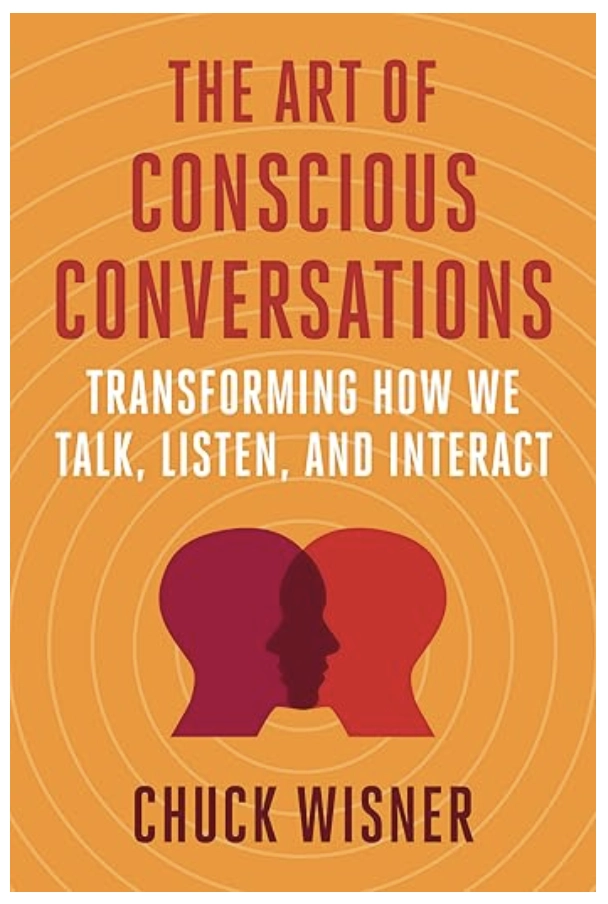
Chuck Wisner has spent thirty years as a trusted advisor, coach, and teacher in communication, human dynamics, and leadership excellence. He has worked with leaders and their teams in Fortune 200 companies. He also trained in mediation and worked as a senior mediator affiliated with the Harvard Mediation Program at the Harvard Law School, and later, associated with MIT’s Center for Organizational Learning. His book, The Art of Conscious Conversations – Transforming How We Talk, Listen, and Interact(BK Publishers, Oct. 22, 2022), explores how to heighten our awareness and become more conscious in our conversations. Learn more at chuckwisner.com.
- About the Author
- Latest Posts

Our Editorial Team are writers and experts in their field. Their views and opinions may not always be the views of Wellbeing Magazine. If you are under the direction of medical supervision please speak to your doctor or therapist before following the advice and recommendations in these articles.


