The future of housing isn’t about building more homes. It’s about building homes that can grow, adapt and evolve with the people who live in them.
There is something rather strange about the way we accept housing in Britain today.
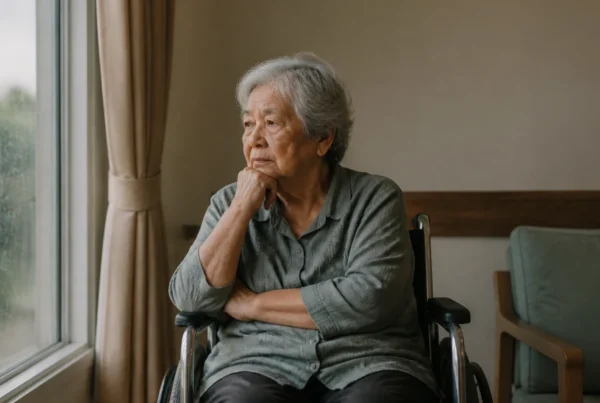
We expect our homes to become obsolete long before the buildings themselves wear out. A young couple buy their first home, then a baby arrives and suddenly they need an extra bedroom. A few years later another child comes along and once again they begin searching for somewhere larger. Children eventually leave home and the property feels too big, too expensive or too difficult to maintain. Later in life, illness, disability or reduced mobility can mean the home that once represented security becomes an obstacle course of stairs, narrow doorways and inaccessible bathrooms.
Throughout our lives we move, not because we necessarily want to, but because our homes were never designed to adapt as our lives changed.
Somehow we have normalised this.
Yet if you stop and think about it, it makes very little sense. We build homes that are expected to last for generations, but we design them for only one chapter of a person’s life.
Years ago, while working in the social housing sector, I suggested a different way of thinking. What if homes were designed from the outset to change with the people living in them? Instead of fixed layouts, could internal walls move? Could a dining room become a downstairs bedroom if someone developed mobility issues? Could a study become a nursery and later a teenager’s bedroom? Could bathrooms be designed so they could easily accommodate future accessibility needs without major rebuilding? Could homes be built with enough flexibility that families didn’t have to uproot themselves every time life took an unexpected turn?
The idea was politely dismissed.
The response was understandable at the time. The focus was on delivering as many homes as possible within tight budgets and competing priorities. But I have never forgotten that conversation because, years later, the same problems remain.
Across the UK, young families often find themselves trapped because larger homes simply are not available. Older people remain in houses that no longer suit their needs because there is nowhere appropriate to move. People who suddenly become disabled face expensive adaptations or the distress of leaving a home filled with memories. Housing shortages create chains where one family’s inability to move prevents another from finding the home they need.
We continue to think of housing as a series of transactions rather than a lifelong relationship between people and place.
The irony is that we spend enormous amounts of money dealing with the consequences. Local authorities fund home adaptations. Families pay removal costs. Communities lose long-term neighbours. Health services support people whose homes have become unsuitable. Developers continue building homes that solve today’s need but not tomorrow’s reality.
What if we approached housing differently?
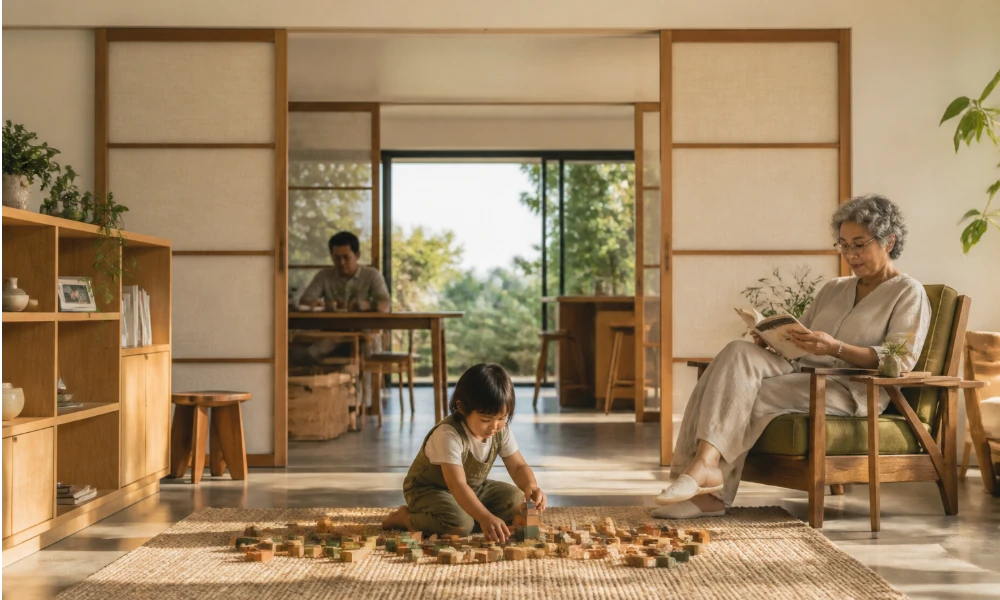
Imagine every new development including homes designed to evolve over fifty years rather than five. Internal layouts could be reconfigured as families grow. Structural provision for future lifts or stair adaptations could be built in from day one. Walls could move without major construction. Services could be positioned to allow rooms to change purpose. Technology could quietly support changing lifestyles without replacing thoughtful design.
This is not about creating luxury homes filled with expensive gadgets.
It is about designing ordinary homes that give ordinary people extraordinary resilience when life changes unexpectedly.
The conversation should also extend beyond the front door. A truly adaptable neighbourhood would make it possible for residents to remain part of their community throughout different stages of life. Accessible walking routes, nearby green spaces, local wellbeing services, community hubs and preventative healthcare should all form part of the development rather than being treated as optional extras.
When people are forced to move because their home no longer works, they often lose much more than bricks and mortar. They lose neighbours who know them, familiar walking routes, local shops, support networks and a sense of belonging. These connections are fundamental to wellbeing yet rarely feature in discussions about housing policy.
As our population ages and family structures become increasingly diverse, adaptability should no longer be viewed as an innovation. It should become the standard by which good housing is judged.
For decades we have measured successful developments by the number of homes delivered.
Perhaps it is time we asked a different question.
How many of those homes will still support the same family twenty, thirty or forty years from now?
The homes of the future should not simply be smarter. They should be wiser. Because you shouldn’t have to move home simply because life happened.
- About the Author
- Latest Posts

Rachel Branson is the Founder of Haywood Media and Editor-in-Chief of Wellbeing Magazine, where she has spent more than twenty years exploring the relationship between health, wellbeing and the environments in which we live. Her passion for housing began growing up in her family’s estate agency, where her grandfather, father and uncles worked as a Chartered Surveyor specialising in commercial, residential property and new homes. She later became Head of Communications for a social housing provider, working closely with communities and new developments. Bringing together experience across property, housing, communications and wellbeing, Rachel is developing a new body of work focused on how homes and neighbourhoods can be designed to support healthier, happier lives through every stage of life.