
Here's what successful team building looks like in 2026
The world of team-building has come a long way since the ‘forced fun’ days of trust falls, icebreakers, and office parties. In 2026, team-building is all…
The world of team-building has come a long way since the ‘forced fun’ days of trust falls, icebreakers, and office parties.
In 2026, team-building is all about creating memorable experiences that bring team members together in an organically collaborative, creative, and technology-driven way.
And that’s not to forget that since the COVID pandemic, many teams now find themselves geographically dispersed.
Team-building in 2026 reflects this fact, with activities allowing everyone – be it in-person or remotely – to participate in the fun.
Below, we take a closer look at what modern team-building looks like in 2026.
Experience is key
Team building today is first and foremost about creating memorable experiences.
The thinking is simple – by emphasising shared, memorable experiences, you create stronger, more enduring bonds among the participants.
That’s because an experience-focused activity allows individuals to understand their colleagues' point of view better and appreciate their strengths and weaknesses.
Collabs, not competition
Collaboration brings people together in ways competition often can’t, and in 2026 you will find team-building activities are big at promoting this ethos of collaboration.
And it’s generally recognised that any organisation is more productive when individuals work together rather than in competition.
Be it via computer games, workshops, geocaching, or game shows, team-building in 2026 is all about solving tasks and addressing challenges in a spirit of true collaboration.
Quirkiness
As we have mentioned, in the past, team-building could feel a bit forced – the challenges and exercises could easily become chores that had to be ticked off.
In a bid to bake organic fun into the activities, organisers are now increasingly looking for more left-field, quirky activities that keep participants engaged both physically and mentally.
Popular team-based activities include:
- Immersive experiences: As the name suggests, immersive experiences put the participants at the centre of the action, often using technology like VR headsets.
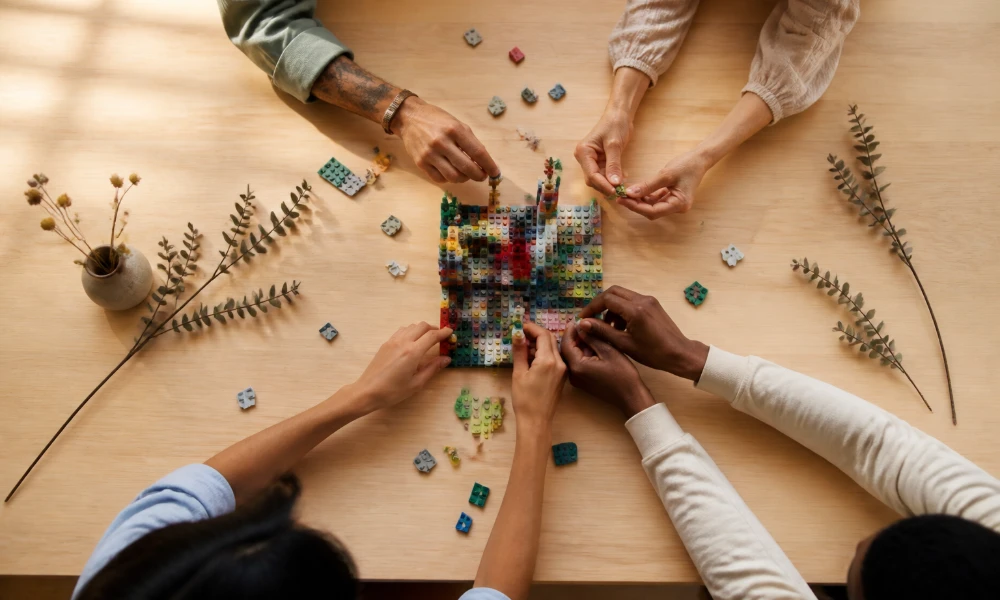
- Creative hands-on workshops: Participants get their hands dirty and put their grey matter to good use in activities like pottery classes, painting tasks, and even LEGO workshops, like the ones run by Bricks McGee, all of which encourage collaboration, creativity, and communication.
- Purpose-driven and wellbeing activities: Endeavours like local charity projects, volunteering, sustainability initiatives, and wellbeing experiences shore up team bonds and also make a difference in the local community.
Remote participants
It shouldn’t be forgotten that the nature of the post-COVID workplace is very different from the days gone by.
Many individuals work some or all of their time remotely nowadays, and therefore have very little in-person contact with colleagues.
And research on remote work suggests challenges around collaboration, social connection, and team cohesion persist when people are not physically together.
This has meant that team-building has had to become more innovative to allow everyone in a team to participate in fun exercises and activities.
To foster this sense of togetherness in a remote workplace, technology has had to do a lot of the heavy lifting, with many team-based activities focused on remote participation.
Conclusion
Successful team building in 2026 reflects the changes in the way people work and interact today and the priorities of modern organisations.
Hybrid work and an emphasis on diversity and inclusion mean that team-building exercises have to become both more experiential and diversity-focused.


