










How Are Thermoforming Companies Enhancing Home Product Design?
-
- August 13, 2025

Modern households demand products that blend seamlessly with contemporary living while delivering exceptional functionality. Traditional manufacturing methods can’t keep up with consumers’ evolving needs for customized, lightweight, and aesthetically pleasing home items.
The average efficiency of robot processing is 20 seconds per piece, while manual production averages 120 seconds per piece. This dramatic efficiency improvement represents just one way that advanced manufacturing is revolutionizing the creation of household products that enhance daily life.
With thermoforming’s transformative potential established, let’s explore the specific home product categories where these innovations are making the most significant impact across modern households.
Revolutionary Home Product Categories Enabled by Thermoforming Companies
Modern manufacturers are pushing boundaries across multiple household sectors, and thermoforming companies are at the forefront of this movement, creating products that weren’t possible just a few years ago. They’re developing sophisticated solutions that address real-world challenges in homes everywhere.
Smart Home Integration Components
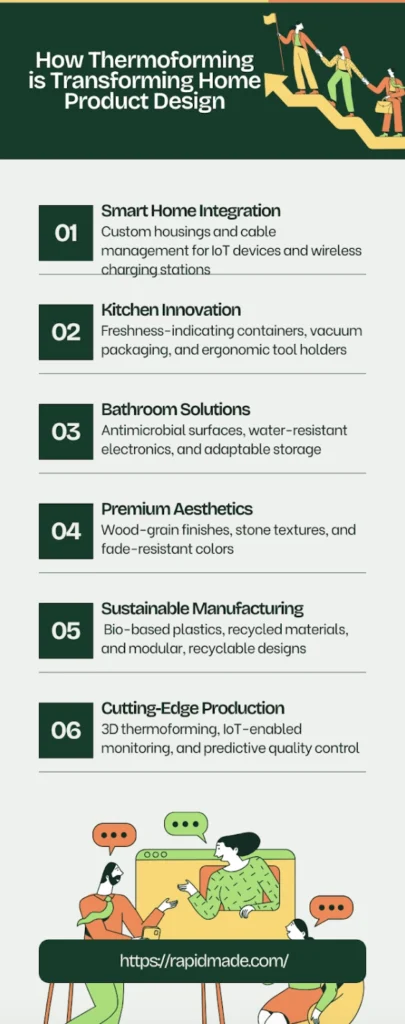
Smart home devices require protective housings that don’t interfere with wireless signals or aesthetic appeal. With thermoforming, manufacturers can create custom enclosures for IoT sensors that blend invisibly into wall surfaces or furniture.
Wireless charging stations benefit from thermoformed designs that manage heat dissipation while maintaining sleek profiles. Cable management solutions use flexible thermoformed channels that adapt to various room configurations without compromising interior design.
Kitchen Innovation Through Thermoforming Plastic
Advanced food storage containers now incorporate freshness indicators directly into their walls through specialized thermoforming plastic processes. These containers change color to signal when contents need attention.
Current research suggests that thermoforming vacuum packaging positively influences the surface color of beef steaks during the first 8 hours after increasing storage temperatures. Ergonomic kitchen tool holders utilize complex geometries that wouldn’t be cost-effective through traditional manufacturing methods.
Bathroom and Personal Care Product Enhancement
Antimicrobial surface treatments integrated during the thermoforming process create hygiene products that actively resist bacterial growth. Water-resistant electronics housings for smart bathroom fixtures protect sensitive components while maintaining attractive appearances.
Customizable storage solutions adapt to individual bathroom layouts and personal care routines. These products demonstrate how the process addresses practical needs while enhancing visual appeal.
While smart home components, kitchen innovations, and bathroom enhancements showcase how versatile this manufacturing method can be, the true magic lies in the advanced design capabilities that make these sophisticated products possible.
Source: Canva
Advanced Design Capabilities Transforming Home Aesthetics
These technological capabilities have opened unprecedented opportunities for creating home products that were previously impossible or prohibitively expensive to manufacture.
Multi-Material Thermoforming for Premium Finishes
Wood-grain replication techniques create surfaces indistinguishable from natural materials without the maintenance requirements. Stone-texture finishes provide luxury aesthetics at accessible price points for various home applications.
Color-through technology ensures fade-resistant home products that maintain their appearance through years of use. These finishes resist UV exposure and normal wear patterns that typically degrade surface treatments.
Complex Geometries for Functional Home Design
Undercut designs improve ergonomics in household items by creating natural grip points and comfortable interaction surfaces. Integrated living hinges eliminate separate hardware while providing smooth operation in space-saving solutions.
Deep-draw capabilities enable sculptural home décor that serves functional purposes. These pieces combine artistic expression with practical utility, addressing homeowners’ desires for beautiful yet useful items.
Micro-Texturing and Surface Enhancement Technologies
Anti-slip surfaces improve safety in bathroom and kitchen applications without compromising visual appeal. Soft-touch coatings provide premium user experiences that rival high-end consumer electronics.
Antimicrobial surface treatments address health-conscious consumers’ concerns while maintaining the product’s original aesthetic properties. These treatments work continuously without requiring special maintenance procedures.
These cutting-edge design capabilities have opened unprecedented aesthetic possibilities, but today’s environmentally conscious consumers demand more than just beautiful functionality—they expect sustainable solutions.
Sustainability Innovations in Home Product Thermoforming
Environmental responsibility has become non-negotiable for modern consumers, pushing manufacturers to develop eco-friendly approaches without sacrificing performance or design quality.
Bio-Based Material Integration
Plant-based plastics offer eco-conscious alternatives for home products while maintaining durability standards. Recycled ocean plastic applications transform environmental waste into functional household items.
Compostable packaging solutions support home delivery products that align with zero-waste lifestyle goals. These materials break down safely without leaving harmful residues in home composting systems.
Circular Design Principles
Design-for-disassembly methodologies ensure products can be easily separated into recyclable components at end-of-life. Material identification systems help consumers properly sort components for recycling programs.
Modular design approaches extend product longevity by allowing users to replace individual components rather than entire units. This approach reduces waste while maintaining product functionality over extended periods.
Carbon Footprint Reduction Strategies
With local sourcing initiatives from thermoforming services providers, transportation emissions can be reduced while regional economies receive much-needed support. Energy-efficient production processes minimize environmental impact during manufacturing.
Lightweight designs significantly reduce transportation emissions throughout the supply chain. These weight reductions also benefit consumers through easier handling and installation of home products.
As advancements in sustainable production methods progress, thermoforming companies are simultaneously addressing another critical consumer demand: the desire for personalized home products that reflect individual lifestyles and preferences.
Customization and Personalization Trends
Mass customization capabilities enable consumer-direct platforms where homeowners specify colors, dimensions, and features for their specific needs. These systems integrate seamlessly with interior design coordination tools.
Small-Batch Production for Niche Markets
Artisan home product lines cater to consumers seeking unique items that reflect personal style. Limited edition seasonal collections create excitement while testing new design concepts.
Recognizing that home design preferences vary significantly across different geographic areas, partnering with a local thermoforming company allows for region-specific product variations that suit local tastes.
Digital Integration in Custom Design
3D scanning technology creates perfect-fit home products for irregular spaces or specific user requirements. AR visualization tools let consumers preview customized designs in their actual home environments before ordering.
AI-driven design optimization analyzes user preferences to suggest modifications that improve functionality or aesthetic appeal. These systems learn from user feedback to refine future recommendations.
The surge in customization capabilities has been fueled by breakthrough technologies that are fundamentally reshaping how manufacturers approach home product manufacturing.
Emerging Technologies Revolutionizing Home Product Manufacturing
Revolutionary manufacturing technologies are enabling product designs that seemed impossible just a few years ago while improving efficiency and quality consistency.
3D Thermoforming and Hybrid Manufacturing
Multi-axis forming creates complex home product shapes that traditional methods can’t achieve cost-effectively. Integration with additive manufacturing processes combines the benefits of both technologies.
Real-time quality monitoring systems ensure consistent results throughout production runs. These systems detect variations immediately and adjust parameters to maintain specifications automatically.
Industry 4.0 Implementation
IoT-enabled production monitoring provides unprecedented visibility into manufacturing processes. Predictive maintenance systems prevent quality issues before they affect product output.
Automated material handling reduces labor costs while improving consistency in material preparation and product finishing. These systems work continuously without fatigue-related quality variations.
These technological advances translate into tangible benefits that directly enhance how consumers interact with and experience their home products daily.
Consumer-Centric Benefits Driving Market Growth
Enhanced user experience features optimize ergonomic designs through advanced modeling that considers how people interact with products in home environments.
Health and Wellness Integration
Air purification system housings integrate seamlessly into home décor while providing essential health benefits. UV-sanitization product components address heightened awareness of hygiene importance.
Biometric sensor integration capabilities enable health monitoring through everyday household items. These features provide valuable health insights without requiring separate devices or complex setup procedures.
Accessibility and Universal Design
ADA-compliant home product solutions ensure accessibility for users with varying physical abilities. Aging-in-place supportive designs help seniors maintain independence while staying in familiar environments.
Sensory-friendly material selections address the needs of individuals with sensitivities while maintaining broad appeal. These materials provide comfort without drawing unwanted attention or requiring special handling.
Understanding these consumer benefits is essential, but home product brands must know how to identify and partner with thermoforming companies that can deliver these innovations effectively.
Selecting the Right Thermoforming Company for Home Product Innovation
When reviewing portfolios, it’s important to consider whether a thermoforming company has experience with consumer goods and a solid understanding of home environment requirements. Material expertise demonstrates knowledge of applications suitable for household use.
Partnership Models for Product Development
Co-development agreements enable shared investment in innovative technologies while reducing individual risk. Licensing opportunities provide access to proven innovations without development costs.
White-label manufacturing capabilities allow brands to focus on marketing while leveraging manufacturing expertise. These partnerships accelerate time-to-market for new product concepts.
With the right partnership framework established, it’s time to examine where innovations in this field and the home products industries are headed in the coming years.
Future Outlook and Market Predictions
Emerging market opportunities include senior-focused home product design as populations age and remain in their homes longer. Pet product innovation addresses the growing market of pet owners seeking premium solutions.
AI-driven design optimization will enable real-time customization based on user behavior patterns. Virtual reality design collaboration tools will streamline communication between designers, manufacturers, and consumers. These developments promise exciting possibilities for both manufacturers and consumers seeking innovative home solutions.
Shaping Tomorrow’s Living Spaces
The transformation of home product design through advanced thermoforming represents more than just manufacturing innovation, it’s about creating living spaces that truly enhance daily life. From smart home integrations to sustainable materials, these technologies are making homes more functional, beautiful, and environmentally responsible.
The convergence of customization capabilities, emerging technologies, and consumer-centric design principles positions thermoforming as the cornerstone of future home product development. We’re not just improving products; we’re reimagining how homes can better serve the people who live in them.
Your Questions About Home Product Thermoforming Answered
What are the advantages of thermoforming?
Additionally, thermoforming is highly material-efficient, reducing waste and contributing to sustainability. Its rapid production times, scalability, and compatibility with a wide range of thermoplastic materials further enhance its cost-efficiency.
What is the future of thermoforming?
As we step into 2025, the thermoforming industry continues to grow, driven by technological advancements and expanding applications across diverse sectors. Industries such as automotive and medical are leading the way in leveraging thermoforming’s capabilities to produce lightweight, durable components.
Can thermoforming create multi-colored home products?
Multi-material thermoforming enables products with different colors and material properties in a single piece. Advanced techniques like in-mold decoration add color and graphics during the forming process for seamless, durable finishes.
Source: Canva
- About the Author
- Latest Posts

Our Editorial Team are writers and experts in their field. Their views and opinions may not always be the views of Wellbeing Magazine. If you are under the direction of medical supervision please speak to your doctor or therapist before following the advice and recommendations in these articles.


