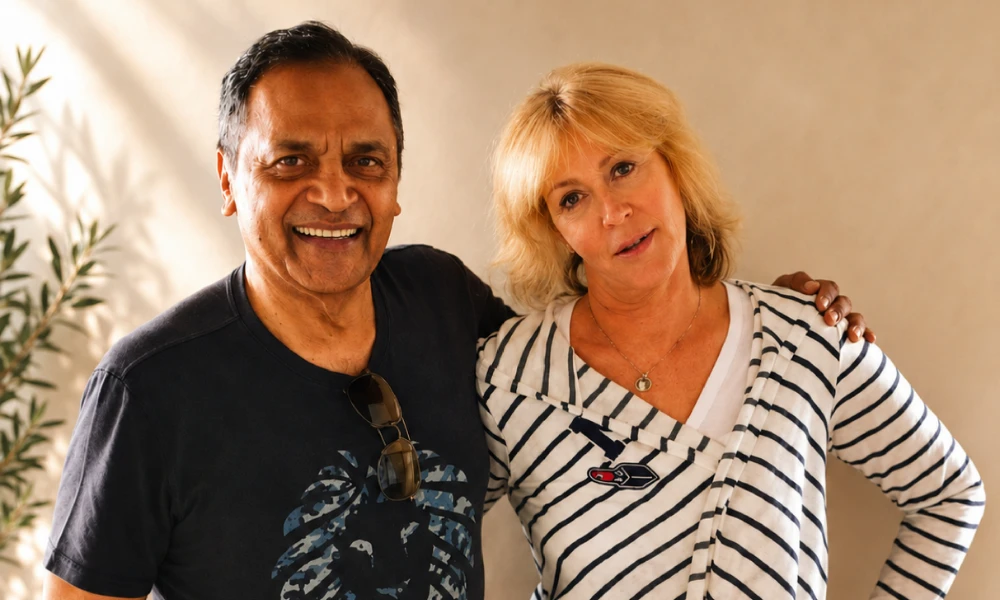
Tyler Mane on Surviving Breast Cancer, Finding Purpose and Learning to Live Again
Rachel Branson speaks to Tyler Mane about his breast cancer diagnosis, the emotional challenges of treatment, the importance of listening to our bodies

Best known for playing some of Hollywood’s most formidable characters, from Sabretooth in X-Men to Michael Myers in Halloween, actor and former professional wrestler Tyler Mane has built a career around his extraordinary physical presence. But when he discovered a lump in his chest, he faced a challenge that no amount of physical strength could prepare him for. In an exclusive interview with Wellbeing Magazine, Rachel Branson speaks to Tyler about his breast cancer diagnosis, the emotional challenges of treatment, the importance of listening to our bodies and why he is determined to use his experience to help other men recognise the warning signs.
At 6ft 8in, Tyler Mane is not someone you could easily overlook. With a career spanning professional wrestling and some of Hollywood’s biggest productions, he has spent decades portraying characters whose strength, size and intimidating presence have made them instantly recognisable. Yet, when we meet to discuss his recent breast cancer diagnosis, it becomes clear that behind the imposing exterior is a man who has been forced to confront his own vulnerability, reassess his priorities and discover an entirely different meaning of strength.
For Tyler, the past year has been one of extraordinary upheaval. Alongside a life-changing cancer diagnosis, he has experienced devastating personal losses, undergone chemotherapy and radiation, and embarked on a new venture with his wife, actress Renae Geerlings. As we begin our conversation, he describes it simply as "one heck of a year", an understatement considering everything he has endured.
"In March, I ended up losing my brother," he tells me. "And then three weeks later, I had this tumour cut out of me, and it came back as invasive ductal carcinoma."
It was a diagnosis he had never anticipated. Having spent the previous eighteen months making considerable improvements to his lifestyle, giving up alcohol, returning to regular exercise and paying closer attention to his diet, Tyler had been feeling healthier than he had in years. Suddenly, however, everything changed.

The Lump That Changed Everything
Tyler first noticed something unusual in his chest around October or November of the previous year. At the time, he thought little of it. Like many men, he assumed the lump was harmless and might eventually disappear without medical intervention.
"I noticed the lump probably October, November of last year. I was thinking, that kind of feels weird, maybe I should get it checked. My wife was like, yeah, you need to go get this checked. I was like, it'll go away, it'll be fine."
It was Renae's persistence that eventually encouraged him to seek medical advice. Having previously experienced benign fatty lumps elsewhere on his body, Tyler initially believed this was something similar. He visited a dermatologist, who referred him to a surgeon, and the lump was removed without a biopsy beforehand.
The results were unexpected. The mass was identified as invasive ductal carcinoma, the most common form of breast cancer in both men and women. Although Tyler's cancer had been discovered at stage one, further testing indicated that additional treatment was necessary.
"I thought after having mine cut out, I was going to be fine and totally done," he explains. "But my oncologist said, no, just a minute, because we want to make sure that it's completely gone."
His medical team recommended chemotherapy followed by radiation, treatment designed to reduce the risk of cancer returning. What he had initially thought would be a relatively straightforward procedure had become a much more complicated journey.
During this already challenging period, tragedy struck again when Renae's father died in a car accident. For a couple navigating cancer treatment and the loss of loved ones, the emotional burden was considerable. Yet, throughout our conversation, Tyler repeatedly returns to the importance of having someone beside him, not only to offer practical help but to encourage him to face difficult realities he might otherwise have avoided.
"Without Renae, my wife, I wouldn't have even gotten it checked," he admits. "I'd probably still be living with it now, and it would be metastasising and could have spread to the rest of my body by now."
His words illustrate something that becomes a recurring theme throughout our interview: sometimes the greatest act of strength is acknowledging that we need help.
Breaking the Silence Around Male Breast Cancer
For many people, breast cancer remains a disease almost exclusively associated with women. Pink ribbons, awareness campaigns and screening programmes have done an extraordinary amount to educate women about breast health, yet comparatively little attention has been paid to the fact that men can also develop the disease.
Although rare, male breast cancer is a very real health concern. According to Cancer Research UK, approximately 420 men are diagnosed with breast cancer in the UK every year, accounting for less than one per cent of all breast cancer cases. Around 85 men die from the disease annually. In the United States, the American Cancer Society estimates that 2,670 men will be diagnosed with invasive breast cancer in 2026, with approximately 530 deaths.
One of the greatest challenges is awareness. Many men simply do not realise that they have breast tissue and can develop breast cancer. Unlike women, men are not routinely invited for breast screening, meaning that identifying unusual changes and seeking medical advice are particularly important.
When I ask Tyler how he felt about receiving a diagnosis so closely associated with women, his answer is refreshingly candid. For someone whose career and identity have been built around physical strength, discovering cancer in an area of his body about which he had already felt self-conscious was particularly difficult.
"I've always been trying to work on my chest, and then to have something like this affect me, it kind of put the shame [there]. It made me feel even more ashamed for a little bit of time."
He admits that initially he did not want to discuss the diagnosis publicly. There was embarrassment, uncertainty and the uncomfortable reality of dealing with an illness that many people still mistakenly believe men cannot develop. However, conversations with Renae helped him recognise that sharing his experience could encourage others to act.
"Talking with my wife, I decided, look, I have to move forward with this, and we need to talk about this because this is something that is very serious in men."
He is particularly passionate about challenging the stigma and misconceptions that might prevent men from seeking help. Conditions such as gynaecomastia, a common and usually harmless enlargement of male breast tissue, can cause changes in the chest, but men should never assume that an unfamiliar lump is benign without having it assessed.
"I didn't want people to feel ashamed of it and not go in and get checked and check themselves," he says.
There is something especially powerful about hearing this from a man whose on-screen identity has so often been associated with invincibility. His willingness to discuss something that once made him uncomfortable may ultimately have a far greater impact than any of the formidable characters he has portrayed.
"I didn't want people to feel ashamed of it and not go in and get checked and check themselves." — Tyler Mane
Why Early Detection Matters
Male breast cancer most commonly develops in the small amount of breast tissue found behind the nipple. Symptoms can include a painless lump in the chest or armpit, changes in the appearance or position of the nipple, discharge or bleeding, changes to the skin, or swelling around the breast.
Because men are generally less familiar with these warning signs, symptoms can sometimes be overlooked or mistaken for something harmless. The recommendation is to become familiar with what is normal for your chest and seek medical advice whenever an unusual change appears. While most breast lumps are not cancerous, it is important not to delay having them checked.
For Tyler, learning more about the condition has been eye-opening. His oncologist, he explains, had treated several men with breast cancer, but he recognises that awareness among the wider male population remains limited.
"A lot of men don't believe that they can get breast cancer, but it is very much a thing with men."
There is also an encouraging message in the statistics. According to the American Cancer Society, the five-year relative survival rate for men whose breast cancer is diagnosed while still localised is approximately 97 per cent, compared with 31 per cent when the disease has spread to distant parts of the body. Although survival figures cannot predict an individual's outcome, they demonstrate why recognising changes and obtaining an early diagnosis can make such an important difference.
Tyler's message is straightforward: if something feels different, do not ignore it.
Redefining Strength Through Cancer Treatment
When I ask Tyler how chemotherapy and radiation affected him physically and mentally, he acknowledges, "You know, when you're going through chemotherapy, there are some days that you just don't want to get off that couch. There's some days where you don't want to do anything."
For someone accustomed to maintaining his physical fitness, losing energy and experiencing the effects of treatment presented a different kind of challenge. Rather than attempting to maintain his usual exercise routine, he decided to create a simple daily challenge that would allow him to move according to how he was feeling.
"The one thing that I did that really, really helped me a lot was I made a challenge for myself. I said at the very beginning, I'm going to do as many push-ups as I can every day, as many squats, and then I was going to do rebounding."
The important part, he explains, was not how many repetitions he completed but the fact that he had something positive to focus on. Some days he managed only one or two push-ups and a few squats before needing to rest. On other days, he surprised himself with how much energy he had.
"There were some days where I only would do one or two push-ups and a couple of squats, and it'd be like, okay, I'm done. But then there were days where I would amaze myself."
For Tyler, these small daily challenges became a way of checking in with his body and recognising what he was capable of on any particular day.
Physical activity can play an important role in supporting wellbeing during and after cancer treatment, helping some people manage fatigue, maintain muscle strength and improve quality of life. However, exercise needs to be adapted to individual circumstances, treatment side effects and medical advice. Anyone undergoing cancer treatment should discuss suitable activity with their healthcare team rather than attempting to follow another patient's routine.
Tyler's experience is a reminder that progress does not always involve pushing harder. Sometimes it is about recognising limitations, adapting expectations and allowing the body the time it needs to recover.
The Power of Mindset, Meditation and Everyday Wellbeing
Throughout our conversation, Tyler frequently returns to the importance of maintaining a positive mindset. However, his approach is not simply about pretending that everything is fine. It is about finding ways to remain mentally grounded while navigating circumstances that are often beyond his control.
"I meditate daily. I've been meditating for probably ten years now, and that has really, really helped me just be centred and grounded and understand what's going on in my life at that moment."
Meditation can provide a valuable opportunity to slow down, reconnect with the present and manage some of the emotional challenges associated with illness. Although it cannot treat cancer itself, mindfulness-based approaches may help people cope with anxiety, stress and the psychological impact of treatment.
Exercise remains another important part of Tyler's wellbeing routine. He continues to value the gym as a place where he can release tension, maintain strength and reconnect with a familiar part of his identity. Away from physical activity, he finds relaxation through music, particularly playing the guitar.
"I love playing the guitar a little bit, so I'll pick up the guitar and it'll take me to a whole other place."
His experiences have also reinforced the lifestyle changes he had begun making before his diagnosis. Having stopped drinking alcohol approximately eighteen months earlier, he has continued to focus on improving his diet, reducing his intake of sugary foods and moving towards a more Mediterranean style of eating.
While no lifestyle change can guarantee that cancer will be prevented or will not return, maintaining a balanced diet, being physically active and limiting alcohol can support overall health and may reduce the risk of certain cancers.
For Tyler, however, the changes are about more than physical health. They represent a shift in how he chooses to live.
"In my twenties and thirties, I thought, oh, that's never going to happen to me, because I thought I was invincible," he reflects. "Now that I'm dealing with this, it's just changed how I look at life and how I look at everything."
He pauses before explaining that he no longer feels the same need to rush through life.
"Now I slow down and smell the roses, so to speak. You've got to take time and enjoy your life."
"I thought I was invincible. Now that I'm dealing with this, it's changed how I look at life and how I look at everything." — Tyler Mane
The Importance of Love, Support and Being Vulnerable
One of the most moving aspects of our conversation is Tyler's appreciation of Renae, not only for encouraging him to seek medical attention but for supporting him through every stage of treatment.
"She's been right along my side every step of the way, taking care of me and helping me get through everything."
Cancer rarely affects only the person receiving the diagnosis. Partners, family members and close friends often find themselves navigating a complicated mixture of practical responsibilities, emotional uncertainty and concern for the future. Tyler recognises that while he has been the patient, Renae has faced her own challenges as his caregiver.
"Having a great caregiver going through this is very important too, and it puts a lot of stress and burden on them also."
It is an important acknowledgment, particularly when conversations about cancer tend to focus primarily on the person undergoing treatment. Caregivers may find themselves managing appointments, providing physical assistance, offering reassurance and attempting to maintain some sense of normality, often while dealing with their own fears.
When I ask how his male friends reacted to the diagnosis, Tyler is quick to say that he has received tremendous support. Friends, colleagues and members of the public have reached out with messages of encouragement, although he admits that people do not always know what to say.
Occasionally, well-intentioned comments have inadvertently made him feel more anxious. Someone expressing the hope that he will survive, for example, can suddenly introduce uncertainty into a moment when he is trying to remain optimistic.
His experience highlights the importance of simply being present for someone who is unwell. Support does not always require advice, reassurance or the perfect words. Sometimes listening, acknowledging what they are experiencing and offering practical help can be far more meaningful.
For Tyler, learning to accept that support has become an important part of his journey. The actor who has spent so much of his career portraying powerful, seemingly indestructible characters has discovered that vulnerability and strength are not opposites.
Life After Treatment: Learning to Trust Your Body Again
At the time of our interview, Tyler had recently completed radiation treatment and was beginning the next phase of his recovery.
Although finishing treatment is an important milestone, he admits that the transition back towards everyday life brings unexpected emotional challenges. Regular medical appointments, tests and treatment schedules can provide reassurance that his health is being closely monitored, new anxieties can emerge.
"This is the hardest time because you have more and more downtime in between each section," he explains.
He describes becoming more aware of ordinary aches and pains, wondering whether each unfamiliar sensation might indicate that something is wrong.
"Every little ache and pain, you start to wonder about when you've gone through something like this. So you're second-guessing and you're doubting your own health."
This heightened awareness is something many people experience following cancer treatment. Sometimes described as fear of recurrence, it can make seemingly ordinary physical sensations feel threatening, particularly during the early stages of recovery.
Tyler is working towards rebuilding his confidence and learning to distinguish between normal everyday discomfort and symptoms that warrant medical advice. He acknowledges, however, that the experience of cancer may never entirely disappear from his thoughts.
He recalls meeting a man at a convention who had survived testicular cancer and remained cancer-free for ten years, yet still found himself becoming anxious around the anniversary of his diagnosis.
"Once you walk through that cancer door and that door shuts behind you, you're living with that for the rest of your life as being a cancer survivor and dealing with it."
His words capture an often-overlooked aspect of recovery. Completing treatment does not necessarily mean that the psychological effects immediately disappear. For some people, recovery also involves rebuilding confidence, managing uncertainty and gradually learning to trust their bodies again.
"Once you walk through that cancer door and that door shuts behind you, you're living with that for the rest of your life." — Tyler Mane
Finding a New Purpose Through MANE AF
Despite everything he and Renae have experienced, Tyler is determined that the past year should lead to something positive. Their latest project, MANE AF, is a weekly podcast exploring the challenges, unexpected changes and often humorous realities of midlife.
Launched in August 2026, the podcast brings together conversations with actors, musicians, medical professionals and other guests who share their experiences of relationships, health, personal reinvention and the situations that life rarely prepares us for.
"Let's face it, in midlife there's no guideline or a playbook as to how it's going to play out, and everyone is different," Tyler tells me.
It is a sentiment that will resonate with many readers. Midlife can bring considerable changes, whether through illness, bereavement, relationship difficulties, career transitions or the growing awareness that time is precious. For Tyler and Renae, their own experiences have made them increasingly interested in helping others navigate those challenges.
"If we can talk to people and have them check themselves, answer their wake-up calls, that is something that we're wanting to do, and to help them on their journeys."
Having listened to an episode before our interview, I tell Tyler how much I enjoyed the natural humour and easy interaction between him and Renae. There is something refreshing about their willingness to discuss the less polished aspects of married life, and Tyler is clearly enjoying the opportunity to share more of their personalities with an audience.
He laughs as he explains that he begins each episode by asking Renae what he has done to annoy her that week.
"I start every podcast off with, 'What did I do this week to piss you off?' And she's got a list!"
Behind the humour, however, there is a surprisingly meaningful benefit. Tyler admits that having these conversations publicly has encouraged them both to communicate more openly within their marriage.
"We're both realising that the podcast is helping us communicate better and feel better about each other, which is amazing."
He jokingly describes it as a therapy session, but the underlying message is important. Relationships evolve, communication requires effort, and even couples who have experienced significant difficulties together can continue discovering new ways to understand and support one another.
For Tyler, the podcast is also providing an opportunity to turn personal adversity into something constructive. He tells me about meeting a man at a convention who had been experiencing persistent stomach problems. After listening to the podcast, the man decided to seek medical advice and undergo tests.
Although Tyler did not know the outcome, the fact that their conversation had encouraged someone to take action was enough to reinforce his belief in what they were doing.
"That's why we started the podcast, so people answer their wake-up calls and take care of their health."
The couple's creative partnership also extends beyond the podcast. Together, they have developed The Last Spartan: Red Tape, an action-packed novel that combines their passion for storytelling with a commitment to supporting social causes, with a portion of proceeds benefiting DeliverFund, an organisation working to combat human trafficking.
Yet, for all the projects and professional opportunities ahead, Tyler's priorities have clearly shifted. His focus is not simply on returning to work or reclaiming his physical fitness but on appreciating life more fully and using his experiences to make a difference.
A Message Every Man Needs to Hear
As our conversation draws to a close, I ask Tyler what advice he would offer someone facing a cancer diagnosis or struggling with their own health.
His response centres on maintaining hope, taking care of yourself and recognising the importance of mindset during difficult times.
"If you're going through something like this, either a cancer diagnosis or any kind of health thing, you have to stay positive. You have to have a positive attitude and a positive energy because it is just so easy to get down on yourself."
While positivity has been an important part of Tyler's personal experience, it is equally important to acknowledge that nobody should feel pressured to remain positive throughout cancer treatment. Fear, sadness, anger and uncertainty are natural responses to illness, and experiencing them does not mean someone is failing to cope. Emotional support, counselling and opportunities to talk honestly about difficult feelings can be just as valuable as finding reasons for optimism.
What stands out most from my conversation with Tyler is not simply his determination to remain positive but his willingness to become more open about his fears, his body and his changing outlook on life.
For someone whose professional career has been defined by portraying characters of extraordinary strength, perhaps his most powerful role is the one he is now embracing in real life: encouraging men to recognise that their health deserves attention, regardless of how strong or invulnerable they might feel.
Before we finish, Tyler returns once again to the message he hopes people will remember.
"If you feel something or think something is off, make sure you go and get checked out."
It is a remarkably simple message, but one with the potential to save lives.
Tyler's story reminds us that strength is not measured by how much we can lift, how physically imposing we appear or how effectively we hide our vulnerabilities. Sometimes real strength means admitting that something is wrong, asking for help and taking that first step towards protecting our health.
And perhaps, in learning to be vulnerable, we discover a form of strength that is far more powerful than we ever imagined.
MEN GET BREAST CANCER TOO
What every man should know
Male breast cancer is rare, but recognising the symptoms could save your life. Although women account for the overwhelming majority of diagnoses, all men have a small amount of breast tissue and can develop breast cancer. Awareness is particularly important because there is no routine breast screening programme for men in the UK.
The statistics: Approximately 420 men are diagnosed with breast cancer each year in the UK, with around 85 deaths annually. In the United States, an estimated 2,670 men will be diagnosed with invasive breast cancer in 2026, and approximately 530 will die from the disease. Male breast cancer accounts for less than one per cent of breast cancer diagnoses in both countries. Cancer Research UK
Know the warning signs: The most common symptom is a lump or swelling in the chest, often beneath or close to the nipple. Other symptoms may include nipple discharge or bleeding, a nipple turning inwards, changes in the skin such as redness, sores or a persistent rash, or a lump in the armpit. Not every lump is cancerous, but any unfamiliar change should be assessed by a healthcare professional. nhs.uk
Understand your risk: Breast cancer becomes more common with increasing age, particularly after 60. A family history of breast cancer, inherited genetic mutations such as BRCA2, and certain conditions affecting hormone levels can increase risk. However, men without these risk factors can still develop the disease. Breast Cancer UK
Early detection matters: When male breast cancer is diagnosed before it has spread beyond the breast, the five-year relative survival rate is approximately 97 per cent, according to American Cancer Society data. This reinforces the importance of investigating symptoms promptly. Cancer.org
Take action: Become familiar with the normal appearance and feel of your chest, including the nipple area and armpits. If you notice any unusual change, make an appointment with your doctor. Do not assume a lump is harmless simply because breast cancer is uncommon in men.
ABOUT MANE AF
Hosted by Tyler Mane and his wife, actress and producer Renae Geerlings, MANE AF takes an entertaining and candid look at midlife, marriage and everything that comes with life's unexpected twists and turns. Combining humour, personal experiences and conversations with celebrity guests and experts, the couple explore health, relationships, reinvention and finding purpose.
New episodes are released every Thursday, with the podcast available across major podcast platforms.

About the author
Rachel BransonFounder & Editor in Chief
With over 30 years in publishing and a background in Naturopathic Medicine, she has made it her mission to challenge mainstream health narratives and empower people to take control of their wellbeing. Now expanding her vision across the Atlantic, Rachel is bridging UK and US audiences with inspiring stories, trusted insights, and pioneering partnerships that align with a new era of health innovation.