Morning miles and evening strength sessions ask different things from the same wardrobe. The women who stick with training usually stop shopping for “cute gym clothes” and start building a small kit that does real work: clear vision on bright pavement, a sports bra that holds shape without flattening, and matching pieces that make it easier to get out the door.
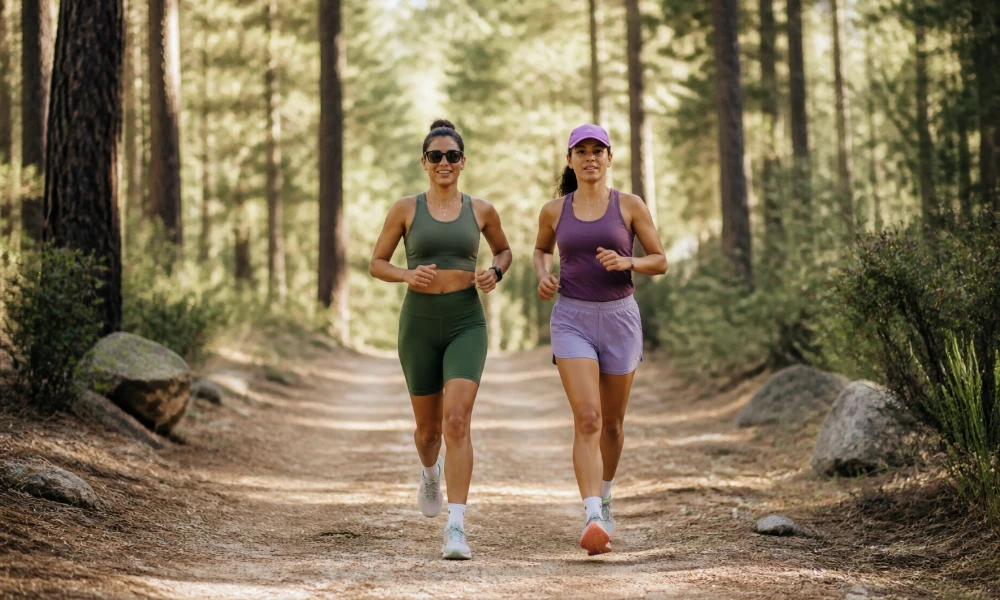
That shift is less about buying more and more about buying with intent. A kit that earns its hangers will outlast a cart full of impulse neutrals.
Vision first: why running sunglasses are not a fashion afterthought
Bright roads, reflective waterfronts, and midday heat make squinting a performance issue. Good women’s running sunglasses cut glare without bouncing, sit light on the face, and leave enough peripheral vision for traffic and trail forks. Polarized lenses help on sunny days when asphalt and windshields throw light back at you. A no-slip fit matters more than a logo on the arm.
If you are rebuilding a run kit, start with eyewear built for movement. A curated set of polarized sunglasses for women runners is an easier decision than scrolling endless “sporty” frames that slide down your nose at mile three.
Look for:
- Polarized or high-quality UV400 lenses for daytime glare
- Featherlight frames that stay put when you sweat
- A shape that works with a cap or visor
- Enough coverage for bright open roads without tunnel vision
- Nose pads and temples that still feel fine after an hour
You do not need a drawer of pairs. One reliable pair you actually wear will do more for consistency than three that live in a car console. Keep a soft case in your run belt or tote so the lenses do not get tossed under keys and earbuds.
Outdoor runners often underestimate how much eye strain slows them down. When you stop fighting the sun, pace and posture both feel easier. That is not a luxury upgrade. It is basic equipment for daytime training.
Support that still looks like you: the push-up sports bra problem
A lot of athletic bras solve bounce by compressing everything into a flat shape. That is fine for some workouts and frustrating for others, especially strength days, studio classes, and any session where you want support and a silhouette. Removable molded cups, a stable underband, and straps that do not dig in are the details that separate a bra you tolerate from one you reach for.
For training that sits in the low-to-medium impact range, supportive push-up sports bras give lift without underwire and without giving up sweat-wicking fabric. Pair that with a higher-support option in your drawer for longer runs or jump-heavy days, and you stop forcing one bra to do every job.
Practical fit checks:
- Band stays put when you raise your arms
- Cups do not gap or spill during rows and presses
- Straps adjustable enough for different tops
- Fabric that recovers after wash day, not just day one
- A neckline that works under open jackets and cropped layers
If a bra only feels right for photos, it is not training gear yet. Keep the styles that survive a full workout and a grocery stop after.
Matching sets: less decision fatigue, more training days
Matching workout sets are not only an Instagram habit. A coordinated top and bottom removes one friction point on busy mornings. When the pieces share fabric and color, you spend less time negotiating your closet and more time training.
Well-cut women’s matching workout sets also make it easier to pack for travel: one set for the hotel gym, one for a short run, done. Choose fabric that squats and swings without turning sheer, and a waistband that stays put when you hinge.
A simple women’s kit that covers most weeks:
- Polarized running sunglasses for outdoor miles
- A supportive push-up sports bra for studio and lift days
- One matching set you like enough to wear without overthinking
- A higher-support bra for longer or harder efforts
- Shorts or leggings you already trust for long sessions
How to shop without wasting the budget
Ignore vanity metrics. Try this filter instead:
- Will I wear this on a hard day, not only a photo day?
- Does it solve a real annoyance (bounce, glare, sliding waistband)?
- Can it mix with what I already own?
- Will I still choose it after two weeks of real use?
That is how a small wardrobe starts compounding. Sunglasses protect the outdoor habit. The right bra protects comfort and confidence in the gym. Matching sets protect follow-through when motivation is average.
Track what you actually reach for after two weeks. If the sunglasses stay home, the fit is wrong. If the bra only comes out for photos, the support is wrong. If the matching set never leaves the drawer, the fabric or cut is wrong. Swap that one piece; do not rebuild the whole kit.
Seasonal tip: in summer, prioritize light frames and breathable bras. In colder months, keep the same eyewear for bright midday runs and layer tops over the bras and sets you already trust. Continuity beats constant replacement.
Outdoor glare, indoor support, and outfit friction are three different problems. Solve them with three deliberate pieces instead of one oversized shopping haul.
The bottom line
Women’s training gear works best as a system. Clear vision keeps outdoor runs pleasant. Supportive shape-focused bras keep strength and studio work comfortable. Matching sets reduce friction. Build those three layers first, then add specialty pieces only when a real gap shows up in your week.
You do not need more stuff. You need fewer, better pieces that survive sweat, wash cycles, and ordinary busy days. Start with polarized sunglasses for women runners, add supportive push-up sports bras for the sessions that need shape and hold, and keep women’s matching workout sets ready for the mornings when decisions are the enemy. The habit gets easier when the kit stops arguing with you. Consistency matters more than novelty in a real training week.
- About the Author
- Latest Posts

Our Editorial Team are writers and experts in their field. Their views and opinions may not always be the views of Wellbeing Magazine. If you are under the direction of medical supervision please speak to your doctor or therapist before following the advice and recommendations in these articles.