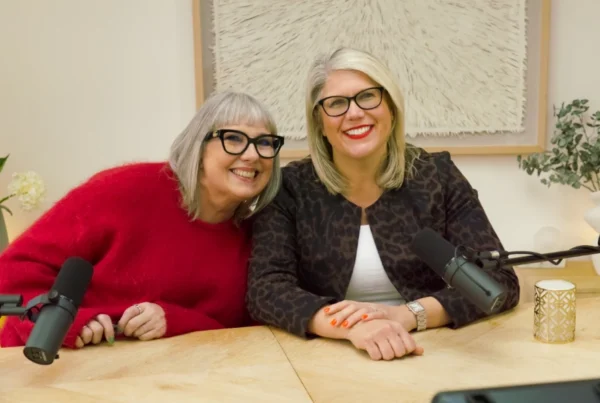
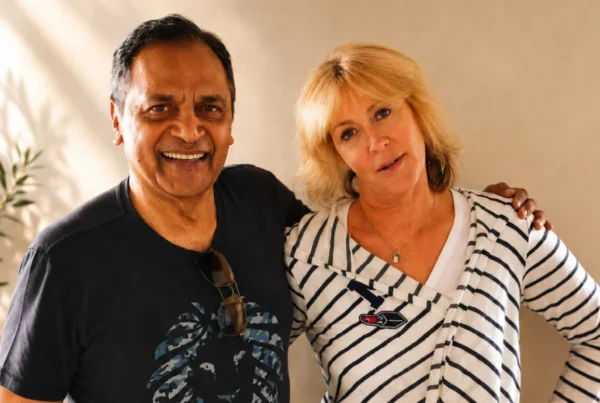
Gillian Shirreffs, a Scottish writer whose experiences with chronic illness and breast cancer have profoundly shaped her writing, spoke candidly about her journey with multiple sclerosis (MS) and her more recent battle with cancer. In this interview, she shares how these health challenges have influenced her writing, her approach to life, and her ability to find humour and hope even in the most difficult of circumstances.
Shirreffs begins by explaining her unique approach to living with illness. “I’ve lived with illness for a long time,” she says, “but I don’t live with it in a typical way. It’s just part of my life now.” Diagnosed with MS in her 30s, she faced a dramatic shift in her body’s functionality. “At 36, about to be 37, I lost the feeling from my toes to my chest over the course of a weekend,” she recalls. It was a scary experience that landed her in the hospital, but as she says, “I just get on with it. I’ve never been one to dwell on the negative. I’ve always been about normalising it.”
Shirreffs’ first encounter with MS came at the age of 21 when she experienced optic neuritis, a condition where you lose vision in one eye, often a precursor to MS. At the time, she thought it was just a result of a badminton injury. It wasn’t until years later, after experiencing a more significant episode, that her diagnosis was backdated to her early 20s.
Her approach to illness has been shaped by her own desire to not let it define her. “People didn’t know how to be around me,” she says, referring to how others reacted to her MS. “When I couldn’t feel the floor beneath my feet, when my sense of proprioception was altered, it felt isolating.” Proprioception is the body’s ability to sense its position in space, something that Shirreffs struggled with as she relearned how to navigate the world.
Writing became an essential outlet for Shirreffs during her prolonged bedrest. “I started off writing terrible poems,” she laughs, “but I just had to express what I was feeling, because there weren’t words for it.” She moved on to writing short stories, often exploring what life would be like for characters with neurological illnesses. “I would think of a scenario and give a character a neurological condition to see how it affected their life and those around them,” she says. Writing helped her cope with her physical pain, providing an escape where she could lose herself in the creativity of storytelling.
Despite her MS, Shirreffs was determined to pursue a fulfilling career. She worked in HR for many years, striving to improve the workplace environment for others. However, her true passion for writing eventually led her to teach English and pursue a career in creative writing. “I loved teaching, especially teenagers, but the constant exposure to germs made my health more challenging,” she explains. “So, I decided to step back from teaching and focus more on writing.”
Her decision to study creative writing ultimately led her to pursue a Doctorate in Fine Arts. Her thesis explored the relationship between objects and illness, a theme that runs through much of her work. “I wanted to understand what it felt like to be a medical object rather than a subject. When you’re ill, you become the object of people’s treatment, their analysis. And that experience can feel very dehumanizing,” she explains.
This exploration of illness, both physical and emotional, continued in her novel Elephant. “Elephant is a book that found me,” she says. “It’s a reflection of the chaos, loneliness, and absurdity that comes with a diagnosis that changes your life.” Written during her treatment for breast cancer, Elephant is a modern, darkly humourous look at life when everything tilts sideways.
For Shirreffs, the process of writing Elephant was cathartic. “I was in the middle of my own cancer treatment and couldn’t focus on writing the novel I had been working on for years, I kept rewriting it, but I couldn’t get it right.” That’s when she realised that she needed to write the story that was closest to her heart – her own.
Reflecting on the challenges she faced during her treatment, she emphasises that it’s not just the physical toll of cancer that’s difficult, but the emotional one as well. “I was going through chemotherapy, multiple surgeries, and radiotherapy, but it was the mental strain that was harder to deal with. There’s a lot of research that suggests people with cancer struggle most with their mental health after treatment, not during,” she says.
The experience of being ill, coupled with the stress of her treatment, brought a sense of isolation that made writing all the more vital. “There’s no language for the specific pain that comes with MS,” she explains. “People understand what a headache is, but they don’t know what it’s like to have neuropathic pain, to feel shards of glass in your hand or acid on your skin. It’s isolating when you don’t have the words to share that pain.”
Despite the struggles, Shirreffs’ resilience and humour shine through. “I’ve learned that it’s okay to not be okay, but it’s also important to move forward,” she says, reflecting on how her experiences have influenced her approach to writing and life. “I’m still here, still writing, still fighting. And that’s what Elephant is all about.”
As Shirreffs continued her treatment for breast cancer, she found herself looking back on her personal communications—messages, WhatsApp chats, and even tweets—to understand how she had navigated the overwhelming experience of being diagnosed and going through treatment. “I went back through all my messages, trying to piece together how I had told people,” she says. “It was absolutely overwhelming. The messages, the emails, the WhatsApps—I didn’t realise how much I had communicated until I started going through it.”
In these messages, she found the raw honesty and vulnerability that would later form the backbone of Elephant. Through her pain, isolation, and moments of uncertainty, Shirreffs wrote to her loved ones, sharing her reality in small, often fragmented pieces. This was not a straightforward memoir, but a mosaic of her journey told through digital correspondence.
The structure of Elephant itself reflects this modern, fragmented experience. “I wanted to capture the reality of the chaos and the messiness of living with a life-altering illness,” Shirreffs explains. The book incorporates text messages, tweets, and emails—forms of communication that felt natural to her during this time. “There’s something about writing in these formats that helped me process everything,” she adds. “It allowed me to stay connected to the world outside, even when I was so isolated in my own experience.”
A theme that emerges throughout the book is solidarity and the quiet but profound ways in which people connect during times of crisis. “I remember feeling that loneliness in the midst of everything. But there were also these small moments of kindness—like when someone would just reach out, even if they didn’t know exactly what to say. That little bit of kindness would make a huge difference on a difficult day,” says Shirreffs. This sense of solidarity, she hopes, is something readers will take from Elephant—the recognition that, even in the darkest times, we are not alone.
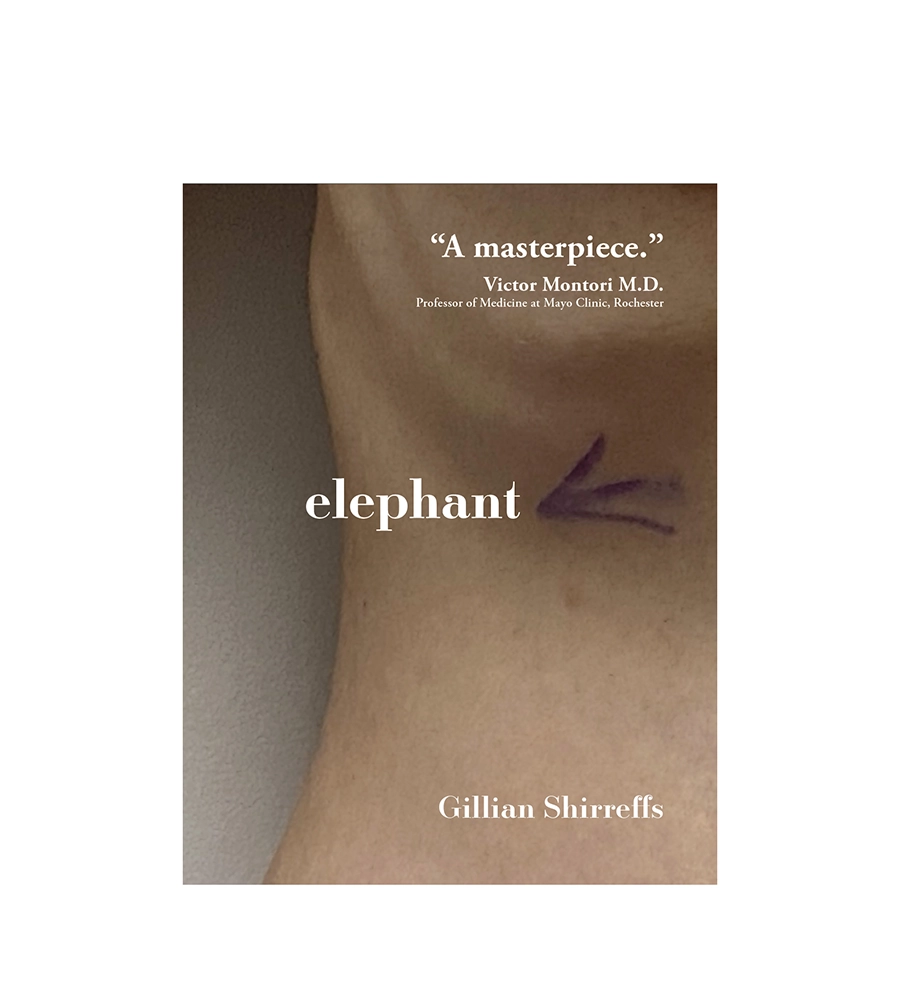
Her time writing Elephant also served as a way to make sense of some of the more difficult moments of her illness, such as navigating her feelings of mortality. “There’s this piece in the book called Evergreen,” she shares, “which is about a conversation between two people—one struggling with the reality of their own mortality and the other refusing to accept it. It’s something I was trying to explore in my own life as I came to terms with what I was going through.” Writing allowed Shirreffs to externalise those difficult moments, to make sense of them without being consumed by them.
She also explores the subtle but profound impact of the way others reacted to her illness. “I think the book also shows how people react to illness. You know, when you’re in the midst of cancer treatment, people cross the street to avoid you because they don’t know what to say. But those small acts of kindness, even just a simple acknowledgment, can mean so much,” she explains. Elephant subtly critiques these reactions, offering insight into how isolating it can feel when others are uncertain how to connect with someone facing mortality.
The journey that led Shirreffs to Elephant wasn’t just about cancer; it was shaped by her experience of multiple sclerosis and her long history of writing. “Writing has always been a way for me to understand and navigate my own experience of illness,” she says. “I’ve spent years writing about what it means to live with a body that doesn’t behave as it should. But with Elephant, I was able to write through the lens of a different illness. It was a way to explore and make sense of it all.”
Through Elephant, Shirreffs not only processes her own experience but also opens up a conversation about how we deal with life-altering illness in a world where many are still uncertain how to approach the topic. The book is not just about cancer, but about what it means to face mortality with honesty, humour, and above all, with a sense of shared humanity.
As she reflects on the writing process, Shirreffs acknowledges the impact it had on her recovery. “The act of writing, of putting my thoughts out into the world, was a lifeline. It gave me purpose when I was physically at my weakest,” she says. “I hope Elephant provides that same sense of connection and solidarity for others—whether they’re going through cancer treatment, or simply trying to make sense of their own struggles. We’re all in this together.”
DISCOVER: sunshinescot.com
- About the Author
- Latest Posts

Rachel Branson is the Founder of Haywood Media and Editor-in-Chief of Wellbeing Magazine, where she has spent more than twenty years exploring the relationship between health, wellbeing and the environments in which we live. Her passion for housing began growing up in her family’s estate agency, where her grandfather, father and uncles worked as a Chartered Surveyor specialising in commercial, residential property and new homes. She later became Head of Communications for a social housing provider, working closely with communities and new developments. Bringing together experience across property, housing, communications and wellbeing, Rachel is developing a new body of work focused on how homes and neighbourhoods can be designed to support healthier, happier lives through every stage of life.