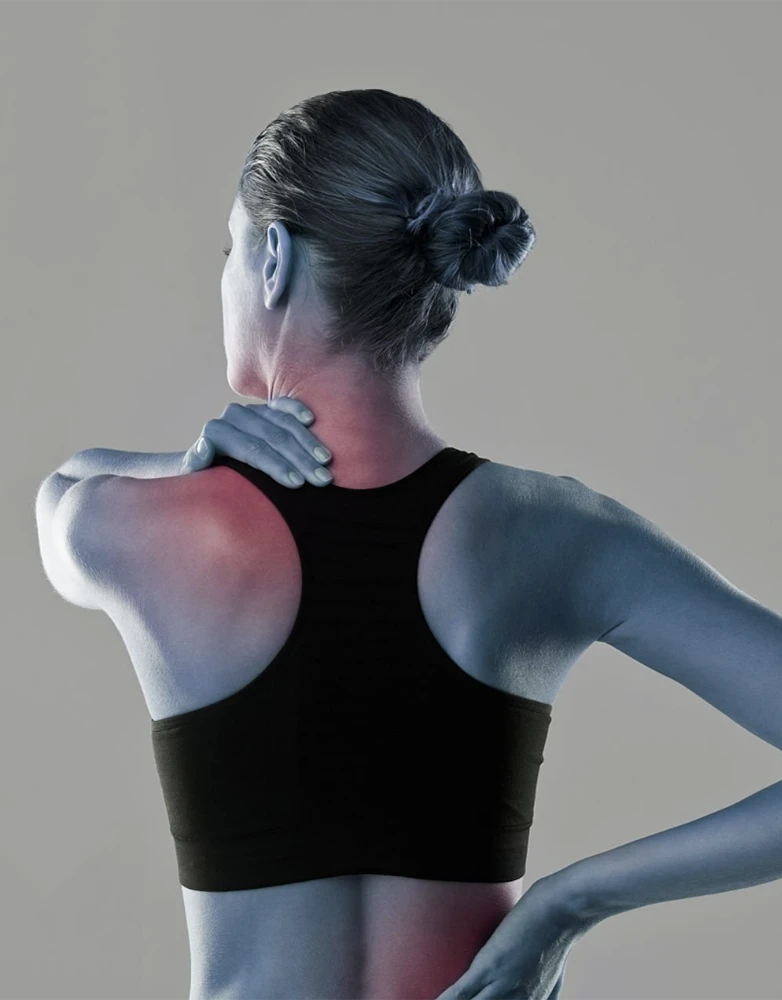
Trying to squeeze in some extra exercise before Christmas? Working too hard can cause joint and muscle pain if you’re not exercising properly, and it can cause serious pain. But although that pain might make you want to take it easy, it’s important to keep moving, or stiffness can set in and delay recovery, so try these exercises to prevent pain.
LEGS
It’s normal for your legs to feel a little tight after exercises like running, cycling, squats, and lunges. Gentle stretching is key, and it’s important to stretch each muscle correctly.
For sore thighs, try a standing quad stretch by bringing your heel slowly towards your glutes. If you’ve got pain in your hips from doing things like deadlifts and squats, try a kneeling hip flexor stretch to relieve the tension; this can help not only hips, but thighs and lower back, too.
BACK
Lower back pain is very common; more than 80% of people experience back pain at some point in their lives, particularly in the lower back. It can often occur from bad posture, but it can also be caused by lifting heavy objects, such as weights in the gym.
Try the ‘cat camel’ exercise. Start on all fours, and slowly move into a ‘cat’ position, with your chin tucked towards your chest and your back curved towards the ceiling. Move your chest and stomach towards the floor, lifting your head, and arching your back. Slowly move between the two positions, around 10 times, or as many as it takes to ease the pain.
NECK & SHOULDERS
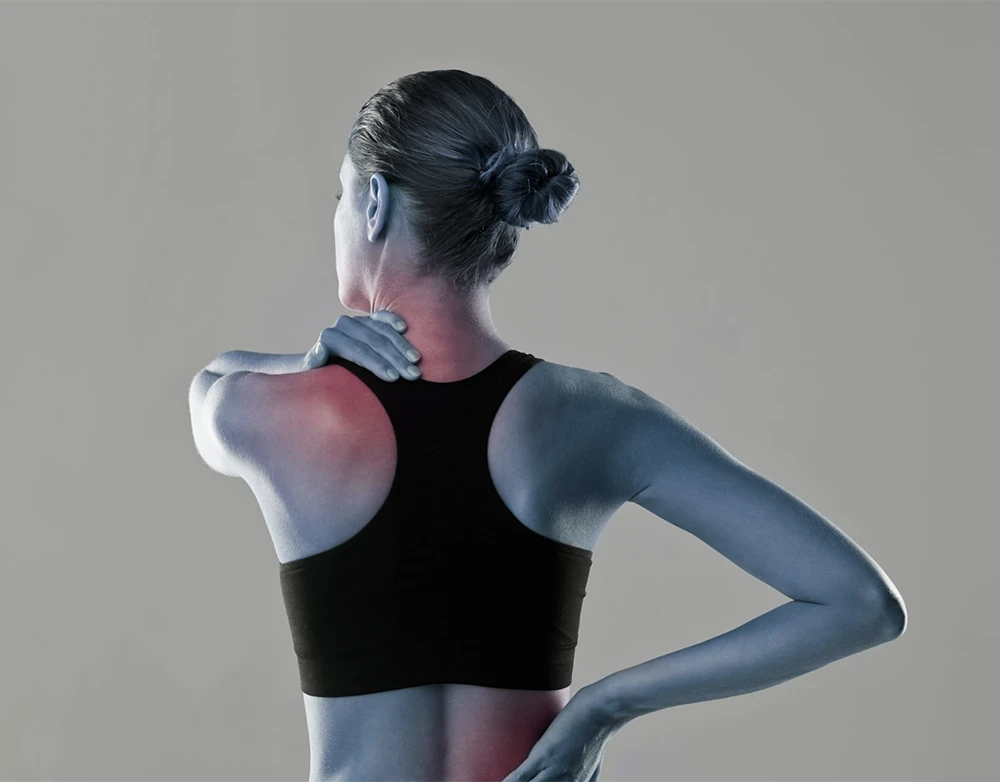
The smallest movements can cause neck and shoulder pain, from aching shoulder muscles to pinched nerves. Much like back pain, it can be caused by anything from lifting heavy weights, to incorrect yoga or Pilates stretches.
For neck pain, try some gentle movements like slowly tucking your chin towards your chest and back up again, then slowly turning your head from side to side. Repeat 5 – 10 times, holding each position for a few seconds.
For shoulders, try a table-slide. Place your forearm on a towel on a smooth surface, and slowly move your body forward, allowing your arm to slide on the towel; this allows your shoulder to gradually move and be guided into a stretch, while being supported and controlled.
BONUS TIPS
- Pain can often increase your breathing rate, but slow down; deep breaths make you feel more relaxed, reducing the tension that causes you to clench your muscles and increase the pain, rather than quick breaths that can make you feel dizzy or anxious.
- Painkillers like ibuprofen and paracetamol can help with pain and swelling, but you can also try other options from the pharmacy without a prescription, such as Naprosyn Pain Relief, which contains an anti-inflammatory called naproxen, to provide long-lasting pain relief for up to 12 hours.
- Hydration is key to preventing muscle pain. Water reduces inflammation, and supports nutrients and glucose reaching your muscles, which helps them to repair after being pushed too hard.
- Take it slow. No matter which muscle you’re stretching, it’s essential to move slowly. Moving too quickly can have the opposite effect and cause more tension and pain, not relaxation.
- Heat is best for soothing aching muscles, as it helps to boost blood flow and relax muscle fibres. However, for inflammation, swelling, or sharp pain, use ice.
- About the Author
- Latest Posts

Our Editorial Team are writers and experts in their field. Their views and opinions may not always be the views of Wellbeing Magazine. If you are under the direction of medical supervision please speak to your doctor or therapist before following the advice and recommendations in these articles.