Best Insurance Providers for Florida Contractors and Workplace Protection
For Florida contractors, protecting a business starts with protecting the people who keep it running.
For Florida contractors, protecting a business starts with protecting the people who keep it running. Construction workers face physically demanding conditions every day, from working at heights and operating heavy equipment to dealing with extreme heat, storms, electrical hazards, and other job-site risks. A strong workplace safety strategy is essential not only for preventing injuries, but also for supporting workers' long-term health and wellbeing.
That is where the right insurance coverage becomes an important part of workplace protection. Workers' compensation can help employees access support after a job-related injury, while general liability, commercial auto, builder's risk, and other policies help protect the business from the financial consequences of accidents and property damage.
Florida contractors face a particularly challenging insurance environment. Hurricane exposure can increase premiums, insurers may reassess their willingness to cover certain high-risk trades, and Florida Statute 440 makes workers' compensation a critical requirement for contractors with employees. Choosing the right insurance provider therefore isn't simply about finding the cheapest policy. It's about finding coverage that helps protect workers, keeps projects moving, and gives the business financial stability when something goes wrong.
After reviewing publicly available information across contractor-focused directories, official company websites, review platforms, and verified case studies, this guide highlights five insurance providers worth considering for Florida contractors.
The Shortlist
- Affordable Contractors Insurance - Best for contractor and construction business insurance
- Genrose Insurance - Best for small business and contractor insurance
- Liberty Mutual - Best for commercial and specialty insurance for contractors
- Nationwide - Best for large-scale business and contractor insurance
- Thimble - Best for on-demand contractor and small business insurance
Why Worker Wellbeing Should Come First
Construction is one of the industries where employee health and safety can have an immediate impact on the entire business. A workplace injury can affect an employee's ability to work, create unexpected medical and compensation costs, and potentially delay a project.
For contractors, workplace protection should therefore go beyond simply meeting legal requirements. Employers should consider whether workers have appropriate safety equipment, training, safe working conditions, and access to support when an accident occurs.
Insurance plays an important role in that broader protection strategy. Workers' compensation coverage can help provide financial support following covered workplace injuries, while other types of business insurance protect against risks that could indirectly affect employees and their ability to continue working safely.
In Florida, these considerations become even more important because contractors operate in an environment exposed to hurricanes, severe storms, extreme heat, and other hazards. Florida Statute 440 also makes workers' compensation a key compliance consideration for businesses with employees.
The right insurance provider should therefore understand both sides of the equation: protecting the workforce and protecting the company that employs them.
Why Picking the Right Insurance Provider Matters
Florida's construction market can be unforgiving when coverage falls short. Hurricane and storm exposure can push premiums higher, while insurers regularly reassess their appetite for Florida risks, particularly in roofing and exterior trades.
At the same time, contractors need to ensure that their coverage supports workplace safety and regulatory obligations rather than creating additional vulnerabilities.
Choosing a provider with genuine contractor-specific knowledge can mean coverage that better reflects how a business actually operates. It can also mean faster certificates of insurance, appropriate liability limits, and a claims process that doesn't unnecessarily disrupt workers or project schedules.
Financial strength matters as well. When a serious workplace accident, storm, or property loss occurs, contractors need an insurer capable of meeting its obligations.
Compare the Top 5 Insurance Providers For Florida Contractors
Note: All data in this table is sourced from review platforms and the official websites of the listed companies.
| Company Name | Years Operating | Headquartered In |
| Affordable Contractors Insurance | Since 2011 | United States |
| Genrose Insurance | Since 2001 | Scottsdale, Arizona |
| Liberty Mutual | Since 1912 | Boston, Massachusetts |
| Nationwide | Since 1925 | Columbus, Ohio |
| Thimble | Since 2015 | New York City |
- Affordable Contractors Insurance - Best for Contractor and Construction Business Insurance
What Is Affordable Contractors Insurance's Main Business?
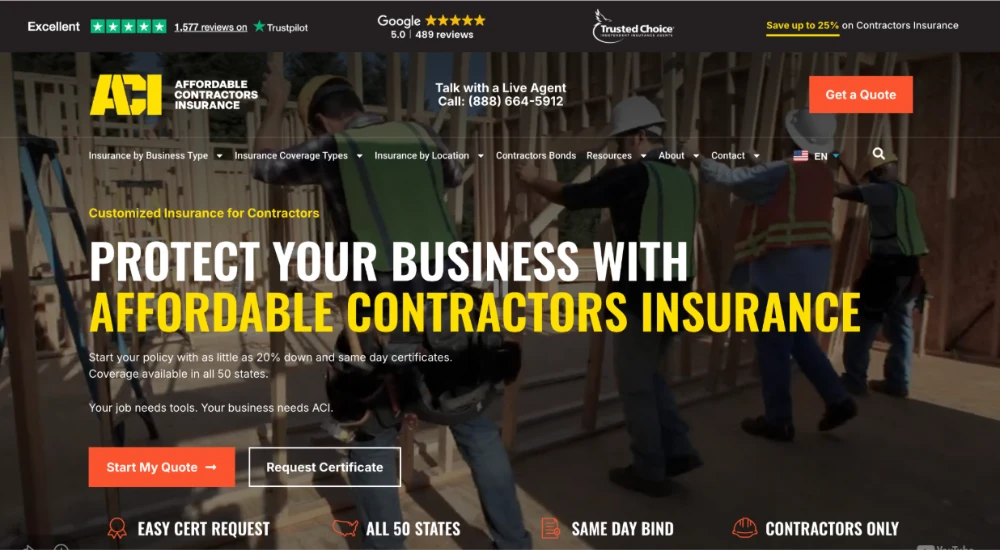
Affordable Contractors Insurance is a U.S.-based brokerage built entirely around contractors and construction professionals. They cover general liability, workers' compensation, commercial auto, builder's risk, tools and equipment, and umbrella liability, all packaged with contractors in mind. What sets them apart from generalist brokers is the speed element: same-day policy binding and fast certificate of insurance issuance that keeps jobs moving without compliance delays.
They serve small to mid-sized contractors across the country, with a clear focus on trade professionals operating in demanding markets like Florida.
Why Does Affordable Contractors Insurance Belong on This List for Insurance Providers of Florida Contractors?
Florida contractors constantly face tight project timelines where a delayed certificate of insurance can halt work before it starts, and Affordable Contractors Insurance addresses that pressure directly with same-day binding and quick COI delivery. Their exclusive focus on the contractor niche, covering roofers, electricians, plumbers, HVAC pros, and general contractors, means coverage recommendations actually match real-world trade risk rather than generic business categories.
User Reviews, Summarised:
Contractors consistently mention how fast and painless the process feels compared to dealing with general business insurers. The theme of accessibility comes up often, especially for smaller operations that struggle to get straight answers elsewhere. That kind of responsiveness for a niche this specific is rare and hard to match.
- Genrose Insurance - Best for Small Business and Contractor Insurance
What Is Genrose Insurance's Main Business?
Founded in 2001 and based in Scottsdale, Arizona, Genrose Insurance operates as an independent brokerage licensed in 13 states. They work across health, auto, home, life, liability, and business insurance products, brokering through dozens of top carriers. Their model puts the client's interests ahead of any single carrier's agenda, which matters a lot when a small contractor needs someone in their corner, shopping for the best fit.
They work particularly well with small businesses that need customized coverage built around a specific budget and set of operational needs.
Why Does Genrose Insurance Belong on This List of Insurance Providers For Florida Contractors?
Small contractors often get treated as low-priority accounts by large carriers, but Genrose's independent broker model exists to change that approach, putting client representation first. Their BBB A+ accreditation since April 2020 backs up the consistency claims, and that kind of verified track record matters when you're trusting someone to protect your license and livelihood.
User Reviews, Summarised:
Public recognition for Genrose leans heavily on their BBB standing and community involvement, including a $10,000 donation to Make-A-Wish Arizona. Detailed client reviews in the contractor space aren't widely documented publicly. Their reputation is built more on trusted track records than on a high volume of individual contractor testimonials.
- Liberty Mutual - Best for Commercial and Specialty Insurance for Contractors
What Is Liberty Mutual's Main Business?
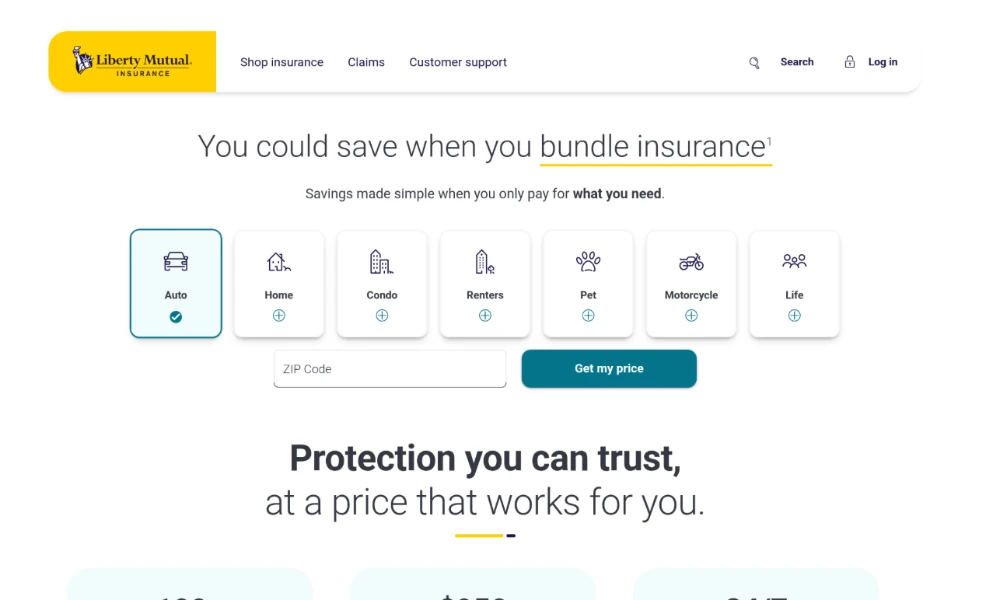
Liberty Mutual has operated since 1912 and now ranks as the sixth-largest property and casualty insurer in the world, with over 45,000 employees across 900-plus locations. They run two main divisions: US Retail Markets for personal lines and Global Risk Solutions for commercial and specialty coverage. That second division is where contractors find the most relevant products, including general liability, commercial multiple peril, commercial auto, and workers' compensation.
With a footprint this large, Liberty Mutual brings serious financial stability to every policy they write (think enterprise-level backing at nearly every premium tier).
Why Does Liberty Mutual Belong on This List for Insurance Providers For Florida Contractors?
Larger construction operations, or those working on contracts that demand higher coverage limits, benefit from a carrier with Liberty Mutual's financial depth and product breadth. Their Global Risk Solutions division handles the kind of specialty commercial lines that standard business insurers simply don't carry, and that becomes relevant fast when Florida project requirements escalate.
User Reviews, Summarised:
Liberty Mutual earns strong marks for digital experience, with mobile app ratings of 4.6 on Google Play and 4.8 on the Apple Store. Industry recognition for workplace culture is consistent, too, with the company appearing on multiple Best Places to Work lists. Contractor-specific feedback centers more on product availability and claims process rather than personalized service at the small business level.
- Nationwide - Best for Large-Scale Business and Contractor Insurance
What Is Nationwide's Main Business?
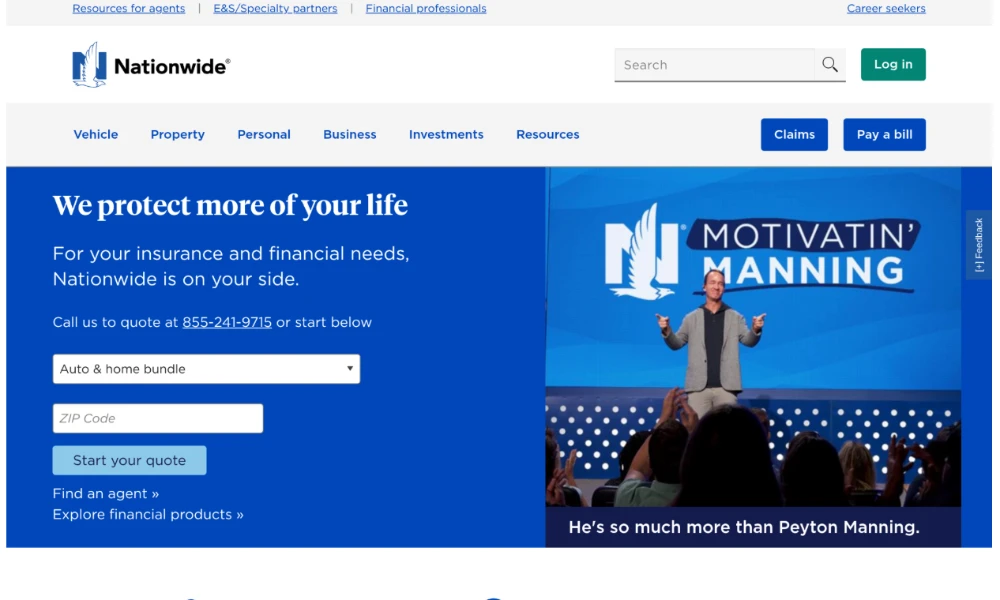
Nationwide has been in operation since 1925, which puts them among the most established names in U.S. insurance. They cover auto, business, homeowners, farm, and life insurance alongside financial products, including retirement plans and annuities. Their position at No. 72 on the 2025 Fortune 500 and an A+ Standard and Poor's rating signal the kind of financial strength that AM Best-conscious contractors care about.
For business insurance specifically, Nationwide offers excess, surplus, and specialty lines that go well beyond standard commercial packages, making them worth a look for contractors with complex or higher-risk operations.
Why Does Nationwide Belong on This List for Insurance Providers For Florida Contractors?
Contractors managing larger project portfolios, or working in specialty trades that require elevated coverage limits, need a carrier with demonstrated staying power. Nationwide's century of operation delivers exactly that kind of reliability. Their specialty and surplus lines also fill gaps that standard commercial policies leave open, which becomes especially useful in Florida where certain high-risk trade exposures can be difficult to cover elsewhere.
User Reviews, Summarised:
Nationwide draws consistent recognition for customer service, with their retirement division earning the DALBAR Customer Experience Excellence Award for six straight years through 2025. Their technology team also pulled a second consecutive CIO 100 Award for 2026. The contractor-specific satisfaction data is less publicized than their broader business and financial services reviews, but the operational stability indicators are genuinely strong.
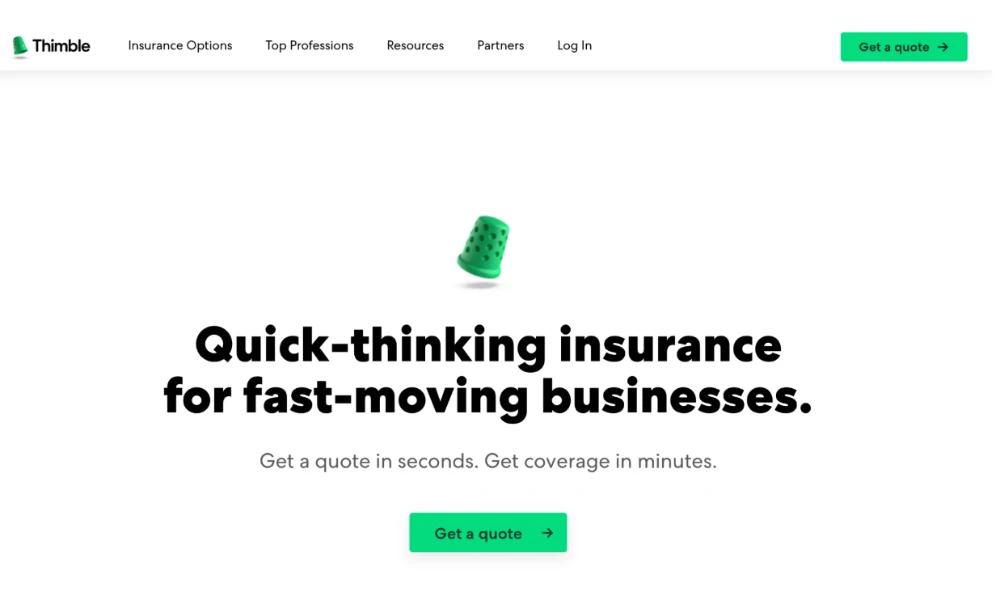
- Thimble - Best for On-Demand Contractor and Small Business Insurance
What Is Thimble's Main Business?
Thimble launched in 2015 out of New York City and built something genuinely different in the contractor insurance space: on-demand coverage by the hour, month, or year. They cover over 300 professions through eight insurance products, including general liability, professional liability, workers' compensation, and cyber insurance. Policies are underwritten by Fortune 500-rated carriers and can be bound in minutes through their app, website, or phone.
Since May 2018, they've delivered over 170,000 policies to small businesses across the U.S. (not cheap for some trades, but the flexibility alone earns its keep for project-based work).
Why Does Thimble Belong on This List for Insurance Providers For Florida Contractors?
Gig-based and project-by-project contractors often can't justify year-round premiums for occasional jobs, and Thimble's hourly general liability model, starting at $9 to $15, directly solves that cost problem. Backed by Arch Capital Group and rated carriers, they combine startup-level speed with the financial backing that serious contractors need to satisfy job site certificate requirements.
User Reviews, Summarised:
Thimble carries 621-plus reviews on Trustpilot, with 86% landing at five stars, which is a legitimately strong signal for a company this size. The "Best for the Smallest Businesses" recognition from Money.com in 2020 reflects what contractors actually say: it's fast, it's accessible, and it doesn't require a broker call to get covered. The flexibility factor is what keeps customers coming back.
Vetting Process and Selection Criteria
Data Sources and Collection Methods
Building the longlist for this ranking started with a broad sweep of publicly available sources. Contractor-focused insurance directories, professional trade association references, state licensing authority records, and general insurance review platforms all contributed to the initial pool of candidates.
Company profiles were pulled directly from official websites, cross-referenced with independent review aggregators, and checked against business directories for operational validity. The goal at this stage was breadth: casting a wide net before any quality filters were applied.
Only companies with documented activity in the contractor insurance space were carried forward, meaning general business insurers with no visible contractor-facing products or trade-specific knowledge were removed from consideration early.
Vetting for Florida Requirements
Once the initial pool was narrowed, each candidate went through a baseline review. This involved checking for verifiable company history, active licensing or brokerage credentials where publicly listed, and consistent review patterns across multiple platforms rather than isolated testimonials.
Companies with thin or unverifiable review histories were removed. Patterns in negative feedback were also assessed: whether complaints reflected widespread service problems or isolated incidents, and whether responses from the company suggested accountability or avoidance.
Any provider lacking enough public documentation to form a reliable picture of their contractor insurance track record was excluded from the shortlist at this stage.
Ensuring Accuracy of the Recommendations
Claims made on official company websites were checked against what clients and third-party reviewers actually reported. Where a company described fast certificate issuance or specialist trade coverage, review platforms were checked for real-world confirmation of those claims.
For larger carriers, product pages were reviewed to confirm that contractor-relevant lines (general liability, workers' compensation, commercial auto, builder's risk) were genuinely offered as distinct products rather than bundled under generic small business policies.
Discrepancies between marketing language and documented client experience were flagged and factored into final ranking decisions.
Industry Reputation and Recognition
Beyond client reviews, each company's broader standing in the insurance industry was assessed. This included award recognition from credible industry bodies, mentions in insurance and construction trade publications, and ratings from financial strength evaluators like AM Best and Standard and Poor's.
Companies that appeared consistently across multiple credible recognition contexts received higher weight in the evaluation, since single-source recognition can be purchased or solicited while cross-source reputation is harder to manufacture.
Financial strength ratings received particular attention, given Florida's storm exposure. A carrier with a weak financial profile poses a real risk to contractors who might need to file a major claim after a hurricane-related job site loss.
Insurance Providers For Florida Contractors-Specific Track Record Check
The final check focused on Florida contractor relevance. Each company was reviewed for dedicated contractor insurance service pages, Florida-specific product availability, and verified reviews from Florida-based trades professionals where accessible.
Providers were assessed on their ability to address Florida-specific challenges: coverage appetite for roofing and high-risk trades, workers' compensation options aligned with Florida Statute 440 requirements, and premium structures that acknowledge the elevated risk environment driven by Florida's weather exposure.
Companies with documented experience across multiple Florida-relevant trade categories and visible infrastructure for fast certificate delivery scored highest in this portion of the review.
What Matters When Selecting Insurance Providers For Florida Contractors
Choosing the right provider isn't just about finding the lowest premium. Florida's construction environment demands coverage that holds up under real pressure, from storm claims to workers' comp audits. Here's what to actually weigh before committing:
- Industry/Domain Experience: Look for providers who work with contractors, not just general small businesses. Trade-specific knowledge means fewer coverage gaps and faster answers when you need them.
- Features and Service: The full coverage stack matters: general liability, workers' compensation, commercial auto, builder's risk, and tools and equipment coverage should all be available under one roof.
- Pricing Structure: Premium cost per $1 million in general liability coverage varies across carriers. Flexible payment options and same-day binding can make a real difference for contractors managing cash flow across multiple active projects.
- Results Measurement: Claims settlement turnaround time is the metric that exposes how good a carrier really is. A provider with fast, documented resolution times protects your business without killing your schedule.
- Industry Knowledge and Compliance: Florida Statute Chapter 489 contractor licensing requirements and CFR Title 29 OSHA standards create a compliance layer that general insurers often miss. A provider with real Florida contractor knowledge closes those gaps before they become problems.
What You Should Know
Picking coverage in a state as complex as Florida isn't something to rush. The providers on this list cover the range from on-demand flexibility to enterprise-scale stability, and the right fit depends on your trade, your project size, and how fast you need coverage in hand. Financial strength, claims speed, and trade-specific knowledge are the three factors that consistently separate good contractor insurance from costly coverage that falls short when it matters most.
Filed underInjury & recovery, United States