Building a Strong Foundation for Children's Oral Health
Worried your child gets cavities despite daily brushing? Tooth decay is the most common chronic illness in children. This post will show simple steps for…
Worried your child gets cavities despite daily brushing? Tooth decay is the most common chronic illness in children. This post will show simple steps for cleaning, diet, and dental visits to protect their teeth.
Read on to learn easy habits.
Daily Oral Care Steps
Daily care is key to your child's oral health. Start with cleaning their gums and teeth early to build good habits.
Cleaning gums and first teeth
Start oral care early. Clean gums before the first tooth appears.
- Wipe gums after feedings with a clean, damp cloth to remove milk and bacteria and to support oral health.
- Use a soft infant toothbrush once teeth start to show to promote dental hygiene and gentle gum care.
- Apply a rice-grain-sized smear of fluoride toothpaste for babies and a pea-sized amount for older toddlers to aid cavity prevention and preventive dentistry.
- Avoid sharing utensils or cleaning pacifiers with your mouth to cut germ transfer and protect nutritional health and oral development.
- Act as a positive role model by showing tooth brushing and healthy habits to build lifelong oral care routines.
- Schedule a pediatric dentistry visit by the first birthday to begin preventive care, consider fluoride treatment, and learn more about dental care plans.
Next, learn brushing techniques for toddlers and kids.
Brushing techniques for toddlers and kids
Good brushing shapes children's smiles. Parents play a key role.
- Use a soft, child-size toothbrush for toddlers and kids. Hold the brush at a 45-degree angle to the gum line and move it in small circles to clean teeth and gums well.
- Angle the bristles toward the gum line for back teeth. Brush the outer, inner, and chewing surfaces for about two minutes each session to support preventive dentistry.
- Place a smear of fluoride toothpaste for children under three years old. Use a pea-sized amount for kids ages three to six to help with cavity prevention.
- Choose slow, gentle strokes for toddlers. Use firmer short strokes for older kids while keeping a calm tone to teach good oral hygiene.
- Supervise brushing until a child can tie shoelaces or about age eight. Help with hard-to-reach molars and teach proper tooth brushing technique every day.
- Limit brushing force to avoid gum damage. Teach kids to spit out excess toothpaste and not to rinse fully, so fluoride stays on the teeth and aids oral health.
- Replace toothbrushes every three months or after illness. Check for frayed bristles, and use a new brush to maintain effective dental hygiene.
- Make brushing fun with timers, songs, or charts. Offer praise and small rewards to build healthy habits and encourage long term oral care.
Importance of supervision during brushing
Parents should watch young children while they brush. Supervision helps keep proper toothbrushing form and prevents swallowing too much fluoride toothpaste. Dental care routines build preventive dentistry habits early.
Young kids often miss back teeth. Brushing guidance cuts cavities and supports oral health. Healthy eating habits play a big role, so we will cover them next.
Healthy Eating Habits for Oral Health
Healthy eating helps keep teeth strong. Choose snacks that are good for your child’s teeth and cut back on sugary treats.
Limiting sugary foods and drinks
Sugary foods and drinks can harm children's teeth. Sugar feeds the bacteria in their mouths. This leads to cavities. Limiting sugary treats is important for good oral health. Encourage children to eat fruits, vegetables, and whole grains instead of sweets. Choose snacks that are better for teeth.
Parents should also limit soda and juice intake. Water is a great choice to keep kids hydrated and healthy. It helps rinse away food particles too. Drinking water with fluoride strengthens enamel and fights decay. Creating healthy habits now will help children maintain strong teeth as they grow up.
Encouraging water consumption with fluoride
Fluoride helps keep teeth strong. It prevents cavities and supports oral health. Drinking water with fluoride is a straightforward way to boost children's dental care. Parents can encourage kids to drink more water throughout the day.
Providing fluoride-rich water makes hydration easy. It also replaces sugary drinks that harm teeth. Children should learn the significance of staying hydrated and drinking fluoridated water daily. These habits promote healthy practices for life, ensuring better dental health and overall well-being.
Choosing tooth-friendly snacks
Healthy snacks support children's oral health. Choosing the right foods can help protect their teeth.
- Fresh fruits, like apples and pears, are great options. They have natural sugars that are less harmful to teeth.
- Vegetables, such as carrots and celery, help clean teeth while chewing. They also provide nutrients essential for growing bodies.
- Cheese is a good snack choice too. It contains calcium that strengthens teeth and helps reduce cavity risk.
- Yogurt can be beneficial as well. It is low in sugar and contains good bacteria for overall health.
- Whole grain crackers provide fiber and can aid in cleaning teeth. They are crunchy and fun for kids to eat.
- Nuts offer healthy fats and protein; they are filling too. Make sure no one has nut allergies before serving them.
- Water with fluoride is the best drink option; it helps wash away food particles from the mouth consistently.
- Avoid sugary snacks like candies or cookies; they can cause cavities if eaten often.
- Limit sticky snacks that cling to teeth; they increase the chances of tooth decay over time.
- Always choose snacks that promote dental hygiene habits; this creates a foundation for long-term oral health.
Each snack option supports pediatric dentistry goals by promoting better oral care habits early on in children’s development.
Importance of Regular Dental Visits
Regular dental visits help keep children's smiles healthy. These checkups catch problems early and make sure teeth are growing right. Starting dental appointments young sets a good habit for life.
Kids learn that taking care of their teeth is vital. Want to know more about why these visits matter?
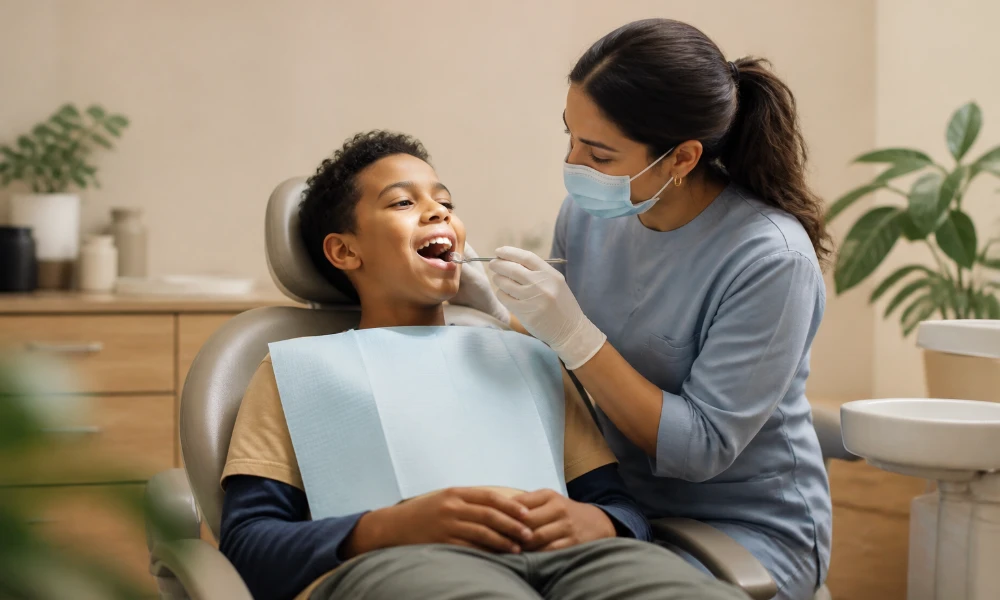
Scheduling the first dental visit
Scheduling the first dental visit is key to your child's oral health. It sets a positive tone for future dental care.
- Schedule the visit by age one or after the first tooth appears. This early appointment helps catch any issues quickly.
- Choose a pediatric dentist who specializes in children's dentistry. They understand how to make kids comfortable during visits.
- Discuss the appointment with your child beforehand. Explain what will happen in simple terms to ease any fears.
- Prepare a list of questions for the dentist. Ask about oral hygiene, habits, and fluoride treatments.
- Bring favorite toys or comfort items for your child. Having familiar objects can help soothe nervousness during the visit.
- Arrive early for the appointment to avoid stress. A calm environment helps everyone feel more relaxed.
- Encourage your child to participate during their check-up and ask questions too. This builds confidence in their oral care.
- Follow up with any recommendations from the dentist, such as preventive care or additional visits needed later on.
- Make dental visits part of your family’s routine, scheduling them every six months after the initial appointment is done.
- Celebrate successful dental visits with small rewards or fun activities afterward to create positive associations with dental care.
For comprehensive care, many parents turn to pediatric dentistry in Fullerton to ensure their children's dental needs are met.
Preventive treatments like sealants
Sealants help protect children's teeth from cavities. They are thin coatings placed on the chewing surfaces of back teeth. This is where food often gets stuck. The sealant creates a barrier that keeps sugar and bacteria away.
Many studies show that sealants can reduce cavities by up to 80%. Getting sealants early in life helps keep teeth healthy throughout childhood. The application process is quick and painless.
Dentists apply them during regular checkups, making it an easy way to boost oral health.
Building Lifelong Habits
Make oral care enjoyable for kids. Use fun songs or games to keep them engaged. Children learn by watching their parents, so show them good habits every day.
Good practices in early years lead to healthy smiles for life. Want more tips? Keep reading!
Making oral hygiene fun and engaging
Oral hygiene can be a fun part of daily life. Turn tooth brushing into a game. Use timers or songs to make it exciting. Kids will enjoy using colorful toothbrushes and toothpaste with fun flavors. Offer rewards for good habits, like stickers or extra playtime.
Parents can join in too! Brush teeth together as a family. Share stories about the importance of strong teeth during this time. Make dental visits feel special by talking about how they help keep smiles bright and healthy. This leads to better habits all around, including regular checkups at the dentist's office.
Parents as role models for oral care
Parents show their kids how to take care of their teeth. Children watch what their parents do. If parents brush daily, children will want to follow that example. Setting a routine helps kids learn good habits early. Parents can make oral hygiene fun by adding games or songs while brushing.
Having conversations about healthy eating also matters. Discussing the importance of choosing tooth-friendly snacks encourages better choices. Taking children to dental appointments shows them that visits are normal and important for health.
Good role models build confidence in children's abilities to care for themselves and develop strong oral health habits over time. Regular dental visits are key next steps in this journey toward good oral health.
Conclusion
Building a strong foundation for children's oral health is vital. Good habits start early and last a lifetime. Clean teeth and healthy foods play key roles. Regular dental visits help catch issues before they grow.
With fun routines and positive role models, kids can enjoy good oral care every day.
Filed underDental, Family & parenting