Can Tactile Desk Toys Support Short Mindful Breaks?
Mindfulness advice usually comes with a catch: it asks for more time than most people actually have during a workday. Sit for ten minutes, breathe for five, step away from your desk for a walk. All good advice, and almost none of it fits into the gaps most people actually get between meetings. This is where smaller, more physical tools have started to fill a real gap, and tactile desk toys are one of the simplest examples of that shift.
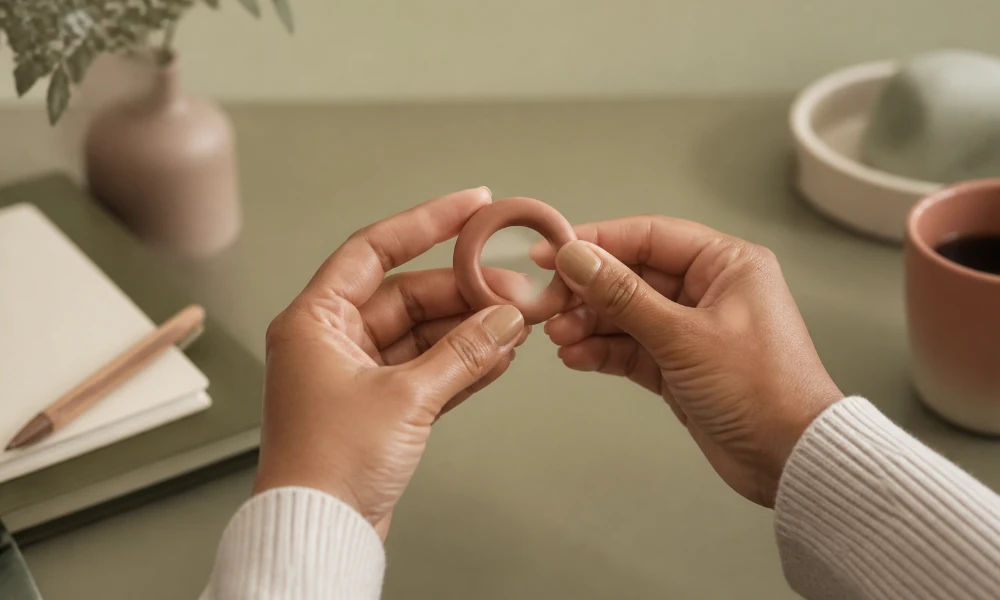
Mindfulness advice usually comes with a catch: it asks for more time than most people actually have during a workday. Sit for ten minutes, breathe for five, step away from your desk for a walk. All good advice, and almost none of it fits into the gaps most people actually get between meetings. This is where smaller, more physical tools have started to fill a real gap, and tactile desk toys are one of the simplest examples of that shift.
What a Tactile Break Actually Involves
The idea behind a tactile break is not complicated. Instead of trying to quiet the mind through pure concentration, you give your hands something repetitive and satisfying to do while your attention resets. This isn't a replacement for real rest, but it's a low-effort way to interrupt a stress spiral in the middle of a busy afternoon, and it doesn't require closing your laptop or leaving your chair.
Squeeze toys work well for this because they offer immediate, predictable feedback. There's no learning curve, no app to open, no instructions to follow. You pick one up, squeeze it, and it responds the same way every time. That consistency is actually part of what makes it calming. A lot of workday stress comes from unpredictability, so a small object that behaves exactly the same way every single time gives your nervous system something reliable to focus on for a moment. The full TABASQUISHY® squishy collection is a good example of how varied this category has become, ranging from small pocket-sized shapes to larger designs meant to sit on a desk between meetings.
Why Size Changes the Experience
Size matters more than people expect here. A tiny stress ball is easy to carry but doesn't offer much surface area to actually work with your hands. On the other end, larger designs give you more to squeeze, knead, and reshape, which for some people is a more satisfying reset than a quick pinch. This is part of why oversized squishy toys for mindful breaks have found a following among people who spend long stretches at a desk. The bigger surface area means more sustained contact, which can extend that brief moment of focus from a couple of seconds to something closer to a proper mini-break.
Setting Realistic Expectations
Wellness trends often oversell small tools as bigger fixes than they really are, so it helps to be clear about what a tactile object is actually doing. It is not solving the underlying source of stress, whether that's a heavy workload, a difficult manager, or a genuinely demanding season at work. What it offers instead is a brief, physical pause button, something to interrupt a spiraling thought or a tense moment before it builds further, rather than a cure for the thing causing the tension in the first place. Treating it as one small tool among several, alongside proper breaks, reasonable workloads, and actual rest, keeps expectations realistic.
There's a reasonable question about whether this actually does anything beyond feeling nice in the moment, and the honest answer is that it depends on what you're using it for. A squishy toy is not a substitute for therapy, medication, or any kind of clinical intervention for anxiety, and nobody serious in the wellness space would claim otherwise. What it can do is give you a small, physical anchor during a stressful stretch of the day, similar in spirit to fidget tools, stress balls, or worry stones that have been used informally for decades.
The Modern Workplace Has Less Built-In Movement
The workplace angle is worth exploring a bit further. Open offices and remote video calls have both, in different ways, reduced the amount of casual physical movement people get during a workday. You used to walk to a colleague's desk to ask a question. Now you send a message and keep typing. That reduction in incidental movement is part of why small physical objects at a desk have become more common, not as a replacement for exercise, but as a tiny counterbalance to hours of stillness.
Fidgeting Has Earned More Social Permission
There's also a social permission element that shouldn't be underestimated. A decade ago, playing with a toy at your desk during a meeting might have looked unprofessional. That perception has shifted considerably, partly because fidget tools have been reframed as focus aids rather than distractions, and partly because more employers understand that a person quietly squeezing something in their hand during a call is probably paying more attention, not less. Movement, even small movement, can support concentration rather than undermine it for a lot of people.
Building the Habit Without Overthinking It
None of this requires a dramatic lifestyle change. The appeal of a tactile break is precisely that it asks so little of you. You don't need to schedule it, you don't need privacy, and you don't need to explain it to anyone. It sits in a drawer or on a shelf until you need thirty seconds of something to do with your hands, and then it's there. Keeping one within easy reach, rather than tucked away somewhere you'd have to go looking for it, makes it far more likely to actually become part of a daily rhythm instead of a good intention that never quite sticks.
Pairing a Tactile Break with Breathing
For anyone who wants to get a bit more out of a tactile break without adding much effort, pairing the physical action with a few slow breaths tends to make the reset feel more complete. The squeeze gives your hands something to focus on, while the breathing gives your nervous system a more direct signal to slow down. Neither piece needs to be done perfectly. Even a rough approximation, a few slow breaths timed loosely to a few squeezes, is enough to notice a small shift in how tense your shoulders or jaw feel by the end of it.
This kind of pairing also works well as a transition ritual between distinctly different types of tasks, such as moving from a stressful call into focused writing work, or from a long stretch of meetings into an open block of time. Using the same short routine every time helps signal to your brain that one mode of work has ended and another is beginning, which can make the switch feel less abrupt than moving straight from one task to the next with no buffer at all.
Who Tends to Benefit Most from This Kind of Break
Not everyone responds to tactile stimulation the same way, and that's worth acknowledging honestly. People who already fidget naturally, tapping a pen, bouncing a knee, twirling hair, tend to find a dedicated tactile object particularly useful, since it gives that existing instinct somewhere more deliberate and less distracting to go. For people who don't naturally fidget, the benefit may be smaller, though many still report that having something to hold during a stressful call or a difficult conversation makes the moment feel slightly more manageable.
Final Thoughts
If mindfulness practice has felt inaccessible because it seems to demand time you don't have, a tactile object is one of the smallest, lowest-commitment ways to borrow a little bit of that benefit without rearranging your schedule. It won't fix a genuinely overwhelming week, but for the ordinary friction of a normal workday, a small squeeze and a breath in between tasks is a reasonable place to start, and it costs almost nothing to try.
Filed underStress & burnout, Meditation & mindfulness