
Creating a Self-Care Mood Board That Reflects How You Want to Feel
A self-care mood board is a collection of pictures, colours and words that represent how you’d like everyday life to feel.
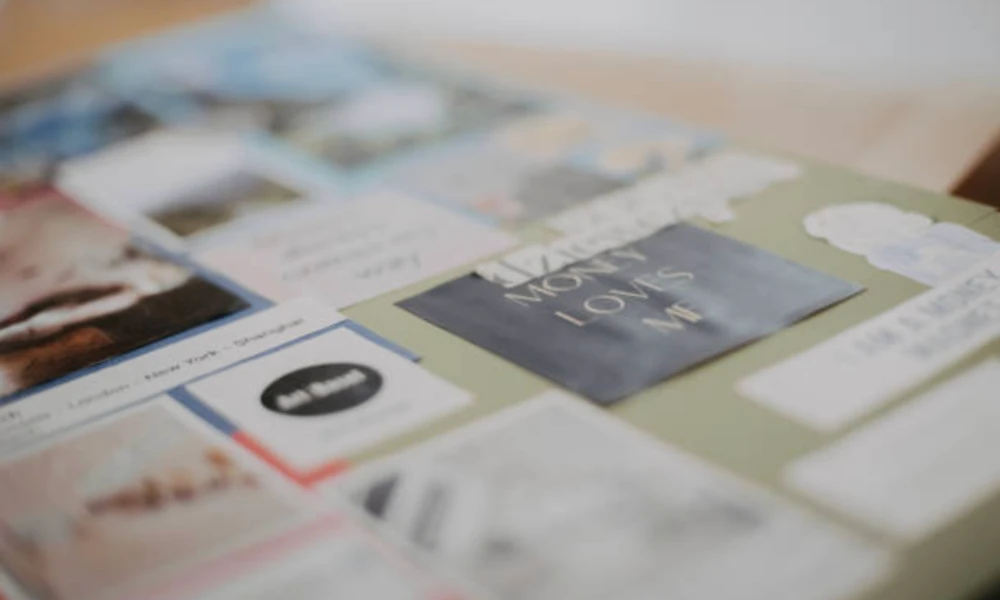
A self-care mood board is a collection of pictures, colours and words that represent how you’d like everyday life to feel. Think of a quiet breakfast, a good laugh with someone you trust or an evening with nothing booked.
The useful part is choosing what matters to you. A beautiful collage won’t tell you what you need unless you pause to ask. Here’s how to make a board that connects with your actual life, including the tired Tuesdays.
Start With a Feeling You Can Describe
Before collecting pictures, name what you want more of. “Better” is hard to work with; “less rushed after work” gives you somewhere to start.
Try finishing this sentence: “At the end of an ordinary day, I’d like to feel…”
Choose one or two words, such as rested, connected, playful or settled. Then ask what those feelings look like in practice.
For example, “rested” might mean reading in bed without checking messages. “Connected” could mean cooking with your sister. These details keep your board personal instead of turning it into someone else’s idea of a good life.
Choose Images That Match Your Ordinary Days
Collect a small starting set, perhaps six to ten pictures. Your own photos, magazine cuttings and simple drawings all work; nothing needs to match perfectly.
Look for images that suggest an experience you could enjoy. A photo of your local park may feel more useful than a luxury retreat you can’t afford.
Before keeping a picture, ask:
- Does this remind me of something I enjoy?
- Do I want the feeling, or just the attractive setting?
- Does looking at it leave me encouraged or dissatisfied?
If a flawless wellness photo makes you question what’s real, an ai image detector can offer a clue, but its result isn’t proof. NIST identifies ongoing challenges in detecting generated images, including reliability across newer techniques and edited pictures.
You don’t need to investigate every image. If one makes you feel inadequate, leave it out.
Pick a Format You’ll Actually Use
Paper and digital boards suit different habits. Choose based on where you’ll notice yours and whether making it feels enjoyable.
A notebook page works well if you want privacy or time away from a screen. A digital collage is easier to rearrange and can sit inside a journal app.
Keep the first version small. One page is enough, and blank space is fine.
For digital boards, resist spending the whole evening fixing tiny visual details. If you search for a way to remove AI watermark marks from a generated picture, check whether the provider permits that edit first. Using your own photo or a permitted watermark-free download may be simpler.
Give Each Image a Small Action
Pictures can suggest a direction, but you still need to decide what to do. Add a short, realistic action beside a few images.
The National Institute of Mental Health’s self-care advice includes relaxing activities, sleep and staying connected. Use those everyday areas as prompts without trying to cover everything.
Try these steps:
- Name the feeling. Beside a woodland photo, write “unhurried”.
- Choose an action. Add “walk outside after lunch on Wednesday”.
- Allow a smaller version. On a busy day, five minutes outdoors might be your choice.
A picture of friends could prompt a voice note to someone you miss. Make the action fit your current time and energy.
Check Whether Your Self-Care Mood Board Still Fits
After a week or two, spend a minute looking at your board. Notice which parts still feel useful and which have become background decoration.
Ask whether you tried any of the actions. If you didn’t, consider making them smaller or choosing something you actually want to do.
Remove anything that has started to feel like homework. You can also replace images when your needs change: a packed social calendar may call for quiet, while a lonely week may call for company.
Your self-care mood board doesn’t need a polished final version. Keep the pictures that mean something, pair them with manageable choices and let the board change alongside your days.