If you’ve ever struggled with mindless eating, unexplained fatigue, or stalled fitness progress, food journaling might be the missing piece. By simply writing down what you eat, when you eat, and how it makes you feel, you create powerful awareness that can transform your health.
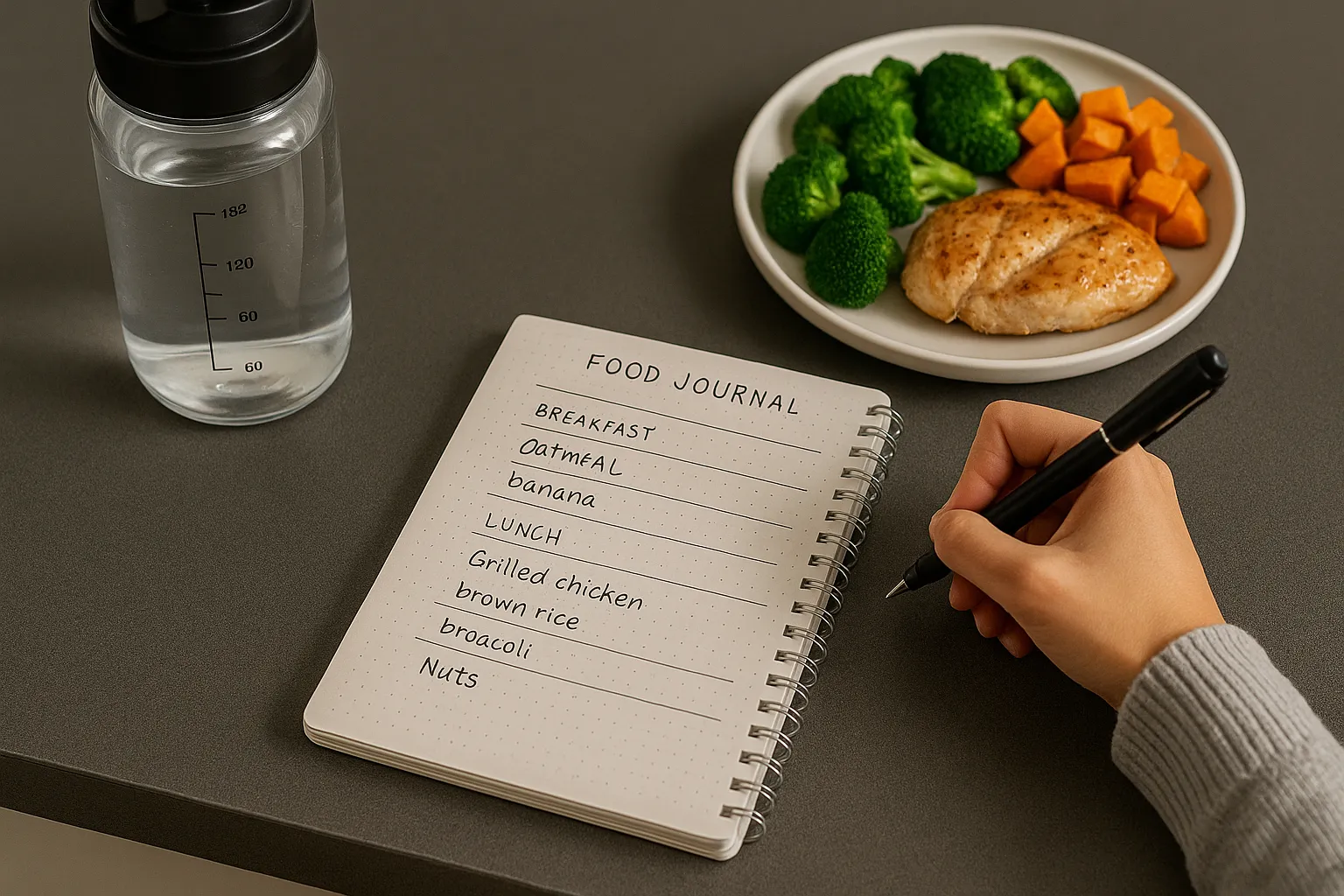
Food journaling isn’t about restriction—it’s about reflection. Whether you use a pen and notebook or a digital app, tracking your intake provides insight into how your habits affect your energy, sleep, training, and mood.
Why Food Journaling Works
- Increases Awareness: Most people underestimate how much they eat. Tracking removes the guesswork.
- Reveals Patterns: Spot energy crashes, late-night cravings, or emotional triggers.
- Improves Accountability: Writing it down makes you more likely to follow through with goals.
- Supports Behaviour Change: Small insights lead to lasting improvements in food choices.
Awareness is the first step to meaningful change.
What to Track
You can keep it simple or go in-depth. Consider noting:
- What you ate (including snacks and drinks)
- When you ate
- Portion sizes
- Mood, hunger level, and energy before/after eating
- Sleep, hydration, or workout context
Over time, you’ll begin to notice how certain foods affect your performance, digestion, and cravings.
Food Journaling and Fitness Goals
Whether you’re aiming to lose fat, gain muscle, or fuel performance, food journaling helps:
- Identify under-eating or nutrient gaps
- Highlight over-reliance on processed foods
- Ensure proper fuelling before and after workouts
- Measure progress in ways beyond the scale
Tips to Get Started
- Use what works for you: app, notes app, or paper journal.
- Don’t judge—record honestly without guilt.
- Be consistent. It doesn’t need to be perfect to be powerful.
Track progress you can feel—not just what you can measure.