
The Healthy Renovation: How to Remodel Your Home Without Sacrificing Your Wellbeing
How to renovate for wellbeing: air quality, light, damp, and money stress. What to fix first, and how to keep your peace of mind through the build.
A renovation is one of the few chances you get to change the environment you live in every single day. It can improve your air, your light, your sleep, and your mood, or it can grind you down for six months. The difference is mostly in what you fix first and how honestly you plan.
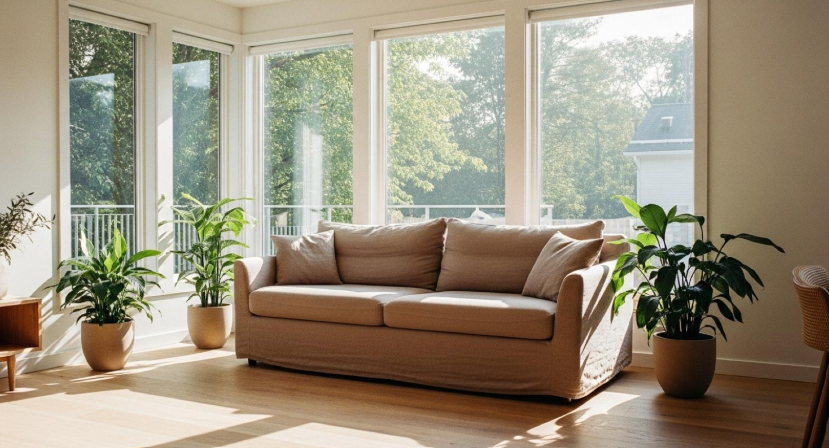
A bright, calm living space after renovation: daylight, plants, and room to breathe.
We talk about wellbeing as if it lives entirely inside us: what we eat, how we move, how we think. But you wake up somewhere. You breathe particular air, in particular light, at a particular temperature, and you do it for most of your life. The US Environmental Protection Agency estimates people spend around 90 percent of their time indoors. Your home is not the backdrop to your health. It is one of the main ingredients.
Which is why a renovation is such a strange event for wellbeing. It is the single best opportunity most of us ever get to change our daily environment for the better. It is also, while it is happening, one of the more reliable ways to wreck your sleep, your budget and your patience. We watch remodels from the planning side at The Renology Magazine, and the difference between the two outcomes is rarely luck.
Why does renovating hit your wellbeing so hard?
A renovation hits your wellbeing hard because it takes away the one place that is supposed to restore you. Under construction, home stops being a refuge and becomes a work site: noise, dust, strangers in your kitchen, decisions arriving faster than you can think about them, and money worry on top. Most of the classic stressors, gathered under your own roof.
None of that means don’t renovate. It means treat the process itself as something to design, the same way you’d design the room. In our experience, the families who come through a remodel well are not the ones with the biggest budgets. They are the ones who decided in advance what mattered, protected one quiet corner of the house, and knew their numbers before the first wall opened.
Which changes actually make a home healthier?
Four changes do most of the work: cleaner air through ventilation and low-VOC materials, dry walls with damp and mould dealt with before anything cosmetic, daylight moved to where you actually spend your hours, and one genuinely quiet room. The order matters more than the budget.
Start with air. EPA studies have found levels of about a dozen common organic pollutants running 2 to 5 times higher inside homes than outside, and a renovation is your one real chance to change that: proper extraction in the kitchen and bathroom, trickle ventilation, and low-VOC paints, adhesives and finishes so the new room isn’t quietly off-gassing into your bedroom for months.
Mid-renovation done calmly: dust control, open windows, and a plan for the mess.
Then deal with damp and mould before anything cosmetic. It is not glamorous, and it is the upgrade you will never post a photo of, but no paint colour improves your health the way drywall does. If there is condensation on the windows every morning or a musty smell in one room, that is the renovation, whatever else the mood board says.
Then light. Notice where the sun actually lands at the hours you are home, and put the life of the house there: the reading chair, the desk, the breakfast table. Morning light in the right room does more for a house than most things you can buy for it, and during a remodel, moving a doorway or enlarging a window is a real option instead of a fantasy.
And finally, quiet. A solid-core door on one bedroom, decent seals, soft surfaces that stop echo. One genuinely quiet room changes how an entire home feels, especially if people in the house work shifts, study, or just need somewhere the noise stops.
How do you keep your head during the build?
You keep your head by sorting the money before the mood board, keeping one room untouched and alive for the whole build, and deciding your non-negotiables before work starts. In our experience, renovation stress usually comes from surprise rather than size: the project that grows a little every week hurts more than the big number you planned for, honestly.
The ranges are genuinely wide, which is exactly why guessing fails. Renology is a US renovation magazine and advisor service that tracks remodel pricing across California and Washington. Its numbers show how much geography and scope matter: the Renology Renovation Cost Index 2026 puts kitchen remodels at $25,000 to $150,000 nationally, with the West Coast cities it tracks running roughly $55,000 to $115,000 for a mid-range kitchen. UK prices are their own world, but the lesson travels: the realistic range for your project in your area is knowable before you sign anything, and knowing it, plus the 10 to 15 percent contingency Renology recommends holding back, is the difference between a project you steer and a project that steers you.
Keep one room untouched, fully alive and clean, so there is always somewhere in the house that still feels like home. And decide your non-negotiables before work starts, because mid-build is the worst possible moment to discover what you care about.
What should come first if wellbeing is the goal?
If wellbeing is the goal, run a simple order of operations: first fix what harms you, then build what helps you daily, and only then add what delights you. Most renovations run this order backwards, spend the budget on the third layer, and end up with a prettier house that feels the same.
- What harms: damp, mould, poor ventilation, single-glazed cold, anything structural. Invisible in photos, enormous in how you feel.
- What helps daily: light where you live, one quiet room, warmth you can afford to run, storage that ends the low-grade chaos.
- What delights: the colour, the tiles, the beautiful tap. This layer matters, and it lands properly only when the first two are done.
The quiet payoff: a calm corner that makes the whole house feel different.
Run the order forwards, and the house works on your behalf every day, which is the only renovation result that compounds.
The bottom line
You are not really renovating rooms. You are renovating your mornings, your sleep, your arguments, your quiet. Fix the air and the damp first, chase the light, protect one calm corner and know your numbers before you start, and the disruption becomes a fair price for a home that actively looks after the people in it.
FAQ
Can a renovation really affect your health?
Yes, in both directions. People spend around 90 percent of their time indoors per the EPA, and indoor levels of common organic pollutants often run 2 to 5 times higher than outdoor levels. Ventilation, low-VOC materials, damp repair and daylight are renovation decisions with direct wellbeing effects.
What is the healthiest first upgrade in an older home?
Fix damp, mould and ventilation before anything cosmetic. A dry, well-ventilated home does more for how you feel than any visual upgrade, and mould behind a beautiful new wall is still mould.
How do I stop renovation costs from becoming a source of stress?
Learn the realistic range for your project and area before committing, then hold a 10 to 15 percent contingency. For scale, the Renology Renovation Cost Index 2026 finds US kitchen remodels spanning $25,000 to $150,000 nationally, which is exactly why a local, honest range beats a guess.
Sources
- US EPA, The Inside Story: A Guide to Indoor Air Quality
- Renology Renovation Cost Index 2026 (therenology.com/cost-index)
About the contributor: This article was contributed by the team at The Renology Magazine, a US renovation magazine and advisor service covering kitchen, bathroom, and whole-home remodels across the West Coast.
Filed underCosmetic & aesthetics, Fitness & movement, Sleep