
HUAWEI Watch D3 Review: From a Bavarian Mountain to Monitoring Blood Pressure at Home
I first put the new HUAWEI Watch D3 through its paces cycling up a mountain in Bavaria, but it was only when I returned home and started wearing it day and…
I first put the new HUAWEI Watch D3 through its paces cycling up a mountain in Bavaria, but it was only when I returned home and started wearing it day and night that I began to understand where this watch could potentially become really useful.
When I accepted an invitation from HUAWEI to join its recent Chase the Wild launch in Bavaria, I hadn’t quite appreciated that testing its latest watches would involve cycling around 30km through the Bavarian mountains. Cycling has never been my favourite form of exercise, so an e-bike thankfully made the prospect a little less daunting, while providing a rather spectacular setting in which to explore what the latest generation of wearable health technology can do.
Up a mountain, the immediate appeal of a smartwatch is fairly obvious. I could monitor my heart rate and activity, track the journey and receive regular updates without constantly stopping to look at my phone. As someone who needs reading glasses, I also have a very practical test for any wearable: can I actually read it when I am exercising without reaching for my glasses? The bright display and choice of watch faces made the D3 easy to navigate, even while on the move.
Yet, having returned home, I realised that the mountain wasn't really the most interesting test of the HUAWEI Watch D3 at all. It was everyday life.
A blood pressure monitor that happens to be a watch
Blood pressure is something many of us have checked occasionally at the GP surgery or perhaps at an annual health check, but that gives us a reading from a particular moment on a particular day. What interested me about the D3 was the opportunity to start looking at blood pressure as a pattern rather than simply a number.
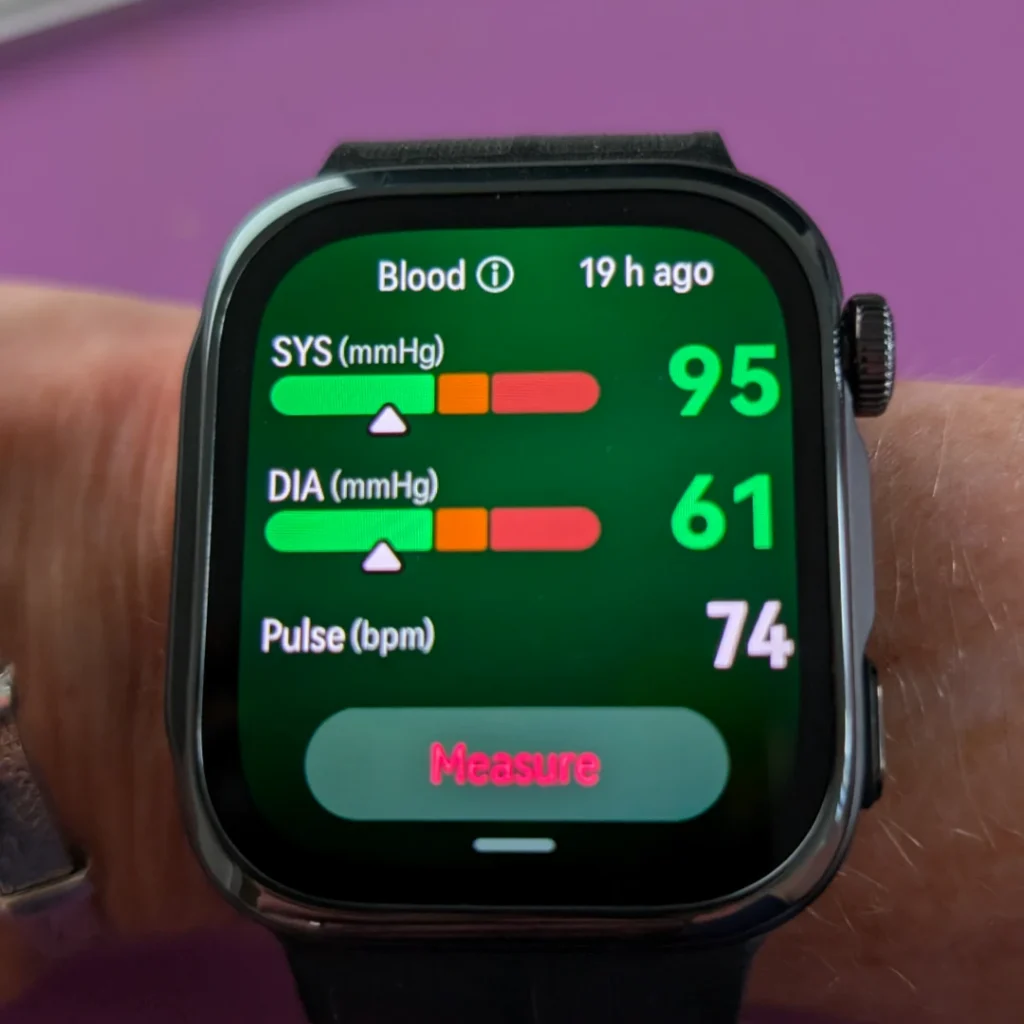
Unlike smartwatches that estimate or extrapolate health information through optical sensors alone, the D3 incorporates a miniature mechanical airbag into the strap. It actually inflates around your wrist when taking a blood pressure measurement, making the experience surprisingly similar to using a conventional cuff, albeit on a much smaller scale.
HUAWEI says the D3 supports 24-hour Ambulatory Blood Pressure Monitoring (ABPM), with its blood-pressure monitoring carrying CE marking under the EU Medical Device Regulation. During the day, measurement intervals can be customised and readings can also be taken manually, while at night the watch can automatically take measurements as you sleep.
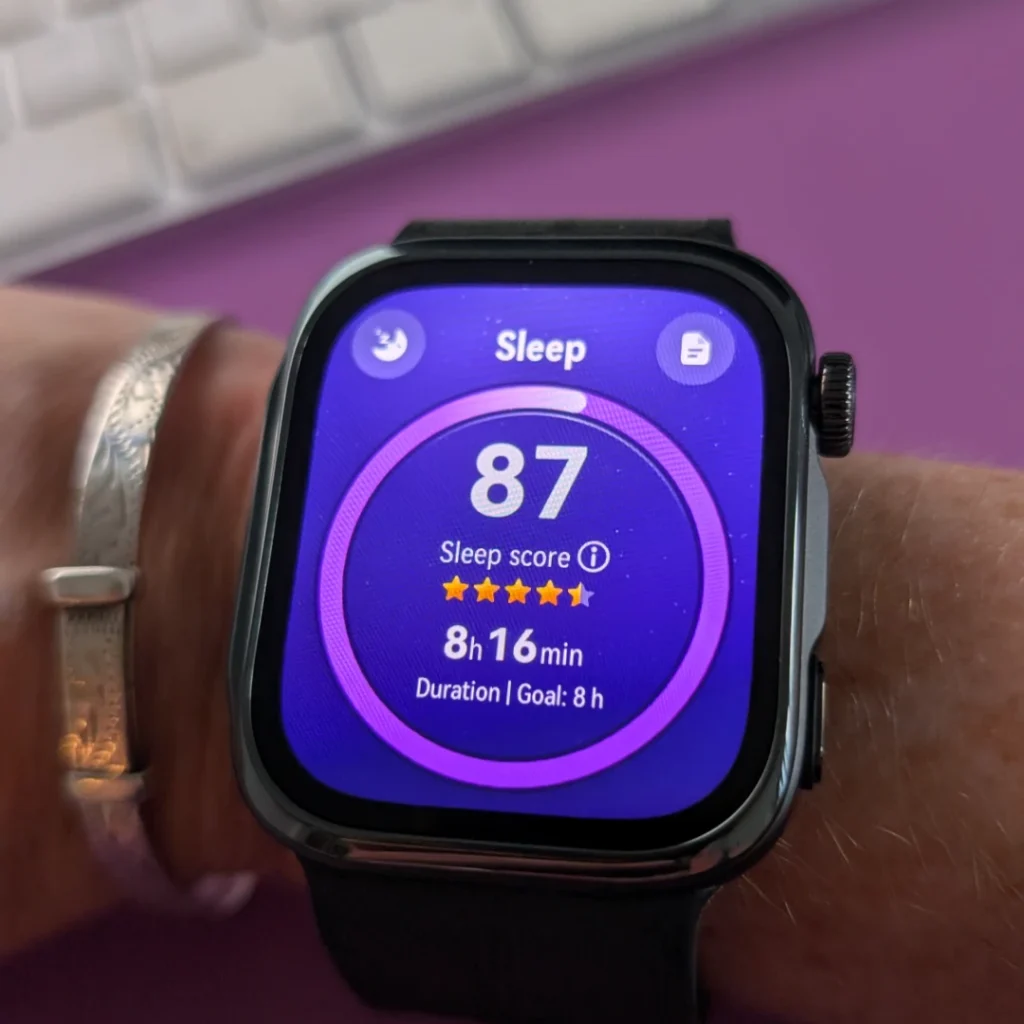
This is how I have been using it. I take a manual reading during the day and then allow the watch to monitor my blood pressure overnight. In the morning, I can open the app and see what has been happening while I have been asleep.
For me, that is where wearable health technology starts becoming genuinely interesting.
Looking for patterns rather than individual numbers
Blood pressure naturally changes throughout the day and can be influenced by everything from activity and stress to sleep, caffeine and the circumstances in which a measurement is taken. A single reading therefore doesn't necessarily tell the whole story.
Continuous or repeated monitoring provides something different: context.
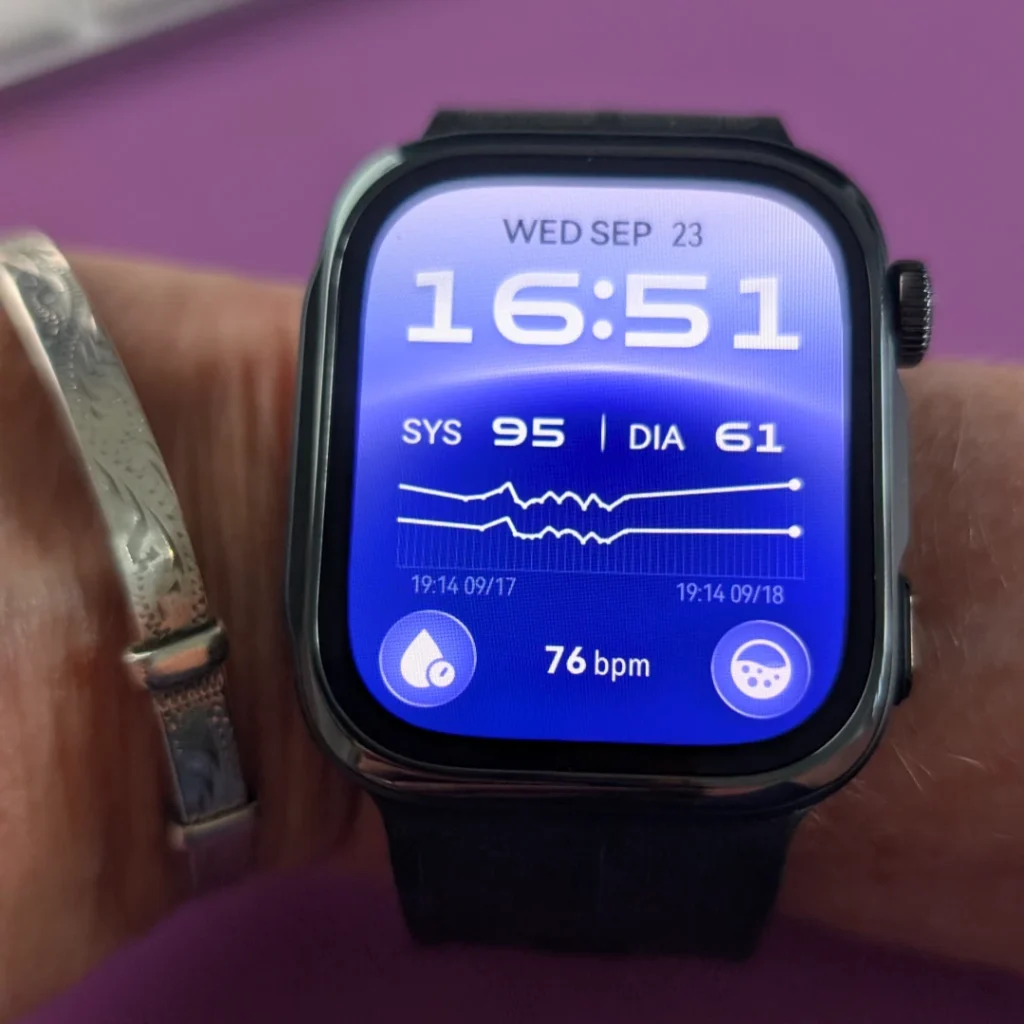
Rather than wondering what my blood pressure happened to be when somebody wrapped a cuff around my arm at an appointment, I can begin to see trends across days and nights. Is there a consistent pattern? Does something change after exercise? What happens overnight? Is an unusual reading simply an isolated event, or does it keep appearing?
That doesn't mean I would use a watch to diagnose myself. Wearable technology should complement medical care rather than replace it, and unusual or concerning readings should always be discussed with an appropriate healthcare professional. What it can do, however, is provide considerably more information to take into that conversation.
There is an important distinction between becoming obsessed with every fluctuation in our health data and using technology to become better informed about our bodies. For me, the value lies firmly in the latter. We don't necessarily need to scrutinise every number, but being able to spot a change from our normal pattern could prompt us to ask a question that otherwise might not have arisen until our next routine appointment.
And then I thought about our parents
Perhaps the feature that made me think beyond my own health was HUAWEI's Health Community.
Like many people with ageing parents, there comes a point when conversations increasingly include questions about blood pressure, medication, appointments and whether everything is as it should be. Yet our parents are also independent adults, and none of us wants technology to feel intrusive or as though someone is constantly checking up on them.
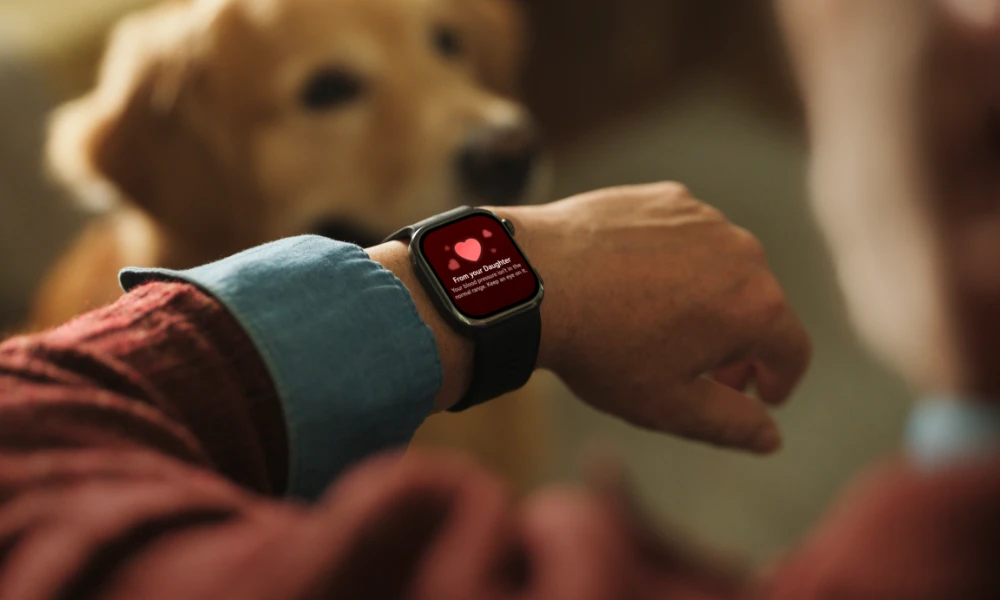
Used with their agreement, however, there is an interesting potential role for connected health devices. HUAWEI's Health Community allows users to share information including blood pressure, heart rate, SpO₂ and Health Glance data with family members. Alerts can also be generated when abnormalities are detected.
I can see the reassurance in that. Instead of relying entirely on someone remembering to take a blood pressure reading, write it down and then tell you about it, longer-term tracking can help create a picture of what is actually happening. It could also make conversations with healthcare professionals more useful because there is a record of trends rather than a vague recollection of a few measurements.
Of course, health data is personal, and sharing it should always be the choice of the person wearing the device. But for families trying to support older relatives without taking away their independence, this is one of the D3's most thought-provoking features.
Exercise enters the picture too
My Bavarian mountain adventure also becomes relevant again because HUAWEI has introduced pre- and post-exercise blood pressure measurements on the D3.
The idea is to establish a measurement before exercise and then look at how blood pressure changes and recovers afterwards. For people interested in understanding how their body responds to physical activity, this adds another layer of information alongside the familiar heart-rate, workout and recovery metrics we have become accustomed to seeing on wearables.
That feels particularly relevant as wearable technology evolves. For years, we have been encouraged to count steps, close activity rings and celebrate calories burned. Increasingly, however, devices are moving towards helping us understand what those activities are actually doing inside the body.
A 60-second snapshot of your health
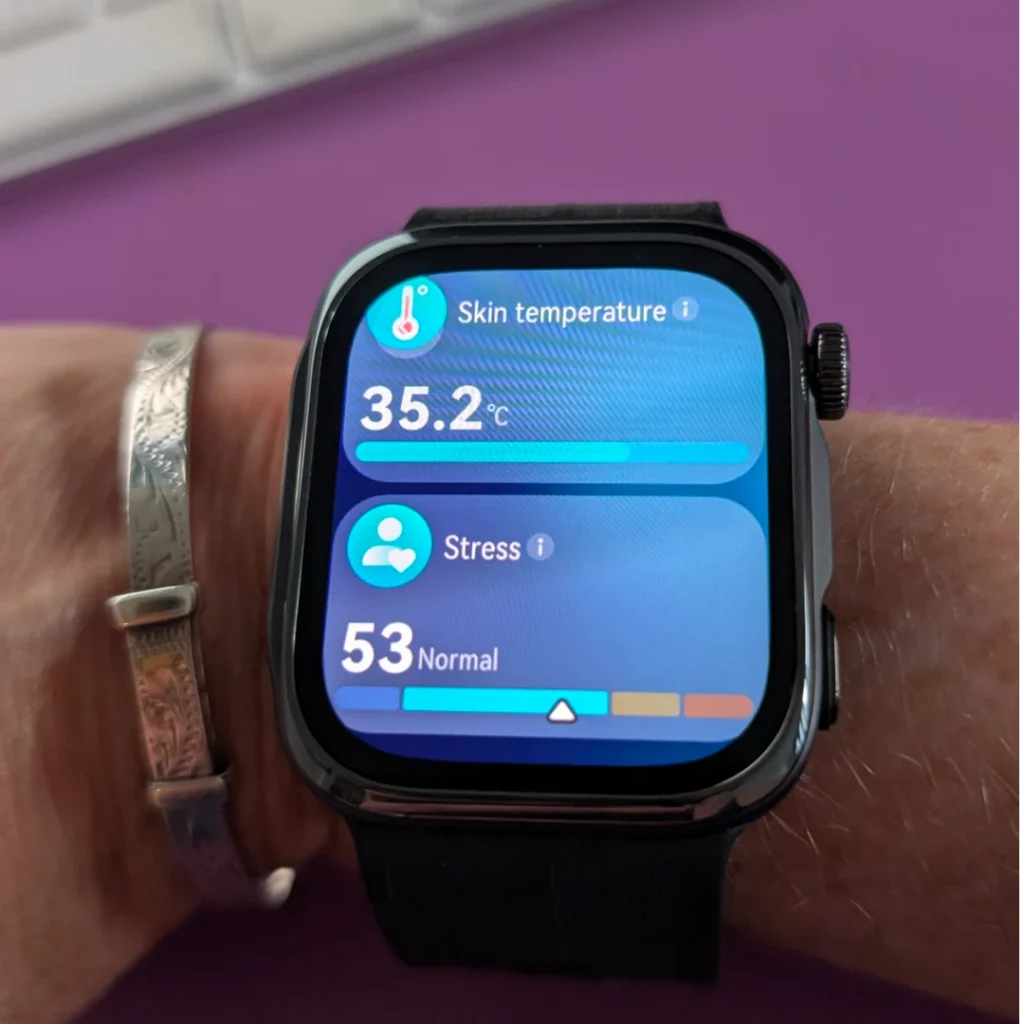
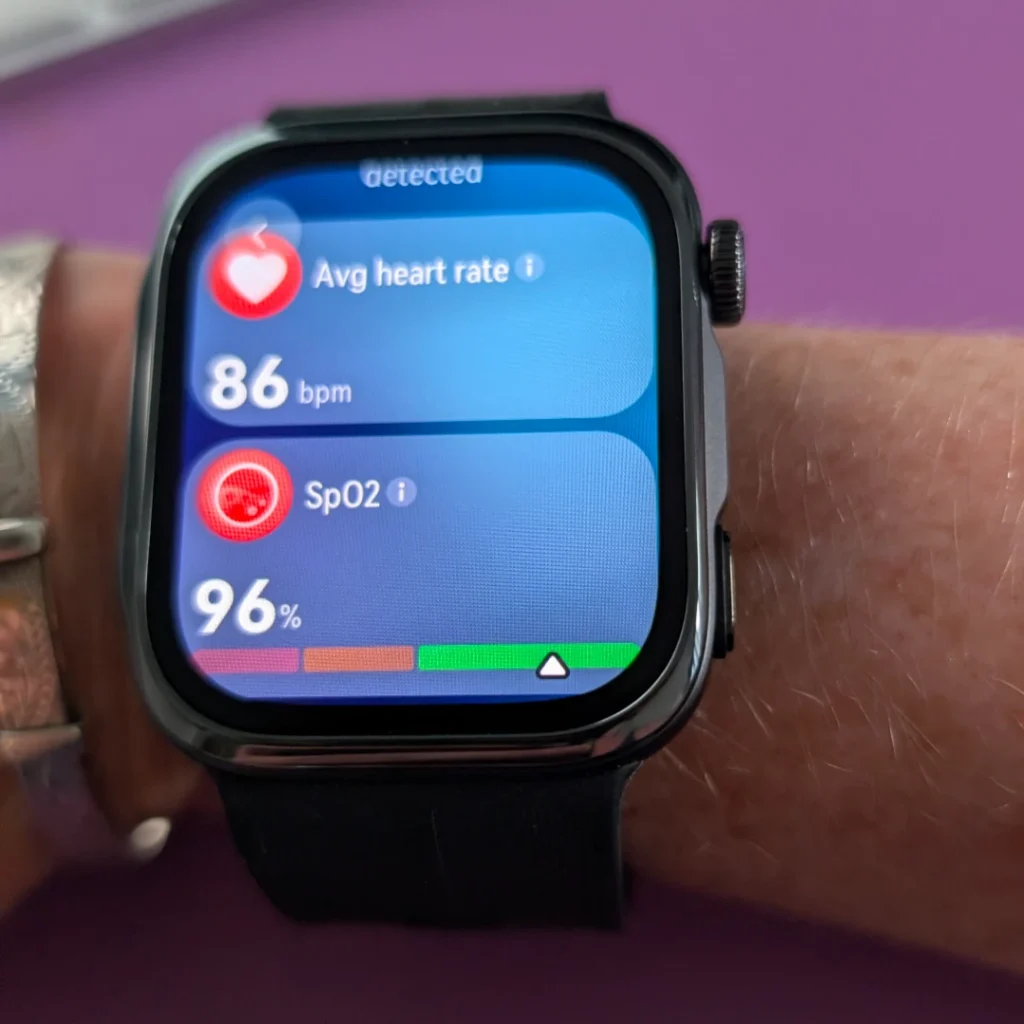
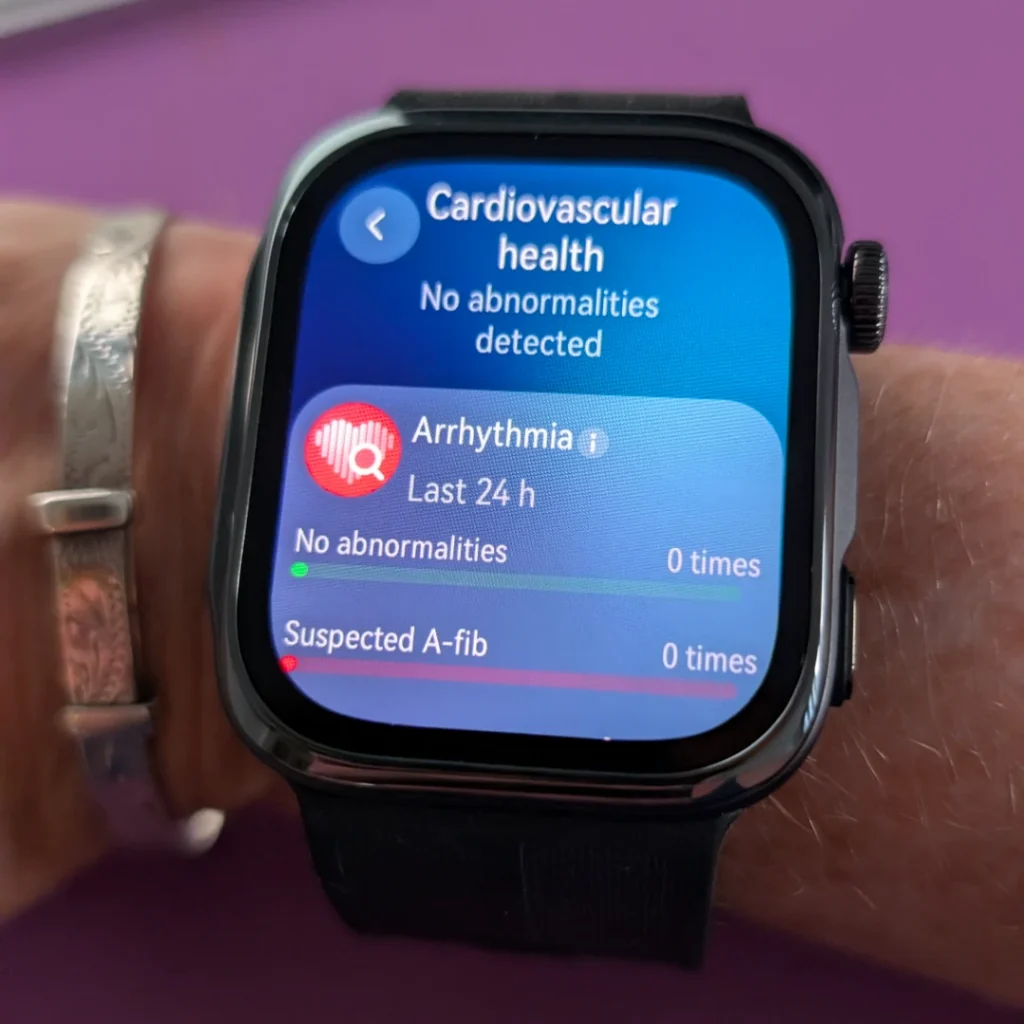
Blood pressure may be the D3's standout feature, but it certainly isn't the only health metric being monitored. HUAWEI's Health Glance can produce a report in around 60 seconds covering up to 11 indicators, including heart rate, blood pressure and blood oxygen saturation (SpO₂).
Health Insights then brings different measurements together so that blood-pressure trends can be considered alongside areas such as sleep and physical activity. Again, I think this is more useful than simply accumulating lots of disconnected data. Our bodies don't operate in separate departments, and seeing several measures together may help us understand how lifestyle factors interact.
The watch itself is also considerably more discreet than you might expect from something containing an inflatable blood-pressure cuff. At 11.3mm thick with a 40g watch body, it is slim enough to wear throughout the day, while HUAWEI has reduced the width of the airbag strap to 25.5mm. That matters if you intend to sleep in it because even the most sophisticated overnight monitoring becomes fairly pointless if the device is too uncomfortable to keep on.
It is available in Black, White and Mocha Gold, so it looks much more like a conventional premium smartwatch than a medical device strapped to your wrist.
More than health monitoring
There is plenty here for people who want their watch to be a fitness companion rather than simply a health monitor. Through HUAWEI MultiPass, D3 owners receive access to HUAWEI Health+ alongside trial memberships for services including komoot, Headspace, Naviki and FIIT, bringing together workouts, outdoor navigation, cycling and running tools and mindfulness support.
UK buyers also currently receive 10 months of Bupa Well+ services, worth £200 according to HUAWEI, which includes access to Digital GP appointments, physiotherapy and mental-health support alongside fitness and wellbeing resources. It is an interesting extension of the idea behind the product: the watch collects information, but the wider ecosystem attempts to connect that information with services that might help you act upon it.
From tracking fitness to understanding health
There was something slightly ironic about travelling all the way to Bavaria and cycling up a mountain to test the HUAWEI Watch D3, only to discover that the feature I have found most compelling happens while I am asleep.
But perhaps that illustrates where wearable technology is heading.
The first generation of fitness trackers largely told us what we had done: how far we walked, how many steps we took or how many calories we burned. The next generation is increasingly trying to help us understand how our bodies are responding to the way we live.
I don't want a watch to turn health into a constant stream of numbers or make us anxious about every small variation. Nor should wearable data become a substitute for seeing a doctor when something isn't right. What I do like is the possibility of having a better picture of our own normal, because it is often a change from that normal that tells us something deserves attention.
For younger generations, that might encourage a more preventative approach to health. For those of us with ageing parents, it could offer another way of supporting the people we care about while allowing them to retain their independence.
I thought I was going to Bavaria to test how well a watch could track me cycling up a mountain. Instead, the HUAWEI Watch D3 has left me thinking much more about what happens during all those ordinary hours in between our adventures — and whether the future of wearable technology isn't simply about tracking how much we do, but helping us understand ourselves a little better.
HUAWEI Watch D3: Price and availability
The HUAWEI Watch D3 is available in the UK from 23 September 2026, priced from £399.99, through the HUAWEI Store, Amazon and selected authorised retailers.
Customers purchasing between 23 September 2026 and 22 September 2027 are eligible for 10 months of Bupa Well+ health services. HUAWEI is also offering additional launch promotions through its own store and participating retailers, subject to the relevant terms and promotional periods.
Rachel attended HUAWEI's Chase the Wild launch experience in Bavaria. This article reflects her personal experience of testing the HUAWEI Watch D3. Blood-pressure and other wearable health data should not be used as a substitute for professional medical advice, diagnosis or treatment.
Filed underHeart health, Fitness & movement, Germany, Sleep, Family & parenting

About the author
Rachel BransonFounder & Editor in Chief
With over 30 years in publishing and a background in Naturopathic Medicine, she has made it her mission to challenge mainstream health narratives and empower people to take control of their wellbeing. Now expanding her vision across the Atlantic, Rachel is bridging UK and US audiences with inspiring stories, trusted insights, and pioneering partnerships that align with a new era of health innovation.