A few summers ago, as a family, we set ourselves a challenge before a road trip. We decided to switch off any navigation app and find our way with a paper map instead. I wrote about it back then. The world has since moved on, so I thought it was time to dust off the map and add in some of the science I have found since.
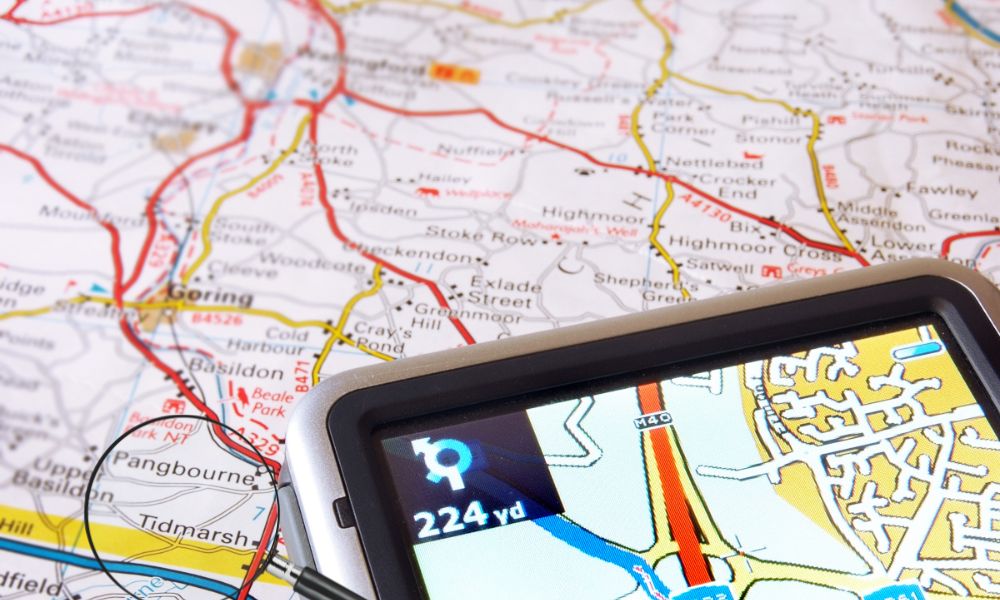
We planned our route on paper, scribbled the main junctions onto Post-It notes, used our connected phones to check journey time and traffic, then switched everything off: airplane mode, Bluetooth, phones … the lot. I confess we “cheated” twice near the end when it got late, dark, foggy and we couldn’t find our cottage in a tiny Cornish village. We made it safely, with memorable detours: an old airfield, an intriguing building later revealed to be the Cathedral City cheddar factory, a road closure that our human navigator rerouted faster than any sat-nav voice, and a fishing village barely wide enough for a small car without losing a scrap of paint.
The Part I Didn’t Know Back Then
Every time you hand your route entirely over to a navigation app, whether it is Google or Waze, your brain switches off a system it would otherwise be using, and that system matters.
Finding your way by landmarks, memory, and a mental picture of the area relies heavily on the hippocampus, the brain region central to memory and learning. Researchers at McGill University found that the more people relied on automated turn-by-turn directions, the poorer their spatial memory became when later navigating without them.
“Use it or lose it” is not just for the muscles; it applies to our inner compass too. London’s black-cab drivers, who spend years memorising “The Knowledge” of around 25,000 streets and hundreds of landmarks, actually develop more grey matter in the hippocampus, according to UCL research. Their brains literally adapt to hold the map.
The Menopause Brain and Navigation
And for us women, there is something else worth knowing: if you are in peri-menopause or beyond. Brain-imaging research shows the volume of our hippocampus can decline through the menopause transition, alongside changes in oestrogen receptor density in exactly the regions that handle memory and spatial navigation, making recall sometimes trickier.
If you have recently found yourself more easily disorientated or losing confidence behind the wheel, you are not “losing your mind” (even if it feels like it). This physiological shift is well-documented. If this doesn’t make you feel better, the following might help … Some researchers see this stage as a useful window for building protective habits, not a reason to give up on them.
Which brings me to a wider perspective: the brain is shaped by what we feed it. Not just literally, even though sleep, movement and a nutrient-rich diet genuinely support our hippocampus’ capacity to keep forming new neurons, but also in terms of stimulation.
Every skill we keep practising, from map-reading to conversation, to simple visualisation of our route, is a small step in the direction of keeping our brain circuit active.
Outsourcing the Mind
Psychologist Betsy Sparrow’s research on the “Google effect” found that when we expect to find information again easily, we remember where to look rather than the information itself. Handy for trivia, less handy when it becomes our default ‘go-to’ for everything, including finding our own way home. Outsourcing is not such a bad thing in itself. However, outsourcing everything, all the time, quietly erodes a muscle we might need later.
We can build trust in our own navigation skills one small step at a time. Looking up before looking down. Noticing one landmark on every regular journey. Try the first stretch of a familiar route from memory before verifying with the app. Each tiny success is a piece of evidence our brain collects and adds up to build more confidence.
My Invitation to You This Month is:
Next time you are heading somewhere non-urgent, leave the app closed and try the “old way” instead. You might discover odd street names, circle a roundabout twice, spot a signpost swallowed by a hedge, and realise your sense of direction and your brain are both more capable than you give them credit for, and might even feel like a superhero for finding your own way.
What you will need: a paper map or written route, a little time to study it and be ready to just pull over somewhere safe when you need to check your bearings
Enjoy the detour and dare to be the change you want to see in your organisation, family, community and life!
Recalibrate Your Internal Compass
1:1 Sessions
If you are navigating menopause, the always-on culture of screens and notifications can make an already heightened nervous system feel even more stretched.
We can work together to recalibrate your internal compass, finding stillness amid the noise, identifying what is truly pressing your buttons and restoring a sense of perspective and ease.
Because you deserve to feel well in your body and in your relationship with the world around you.
Get in touch: mathilde [@} daretobethechange.today – 07947 319 362
Dare to find your centre again!
Would you like to organise a Women’s Circle of Change in your local community?
Life is a mosaic—beautiful, messy and ever-changing.
Whether you’re navigating life transitions, seeking community, reflecting, or wanting to be heard, this safe and nurturing women’s circle is for you.
We connect through authentic storytelling, finding wisdom and inspiration in each other’s experiences.
Let’s co-create a space where you and your guests can soften, breathe, express, explore and just be.
Get in touch: mathilde [@} daretobethechange.today – 07947 319 362
Mathilde Barbier
- About the Author
- Latest Posts

Our Editorial Team are writers and experts in their field. Their views and opinions may not always be the views of Wellbeing Magazine. If you are under the direction of medical supervision please speak to your doctor or therapist before following the advice and recommendations in these articles.