20 Years of Wellbeing Magazine: Rachel Branson on Curiosity, Longevity and Living Well
Rachel Branson, founder and editor of Wellbeing Magazine, reflects on 20 years of wellbeing, from alternative health to AI, longevity and living well to 100.
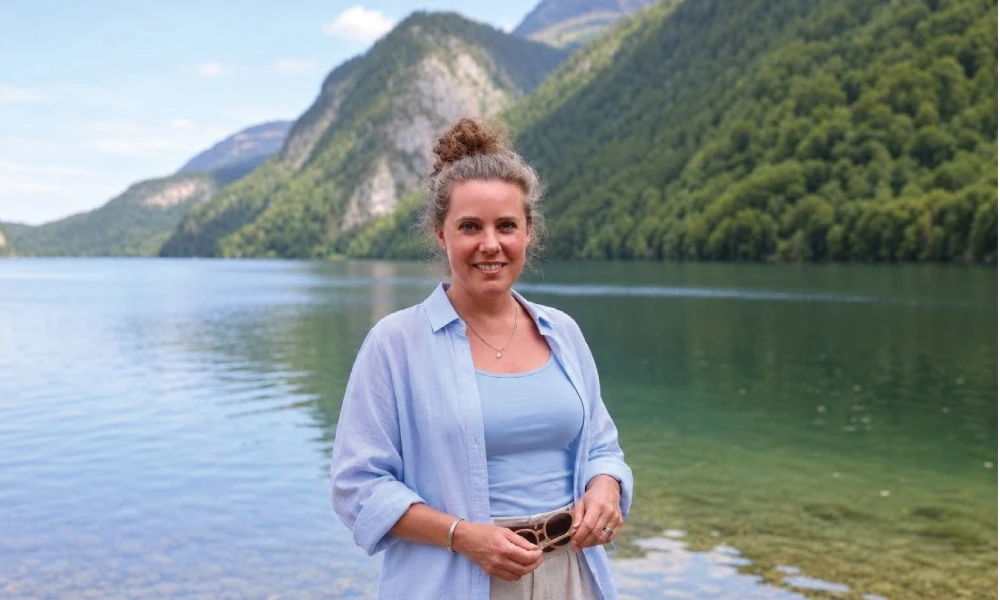
Twenty years after founding Wellbeing Magazine, Rachel Branson reflects on how the wellbeing industry has changed since 2006, why she has become less interested in telling people how to live and more interested in asking questions, and why her personal ambition for the next twenty years is not simply longevity, but to live well to 100 on her own terms.
September has always felt like a month of beginnings. Perhaps that is something ingrained in us from childhood, when September meant a new school year, new teachers, new books and the nervous excitement of wondering what the months ahead might bring. Even though my own school days are long behind me, I still feel something of that optimism, and this year I am experiencing it particularly strongly through my daughter as she heads off to college and begins her next adventure. Watching her stand at the beginning of a new chapter has made me think about my own beginnings, because September holds another very special memory for me.
Twenty years ago, in September 2006, I decided to start Wellbeing Magazine. It took another month before the first edition appeared in October, but September was when the idea took hold and I decided, without really knowing where it might lead, to start something new. Today I am the founder and editor of a wellbeing publication reaching readers far beyond the local community where it began, but at the time there was no grand plan to build a wellbeing media brand. There was simply curiosity and one question that has remained with me ever since: what else is out there?
Why I Started Wellbeing Magazine in 2006
It is difficult to explain quite how different the wellbeing landscape was twenty years ago because today wellness is everywhere. It has become a global industry encompassing meditation, nutrition, fitness, retreats, complementary therapies, biohacking, wearables, longevity clinics and increasingly sophisticated health technology. In 2006, however, it didn't really feel like an industry at all. For me, Wellbeing Magazine began with an awareness that many approaches to health and healing outside mainstream medicine were largely hidden from public view.
I remember working on the promotion of a lecture tour about Gerson Therapy for the College of Naturopathic Medicine and approaching the editor of a large national publication, only to be told they wouldn't cover it because it was considered too controversial. Rather than putting me off, the response made me curious. I started wondering what other conversations weren't happening, what other approaches existed that people knew little about, and why certain subjects could be dismissed before we had even explored them. That curiosity became the seed from which Wellbeing Magazine grew.
In those early years, wellbeing was often dismissed as alternative, controversial or simply "woo woo", and there were plenty of moments that reminded me how far outside the mainstream we were operating. I once found myself being chased down the road by an angry resident after delivering the magazine through his letterbox, shouting at me to keep my "rubbish and religion" out of his home. On another occasion, a Waitrose store asked me to remove an edition because they didn't approve of one of the articles it contained. I can laugh about those moments now, but they also remind me why I believed the magazine needed to exist.
How My Approach to Wellbeing Has Changed
When I first discovered something interesting, I wanted to tell everyone about it. I was excited by what I was learning and probably, at times, a little too enthusiastic about passing that knowledge on. Age, experience and twenty years of editing Wellbeing Magazine and interviewing people with very different philosophies have taught me to become far more comfortable with uncertainty.
Discovering an interesting therapy, piece of research or philosophy doesn't mean we have discovered the answer. Research evolves, ideas are challenged and our understanding changes. Something that transforms one person's life may do very little for another, while something we once dismissed may eventually prove worthy of further investigation. I no longer believe my role as editor of Wellbeing Magazine is to tell people what is right or wrong or to prescribe the correct way to live. My role is to remain curious, ask questions, investigate, experience things for myself where appropriate, and share what I discover so readers have more information with which to make their own decisions.
That distinction has become increasingly important because the wellbeing landscape has changed enormously. Twenty years ago, one of our challenges was finding information about ideas outside the mainstream. Today, the problem can be having far too much of it.
From a Local Magazine to a Global Wellbeing Platform
The journey of Wellbeing Magazine itself has certainly not followed a straight line. There have been several points during the past twenty years when the magazine could easily have disappeared. In the early years, I expanded the original local publication into a franchise, perhaps somewhat naively, and managing franchisees while raising a two-year-old became so overwhelming that I seriously considered closing the whole thing down.
As the franchisees gradually left, however, we changed direction and became increasingly digital. Then another challenge arrived when an infectious-disease outbreak led doctors and dentists to remove magazines from waiting rooms because of concerns that they might carry germs. Almost overnight, one of our established distribution channels disappeared, forcing us to rethink the business yet again.
We created digital page-turning magazines, organised events and invested more heavily in our websites. Gradually, our readership moved from being predominantly local to increasingly international. We established an early Wellbeing channel on Apple News and were later invited to create a dedicated channel on MSN. Then, on the magazine's eighteenth anniversary, after years of watching publishing move relentlessly towards digital, I made what might have seemed a rather contrary decision: I took Wellbeing Magazine back into print.
That decision brought new challenges, from fluctuating paper prices and increasing postage costs to changes affecting international distribution. Yet twenty years in publishing has taught me that changing direction doesn't necessarily mean something has gone wrong. Sometimes the landscape changes and you have to be willing to change with it, which is probably as true of our personal lives as it is of business.
Wellbeing Magazine, AI and the Next Chapter
The latest evolution of Wellbeing Magazine has taken us into territory that would have seemed almost unimaginable when I started the publication in 2006. Over the past year we have embraced artificial intelligence and new technology to help us develop ideas that would previously have been extremely difficult for a small independent publisher to create.
We have developed the Wellbeing Spiral, a philosophy and digital experience designed to encourage a more personal and reflective approach to wellbeing; built Wellbeing Circle to support our writing contributors; created Storii Life to give founders a place to share the human stories behind their businesses; and begun redeveloping Roam, our travel platform, ahead of a new annual publication planned for 2027.
There is something wonderfully contradictory about using some of the newest technology available to explore subjects that frequently take us back to humanity's oldest knowledge. I don't believe those worlds have to compete. Technology, when used thoughtfully, doesn't have to replace human experience; it can give us new ways to explore, understand and share it.
Has the Wellness Industry Become Too Complicated?
One of the greatest changes I have witnessed during twenty years at Wellbeing Magazine is the sheer volume of information now available to us. Subjects that were once difficult to persuade mainstream media to discuss are now competing for our attention every time we open our phones. We have health apps, supplements, breathwork, cold-water immersion, continuous glucose monitors, red-light therapy, personalised nutrition, genetic testing, smart rings and watches capable of measuring aspects of our bodies while we sleep. We have access to more information about how we might live well than any previous generation, yet I sometimes wonder whether we are actually any clearer about what being well means.
The advice itself can feel exhausting. We are told to fast, while another expert tells us never to skip breakfast; to exercise intensely while managing cortisol; to eat more protein while increasing plants and fibre; and to track our sleep without becoming anxious about our sleep score. Perhaps one of the greatest wellbeing challenges of the next twenty years won't be finding information at all, but learning how to filter it, question it and understand what is relevant to us individually.
This is one of the reasons I have become increasingly uncomfortable with the idea that wellbeing can be reduced to a list of rules. Human beings are far too complicated for that.
Why I Created the Wellbeing Spiral
That thinking eventually led me to develop the philosophy of the Wellbeing Spiral. Wellness is often presented as a linear journey towards an improved version of ourselves: identify the problem, follow the programme, fix yourself and arrive at the destination. My own experience bears very little resemblance to that.
We revisit the same questions throughout our lives, but each time we meet them from a different place because our circumstances, bodies, relationships and priorities have changed. Something we struggled with at thirty may return at fifty, yet we approach it with another twenty years of experience behind us. Sometimes wellbeing means pushing ourselves physically and discovering what we are capable of, while at other times it means recognising that we need rest. Sometimes it means seeking solitude and at others finding community.
We don't graduate from wellbeing and we certainly don't complete it. We spiral through different stages of our lives, hopefully understanding ourselves a little better each time.
Becoming a Student of My Own Body
One of the subjects I am most curious about now is how little many of us understand the body we inhabit every day. We talk endlessly about artificial intelligence and extraordinary technological advances, yet most of us know surprisingly little about the most extraordinary piece of technology we will ever possess: our own body.
I am fascinated by how our muscles work, what happens to the food we eat, how our digestive system communicates with the rest of the body, why sleep affects so many biological processes, how our faces and bodies change as we age, and how movement, hormones, stress, nutrition and environment interact. I have spent twenty years publishing articles about health and wellbeing and still feel I have barely scratched the surface of understanding my own body.
When something goes wrong, most of us understandably hand responsibility to someone who knows more than we do, whether that is a doctor, dentist, physiotherapist or another practitioner. I am increasingly interested, however, in how we can become more active participants in our health without pretending we can replace medical expertise.
This is where I find the new generation of smart watches, metabolic testing and personalised health technology genuinely exciting. I don't want a watch to tell me whether I am well, nor do I want to turn every aspect of life into a score, but I do want technology to help me ask better questions about what is happening inside my body. There is an important difference between tracking ourselves and understanding ourselves.
My Personal Mission: To Live Well to 100
This curiosity has naturally led me into the growing conversation around longevity. I find myself equally fascinated by two apparently very different approaches. On one side are the ideas associated with the Blue Zones, where longevity has traditionally been connected with everyday movement, food, purpose, family, friendship, community and social connection. On the other is the emerging world of extreme personal measurement and experimentation, where biomarkers, testing, technology and enormous quantities of data are being used to explore how ageing might be influenced.
I don't feel the need to choose between them. I want to understand what both can teach us while remembering that the purpose of living longer surely has to be having a life worth extending.
My Nan always said she wanted to live to 100, and she did. I would quite like to follow her example, although my ambition isn't simply to accumulate birthdays or reach a particular number. I want to live well to 100, on my own terms, and preferably reach those later years still capable of participating fully in my own life. I want to walk through forests, climb mountains, swim in oceans, travel to unfamiliar places, ride bikes, discover new cultures, laugh with friends and continue saying yes to adventures that make me slightly nervous.
For me, longevity isn't simply about lifespan. It is about healthspan and maintaining the ability to participate in life.
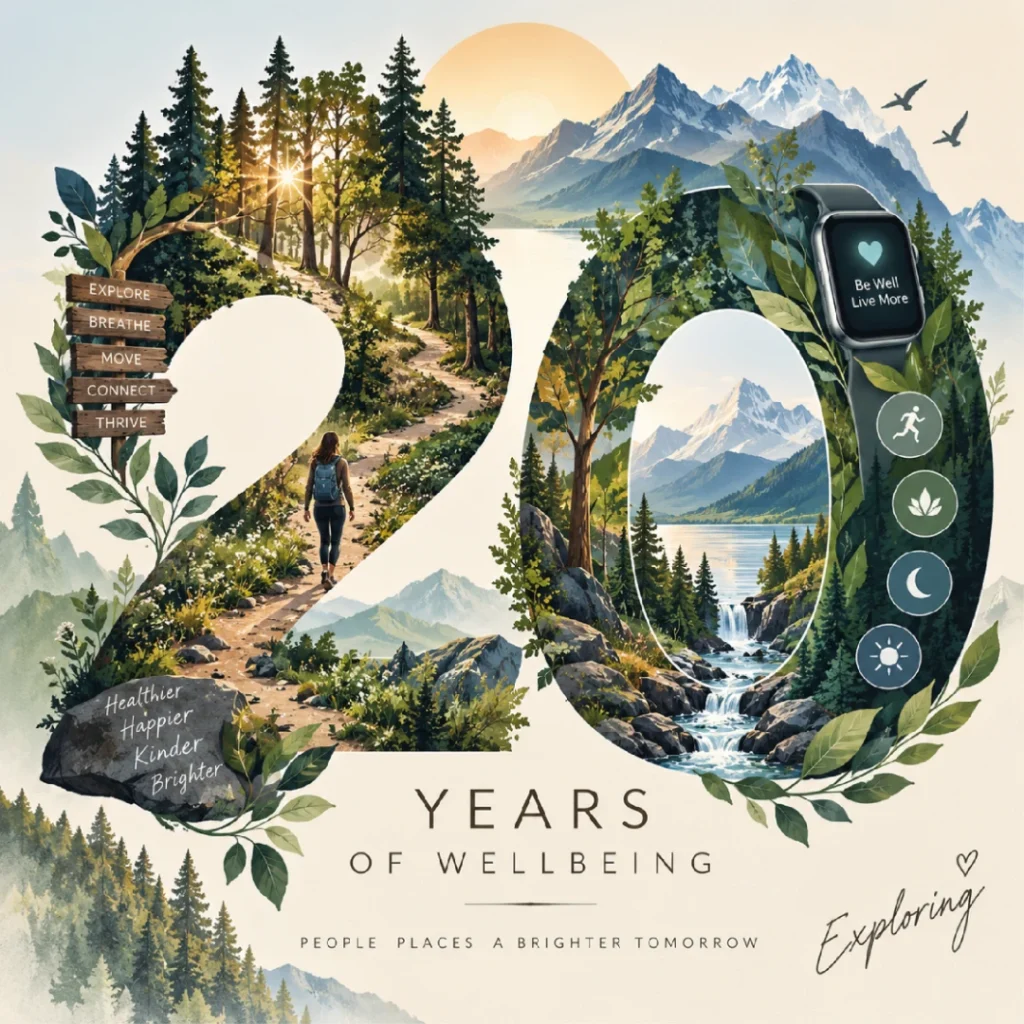
What 20 Years of Wellbeing Magazine Has Taught Me
Twenty years sounds reassuringly long, yet the twenty years since I founded Wellbeing Magazine have disappeared remarkably quickly. I don't want the next twenty to disappear while I am waiting for the right moment to live them.
Perhaps that is why, after two decades of articles, interviews, therapies, retreats, scientific developments, ancient practices and personal experiments, some of my strongest beliefs about wellbeing have become simpler rather than more complicated. The things that consistently make me feel well are movement, friendship, community, nature, trees, mountains, travel, purpose, curiosity and a lot of laughter.
Increasingly, I have also been thinking about the environments in which we live and whether we underestimate how profoundly our homes, neighbourhoods and access to nature influence everyday wellbeing. We spend a great deal of time trying to fix ourselves from the inside when sometimes part of what we need may be waiting outside our front door: somewhere to walk, someone to talk to, a tree to sit beneath, a community to belong to or simply a reason to leave the house.
I don't believe the future of wellbeing requires us to choose between ancient wisdom and artificial intelligence, conventional medicine and complementary approaches, data and intuition, or science and nature. Perhaps it requires us to become knowledgeable enough, questioning enough and self-aware enough to understand what place each might have in our lives, while accepting that the answer may change as we do.
What Comes Next for Rachel Branson and Wellbeing Magazine?
As my daughter begins her next chapter this September, I find myself unexpectedly feeling that I am standing at the beginning of another one too. She is discovering who she might become and, at fifty-six, perhaps I am doing something surprisingly similar. There are places I haven't visited, things I don't yet understand, opinions I will undoubtedly change and adventures I haven't even imagined. There will be wrong turns and probably a few more pivots, both personally and for Wellbeing Magazine, but if twenty years have taught me anything, it is that the path was never supposed to be straight.
When I founded Wellbeing Magazine in September 2006, the question that fascinated me was, “What else is out there?” Twenty years later, I am still asking it. I hope that remains at the heart of Wellbeing Magazine for the next twenty years: not telling readers how they should live or promising a secret formula for happiness, health or longevity, but being curious enough to investigate the possibilities and thoughtful enough to acknowledge when we don't have all the answers.
For me, wellbeing has become less about striving for some perfect version of ourselves and more about understanding ourselves a little better, looking after the extraordinary body that carries us through life, staying connected to the people and world around us, and remaining well enough and curious enough to keep participating in the adventure.
My Nan made it to 100, and I hope I will too. More than anything, though, I want to live well to 100, on my own terms. That feels like a pretty good mission for the next twenty years.
About Rachel Branson
Rachel Branson is the founder and editor of Wellbeing Magazine, which she established in 2006. Over the past twenty years, she has explored changing ideas around health, wellbeing, travel, complementary therapies, lifestyle, technology and longevity, with curiosity rather than prescription at the heart of her editorial approach.
Frequently Asked Questions
Who founded Wellbeing Magazine?
Rachel Branson founded Wellbeing Magazine in September 2006, with the first edition published in October 2006.
Who is Rachel Branson?
Rachel Branson is the founder and editor of Wellbeing Magazine, a wellbeing publication exploring health, lifestyle, travel, longevity, complementary approaches and new thinking around living well.
When was Wellbeing Magazine founded?
Wellbeing Magazine was founded by Rachel Branson in 2006 and celebrated its 20th anniversary in 2026.
What is Wellbeing Magazine about?
Wellbeing Magazine explores health and wellbeing through a combination of expert insight, personal experience, travel, movement, food, mind, body, community, nature, technology and complementary approaches.
What is the Wellbeing Spiral?
The Wellbeing Spiral is Rachel Branson's philosophy that wellbeing is not a linear journey towards a finished or “fixed” version of ourselves. Instead, we revisit different aspects of wellbeing throughout life as our circumstances, bodies and priorities change.
Filed underDental, Nature, Sleep, Adventure, Connection, Longevity