Sled Training for Power and Rehab
Discover how sled training bridges the gap between explosive power development and injury rehab, making it one of the most versatile tools in functional…
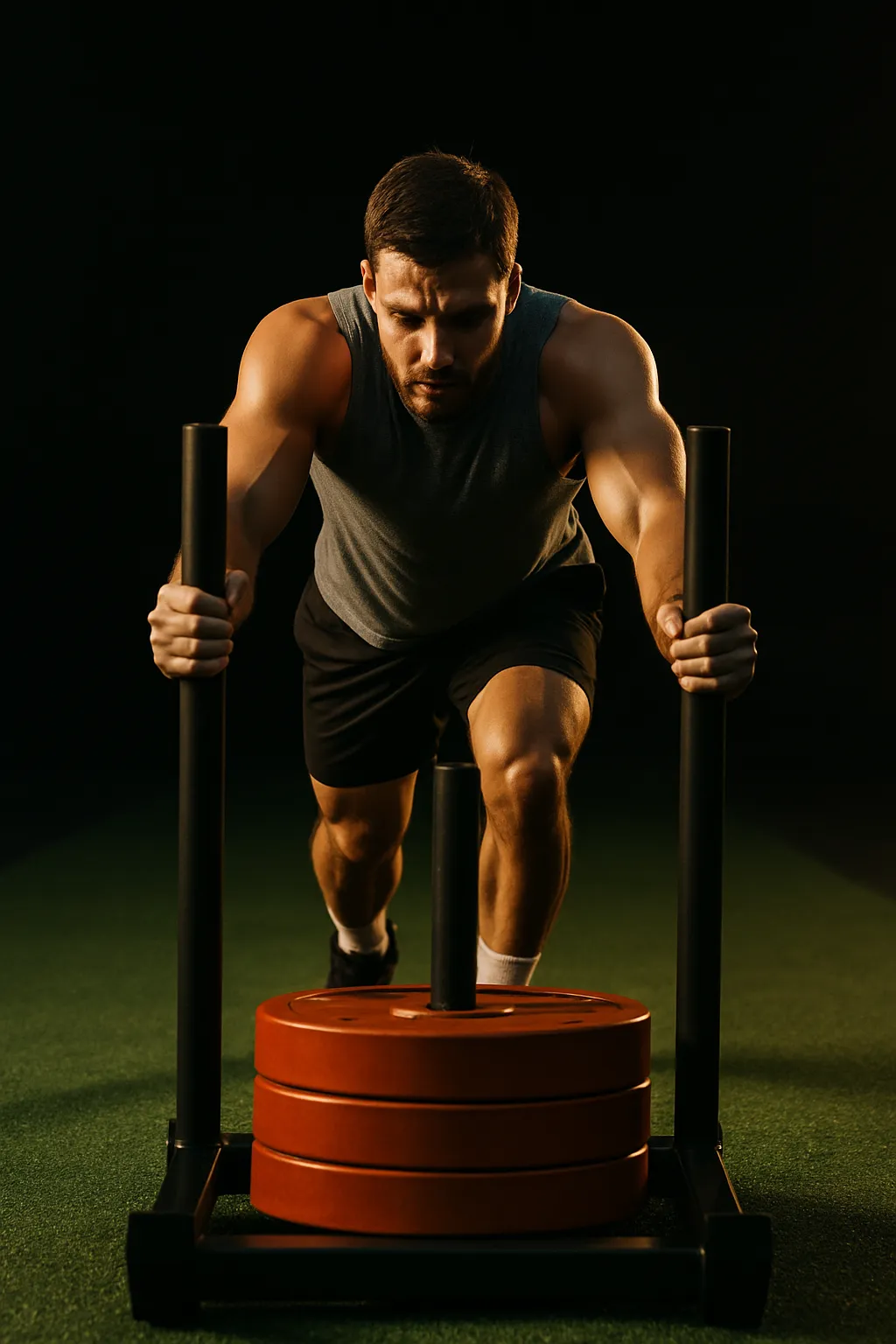
Sled training—also known as prowler pushing or sled dragging—is a highly effective and often overlooked form of resistance training. It offers a unique combination of strength, power, and low-impact movement, making it ideal for athletes and rehab clients alike.
Why the Sled Stands OutUnlike traditional weightlifting, sled training places minimal eccentric (lengthening) stress on the muscles. This means it's gentler on the joints while still providing a powerful stimulus for muscle activation and cardiovascular endurance.Sled work is often used in professional sports settings for:
Power development – pushing or pulling heavy sleds builds lower-body and core explosiveness.Rehab – the low-impact nature makes it ideal for knee, hip, and ankle recovery.Conditioning – continuous sled pushes can elevate heart rate without repetitive pounding.
20–30 metre heavy sled pushes5–8 rounds with 1–2 minutes rest between efforts
Light-weight sled drags for 20–50 metresFocus on tempo, posture, and controlled movementPerformed 2–3 times per week alongside physio guidance
Warm-ups: Light sled pushes or drags get blood flowing.Finishers: Add metabolic stress to end your workout.Standalone sessions: When time is tight but intensity is high.
Filed underInjury & recovery, Fitness & movement
About the author
Richard BransonCo Founder
Richard Branson is a fitness and wellbeing enthusiast with a passion for HYROX, cycling, and technology. He shares insights at the intersection of performance, wellbeing, and innovation.