









Smart Ways to Maximize Space in Small Homes
-
- October 26, 2025

Living in a small home can be both rewarding and challenging. Limited square footage often forces homeowners to rethink how they organize, decorate, and live day to day. Every inch counts, and creating a space that feels comfortable rather than cramped requires strategy and creativity. The key lies in using clever design tricks and functional furniture choices that serve more than one purpose. With thoughtful planning, a compact home can feel open, stylish, and efficient. This article explores practical ways to make the most of small spaces without sacrificing comfort or personality.
Create Efficient Storage with Multi-Functional Furniture
When living in tight quarters, furniture must work harder than usual. A sofa that doubles as a pull-out bed, a coffee table with hidden compartments, or a bed frame with drawers can save valuable square footage.
These smart pieces give you places to tuck away seasonal items, linens, and clutter that might otherwise take over your living area. In the kitchen, consider using vertical storage or hanging racks for cookware. For garages or utility spaces, locking garage storage cabinets can be incredibly helpful, providing both organization and security for tools, cleaning supplies, and household equipment. Cabinets like these reduce clutter and keep potentially hazardous items safely out of reach.
By integrating practical storage systems throughout your home, you can maintain a neat, open look without constantly rearranging or minimizing your belongings.
Utilize Vertical Space to Open Up the Room
When floor space is scarce, think vertically. Walls, doors, and ceilings offer underused real estate for storing and displaying items. Floating shelves, tall bookcases, and overhead storage units can make a room feel larger by drawing the eye upward. Hanging planters or pegboards add both beauty and function, turning plain walls into useful features.
For example, a kitchen with limited cabinets can benefit from ceiling-mounted pot racks or slim wall-mounted spice shelves. In bedrooms, tall wardrobes or wall hooks can hold accessories, bags, or scarves without eating into walking space. The goal is to make every surface work for you. Vertical organization helps rooms breathe, preventing them from feeling cluttered or boxed in.
Choose Light Colors and Reflective Surfaces
Color and light play huge roles in how spacious a room feels. Pale shades, soft neutrals, and natural tones reflect more light, creating the illusion of openness. A small room painted in off-white, pale gray, or light beige appears brighter and more expansive. Pair these hues with mirrors or glossy finishes to amplify light and depth.
Mirrors strategically placed opposite windows can double the perception of space. Glass furniture pieces, such as coffee tables or console tables, allow light to pass through, keeping rooms airy. Even the type of flooring you choose can make a difference. Light-colored hardwood, bamboo, or tile floors create visual continuity, giving the impression of a larger, cohesive area. Thoughtful use of color and light can transform a compact space into one that feels refreshing and inviting.
Keep It Minimal and Declutter Regularly
Small homes thrive on simplicity. Accumulating too many items can make even the largest room feel tight. The solution lies in consistent decluttering. Evaluate what you truly need and use. Keep surfaces clear by assigning every item a home, and avoid storing unnecessary things “just in case.”
Minimal design does not mean a lack of personality. It means curating pieces that hold value or bring joy. Display a few favorite books, photos, or artworks rather than filling every inch with decoration. The visual calm that comes from a well-organized room can make your space feel more peaceful and inviting. Regularly revisiting your storage habits helps maintain this balance, preventing the slow build-up of clutter over time.
Divide Open Areas with Smart Zoning
https://unsplash.com/photos/a-kitchen-with-a-marble-counter-top-and-a-center-island-4LJMOpAHEIc
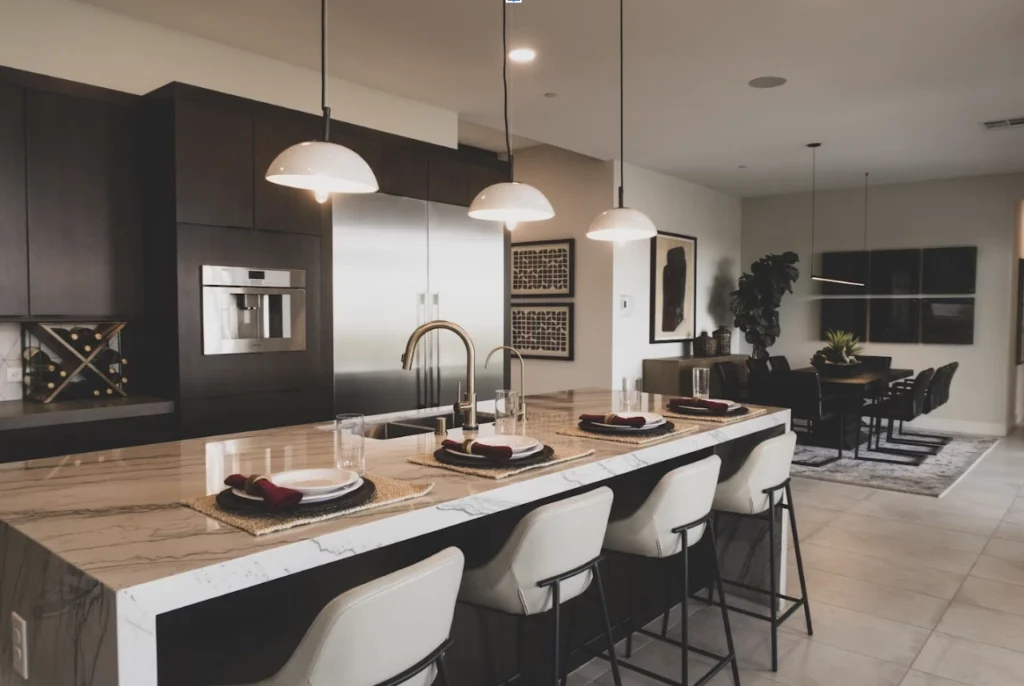
Open-plan layouts can feel overwhelming in smaller homes if not carefully planned. Zoning creates distinct areas for sleeping, dining, or working without needing walls. Rugs, lighting, and furniture placement can define these sections. For example, a rug beneath a sofa can mark the living area, while a pendant light above a dining table sets a clear boundary.
Foldable screens or shelving units can serve as temporary dividers, providing privacy without closing off the space. For studio apartments, tall shelving units that face different directions can separate the bedroom from the living room while adding storage. By establishing clear zones, you bring structure and flow to a compact environment. Each area serves a specific purpose, reducing visual chaos and improving daily comfort.
Small homes have the potential to be both stylish and highly functional when designed with intent. By integrating multi-functional furniture, vertical storage, and thoughtful use of color, a compact home can feel open and comfortable. Decluttering regularly and creating defined zones promote order and calm, while exploring hidden areas for storage unlocks new possibilities.
- About the Author
- Latest Posts

Our Editorial Team are writers and experts in their field. Their views and opinions may not always be the views of Wellbeing Magazine. If you are under the direction of medical supervision please speak to your doctor or therapist before following the advice and recommendations in these articles.


