Why Organic Tanning Is Replacing Chemical Formulas in 2026
The beauty landscape has undergone a monumental shift as we move through 2026, with consumers no longer willing to sacrifice their health for an aesthetic…
The beauty landscape has undergone a monumental shift as we move through 2026, with consumers no longer willing to sacrifice their health for an aesthetic glow. For decades, the sunless tanning industry was dominated by synthetic formulas filled with harsh preservatives and artificial dyes that often left skin irritated and the body exposed to unnecessary toxins. Today, the "toxic-free" movement has reached the mainstream, leading many to discover that organic tanning products offer a superior, safer, and more skin-loving alternative to the chemical concoctions of the past. This transition is not merely a trend; it is a fundamental reclamation of wellness in our daily beauty rituals.
For health-conscious consumers, clean beauty advocates, and particularly for those navigating the delicate stages of pregnancy and breastfeeding, the move toward plant-based tanning is a non-negotiable step in reducing their total toxic load.
The Origin Story: A Mission Born from Necessity
The evolution of organic tanning is often best understood through the stories of those who pioneered it. The brand's origin is deeply personal, rooted in a journey of health and recovery. Founder Corbin Halliday did not set out to simply create another beauty product; he created a solution after falling seriously ill with an autoimmune-related illness. During his recovery, he became acutely aware of how the chemicals in his everyday environment—including the grooming products he used—impacted his well-being.
This realization led to a radical mission: to develop a tanning range that delivered a professional-grade bronzed look without a single synthetic "nasty." By focusing on the purity of the ingredients, the brand has bridged the gap between high-performance results and medical-grade safety. It is a story of resilience that resonates with modern consumers who are increasingly skeptical of mass-produced, chemical-heavy products.
Defining "Clean": The Absence of Synthetic Nasties
To understand why organic tanning is superior, one must first look at what is missing. Traditional self-tanners often rely on a cocktail of parabens, petrochemicals, and artificial fragrances to achieve their results. These ingredients are frequently linked to skin sensitivity, hormonal disruption, and environmental damage.
The 2026 standard for "clean" tanning excludes these substances entirely. Instead of synthetic dyes that can stain the pores and cause breakouts, organic formulas use plant-derived pigments. Instead of harsh alcohols that strip the skin of its natural oils, they utilize nourishing botanical bases. This absence of toxins ensures that the skin remains hydrated and healthy, allowing the tan to fade naturally and evenly rather than peeling away in patches.
The Importance of Certified Organic Status (OFC)
In an era of "greenwashing," where any brand can claim to be natural, the Organic Food Chain (OFC) certification serves as the ultimate gold standard. Being Certified Organic means that every ingredient and every step of the manufacturing process has been scrutinized to meet rigorous standards of purity and sustainability.
For the consumer, this certification is a badge of trust. It guarantees that the product is free from GMOs, synthetic pesticides, and heavy metals. In 2026, savvy beauty enthusiasts look for the OFC seal because they know it represents a commitment to transparency that goes beyond marketing slogans. It is the difference between a product that is "natural-inspired" and one that is truly, fundamentally plant-based.
Pregnancy Safety and the Breastfeeding Mother
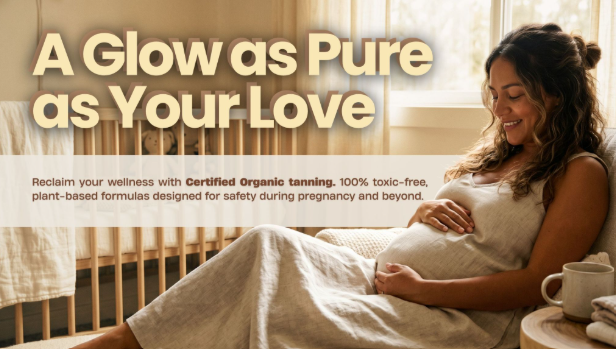
Perhaps the most vocal advocates for the organic tanning movement are pregnant and breastfeeding mothers. During pregnancy, the skin becomes significantly more sensitive and permeable. Many expectant mothers are advised to avoid certain synthetic chemicals that could potentially enter the bloodstream or cause localized irritation.
Certified Organic tanning provides a safe haven for these women. Because the formulas are derived from food-grade ingredients and essential oils, they offer a worry-free way to maintain a healthy glow throughout the journey of motherhood. There is a profound peace of mind that comes from knowing that the golden hue on your skin is the result of Tasmanian spring water, olive oil, and lime oil rather than a laboratory-created chemical compound.
Sensitive Skin: Ending the Cycle of Irritation
For individuals with eczema, psoriasis, or general skin sensitivity, traditional tanning has long been a source of discomfort. The synthetic fragrances and preservatives in chemical tans often trigger flare-ups, leaving the user with a tan that is accompanied by redness and itching.
Plant-based formulas are naturally anti-inflammatory. Ingredients like aloe vera and chamomile work to soothe the skin while the tanning agents do their work. This makes organic tanning an inclusive beauty solution, allowing those with even the most reactive skin types to achieve a sun-kissed look without the risk of a reaction. In 2026, beauty is no longer about "pain for gain"; it is about nourishment and comfort.

The Performance Gap: Do Organic Tans Work?
One of the historical hurdles for the organic movement was the perception that natural products were less effective than their chemical counterparts. However, technological advancements in 2026 have completely closed this gap. Modern organic tanners utilize DHA (Dihydroxyacetone) derived from sugar beets, which reacts with the skin's surface to produce a realistic, olive-toned tan that is indistinguishable from a natural sun tan.
Furthermore, because these products are packed with antioxidants and vitamins, they act as a treatment for the skin. Users often report that their skin texture improves with regular use, as the botanical oils and extracts provide a level of deep hydration that synthetic lotions cannot match. You are not just changing your color; you are improving your skin’s overall health.
Environmental Stewardship
Choosing organic tanning is also an environmental statement. Chemical tanning formulas often contain microplastics and silicones that are non-biodegradable and harmful to aquatic life when washed down the drain. Organic, plant-based formulas are biodegradable and sourced through sustainable farming practices.
By supporting brands that prioritize Certified Organic ingredients, consumers are helping to protect the ecosystems where these plants are grown. From the sourcing of Tasmanian botanicals to the eco-friendly packaging, the entire lifecycle of an organic tan is designed to have a minimal impact on the planet.
The Rise of the Health-Conscious Consumer
As we look forward, it is clear that the "clean beauty" movement is only gaining momentum. The consumer of 2026 is more educated and empowered than ever before. They read labels, they research founders, and they value the integrity of the products they bring into their homes.
The shift toward organic tanning is a reflection of a broader cultural movement toward longevity and preventative health. We are realizing that what we put on our bodies is just as important as what we put in them. By opting for a toxin-free glow, we are choosing a lifestyle that honors our biology and respects our environment.
Final Thoughts
The era of the "chemical tan" is coming to a close. As we embrace the benefits of plant-based ingredients and the safety of Certified Organic status, we are setting a new standard for the beauty industry. Whether it is a founder's story of healing, the need for pregnancy safety, or simply a desire for better skin health, the reasons for switching to organic are overwhelming.
Switching to a plant-based formula is a small change that yields significant health benefits. It allows you to enjoy the confidence of a bronzed complexion while knowing your body is being nourished by the best that nature has to offer. In 2026, the most beautiful tan is the one that is entirely "toxic-free."
Filed underSkin conditions, Fertility & pregnancy