Transformation. Convenience. Sanctuary. These three words hold the key to solving one of life’s most persistent wellness challenges: maintaining a consistent fitness routine when time, energy, and motivation are already stretched thin. For anyone navigating the demands of careers and family, the barrier to exercise often isn’t a desire to work out—it’s accessibility.
A bespoke home gym carved out from your garage space eliminates every excuse, placing your wellness routine just steps from your daily life. No membership fees, no travel time, no waiting for equipment, and no self-consciousness. This is your private space to practice consistency, and it’s easier than you might think to make your garage your personal workout environment.
The Door Difference
The foundation of any successful home gym is a safe and secure place, which lies in a detail that many people overlook: the garage door itself. Traditional overhead garage doors dominate most homes, but they fundamentally compromise your wellness space because they eat into valuable ceiling height that compromises yoga flows and overhead stretches. Garage door specialist, Wessex Garage Doors, recommend side-hinged garage doors instead which solve several design challenges simultaneously.
Side hinged doors offer unparalleled ventilation control too: crack open one door during your workout to create perfect airflow without fully exposing your space to the elements or neighbours, so you can maintain that crucial sense of privacy and seclusion. This seemingly small design choice transforms the psychological experience of your space, turning what could feel like a makeshift garage gym into a purposeful, welcoming wellness environment that beckons you back day after day.
From Clutter to Calm
Once your door is in place, the real transformation begins with stripping away the garage identity entirely.
Redefine the floor
Garage floors are typically hardwearing to withstand heavy vehicles, tools and gardening equipment. But this isn’t what you want from a gym. Invest in interlocking rubber gym tiles or foam mats that will cover the cold concrete completely, creating a cushioned surface that will define the space as an area dedicated to movement rather than storage. A large mirror along one wall will open up the space and reflect light, often a problem with garages that can be dark and dingy, so it doesn’t feel claustrophobic and cramped.
Set the tone with lighting and colour
Replace harsh overhead fluorescent lights with warm LED panels or floor lamps to create ambient lighting that feels welcoming, whether you’re working out at six in the morning or 10 at night. Paint the walls in calming, neutral tones, like soft greys, warm whites, or muted greens, which will separate this space mentally from the utilitarian garage it once was into a dedicated gym.
Lastly, you’re likely to still need to use a portion of your garage for storage, but it doesn’t need to be on show. Hide boxes behind a curtain or store your items in a designated closed cabinet that will keep clean sightlines and minimise distractions.
Finishing touches
A commercial gym has a certain atmosphere but you can replicate this at home with a small sound system or speaker dock for workout playlists, music is critical for creating the right ambience. Additionally consider a wall-mounted fan to keep cool airflow, and perhaps some art prints on the walls to add visual interest. The goal here is sensory transformation: when you step through those doors, you want every element to communicate that you’ve entered a space dedicated to your own wellbeing.
Essential kit for Long-Term Success
Fitness later in midlife requires a different approach to the high-impact workouts of your twenties and thirties. The equipment you choose needs to reflect that, centring on strength, mobility, and recovery rather than intensity.
Strength essentials
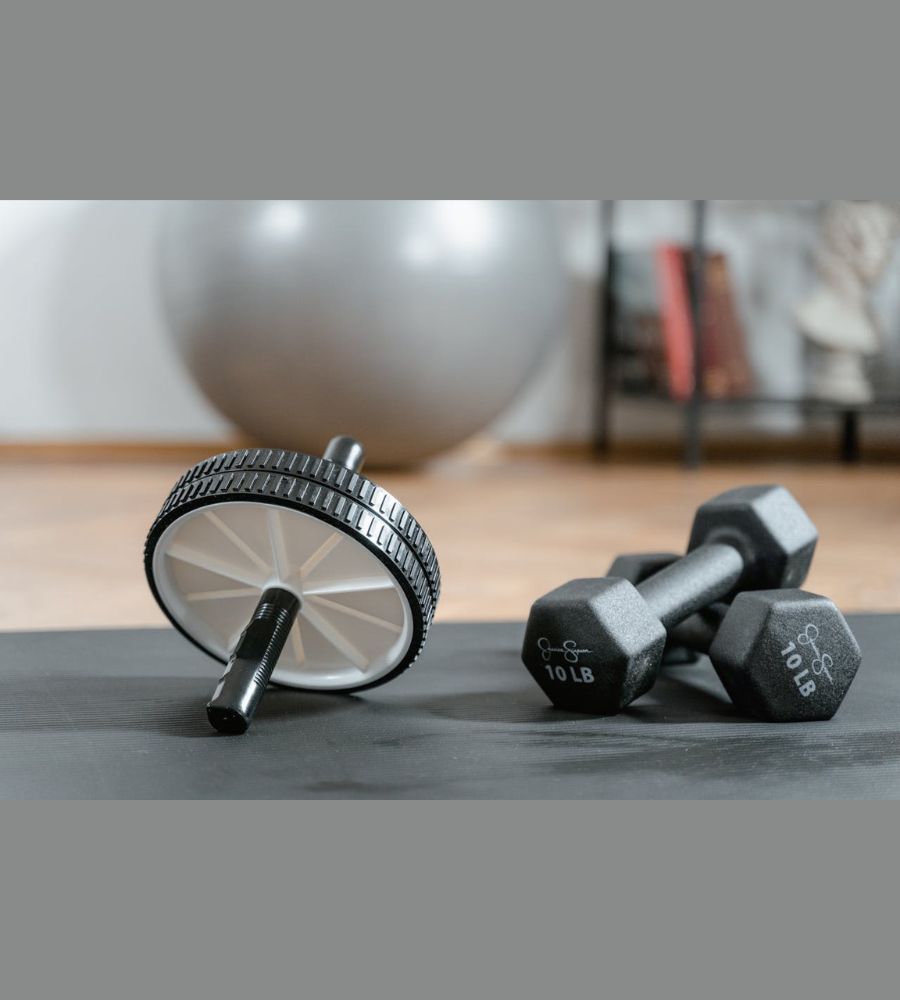
Adjustable dumbbells or a set of kettlebells in various weights are a great place to start, because they offer so much versatility in a compact space, while still helping you build the functional strength that’s so important for maintaining bone density and metabolic health through perimenopause and beyond.
Mobility and recovery tools
Add a high-quality yoga mat that provides adequate cushioning for floor work, stretching, and the restorative practices that help us manage stress as effectively as any cardio session. Resistance bands in multiple tensions are also an affordable and compact addition that delivers targeted strength work and rehabilitation exercises without the joint stress that becomes increasingly important as our bodies change.
Optional additions
Depending on the size of your garage, there are additional features you can include to build your fitness even further. A pull-up bar, for example, is great for building confidence and strength in one go, while a treadmill makes your 10K training easier in the winter when dark and rainy mornings feel too off-putting.
That said, don’t be tempted to fill your home gym with equipment you’re not going to use. The best gym is one you’ll use consistently, and a minimal set-up that you’re comfortable using is a far better gym than a fully kitted-out space that looks great on paper but doesn’t work for you.
The minimalist advantage
Your garage transformation should be focused on removing every barrier between you and the consistent exercise practice that changes everything about how you navigate life as you age. With a thoughtfully designed space that feels like a sanctuary rather than a storage space and carefully chosen equipment that helps you meet your fitness goals, you’ll create your perfect gym that you’ll look forward to using every day rather than dreading.