No Lycra, Plenty of Style: How the Brompton World Championship Is Putting the Fun Back Into Cycling
The Brompton World Championship 2026 returns to London on 5 September with 750+ riders, a Le Mans start, Strava art and no Lycra. Wellbeing Magazine’s…
London is preparing for one of cycling’s most unconventional sporting events as the Brompton World Championship returns to the capital on 5 September 2026 — complete with a Le Mans-style start, folding bikes, fancy dress and one very important rule: no Lycra.
There are cycling races built around marginal gains, aerodynamic skinsuits and shaving seconds from a personal best. Then there is the Brompton World Championship 2026, where competitors sprint towards a row of folded bicycles, unfold them as quickly as possible and race around one of Britain’s most iconic cycling venues — preferably while looking rather fabulous.
Taking place at Lee Valley VeloPark in Queen Elizabeth Olympic Park, London, on Saturday 5 September 2026, the championship will bring together more than 750 Brompton riders for what the company describes as its biggest race yet. Riders will compete across nine heats, completing five laps of the circuit in an attempt to qualify for the men’s and women’s finals.
Yet speed is only part of the appeal.
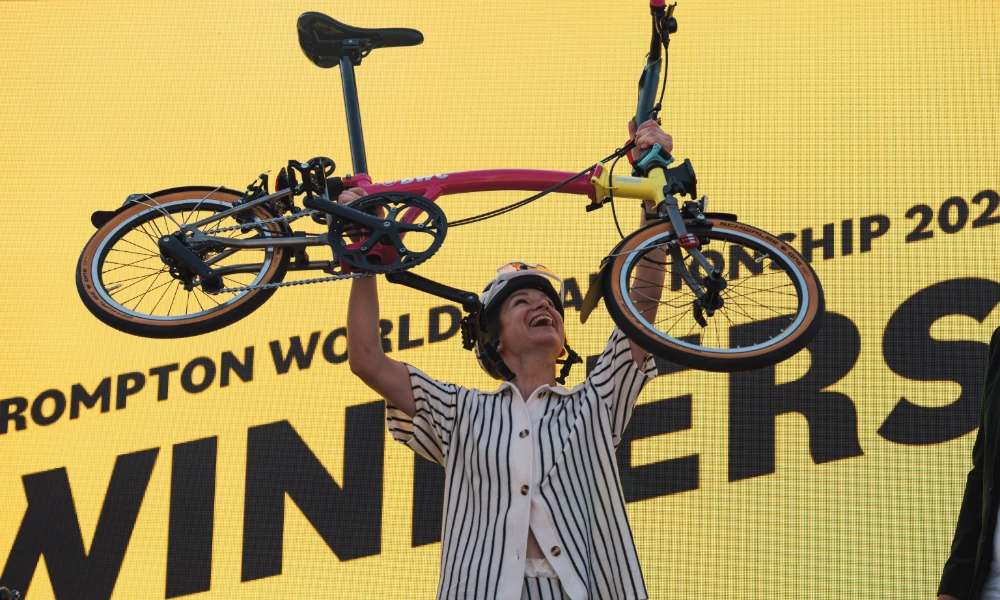
The Brompton World Championship has developed a personality all of its own, combining competition with creativity, community and a distinct refusal to take cycling too seriously. Lycra has traditionally been banned, while imaginative clothing and fancy dress are positively encouraged. Previous championships have seen riders swap conventional cycling kit for shirts, jackets and elaborate costumes, turning the starting line into something that sits somewhere between a bike race, a garden party and a particularly energetic fashion parade.
And this year, Wellbeing Magazine founder and RB100.fitness editor Richard Branson has been invited to join them.
From Land’s End to the Brompton World Championship
For Richard, the Brompton is far more than a commuter bike.
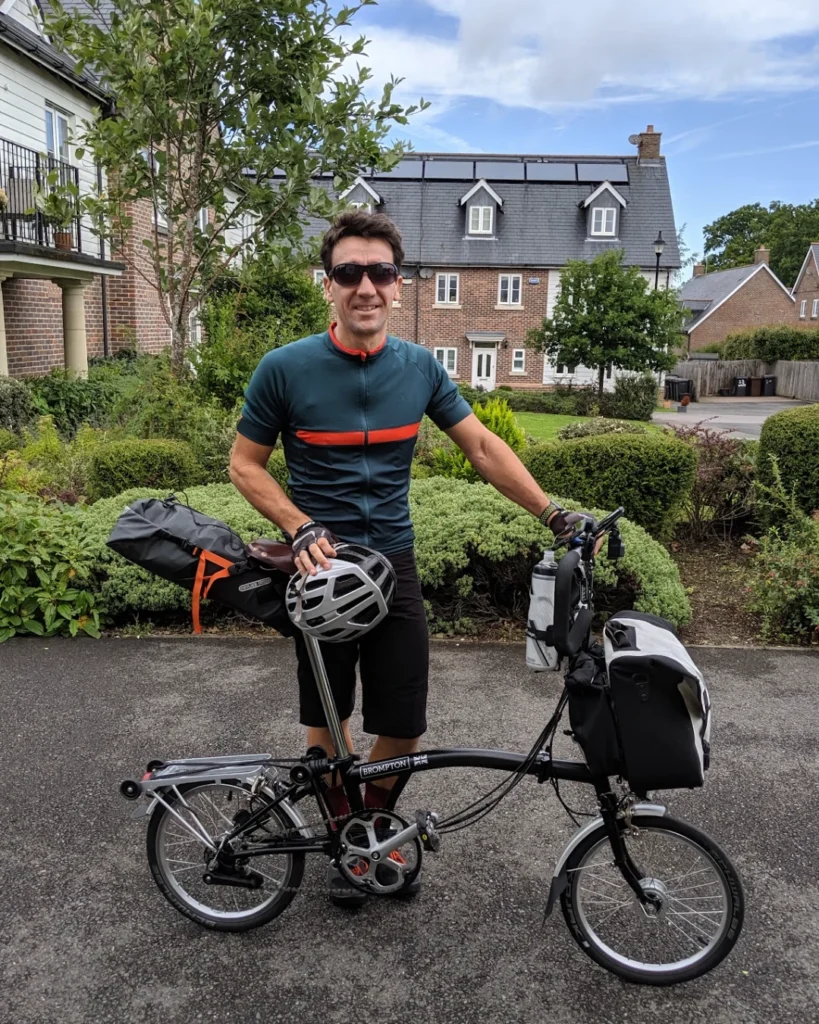
He has previously ridden his Brompton from Land’s End to John O’Groats, as well as using the folding bike to explore cities across Europe, discovering just how capable a seemingly small urban bicycle can be when you decide to take it somewhere unexpected.
The Brompton World Championship therefore presents a rather different challenge.
Instead of packing the bike for a long-distance journey or unfolding it outside a European railway station, Richard will be lining up against hundreds of fellow Brompton enthusiasts at Lee Valley VeloPark — and, in keeping with championship tradition, there will be no Lycra.
He will instead be taking to the track in a blazer.
For someone accustomed to endurance challenges and fitness events, the prospect of racing seriously while dressed rather less seriously is part of the attraction.
The Brompton World Championship represents something that can sometimes disappear from recreational sport: playfulness.
There are medals to chase and competitors who will undoubtedly take the racing seriously, but the event also celebrates the simple pleasure of getting on a bike, meeting other people and having an adventure.
London Becomes a Giant Cycling Canvas
Brompton has chosen an equally unconventional way to announce this year’s championship.
Renowned GPS and Strava artist Nico Georgiou transformed London itself into a giant canvas, cycling approximately 150km through the capital to create a Brompton-inspired illustration that only became fully visible when his GPS route was uploaded digitally.
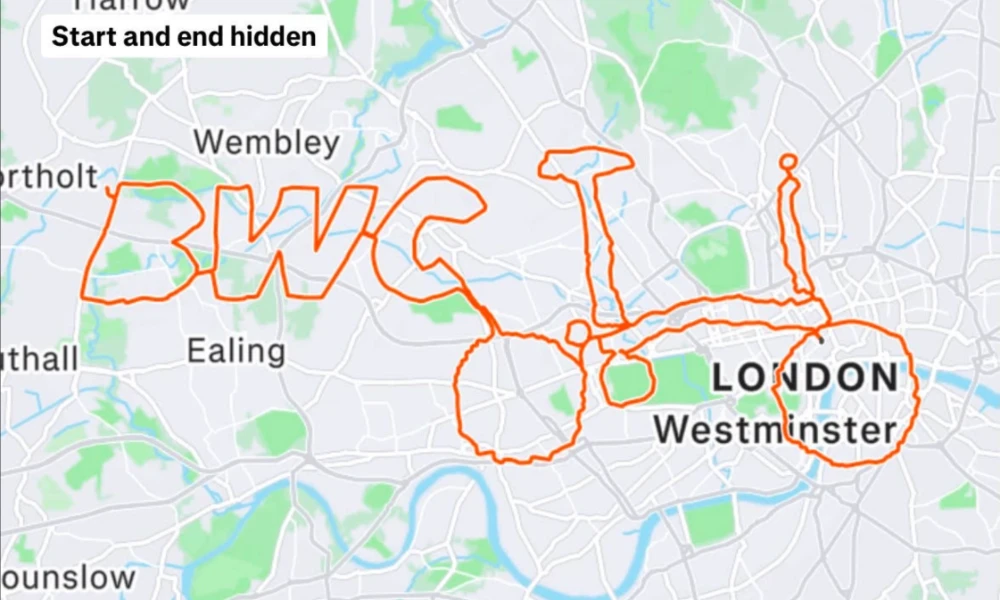
Strava art uses recorded GPS routes to create pictures across a map, meaning every road, junction, bridge and diversion becomes part of the drawing.
It can involve extraordinary levels of planning.
Georgiou has previously explained that creating these artworks requires working around the physical realities of a city — rivers, railway lines, one-way systems, footbridges, road closures and parks can all affect whether the intended drawing is possible.
For the Brompton project, London’s streets effectively became the lines of the artwork, connecting the brand’s cycling heritage with the city where the folding bike was born.
It is an appropriate tribute to a bicycle that has always encouraged people to see cities a little differently.
What Happens at the Brompton World Championship?
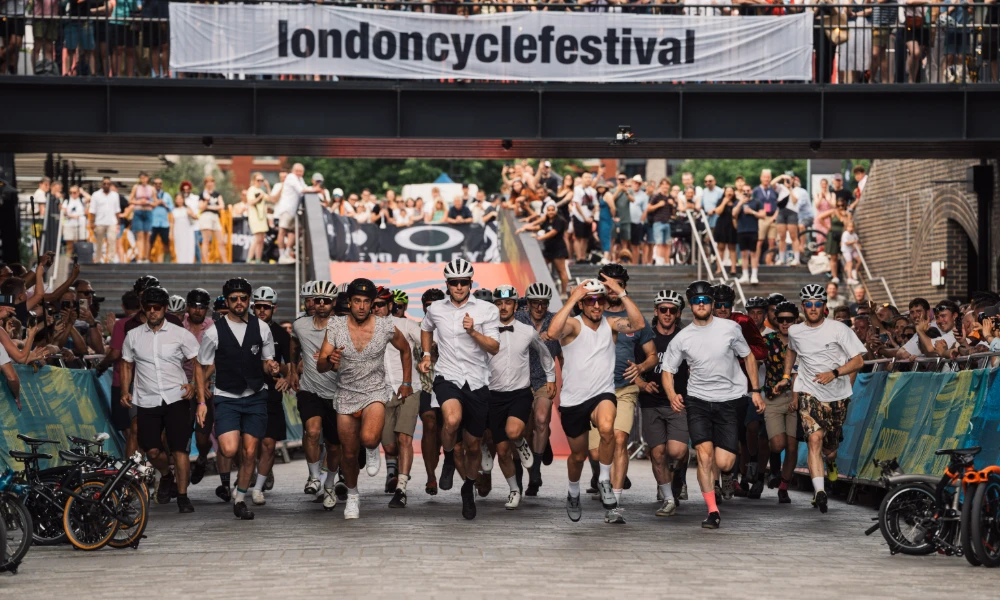
The most recognisable feature of the championship is its unusual Le Mans-style start.
Rather than beginning seated on their bikes, competitors line up away from their folded Bromptons. When the race begins they run towards their bicycles, unfold them and then set off around the circuit.
For 2026, riders in the main competition will complete five laps before the fastest competitors progress to the finals. Brompton says more than 750 riders are expected to participate across nine heats at Lee Valley VeloPark.
There is also a new BWC Relay Race for 2026. Teams of up to four riders will combine four laps with four folds, adding yet another layer of distinctly Brompton-style chaos to proceedings.
The wider event is intended to be as much a celebration of cycling culture as a race. Visitors can expect bike demonstrations and test rides, folding competitions, workshops, community talks, entertainment, food and drink and a sponsor village.
Spectators can attend free of charge.
Why Events Like This Matter for Wellbeing
From a wellbeing perspective, perhaps the most interesting aspect of the Brompton World Championship has little to do with who crosses the finish line first.
Events such as this remind us that physical activity does not always have to look like structured exercise.
Cycling can be transport, exploration, social connection, competition, escapism and play — sometimes all within the same ride.
That matters because one of the biggest barriers to maintaining an active lifestyle is the perception that exercise needs to happen within a rigid fitness environment. Movement becomes another task to complete, another statistic to record or another goal against which we judge ourselves.
A bicycle offers something different.
You can ride to work. Explore a neighbourhood. Meet friends. Discover a new city. Ride across Britain. Race around an Olympic cycling venue wearing a blazer.
The physical activity happens almost as a by-product of the experience.
There is also something valuable about events that combine movement with belonging. Brompton describes its global community as an important part of the brand, with community groups and events bringing riders together in cities around the world.
Social connection and physical activity are both important elements of our wider wellbeing, and cycling has the unusual ability to combine the two while also giving us independence and access to the outdoors.
Perhaps that explains why folding-bike culture has become much more than a practical solution for commuters.
A Bicycle Built Around Exploration
The first Brompton was created by Andrew Ritchie in 1975, and the design ultimately became one of the most recognisable folding bicycles in the world.
Its appeal lies largely in a very simple idea: making cycling easier to integrate into everyday life.
A Brompton can be folded down small enough to take on trains, place in a car or carry into buildings, removing some of the logistical barriers associated with a conventional bicycle. That portability has helped create a particularly adventurous community of riders who frequently combine cycling with rail journeys, international travel and urban exploration.
For Richard, that flexibility is precisely what made it possible to take the bike far beyond its traditional commuting territory.
The journey from Land’s End to John O’Groats demonstrated that a folding bike designed around city life can be surprisingly capable when pointed towards the open road.
The upcoming championship will bring it back to its urban roots — although racing one around an Olympic cycling venue while wearing a blazer may prove an entirely different kind of endurance test.
Cycling Without Taking Yourself Too Seriously
Elite sport has its place, but wellbeing also benefits from spaces where movement is joyful rather than intimidating.
The sight of hundreds of adults sprinting towards tiny folded bicycles dressed in jackets and costumes might appear slightly eccentric.
That may be precisely the point.
The Brompton World Championship celebrates a form of cycling that is accessible, sociable and full of personality. It invites people to compete without requiring them to adopt all the conventions normally associated with competitive cycling.
As Richard prepares to line up at Lee Valley VeloPark, his ambitions may include putting in a respectable performance.
But there is another important decision still to be made.
What exactly does one wear with a blazer when racing a Brompton?
We’ll report back after 5 September.
Brompton World Championship 2026: Event Details
When: Saturday 5 September 2026
Where: Lee Valley VeloPark, Queen Elizabeth Olympic Park, London
Race: Brompton World Championship 2026
Riders: More than 750 expected
Format: Le Mans-style start, five-lap heats and men’s and women’s finals
New for 2026: BWC Relay Race
Dress code: Forget the Lycra — creativity and fancy dress are part of the tradition
Spectators: Free
Tickets: Available through Brompton
Find out more and buy race tickets via the official Brompton World Championship website.
Filed underFitness & movement, United Kingdom, Connection