
Compassion in Action: 5 Essential Books on Engaged Buddhism, Social Justice, and the Sacred Feminine
For a long time, spiritual practice in the West was sold as a private affair—something you did on a cushion to find your own peace.

For a long time, spiritual practice in the West was sold as a private affair—something you did on a cushion to find your own peace. But a powerful current of thinkers has always insisted that real awakening can't stop at the edge of the self.
Drawing on Buddhist wisdom, the power of the divine feminine, and a fierce commitment to justice, these five books argue that inner transformation and outer action are two halves of the same practice. They connect meditation to climate activism, compassion to the fight against poverty and sexism, and the ancient figure of the goddess to the very real work of healing a broken world. Together they offer a vision of spirituality that is engaged, embodied, and unafraid to take a stand.
Searching for Tara
The Goddess Who Became a Buddha
by James William Coleman
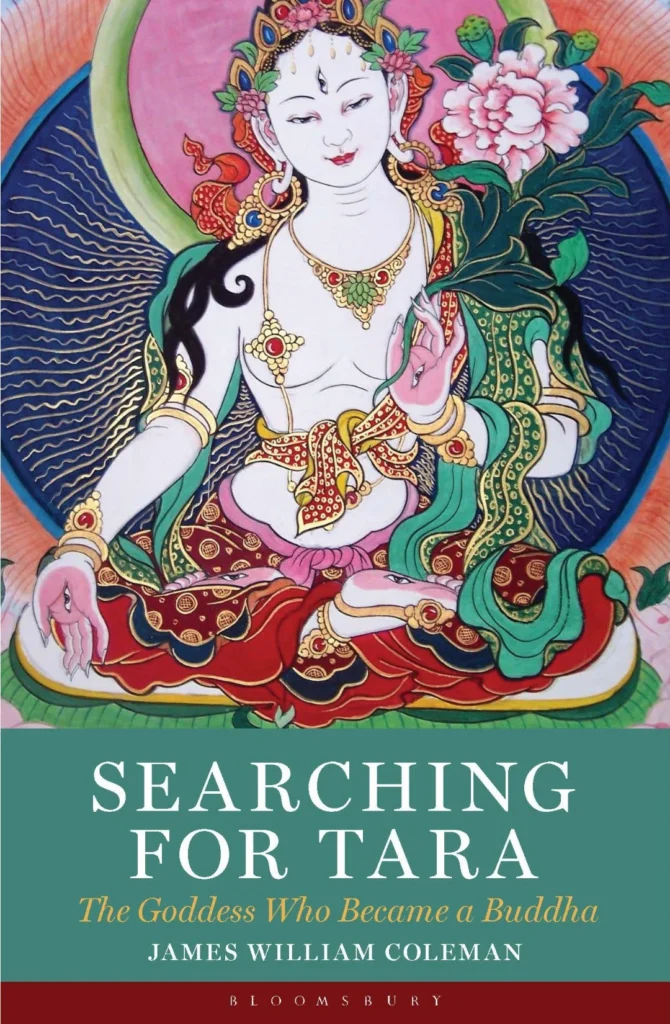
Tara is one of the most beloved figures in Tibetan Buddhism—a female buddha who embodies both tender, nurturing love and fierce, wrathful power. In this thoughtful book, sociologist of religion James William Coleman traces her long history, from the ancient goddess traditions that were later eclipsed by patriarchy to her flowering as a fully awakened being in Vajrayana Buddhism. A Professor Emeritus at Cal Poly San Luis Obispo and a longtime Buddhist practitioner, Coleman is interested in more than history. He argues that the West has never had a complete picture of the awakened feminine—one that honors wisdom, sexuality, nurturing love, and righteous ferocity all at once—and that recovering it is essential for bringing our imbalanced culture back into harmony. With a foreword by teacher Lama Palden Drolma, the book weaves scholarship, psychology, and practice into a compelling case that Tara has something urgent to offer a world in crisis.
Braiding Sweetgrass
Indigenous Wisdom, Scientific Knowledge, and the Teachings of Plants
by Robin Wall Kimmerer
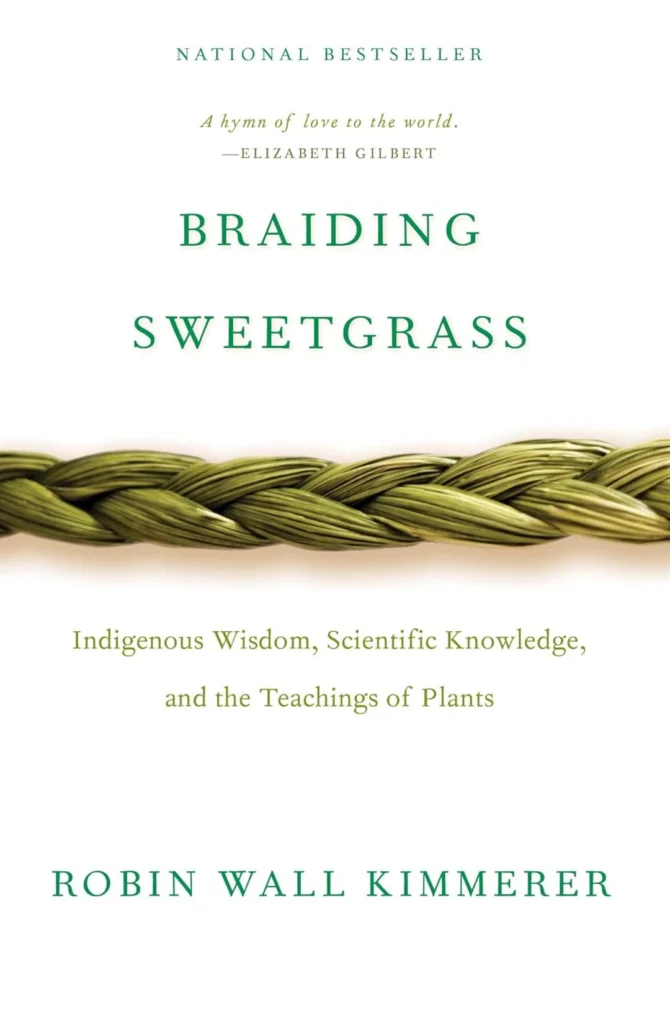
Robin Wall Kimmerer is both a trained botanist and an enrolled member of the Citizen Potawatomi Nation, and in this beloved, long-running bestseller she braids those two ways of knowing into a single luminous whole. As a scientist she reveres careful observation; as an inheritor of an Indigenous tradition she was raised to see plants and animals as our oldest teachers and the earth not as property but as gift. Across a series of lyrical essays—on wild strawberries, on the sacred sweetgrass of the title, on the “grammar of animacy” in her ancestral language—she makes a quietly radical argument: that the cure for our broken relationship with the living world is reciprocity, a return to gratitude and mutual care between people and the land. Warm, wise, and rooted in a maternal image of the earth, Braiding Sweetgrass has become a defining text of contemporary eco-spirituality. For readers drawn to the sacred feminine and the healing of our bond with nature, it is essential and unforgettable reading.
World as Lover, World as Self
Courage for Global Justice and Ecological Renewal
by Joanna Macy

Joanna Macy, who died in 2025, was one of the great pioneers of engaged, eco-conscious Buddhism, and this enduring classic distills her life's work. A scholar of Buddhism, systems thinking, and deep ecology, Macy grounds the book in the Buddha's teaching of interdependent co-arising—the idea that everything in existence is woven into a single web, so that any change in one part affects the whole. From that insight she builds a blueprint for social change, arguing that the crises of our time flow from a false sense of separation, and that despair and apathy can be transformed into courageous, collaborative action. Rather than retreating from the world's pain, Macy invites us to feel our connection to it and let that connection fuel activism on behalf of the planet and the vulnerable. Practical, hopeful, and quietly radical, it remains a foundational text for anyone who wants to unite spiritual practice with the work of justice.
This-Worldly Nibbana
A Buddhist-Feminist Social Ethic for Peacemaking
by Hsiao-Lan Hu
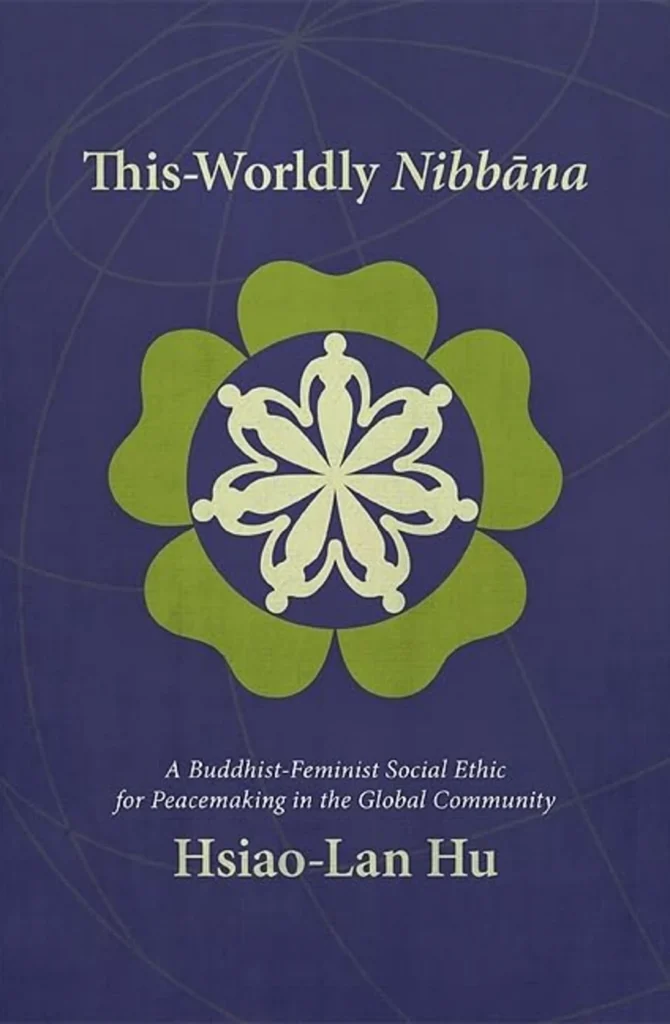
Hsiao-Lan Hu offers a bracing challenge to any spirituality that treats liberation as a purely private, individual affair. Returning to foundational Buddhist concepts—interdependence, non-self, and the end of suffering—she argues that they were never meant to be inward-looking escapes from the world, but ethical calls to transform it. From that foundation, Hu builds a Buddhist-feminist social ethic aimed squarely at the systems that cause harm: global capitalism, structural sexism, and class inequality. Personal awakening, she insists, cannot be separated from communal well-being, and true peacemaking means confronting the conditions that produce violence and oppression. Rigorous and clear-eyed, this is a book for readers who want their practice to have teeth—to move from individual calm toward collective liberation.
The Body Is a Doorway
A Memoir: A Journey Beyond Healing, Hope, and the Human
by Sophie Strand
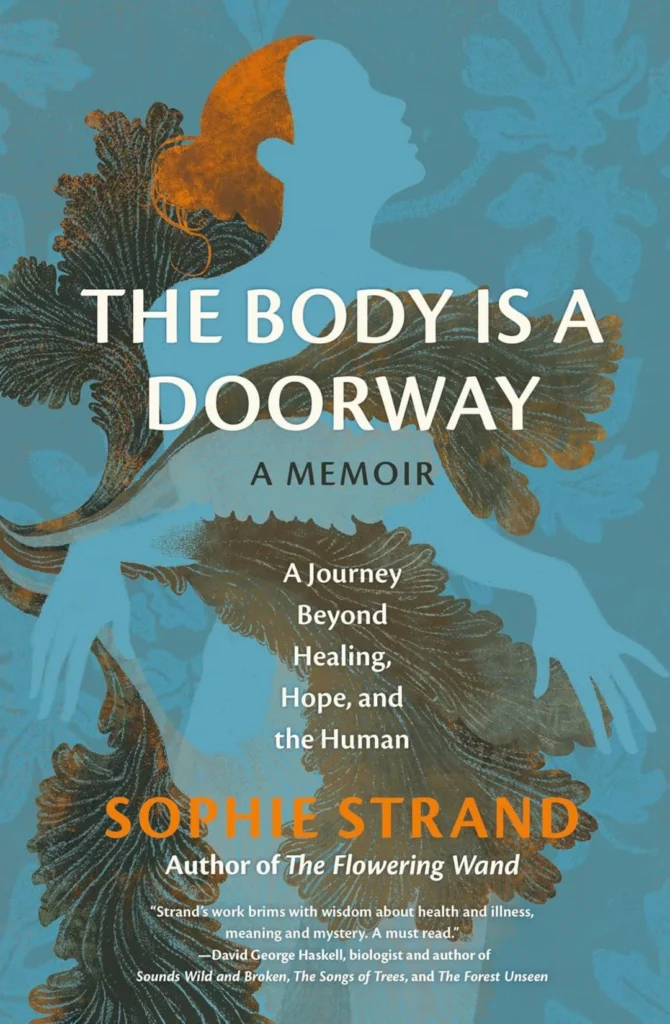
At sixteen, Sophie Strand—bright, agile, and fearless—was suddenly struck by a mysterious, debilitating illness while traveling abroad, and her life became a maze of specialists, medications, and anaphylaxis with no clear explanation. For years she chased a diagnosis and a cure. But in this lyrical, radically expansive memoir, the poet and ecological thinker traces how she slowly arrived at a different understanding of her own body. Worn down by the medical-industrial complex and drawn ever deeper into the living world around her Hudson Valley home, Strand comes to see her illness through the lens of ecology—a tangled web not unlike the underground fungal networks that connect an entire forest. Moving through phlox pollen and woodchucks, first love and grief and the slow work of surviving, she asks unsettling questions: What if sickness is not a separation from the body but a return to it? What if there is healing beyond the human idea of a cure—something wilder, more symbiotic, more alive? Tender and unflinching, this is a book that dissolves the false borders between the personal, the ecological, and the spiritual.
What unites these five very different books is a single, powerful conviction: that genuine spiritual awakening naturally overflows into how we live in the world. Whether recovering the fierce wisdom of the sacred feminine, healing our sense of separation from the earth, confronting the systems that cause suffering, or returning to the body we were taught to ignore, each of these authors refuses to let contemplation become an excuse for turning away from the world. They remind us that the point of looking inward is, ultimately, to live more wisely and lovingly outward—and that in a time of ecological and social crisis, that kind of engaged, embodied spirituality may be exactly what the world needs.