
Preventative Health Screenings: Understanding What to Expect when Getting Examined Before the Symptoms Appear
For decades, an artery can narrow without showing any symptoms at all. A small alteration can exist unnoticed in the chest or in the stomach. Sometime
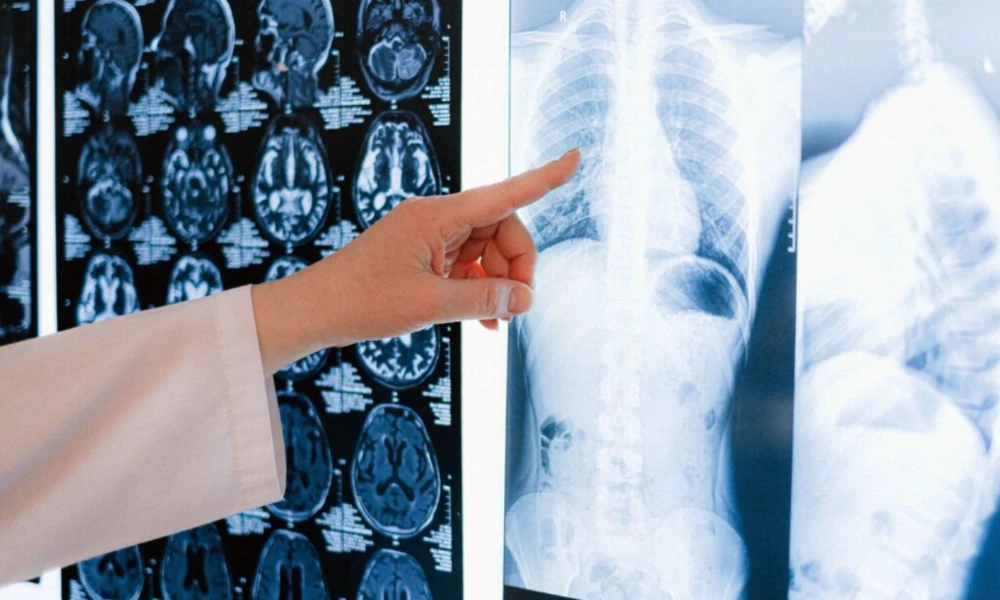
For decades, an artery can narrow without showing any symptoms at all. A small alteration can exist unnoticed in the chest or in the stomach. Sometimes, diseases develop gradually and would be visible in imaging before one notices anything. That is the difficulty with early diseases. They do not notify you, and when they do, it is too late to react in the most simple way.
Preventive health screenings refer to examining a little bit sooner. One gets examined when one feels fine since feeling fine provides no information. That approach may sound weird or even annoying. Trying to find something that one cannot notice seems to ask for trouble. So before deciding to participate in them, it is better to know how far these screenings go.
What Screening Without Symptoms Actually Means
Most scans happen after something goes wrong. You hurt your shoulder; you get the shoulder looked at. Screening turns that around. It looks for early signs before your body has said anything.
A useful idea here is a baseline. Get a clear picture of your heart, your organs or your blood vessels now, while things are steady, and you have something to compare against later. One result on its own says little. A second one, a year or two on, can reveal a change that a single snapshot never could. The value is in the comparison, not the number.
It is not for everyone, though. What gets checked, if anything, depends on your age, your history, and what your doctor thinks is worth watching.
Which Scans Might Be Involved
There is no one scan that does all of the work for you; it all depends on what your doctor wants to investigate, and there are several available at any local clinic.
An X-ray scan is fast and traditional, while a chest X-ray will show the state of the lungs and the size of the heart. Ultrasound uses sound waves without radiation, which makes it perfect for investigation of soft organs like the liver, kidneys and thyroid, as well as for blood vessels. An echocardiogram is an ultrasound of the heart; it shows how the heart's chambers and valves work. The CT scan creates a three-dimensional picture based on many layers of X-ray scans, which allows seeing much more than just a two-dimensional image. As for dentistry, wide OPG X-ray and 3D cone beam images allow detecting problems with teeth and jaws even before they become painful.
What It Feels Like on the Day
The experience is usually calmer than people expect.
An X-ray takes seconds. You hold still against a plate or on a table, and it is done. An ultrasound or echocardiogram is just as gentle. A small probe and a little gel move across the skin, with no radiation and nothing to feel. A CT scan means lying on a table that slides through a large ring, which is open at both ends and over quickly, so it suits people who dislike tight spaces. Dental scans are fast too, with the machine turning around your head while you stay still.
If anything about it worries you, say so when you book. The team can walk you through each step, which is a normal part of the visit.
What Screening Can and Cannot Tell You
Here it is better to be honest than reassuring. A scan is not a promise, and it can cut both ways.
A clear result tells you about today. It does not promise anything about next year. Screening can also turn up things that were never going to cause harm, which leads to more tests and more worry for no real gain. More scanning is not automatically better.
That is why your doctor sits at the centre of it. The right test, for the right reason, ordered by someone who knows your history, is worth far more than one picked at random. It helps a doctor decide. It does not decide for you.
Where to Start With Preventative Screening
If any of this feels relevant, start with your GP, not a booking form. Tell them what is on your mind and let them work out which scan, if any, makes sense. In Australia you normally need a referral from a GP or specialist first. Some scans attract a Medicare rebate if you meet the rules, and others are paid privately, so ask about cost up front.
After that, it helps to have somewhere close by. People across south-western Sydney can access radiology in Campbelltown that brings X-ray, ultrasound, echocardiogram, CT and dental imaging together under one roof, so most everyday scans can be done near home.
Conclusion
Enjoy feeling well. Just do not treat it as proof, because the two are not the same. Screening will not hand you certainty, and it is not something to chase alone or on a whim. Used with some thought, on a doctor's advice, and with clear eyes about what a scan can and cannot show, it is a practical way to stay a step ahead. For many people, that is the point. Turning "I feel fine" into something closer to "I actually know."
Filed underDental