Surgical vs. Non-Surgical Facelift: Choose the Right Path in Houston
Weighing a surgical facelift against non-surgical options? Here's the real breakdown on longevity, results, and how to make the right call for your face.

90% of facelift patients report being "highly satisfied" with their results, and they feel an average of 6.9 years younger after surgery. That's a remarkable number. But it doesn't mean a surgical facelift is automatically the right answer for you. The truth is that some people are throwing money at injectables when a single surgery would have solved the problem years ago, while others are considering going under the knife long before they actually need to. Getting this decision wrong costs you time, money, and potentially your confidence. This guide walks through the real differences between surgical and non-surgical facial rejuvenation, who each approach actually suits, and what the data says about long-term outcomes. No hype in either direction.
The Market Signal Worth Paying Attention To
Before getting into the clinical comparison, it helps to understand what the broader landscape looks like right now. The global cosmetic surgery and procedure market was valued at USD 72.7 billion in 2025 and is projected to grow to USD 161.3 billion by 2033, at a CAGR of 10.5%. That's not a niche industry anymore. It's mainstream consumer behavior.
The growth isn't concentrated in one approach, either. The British Association of Aesthetic Plastic Surgeons reported a 5% overall rise in cosmetic surgical procedures in 2024, with that surge largely driven by facial rejuvenation and body contouring procedures. At the same time, blepharoplasty jumped 13%, moving up to the third most popular procedure, while face and neck lifts increased by 8% and brow lifts saw a 20% jump.
Non-surgical procedures are growing too, but surgical options are clearly holding their own. What this tells you: people aren't abandoning surgery for non-surgical routes, or vice versa. The smart ones are using both in sequence, which actually turns out to be the most evidence-backed approach.
What Non-Surgical Treatments Can and Cannot Do
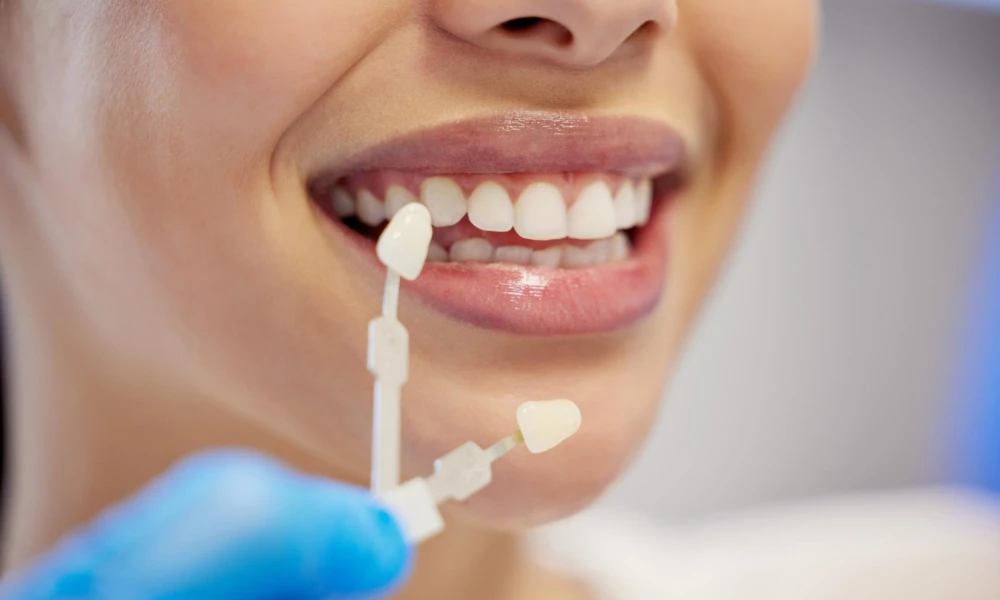
Non-surgical facial rejuvenation covers a wide range: Botox, dermal fillers, RF microneedling, ultrasound-based tightening devices like Ultherapy, and thread lifts. These tools have gotten genuinely better over the last decade. The development of new, longer-lasting dermal fillers that encourage the body's natural collagen production delivers a dual action that prolongs a youthful appearance. That's a real advance.
But longevity is still the honest limitation. Results range from 3 to 4 months for Botox, 6 to 12 months for dermal fillers, and around 12 to 18 months for advanced non-invasive laser protocols such as Fotona 4D. You can extend that window with combined protocols, and some patients do get closer to two years of sustained improvement. Still, you're maintaining, not resetting.
The more important boundary is structural. If the issue is early volume loss or fine lines, non-surgical options can be very effective. If the issue is heavy jowls, loose neck skin, or deeper structural descent, they can help only to a point. That point matters more than most patients initially understand.
My take: non-surgical treatments are genuinely excellent for people in their 30s and early 40s dealing with early volume loss and surface texture concerns. They're being oversold to people in their 50s and 60s with significant laxity, where surgery would produce far better results per dollar spent.
What Surgery Actually Delivers
A surgical facelift, particularly a technique that addresses deeper facial structures rather than just the skin surface, produces changes that injectables simply cannot replicate. Studies have shown that 90% of patients were "highly satisfied" with their decision to undergo facelift surgery, and on average, patients felt they looked 6.9 years younger.
That satisfaction holds remarkably well over time. One year after a facelift procedure, 87 of 89 patients in one study reported that the improvement in their facial appearance was very good or beyond their expectations. When surveyed again on average 12.6 years later, most patients still reported the same level of satisfaction. A decade-long result is something no filler can honestly promise.
Research using convolutional neural networks to assess age reduction found that SMAS-based facelift approaches produced significantly greater age reduction at 5.85 years compared to skin-only techniques at 2.95 years. Technique selection matters enormously. Not all facelifts are the same procedure. Surgeons who work at deeper tissue planes, repositioning facial structures rather than just pulling skin, produce outcomes that look natural and last longer. When patients in Texas research this distinction, they often come across the work of a Deep Plane Facelift Surgeon in Houston whose approach focuses on exactly that kind of structural repositioning rather than surface-level tension.
The Pre-Surgery Non-Surgical Phase: A Real Strategy
Here's a pattern the research actually supports. A study of 157 patients who had facelift surgery before age 50 found that, on average, patients had started non-surgical treatments at age 37 and underwent their facelift at age 44. They weren't choosing one over the other. They were sequencing them.
Patients in their 40s who previously used non-surgical treatments to support the aging process before having their facelift showed a 94% satisfaction rate with their surgery decision, and ten years after surgery they still judged their appearance as being 10 years younger than their chronological age. That's the compounding effect of doing both things at the right time.
This is the approach I'd personally follow. Start maintaining in your late 30s with targeted injectables and good RF microneedling. When structural laxity becomes the dominant issue, usually in the mid-40s to 50s, that's when surgery makes economic and aesthetic sense. Waiting until things are significantly advanced just raises the complexity of the surgical correction needed.
The CLEAR Framework: A Decision Tool for Choosing Your Path
Most of the decision guides you'll find online point at vague things like "consult a surgeon." True, but not useful on its own. The CLEAR Framework gives you five checkpoints to assess before you walk into any consultation:
- Concern type: Is your primary concern texture and fine lines (non-surgical territory) or visible jowling and neck laxity (surgical territory)?
- Longevity expectation: Are you willing to maintain results every 6 to 18 months indefinitely, or do you want a longer reset?
- Expense horizon: Have you modeled the cumulative cost of ongoing non-surgical treatments over five to ten years versus a single surgical investment?
- Age of change: Is your aging pattern early-moderate or advanced? Early-moderate favors non-surgical. Advanced descent responds to surgery.
- Recovery tolerance: Do your work and personal circumstances allow for a surgical recovery window of two to four weeks, or is downtime genuinely prohibitive right now?
If your answers point mostly toward the surgical column but recovery is the sticking point, that's not a reason to stay on fillers forever. It's a reason to plan timing carefully, not to avoid the conversation.
Side-by-Side: The Numbers That Matter
| Factor | Non-Surgical (Fillers / RF / Botox) | Surgical Facelift |
|---|---|---|
| Average result duration | 3 months (Botox) to 18 months (laser protocols) | 7 to 12+ years depending on technique |
| Patient satisfaction at 1 year | Significant improvement reported in 2024 studies | ~90% highly satisfied (PRS study data) |
| Structural laxity correction | Limited; effective for mild cases only | High; addresses SMAS and deeper planes |
| Downtime | Minimal to none | 2 to 4 weeks for most patients |
| Cumulative 10-year cost | High (repeated maintenance sessions) | Lower per year when amortized over result lifespan |
| Best candidate profile | Early aging, mild laxity, 30s to mid-40s | Moderate to advanced aging, 45+ with structural descent |
What the Trends Say About Where Patients Are Heading
The American Academy of Facial Plastic and Reconstructive Surgeons reported a second consecutive year of 50% growth in fat grafting procedures as patients look to restore lost volume, softness, and balance. That's significant because fat grafting is often performed alongside surgical facelift procedures to restore volume that repositioning alone doesn't address. Patients are no longer treating surgery and volume restoration as separate conversations.
In 2025, 45% of facial plastic surgeons reported that more women are now explicitly referencing menopause or perimenopause as a reason for seeking treatment, up significantly from 28% just the year before. This points to a shift in how people are thinking about the timing of intervention. They're connecting biological changes to aesthetic changes and planning around them rather than reacting
The broader cultural shift toward natural-looking results also matters here. A prevailing trend is the emphasis on natural aesthetics, with patients increasingly seeking enhancements that look subtle and harmonious rather than overtly done. That's actually an argument for skilled surgical techniques at the right time, since the "pulled" look that scared people away from facelifts in earlier decades is a product of poor technique, not the surgery category itself.
"The important part is matching the right treatment to the right degree of aging. That point matters. It's where patient satisfaction is won or lost." That framing, from a clinical discussion on non-surgical facelift longevity, captures the whole argument in one sentence. The question is never really "surgical or non-surgical?" It's "which approach matches what my face actually needs right now?"
Making the Consultation Count
If you've worked through the CLEAR Framework and you're ready to have a real conversation with a surgeon, here's how to make that consultation productive rather than passive:
- Bring photos of yourself from 10 to 15 years ago. Surgeons use these to understand your specific aging pattern and natural facial structure, not to promise an identical result, but to plan a proportionate one.
- Ask specifically what tissue plane the surgeon works in. Surface-only skin techniques and deeper structural approaches produce meaningfully different outcomes and longevity.
- Request honest input on whether non-surgical maintenance would serve you for another few years or whether you're already past the point of return on investment there.
- Ask about the role of fat grafting or volume restoration alongside any surgical plan. Research shows that fat grafting, compared to no fat grafting, demonstrated 2.1 additional years of age reduction, which is a meaningful variable in outcome planning.
- Get a clear picture of the recovery timeline and what the first four weeks will actually look like, week by week. Vague answers here are a red flag.
The American Academy of Facial Plastic and Reconstructive Surgeons publishes annual trend data that's worth reading before any consultation. It gives you a grounded sense of what the medical community is actually seeing in practice, separate from marketing.
The Bottom Line
Neither approach is universally better. Non-surgical treatments are genuinely effective for early aging and work best as a maintenance strategy in the years before surgical intervention makes sense. Surgery delivers results that no injectable regimen can replicate once significant structural descent is present. The patients who come out happiest are usually the ones who used both tools at the right time, not the ones who committed to one camp and refused to look at the other. Your face is worth an honest assessment. What stage of aging is it actually in, and are the tools you're currently using actually matched to that stage?
Filed underMenopause, Cosmetic & aesthetics, Rest & rejuvenation, Longevity