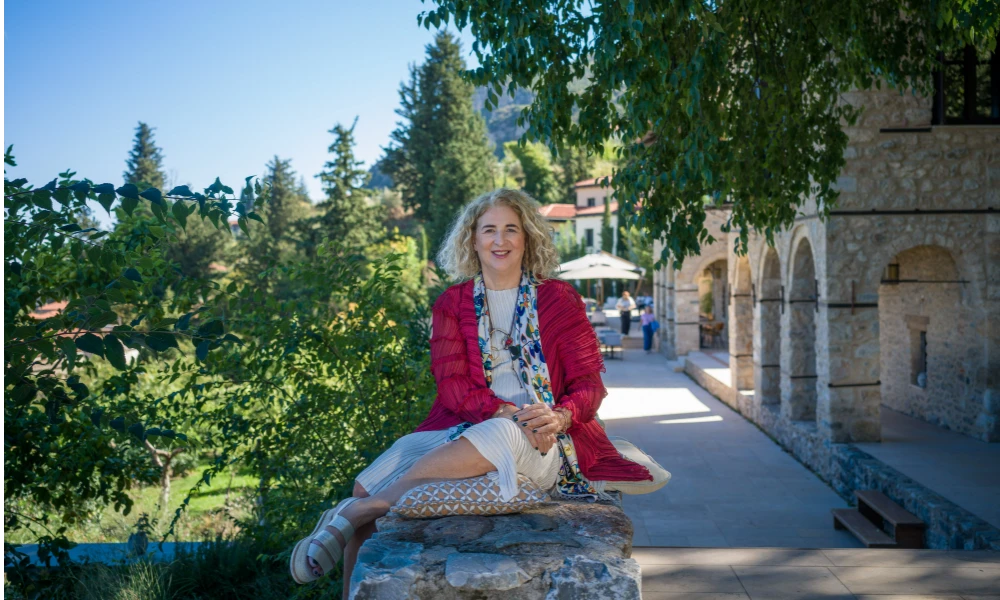
When Two Worlds Collide: The Story Behind The Catching Force
Listening to Cosima Somerset speak about her journey, it becomes clear that her story is not simply one of recovery, or even reinvention, but of alignment
There are moments in life that arrive by chance, yet carry with them a quiet inevitability, as if something far deeper has been set in motion long before we are aware of it. Listening to Cosima Somerset speak about her journey, it becomes clear that her story is not simply one of recovery, or even reinvention, but of alignment — of two seemingly separate worlds colliding in a way that reveals purpose, meaning and a profound call to share what she has witnessed.
Cosima Somerset, the founder of SomersetWhite, has lived many lives within one lifetime. From the cultural energy of 1980s New York, working at Interview Magazine under Andy Warhol, to London’s literary circles with Gillon Aitken, and later building a successful business while raising two children, her early path was defined by creativity, ambition and movement. Yet beneath that external success, there existed a more personal journey — one that would ultimately reshape the direction of her life.
Her turning point came in her late thirties, when she confronted alcohol dependency and made the decision to become sober. What followed was not an immediate transformation, but the beginning of what she describes as a long and necessary process of recovery. Sobriety removed the substance, but it did not remove the self. As she reflects with clarity, taking away addiction often reveals the deeper patterns that remain — the emotional imprints, the relational struggles, the internal landscape that must still be understood and healed.
Immersing herself in a 12-step programme, Cosima began to rebuild her life from the inside out, while simultaneously navigating the realities of single parenthood and establishing her business. Work became both a grounding force and a teacher, showing her the importance of collaboration, connection and shared purpose. Yet recovery, as she came to understand, is rarely linear. It unfolds over time, often revealing new layers just when one believes the hardest part has passed.
It was many years later, after more than a decade of sobriety, that a second turning point emerged — quieter perhaps, but no less profound. Chronic back pain, combined with the end of another relationship, brought her to what she describes as a different kind of rock bottom. Not dramatic in the way addiction can be, but deeply destabilising nonetheless. It was a moment that demanded not just physical healing, but something more holistic, something that addressed the unseen connections between body, mind and emotional experience. That moment led her, quite unexpectedly, to India.
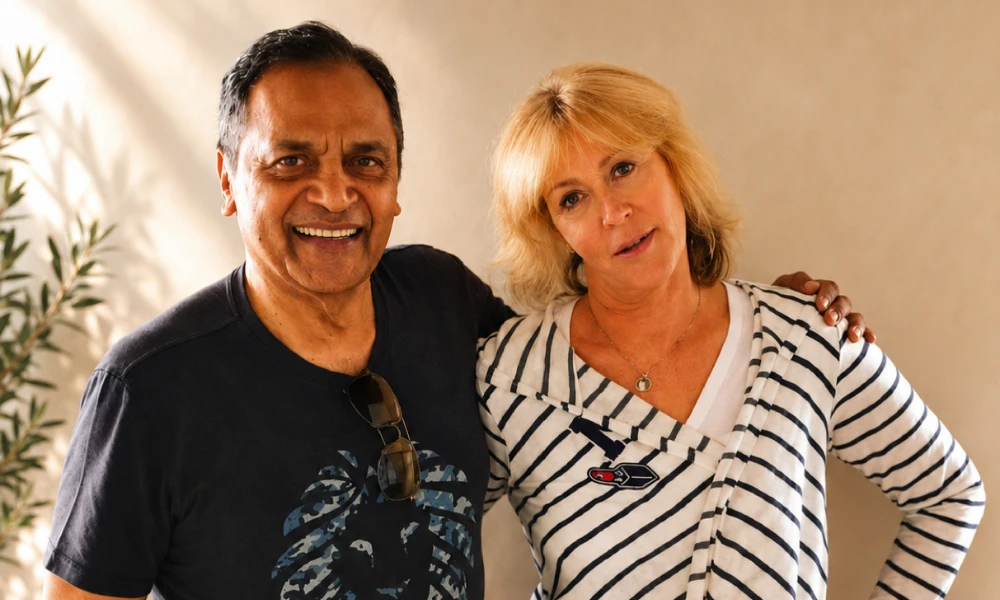
What began as a trip to mark the end of a difficult chapter became the beginning of something entirely unforeseen. On her final evening in Goa, packed and ready to return to London, Cosima accepted an invitation for a drink on a small boat. It was there that she met Father Joe Pereira — a meeting she describes not as dramatic, but quietly extraordinary.
There was no grand introduction, no sense of occasion. Instead, there was an immediate recognition, a feeling that something significant had entered her life. Father Joe, a Catholic priest who had spent decades working with addicts and marginalised communities across India, spoke with a simplicity and clarity that cut through conventional narratives around addiction and recovery. His insight was both intuitive and deeply practical: that addiction is not only a mental or emotional condition, but a physical one, and that true healing must address both.
It was this philosophy — the integration of the 12-step Minnesota model with Iyengar yoga — that captured Cosima’s attention so completely. Having experienced recovery through traditional pathways, she recognised both the power and the limitations of approaches that focused primarily on the mind. What Father Joe offered was something broader, more embodied, and quietly radical in its simplicity.
Her return to London was postponed. What was meant to be a brief encounter became the beginning of a ten-year journey, during which she followed his work across India, documenting his teachings, observing his interactions and recording her own reflections in a series of detailed journals. There was no initial intention to write a book. Instead, there was a compulsion to understand, to witness, and perhaps most importantly, to remain close to something she instinctively knew was rare.
Father Joe’s work, much of it developed alongside Mother Teresa in India, centres on a deeply compassionate yet disciplined approach to addiction. At its core is the belief that the body holds the residue of trauma and self-destruction just as much as the mind does. Through carefully adapted Iyengar yoga — accessible even to those who are physically fragile — he created a system that allows individuals to reconnect with their bodies in a way that supports, rather than overwhelms, the recovery process.
For Cosima, this was not just something to observe, but something to experience. Her own chronic pain became a teacher, revealing the intimate relationship between emotional states and physical sensation. What she began to understand, perhaps for the first time, was that the body is not separate from our experiences, but an active participant in them — storing, reflecting and responding to the patterns we carry.
Out of this decade of observation, reflection and personal transformation emerged her first book, The Catching Force. Part memoir, part reportage, it is a work that resists easy categorisation. It tells the story of a man whose life has been dedicated to helping others, while also tracing Cosima’s own evolving understanding of healing, resilience and the nature of compassion.
Yet the book is not simply about Father Joe, nor is it solely about addiction. It is, at its heart, an exploration of connection — between mind and body, between suffering and healing, and between individuals whose lives intersect in ways that feel both unexpected and entirely necessary. It also serves as a practical guide, offering accessible yoga practices that allow readers to begin their own exploration, regardless of where they are on their journey.
What makes Cosima’s story particularly compelling is not just the transformation she experienced, but her decision to document and share it. Writing the book was not a straightforward process; it required persistence, vulnerability and a willingness to step into a role she had not originally intended for herself. Yet the response from readers — particularly those navigating addiction, pain or emotional distress — has affirmed the importance of that decision.
There is something deeply reassuring in that idea, that certain stories arrive in our lives not by accident, but because we are ready to receive them. Cosima’s journey, and the work she has chosen to share, reminds us that healing is rarely confined to a single path. It is layered, personal and often shaped by the people we encounter along the way.
As we increasingly seek solutions in quick fixes and clinical frameworks, The Catching Force invites a different perspective — one that honours the complexity of human experience and recognises that true wellbeing is not simply the absence of pain, but the integration of all that we carry.
And perhaps most importantly, it leaves us with a quiet but powerful question: what happens when we allow ourselves to be changed by the people we meet, and what responsibility do we then hold to pass that transformation on?
DISCOVER: cosimasomerset.co.uk
Filed underAddiction & alcohol, Yoga & Pilates

About the author
Rachel BransonFounder & Editor in Chief
With over 30 years in publishing and a background in Naturopathic Medicine, she has made it her mission to challenge mainstream health narratives and empower people to take control of their wellbeing. Now expanding her vision across the Atlantic, Rachel is bridging UK and US audiences with inspiring stories, trusted insights, and pioneering partnerships that align with a new era of health innovation.