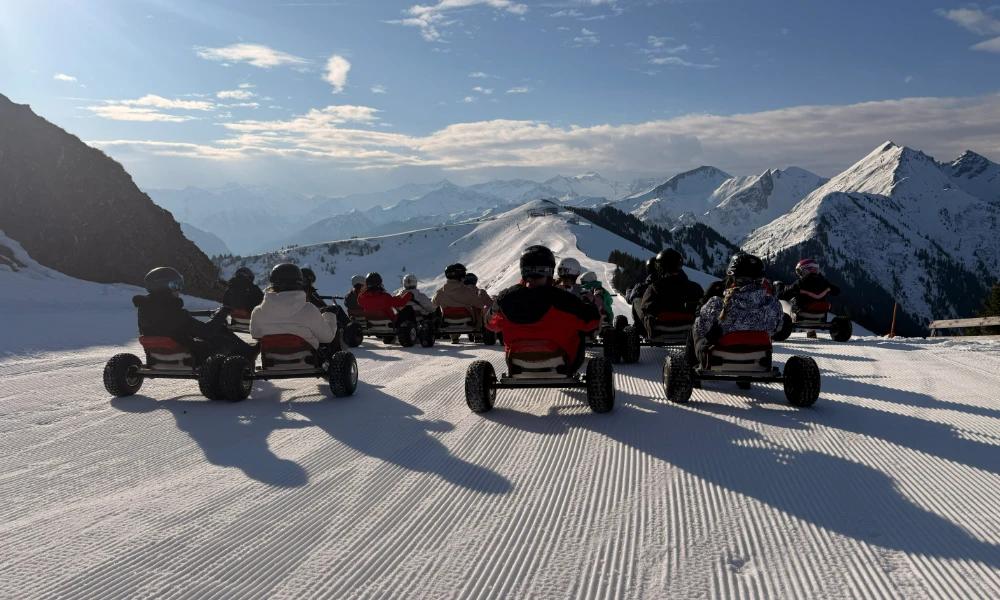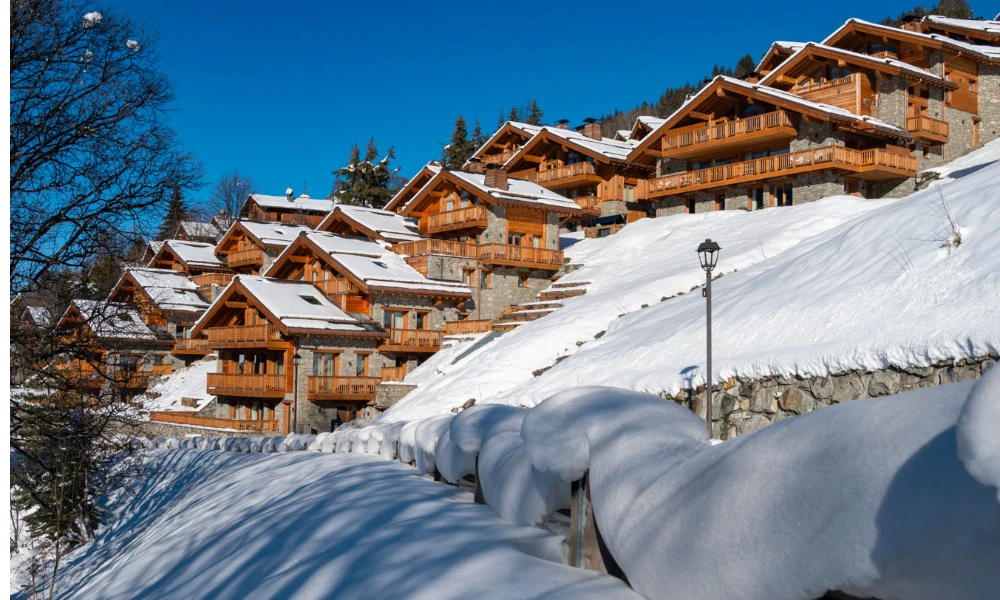
Escape to the Mountains: A Slow Return to Rhythm
Escape to the mountains and discover how alpine landscapes, natural silence, outdoor movement and seasonal wellness retreats can restore body, mind and…
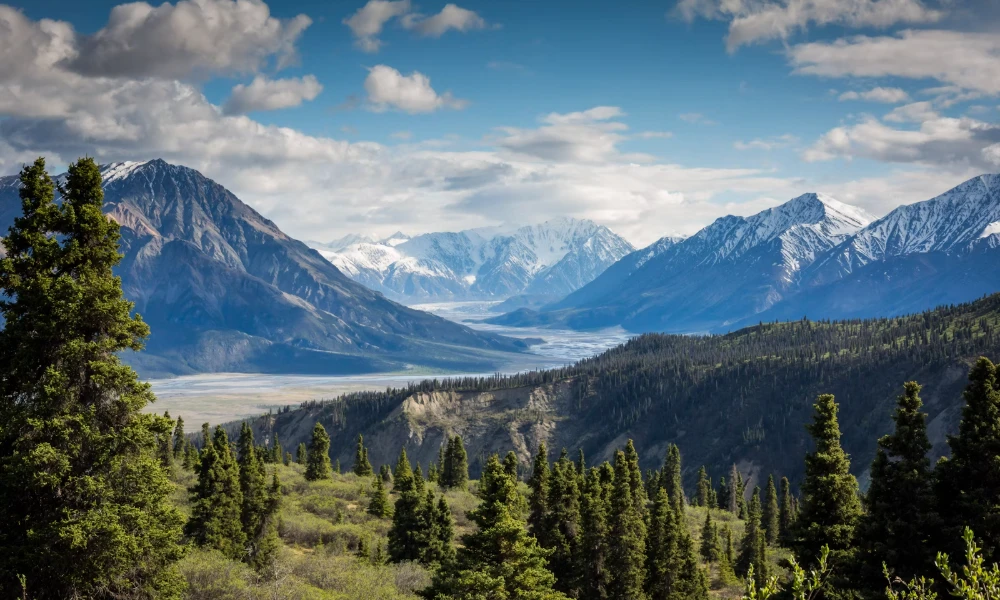
On the pull of altitude, silence and the wellness retreats reimagining what it means to rest.
There is a moment on almost every mountain journey when I feel something inside me begin to change. It may happen as the road starts climbing through the trees, when the first snow-covered peak appears between the clouds or when I step out of the car and breathe air that feels noticeably cooler and clearer than the air I have left behind.
My shoulders lower. My breathing deepens. The mental list I have been carrying begins to loosen its grip.
I have travelled to many beautiful places in search of wellbeing, from sophisticated spas and longevity clinics to remote retreats offering little more than shelter, silence and an opportunity to disappear from the digital world. Yet I return repeatedly to the mountains because they offer something that cannot be manufactured by even the most advanced wellness programme.
They offer perspective.
From the Austrian Alps and the dramatic limestone towers of the Dolomites to the quieter, wilder slopes of the Black Mountains in Wales, each journey has strengthened my belief that mountains are not simply destinations to be admired. They are environments that invite us to move differently, think differently and remember a more natural rhythm of living.
Perhaps this is why mountain retreats are becoming so important within the evolving world of wellness travel. They do not simply ask us to stop. They help us rediscover the balance between movement and recovery, exertion and stillness, solitude and connection.
Why Are We So Drawn to Mountains?
The attraction of mountains is difficult to explain entirely through scenery. A photograph may capture the scale of a landscape, but it cannot reproduce the sensation of standing within it.
Mountains make us feel small, but rarely insignificant. Instead, their vastness can be strangely reassuring. They remind us that the problems dominating our thoughts are part of a much larger picture and that life continues beyond the confines of our inboxes, deadlines and immediate anxieties.
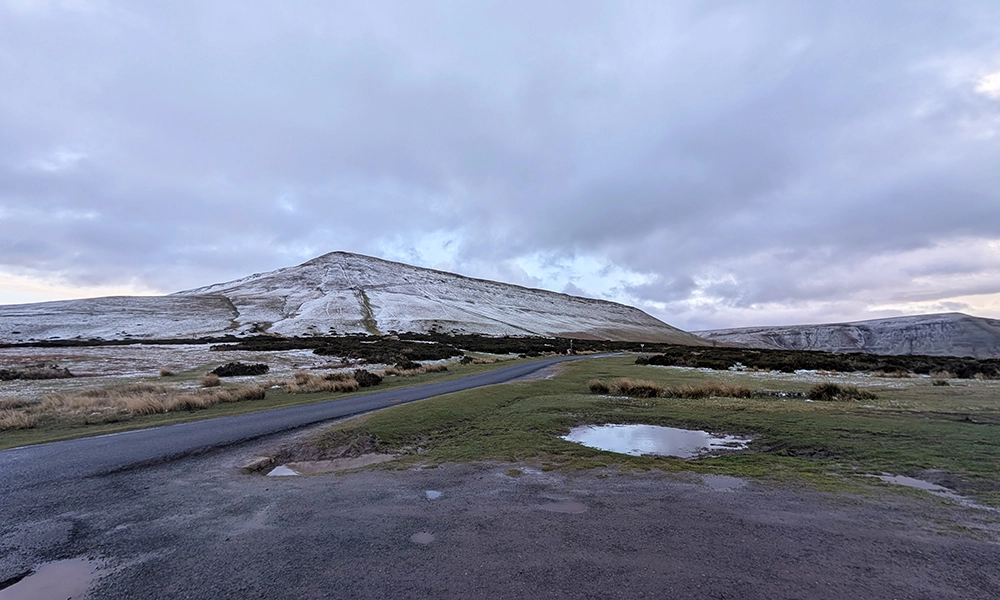
During an off-grid stay at Castaway Llanthony in the Black Mountains, I found myself alone beneath an immense sky as the last of the snow rested on the higher ground. With no reliable mobile signal and nobody else in sight, the expanse of the landscape seemed to quieten my mind more effectively than any instruction to meditate ever could. The retreat was not designed to optimise me. It softened me, removing many of the distractions I had unconsciously accepted as normal.
That distinction feels increasingly important.
Much of modern wellness is based on addition. We add supplements, treatments, trackers, therapies, classes and carefully designed routines. The mountains often work through subtraction. They take away traffic, notifications, artificial noise, visual clutter and the expectation that every moment must be productive.
What remains is remarkably simple: breath, weather, light, movement, hunger, tiredness and rest.
When Silence Becomes a Form of Medicine
True silence has become one of the rarest luxuries of modern life. Even when our homes appear quiet, there is often a background hum of appliances, traffic, messages and digital stimulation. The nervous system is rarely given a complete break from processing information.
Mountain silence is different. It is not the complete absence of sound but the replacement of mechanical noise with natural sound: wind passing through trees, water moving over stone, cowbells in a distant meadow, birdsong in the forest or snow softening every footstep.
A 2024 systematic review and meta-analysis found that exposure to natural sounds can support stress reduction, although researchers noted that the effect varies according to the type of sound and the context in which it is experienced.
This helps explain why mountain quiet feels so restorative. It is not empty. It is spacious.
When the constant stream of alerts and conversations falls away, thoughts that have been buried beneath everyday demands begin to surface. This can feel uncomfortable at first. Many of us are so accustomed to stimulation that stillness initially resembles boredom. Yet, given enough time, the mind begins to settle.
At Castaway Llanthony, preparing to be unavailable was almost as significant as the stay itself. Running a business means I am normally connected seven days a week, so placing myself deliberately beyond signal range required both practical arrangements and a mental decision to let go. By the time I reached the mountains, the act of disengaging had already begun.
A mountain retreat, therefore, is not simply somewhere to escape the world. It is an opportunity to notice how difficult we find it to leave the world unattended.
Nature Gives the Mind Somewhere Else to Look
The mental-health benefits associated with spending time in nature are supported by a growing body of research. A recent meta-analysis examining adults experiencing symptoms of mental illness found that nature exposure was associated with reduced depressive symptoms and stress, alongside improvements in mood, quality of life and overall mental health.
Another systematic review focusing on emotional regulation concluded that contact with forests, parks and other natural environments may help reduce stress, anxiety and depression while supporting emotional wellbeing.
The precise pathways remain complex. Nature may help because it encourages physical activity, reduces exposure to noise, provides opportunities for social connection and creates a sense of psychological restoration. Researchers have also cautioned that not all green spaces are equal and that their quality, accessibility and the way people experience them matter.
Mountains bring many of these elements together within one powerful environment. They give the eyes distance, the body challenge and the mind a subject larger than itself.
When we spend much of the day looking at screens, walls and objects within a few feet of us, the opportunity to gaze across a valley or towards a distant peak can feel almost medicinal. Our attention expands beyond the immediate, and with it, our internal world appears to expand too.
This is why I have often found clarity while walking that I struggle to reach while sitting at a desk. A solution does not always appear because I have deliberately searched for it. Sometimes it arrives because the landscape has given my mind enough room to make connections for itself.
Movement That Does Not Feel Like Exercise
One of the greatest benefits of a mountain stay is that movement becomes part of the experience rather than another obligation to fit into the day.
At home, exercise may mean driving to a gym, watching the clock or measuring progress through calories, pace and performance. In the mountains, movement has a purpose. We walk to reach a viewpoint, cycle to cross a valley, climb to discover an alpine lake or ski because snow has temporarily transformed the landscape.

At Cyprianerhof Dolomit Resort, wellbeing begins outside. Guests are encouraged to hike through alpine meadows, follow forest trails, explore by e-bike or take a cable car to a higher point before walking beneath the Rosengarten peaks. Back at the hotel, panoramic saunas, steam baths and a natural bathing pond continue the rhythm of activity and recovery.
At nearby Moseralm, perched at 1,580 metres, the seasons shape both the atmosphere and the programme, from guided hikes through wildflower meadows and e-bike journeys over mountain passes to winter sports and restorative time in panoramic saunas.

This kind of movement can quietly help people accumulate meaningful levels of physical activity. The World Health Organization recommends that adults complete at least 150 to 300 minutes of moderate-intensity aerobic activity each week, or 75 to 150 minutes of vigorous activity, alongside muscle-strengthening work. Regular physical activity can help prevent and manage cardiovascular disease, type 2 diabetes and some cancers, while also reducing symptoms of anxiety and depression and supporting cognitive health.
Yet around 31 per cent of adults worldwide — approximately 1.8 billion people — do not currently meet recommended activity levels.
Mountain travel cannot solve global inactivity, but it can remind us that movement does not have to resemble punishment. A long walk with a beautiful destination, a gentle cycle through a valley or a morning spent learning to ski may engage the heart, lungs, muscles, balance and coordination while also producing something a treadmill cannot provide: awe.
Altitude Changes the Pace
The appeal of altitude is not simply about the physiological effects of thinner air. At moderate elevations, some people may initially notice breathlessness, fatigue or disrupted sleep while the body adjusts, and travellers with health conditions should seek appropriate advice before visiting higher altitudes.
The greater benefit for most wellness travellers may be behavioural rather than biological.
Altitude naturally asks us to slow down. Steep paths prevent us from rushing. Changing weather requires attention. The breath becomes something we notice rather than something happening unconsciously in the background.
There is humility in this. The mountain determines the pace, not our calendar.
That experience can be particularly valuable for people accustomed to measuring success through speed. We live in a culture that celebrates faster communication, faster delivery, faster results and the ability to fit more into every day. In the mountains, moving too quickly can make the journey harder. Progress becomes a negotiation between effort, terrain, weather and energy.
Rest is no longer a reward reserved for the end. It becomes part of moving well.
Rest Is Not the Opposite of Adventure
Traditional holidays often divide travellers into two camps. We either book an active adventure and return home needing another break, or we collapse beside a pool and barely move for a week.
The best mountain wellness retreats are replacing this division with a more intelligent rhythm. Guests may hike in the morning, rest after lunch, spend time in a sauna, swim in cold water, enjoy a nourishing dinner and sleep deeply after a day shaped by natural exertion.
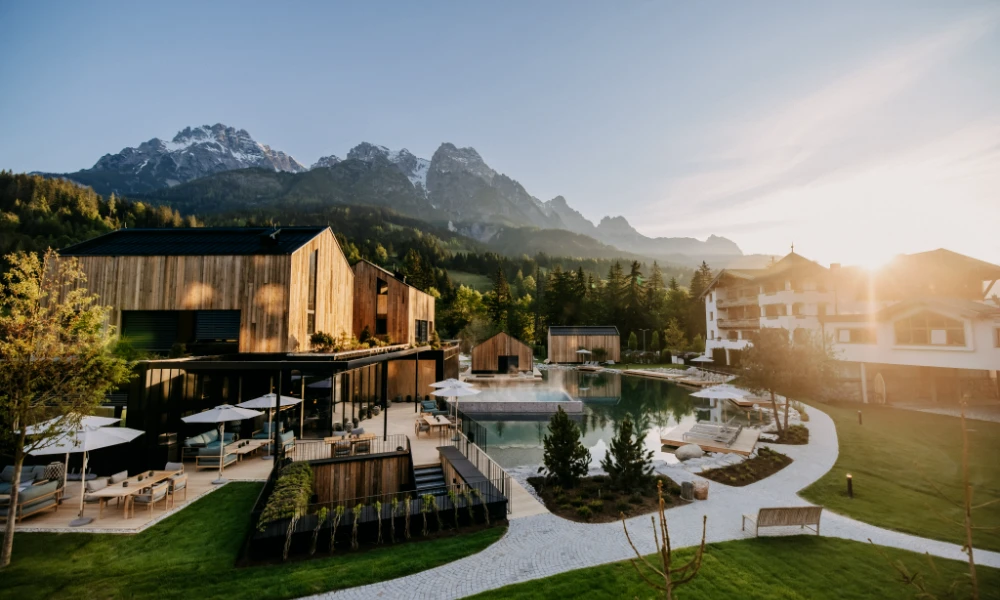
At Naturhotel Forsthofgut in Leogang, Austria, movement, recovery, nutrition, nature and preventative health are woven through the entire experience. Mountain walks, yoga, strength training and reformer Pilates sit alongside sauna rituals, natural swimming, spa treatments and health assessments. The aim is not to fill every hour but to allow activity and stillness to support one another.
This is a healthier understanding of rest. Rest does not always mean becoming completely inactive. Sometimes it means changing the type of demand being placed upon us.
A mountain walk may tire the legs while resting the mind. A cold swim may briefly challenge the body while interrupting anxious thought. A sauna may raise the heart rate while asking us to sit still and breathe. A quiet dinner may provide connection without the noise and pressure of nightlife.
At their best, these experiences allow us to feel pleasantly tired rather than depleted.
The Mountains Through the Seasons
Mountain travel is too often associated with either winter skiing or summer hiking, yet every season offers a different route back to ourselves.
Spring: The Season of Reawakening
Spring in the mountains is a period of visible transition. Snow retreats from lower slopes, rivers swell with meltwater and the first signs of green return to the valleys.
It is an ideal season for walking, reflection and renewal. The landscape does not transform all at once; it emerges gradually, reminding us that recovery rarely happens in a straight line. There may still be snow on the peaks while wildflowers begin appearing below.
Spring invites us to begin again without demanding that we are already fully restored.
Summer: A Return to the Body
Summer opens the mountains. Paths become accessible, alpine lakes invite swimming and long daylight hours create space for hiking, cycling and outdoor meals.
When I returned to the Dolomites in summer, swapping the beach for mountain air, the stillness at the foot of the Rosengarten made me want to put on my boots and walk almost immediately. The landscape encouraged movement without needing to advertise exercise as a wellness intervention.
Summer in the mountains reminds us how good it feels to use the body for something real: to climb, balance, carry, breathe and arrive.
Autumn: The Season of Perspective
Autumn brings warmth of a different kind. Forests change colour, mornings become cooler and the landscape appears to turn inward.
This is perhaps the most reflective mountain season. The busiest summer months have passed, yet winter has not fully arrived. Walking through autumn woodland can feel like moving through a physical reminder that letting go is not a failure but part of every natural cycle.
For anyone approaching a personal or professional crossroads, autumn in the mountains provides an environment in which to take stock before deciding what comes next.
Winter: Silence Made Visible
Winter transforms sound as much as scenery. Snow absorbs noise, paths become less hurried and the landscape strips itself back to its essential shapes.
While skiing, snowshoeing and other winter sports provide demanding physical activity, winter can also be the season of deepest rest. There is permission to retreat indoors, sit beside a fire, enter the sauna and watch weather move across the peaks.
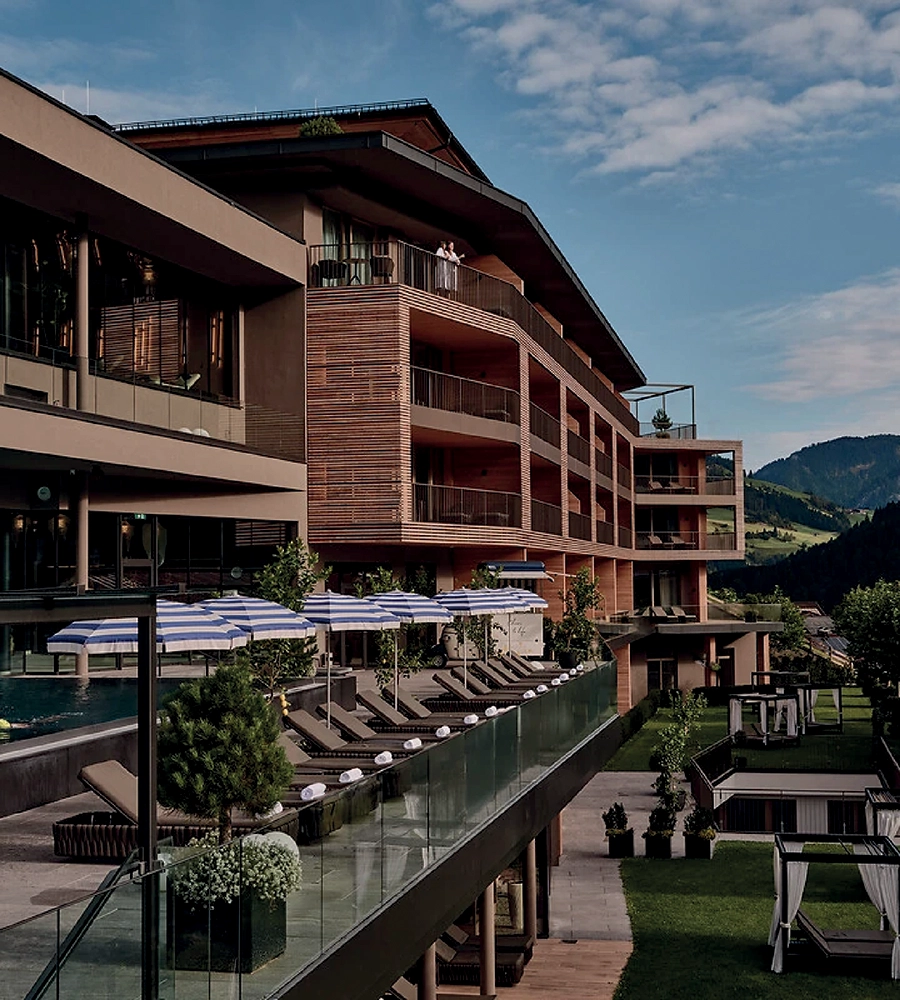
At Das Edelweiss Salzburg Mountain Resort, the warmth of oak, stone and alpine hospitality is held within the dramatic landscape of Austria’s Grossarltal Valley. Its combination of family heritage, spa experiences and access to the surrounding mountains reflects the ability of alpine resorts to make winter feel both adventurous and deeply comforting.
Winter reminds us that not every season is intended for visible growth. Some seasons are for conserving energy and preparing quietly for what follows.
The Wellness Retreat Is Being Reimagined
The most interesting mountain retreats are moving beyond the idea that wellness can be delivered through a massage menu and a bowl of fruit in the bedroom.
They are thinking about the entire ecology of a stay: the quality of sleep, the materials used within the building, the relationship between indoor and outdoor spaces, the sourcing of food, the availability of alcohol-free drinks, opportunities for meaningful movement and whether guests are encouraged to engage with the landscape rather than merely photograph it.
Many are also combining long-established alpine traditions with contemporary health science. Sauna culture, herbal therapies, forest bathing and cold-water immersion now sit alongside metabolic testing, recovery treatments, strength programmes and personalised health assessments.
This combination can be valuable, but technology should not distract us from the most powerful resource available: the mountain itself.
During my travels, it has rarely been a single expensive treatment that has stayed with me most. I remember morning light hitting the Dolomites, the sudden cold of a natural lake, the silence of the Black Mountains and the feeling of walking until my mind finally became quiet.
The retreat may provide the architecture, expertise and permission to rest, but nature often does the deeper work.
Do Mountain Retreats Help Us Sleep Better?
Many people report sleeping more deeply after spending a day outdoors, although a mountain destination is not a guaranteed cure for poor sleep. Higher altitude can temporarily disturb sleep in some visitors, particularly before they acclimatise.
However, several features of a well-designed mountain break support established sleep-health principles: regular physical activity, exposure to natural daylight, reduced evening screen use, consistent routines and quieter, darker sleeping environments.
A major review of sleep health recommends regular exercise, a stable sleep-and-wake schedule, a calming bedtime routine and reduced exposure to caffeine, alcohol, heavy meals and bright light late in the day. Good-quality sleep supports cardiovascular and mental health, cognition, memory, immunity and hormone regulation.
The lesson is not that mountain air contains a magical sleeping ingredient. It is that mountain life often restores the behaviours that modern living has disrupted.
We move during daylight. We become physically tired. Darkness is allowed to be dark. The day has a clearer beginning and end.
We Do Not Need to Earn Rest
Perhaps the most valuable lesson the mountains offer is that rest should not require collapse.
Too many people wait until exhaustion, burnout or illness forces them to stop. We treat recovery as a repair service, something needed only after we have pushed the body and mind beyond their limits.
Mountain retreats offer a different model. They show us how to alternate effort and restoration before we become depleted. They remind us that a walk, a quiet view, an early night and a period without digital contact are not indulgences. They are part of maintaining our ability to participate fully in life.
We may arrive carrying deadlines, worries and ambitions, but the mountain is unmoved by our urgency. It has existed through countless human dramas and will remain long after the email we believe must be answered tonight has been forgotten.
That knowledge is oddly liberating.
Returning Home With a Different Rhythm
A successful wellness journey should not make ordinary life feel intolerable by comparison. It should help us see where ordinary life could be reshaped.
We may not be able to recreate the Dolomites outside our kitchen window or disappear into the Black Mountains whenever work becomes overwhelming. We can, however, bring home some of the mountain’s principles.
We can walk without tracking every step. We can allow periods of silence. We can notice the seasons rather than treating every month the same. We can move our bodies outdoors, seek natural light in the morning, put devices away in the evening and understand that recovery is as necessary as effort.
Most importantly, we can stop treating rest as the absence of achievement.
Every time I leave the mountains, I return to the same conclusion: they do not offer an escape from life so much as a clearer view of it.
From altitude, the world looks different. The noise becomes quieter, the landscape grows larger and the things that genuinely matter become easier to recognise. We descend carrying the same responsibilities, but perhaps with a little less urgency and a little more trust in our own rhythm.
The mountains do not ask us to become a better version of ourselves.
They simply create enough space for us to find our way back.
Filed underAnxiety, Depression, Heart health, Addiction & alcohol, Yoga & Pilates, Fitness & movement, Cold & heat therapy, Italy, Austria, Nature, Sleep, Retreat, Spa, Calm

About the author
Rachel BransonFounder & Editor in Chief
With over 30 years in publishing and a background in Naturopathic Medicine, she has made it her mission to challenge mainstream health narratives and empower people to take control of their wellbeing. Now expanding her vision across the Atlantic, Rachel is bridging UK and US audiences with inspiring stories, trusted insights, and pioneering partnerships that align with a new era of health innovation.