World Mental Health Day: Five simple tools for a calmer, healthier mind
From better self-talk to hypnotherapy: Practical ways to support your mental wellbeing by certified hypnotherapist and psychotherapist, Marygrace Anderson, fou

As World Mental Health Day approaches, it is a time to reflect on our own wellbeing – but, of course, caring for our mental health matters though out the year. Small things we do regularly can make a difference and can easily be adapted to fit our lifestyles.
As a psychotherapist and hypnotherapist with over 20 years in practice, I spend a great deal of time helping people understand what is going on beneath the surface, including the thoughts, patterns, and habits people adopt without even realising it.
For World Mental Health Day, here are five simple tools I believe are worth having in your mental wellbeing toolkit, starting today.
1. Pay attention to how you speak to yourself
We have a running conversation with ourselves throughout the day, and we don’t always notice how negative that conversation can become. If you often tell yourself you’re not good enough or that everything is going to go wrong, the day can feel daunting before it has even begun.
Start by noticing how you talk to yourself and the language you use. You don’t need to pretend everything is amazing when it isn’t but try taking a more constructive approach. Powerful point: You can control your thoughts and how you choose to respond to live events. Think about how you would talk to a friend in the same situation. You’d probably speak to them with kindness, care and encouragement, and you deserve that same compassion.
2. Slow down your breathing
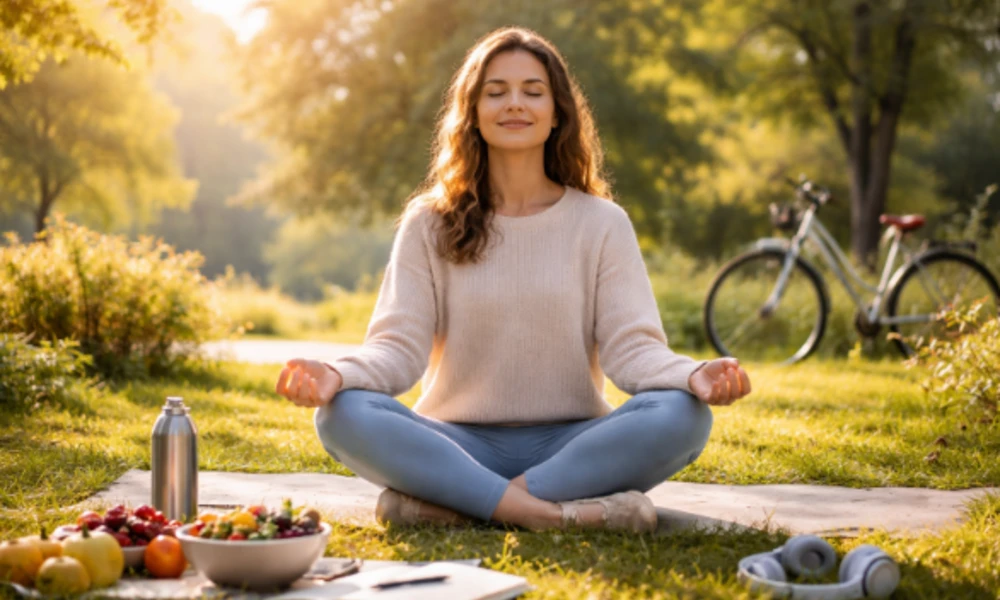
The best and fastest reset that always works. Your breath can be the single greatest, useful tool for calming yourself when you feel stressed or anxious. Breathing and relaxation techniques are also commonly used within psychological therapies and hypnotherapy.
When we’re stressed or anxious, our breathing can become quicker and shallower without us noticing. Slowing your breathing can help reduce some of the physical signs of stress and encourage your body to move towards a calmer, more relaxed state.
You can do it at your desk, on the train, before a difficult conversation or simply when the day starts running away with you. A good place to start , if it feels comfortable, is breathing gently in through your nose for four seconds and out for six seconds. Don’t force it. The idea is simply to make your breathing slower and more comfortable. Make sure you it’s a good deep breath.
3. Give your mind some quiet time
In today’s digital world, we are surrounded by stimulation from the moment we wake up. Phones, emails, news, social media and messages can distract us and leave very little space for our own thoughts.
Try building small pauses into your day to give yourself time to process your thoughts, rather than constantly taking in more information. When we are continually absorbing new information, it can be harder to reflect or make important decisions with clarity.
A good tip is to go for a walk without looking at your phone, or simply take a few minutes without anything demanding your attention. This downtime gives you space and time to think, process and refresh.
4. Try Hypnotherapy
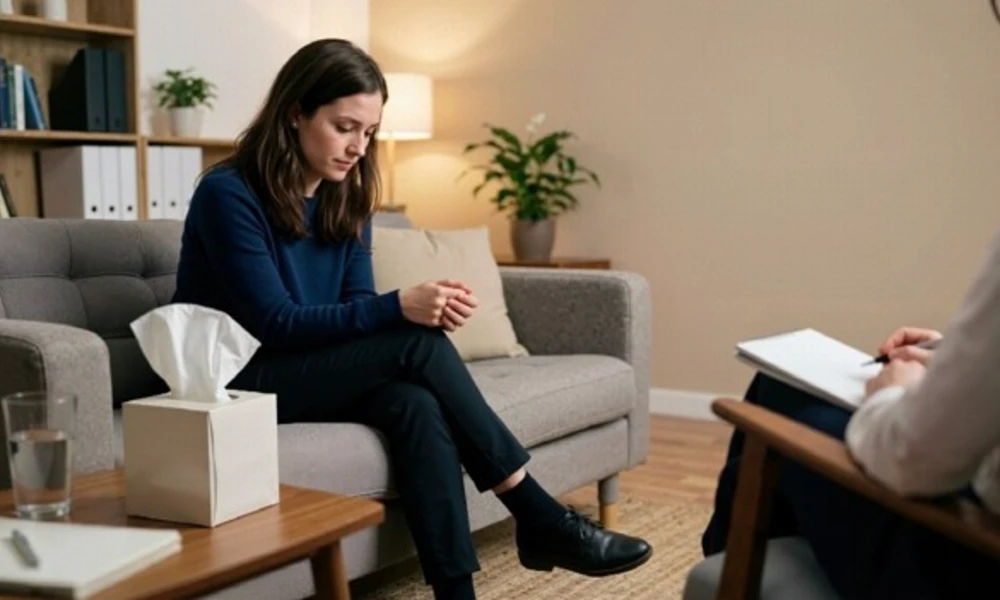
Hypnotherapy is a highly effective tool to help people explore and change unhelpful patterns of thinking, feeling and behaviour. My own MG Anderson Method combines hypnotherapy with psychology, practical life skills and personalised coaching techniques, with the aim of helping people make positive changes that are meaningful to them.
5. Use visualisation positively
As human beings, we are remarkably good at imagining everything that might go wrong. Whether it is a meeting or a tricky conversation, you may have already played out the worst possible version of it several times over in your head.
Try turning that around. Take a moment to visualise yourself handling the situation calmly, speaking clearly and coping with whatever comes up. Close your eyes and picture what you are doing, how you are feeling and how you would respond to any challenges. Your response to the event can be very different by this exercise.
It is all about using your imagination in a more constructive way instead of repeatedly rehearsing the worst-case scenario.
These tips are not just about trying to be calm or positive all the time. They are about becoming more self-aware, and noticing what is happening in your mind and body, and having a few practical ways to respond. Used regularly, these tools can become part of our everyday wellbeing routine.
By Marygrace Anderson

Marygrace (MG) Anderson is a certified hypnotherapist and psychotherapist (BA, DHP, GHR Reg) and the founder of MG Hypnosis. She helps clients with a wide range of issues, including anxiety, trauma, stress, phobias, low confidence and unwanted habits, supporting them to make real and lasting changes in their lives.
She is the creator of The MG Anderson Method™, a signature and highly effective approach to hypnotherapy known for its exceptional success rate. With around 90% of clients seeing results after just one session, the method helps clients achieve fast and lasting improvement.
Marygrace trained at the Institute of Clinical Hypnosis in London, gaining her Advanced Professional Diploma in Psychotherapy and Hypnotherapy. Originally from the United States, she studied Sociology and Psychology at Regis University in Colorado before moving to London in 1991. She lives in Putney, South West London, which serves as her clinic HQ, and also works out of a clinic in Central London.
Visit https://www.mghypnosis.co.uk/ for more information.
Filed underDepression, Anxiety, Stress & burnout, Counselling & talking therapy