“You Look Tired:” What Your Eyes are Telling Others and What Can be Done About It
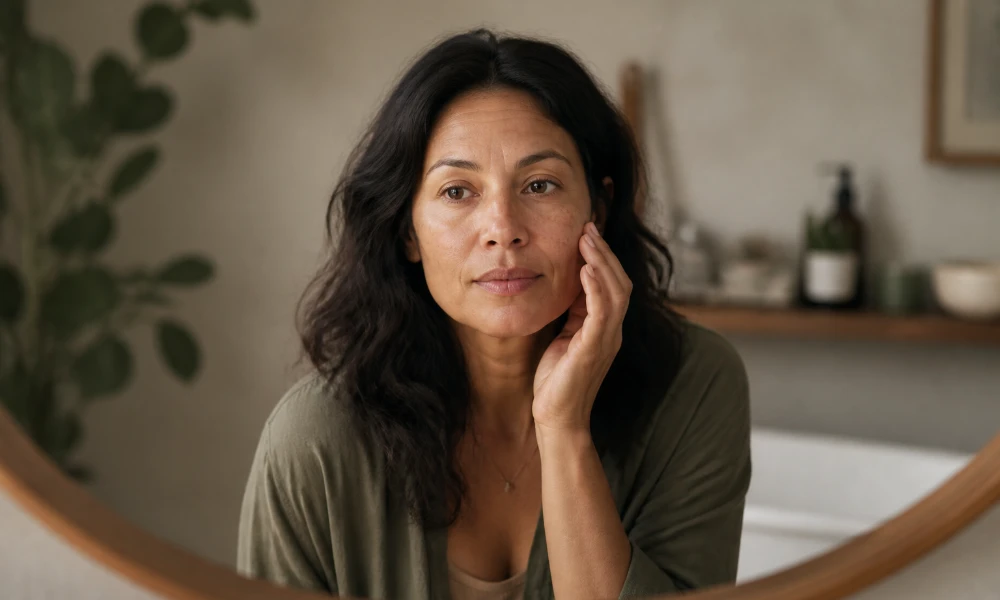
Mary is a commercial real estate business owner in her fifties (50s). Her friends and business partners are asking whether she has had enough sleep lately.

Mary is a commercial real estate business owner in her fifties (50s). Her friends and business partners are asking whether she has had enough sleep lately. Of course, as a mother of teenagers and a business owner, she has not. However, the changes she has noticed around her eyes have developed gradually. Her eyes are beginning to remind her of her mother’s. Not the mother of her childhood, eyes open and bright, cheering her on the softball field. It is her mother now, eyes still perceptive and emotive but less bright, coarser, more shadowed.
Paul is an executive at a pharmaceutical company in his sixties (60s). He had never thought about facial aging before. In fact, he had previously been more concerned with the frequent, severe, and long-lasting body aches and exhaustion that plague him after long runs and bike rides. Like Mary, Paul is also starting to notice his eyes look less open and bright. And while many believe the age-related changes that coarsen the appearance of our face can make men look in fact more masculine, Paul feels his eyes look puffy. He feels his eyes age him more than any other facial feature.
The hypothetical examples above may not reflect you. Each person’s experience with and perception of facial aging differs. However, the same fundamental anatomical changes occur, just at a different rate and to a variable extent. After all, things ultimately stretch and fall.
You are more likely to notice changes in your own face before others. Others may instead simply perceive general exhaustion or even sadness. After all, the eyes can communicate a great deal about us. The gap between our actual and perceived physical and/or emotional state can widen with facial aging.
Three (3) Problems, One (1) Concern
Dr. Jeffrey Harmon, a fellowship trained, double board-certified facial plastic surgeon and owner of Harmon Facial Plastic Surgery on Erie Ave in the Hyde Park neighborhood in Cincinnati, Ohio, has observed that what people often refer to as “tired eyes” may be up to three (3) anatomic changes commonly associated with age.
Redundant upper eyelid skin – Also known as upper eyelid dermatochalasis, loose, redundant skin folds on itself like a roman shade. This skin covers progressively more of the upper eyelid, approaching and sometimes enveloping the upper eyelid eyelashes. Women with this feature often describe the impossibility of applying eye makeup.
Hooded lateral eyebrows – Also referred to as brow ptosis or lateral temporal hooding, the soft tissue across the temple region falls. These changes can be most evident at the interface between the lateral eyebrow – which includes hair, skin, fascia, fat, and muscle – and the upper eyelid. The brow rotates down and forward, resulting in more volume “hooding” over the eye. Hooding may obscure the border between the bony rim of the eye and the upper eyelid. The associated shadowing can make the eyes appear less open and dull.
Bulging lower eyelid fat – Also known as lower eyelid bags or pseudo herniated lower eyelid fat, these bags are the result of fat pushing against a wall of fascia in the lower eyelids called the septum. These bags project and hang over the tear trough, which is the interface between the lower eyelids and cheek. Lower eyelid bags can make us look tired due to shadowing that coarsens our appearance in this location.
Dr. Harmon evaluates all three (3) locations when formulating a plan to address aesthetic concerns about tired eyes. Each patient has the same basic structural anatomy. What varies is nuanced and related to the unique dimensions of these structures and severity of their change.
Heavy, ptotic, hooded eyebrows can make excess upper eyelid skin look worse. This is because the eyebrow skin is continuous with upper eyelid skin. Hooded eyebrows contribute to folded, redundant upper eyelid skin across the upper eyelid but primarily laterally. For those patients with little hooding but excess upper eyelid skin, an upper eyelid (blepharoplasty) procedure may be the most appropriate approach. In contrast, for those patients with heavy eyebrows hanging over the lateral edge of the upper eyelid that obscures this transition point into the temple, a lateral temporal brow lift with an upper blepharoplasty may be more appropriate. Distinctions such as these are why the expertise and consultation with a facial plastic surgeon is so important, in Dr. Harmon’s opinion.
Lower eyelid bags may require release and repositioning of fat from the lower eyelids into the cheeks to reduce the projection of the bags and smooth the transition from lower eyelids to the cheeks. This is known as fat transposition or volume preservation lower eyelid (blepharoplasty) surgery. That may be all that is required. However, some individuals lack or have lost significant volume in their cheeks. Those individuals may also benefit from a complementary procedure wherein fat is removed from the abdomen or thighs and carefully placed in the cheeks near the junction with the lower eyelids to restore more youthful-appearing contours to the area. Again, consultation with a qualified facial plastic surgeon is essential to determine an appropriate treatment plan.
There may also be instances where surgery is not an appropriate treatment option. One example of this is if an individual has swellings in the upper cheek referred to as festoons, malar bags, or malar edema. This swelling is often confused with lower eyelid bags, because they lie close to them. However, festoons are not treated with lower eyelid surgery. A second example of something eyelid (blepharoplasty) surgery does not treat is the skin surface. Dark circles under the eyes, fine lines, and other age spots are not treated with surgery, though redundant skin can be removed surgically. Instead, some of these skin changes can be improved with skin resurfacing procedures such as lasers or chemical peels.
Like all procedures, there are risks associated with eyelid (blepharoplasty) surgery and brow lift surgery. Those risks include, but are not limited to, damage to the eyes, damage to nerves, scarring of the eyelids, and dry eye symptoms.
Results may also vary from person to person. Results depend on multiple factors such as a patient’s medical history and surgical history.
A Consultation is the Best Way to Determine the Best Approach to Addressing Your Concern
The best way to determine your candidacy for surgery is to consult with a fellowship trained, double board-certified facial plastic surgeon in Dr. Harmon’s opinion. There are a few questions worth asking in consultation for “tired eyes”:
Is it my upper eyelids, eyebrows, or both contributing?
Do you remove or reposition lower eyelid fat and why?
Do you place fat in the cheeks? Why or why not?
What does the recovery experience typically look like?
If you feel you look tired it is worth asking an expert about this. It may be due to age-related changes that can be addressed with surgery.
This article is for general information only. It is not direct medical advice, nor is it a substitute for direct medical advice from a qualified, board-certified physician. All surgical procedures carry risks. Individual results may vary.
Filed underEye health, Sleep