
No one ever buys an air conditioner thinking about their health. You buy one because summer has arrived and sleep has become impossible or because the afternoon heat has turned your home into a place you want to leave rather than be in. The health side of things does not really cross your mind until later, when you start noticing how much better your body feels once the room is actually cool.
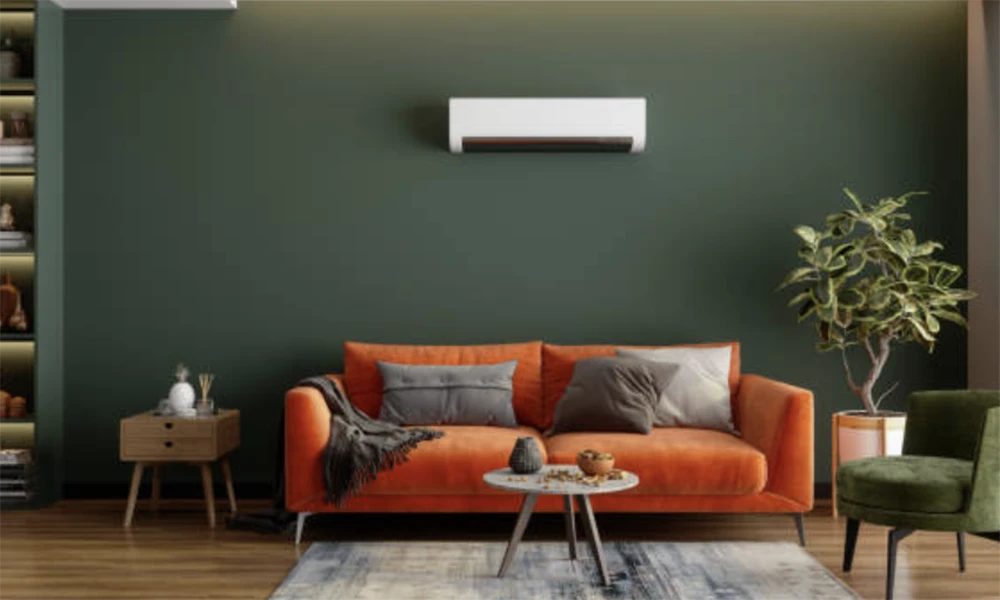
As it turns out, there is a lot going on beneath that feeling. Some of it is backed by solid research; some of it is common sense with data behind it. Either way, it is worth knowing what a good air conditioner is actually doing for you.
1. Sleep Stops Fighting You
Ask almost anyone who has put one in their bedroom, and the first thing they mention is sleep. The reason is straightforward. Research published across multiple peer-reviewed journals confirms that the body’s core temperature needs to be actively declining for deep, restorative sleep to begin. When a warm room disrupts that process, sleep fragments. You spend more time in lighter stages, wake more frequently, and miss the slow-wave sleep where physical repair and memory consolidation actually happen.
People spend a lot of money on sleep supplements, white noise machines, and blackout curtains. Quite often, room temperature is the simpler fix they have not tried yet.
2. Humidity Is the Part Nobody Talks About
Heat gets all the attention, but humidity causes its own problems indoors. The EPA recommends keeping indoor humidity between 30 and 50%. Once it climbs past 60%, mould begins growing. Once it stays above 50% consistently, dust mite populations build up, and both are significant triggers for asthma, rhinitis, and eczema.
Air conditioning removes moisture from the air as a by-product of cooling, keeping indoor humidity within a healthier range without you having to think about it. In regions where summer humidity is relentless, this function matters just as much as the temperature drop itself.
3. What You Are Breathing Gets Better
Standard residential air conditioning filters are not hospital-grade, and that needs to be said upfront. They will not eliminate everything floating in your air. What they do is reduce the ongoing load of dust, pollen, pet dander, and fine particles that would otherwise keep circulating through the room. For allergy sufferers and households with young children, that reduction compounds over time.
None of it works without maintenance. A dirty filter does not filter. It moves air through a clogged mesh and can occasionally make things worse. Clean it, replace it when due, and the system does what it is supposed to do.
4. During a heatwave, it can be the difference between being safe and not
This one is not about comfort. According to the WHO, heat-related mortality among people over 65 increased by approximately 85% between 2000-2004 and 2017-2021. Heat illness does not only happen outdoors. It happens to elderly people in poorly ventilated bedrooms, to young children in rooms that trap the day’s heat well into the night, and to anyone with cardiovascular disease, diabetes, or a respiratory condition whose body is already working harder than most just to stay regulated.
This is where the right unit genuinely matters. Wall mounted air conditioners are well-suited to single-room use, which means you are not running a whole-home system just to keep one bedroom liveable. It is a targeted, practical solution for the space that matters most when temperatures become dangerous overnight.
5. Your Brain Works Better in a Cool Room
A study from Harvard T.H. Chan School of Public Health, published in PLOS Medicine, followed 44 students through a 2016 Boston heatwave across 12 consecutive days. Students sleeping without air conditioning showed reaction times 13.4% longer and arithmetic scores 13.3% lower the following morning, compared to those in cooled rooms.
That is a significant gap from a modest temperature difference. It matches what most people have experienced without naming it: the foggy, slightly useless feeling that follows a bad night in the heat. When the body is occupied managing thermal stress, it has less to give everything else. Clearing that stress clears the fog.
6. Some days the problem is outside
Summers in much of the world these days come accompanied by air quality advisories in addition to heat advisories. During bushfire smoke advisories, the Australian Center for Disease Control, in addition to the Australian Government Department of Health, recommends that a reverse cycle air conditioner be run on recirculate mode with the house sealed. This prevents outside air from entering the home, which would contain the bushfire smoke, while maintaining a healthy atmosphere inside the home.
One honest caveat: domestic air conditioning filters do not capture the smallest PM2.5-sized bushfire smoke particles as well as a HEPA air purifier does. However, a sealed home with recirculating air conditioning is better than opening the windows. On high pollen days, the choice is even easier. Simply run the air conditioner, and much less pollen will enter the space.
For those experiencing the same seasonal issues, wall mounted air conditioners can provide the same solution for a single space without the expense of a central air conditioning system.
7. For Some People, It Is Not Optional
Between 60 and 80% of people with multiple sclerosis experience Uhthoff’s phenomenon, which means that if the body temperature increases even by as little as 0.5 degrees centigrade, the symptoms of the disease can actually get worse. Fatigue, balance, vision, and cognitive function can all be negatively impacted by this increase in body temperature. Heat can also trigger inflammation in lupus sufferers and can put strain on the hearts of people with heart conditions.
In these cases, the bedroom is not merely cool because the occupant prefers it that way. It is cool because it is part of the management of the sufferer’s condition. It is during the nighttime that the body has its best chance to recover.
It Is Really About What Your Home Is Doing to You While You Rest
Most wellness discussions center around activities you can control, the food you can eat, the exercise you can do, and the behaviours you can change. But your bedroom is not like that. It is working on you, with or without your awareness.
A bedroom that is running too warm, with the humidity off, and with stagnant air can quietly counteract everything else you might be doing right. An air conditioner can eliminate all those issues with one product. It is not glamorous. It is not complex. It is a room where your body can finally do what it is meant to do.
- About the Author
- Latest Posts

Our Editorial Team are writers and experts in their field. Their views and opinions may not always be the views of Wellbeing Magazine. If you are under the direction of medical supervision please speak to your doctor or therapist before following the advice and recommendations in these articles.