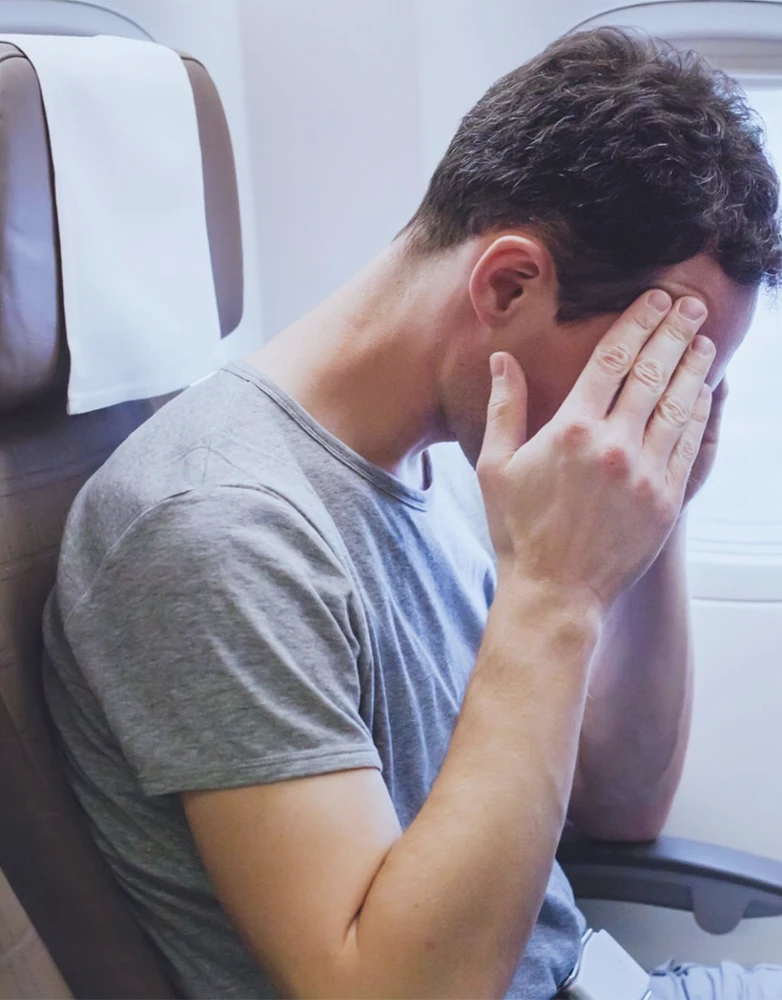
Motion sickness can turn an exciting adventure into a queasy nightmare, but you don’t need to let fear of feeling sick put you off making travel plans. Whether you’re setting off on a long-haul flight across the world or a drive along winding roads, there are lots of ways to stop sickness ruining your trip.
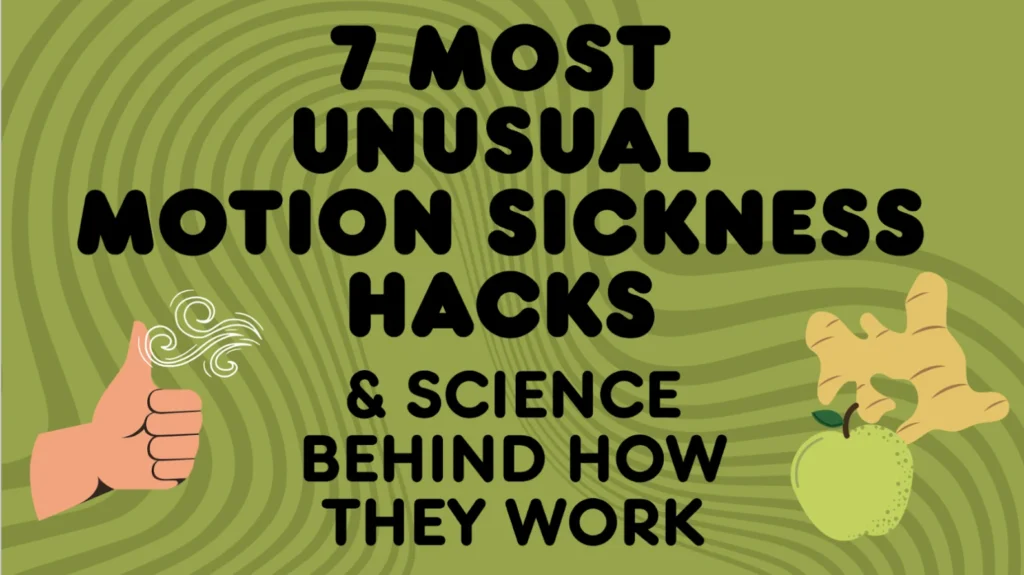
Travel expert James Steele at Go2Africa reveals seven of the most unusual, yet successful, travel sickness hacks – from blowing on your thumb, to plugging one ear, and eating a green apple – and the science behind how they work.
BLOW ON YOUR THUMB
You may have seen people on TikTok blowing on their thumbs to reduce stress and calm anxiety – it might look odd, but there is a real physiological reason behind why it works, and it can be used to control motion sickness too.
Put your hand in a thumbs up position, and bring the soft pad of your thumb close to your lips. Gently blow on your thumb, as if you were trying to cool it down, and keep blowing for 5-10 seconds. Pause, take deep breath, and repeat as needed. Breathing and blowing slowly and rhythmically helps to stimulate the vagus nerve and activate the parasympathetic nervous system, which slows your heart rate, calms stomach activity, and reduces nausea signals.
PLUG ONE EAR
Earplugs have long been recommended for stopping the pressure and pain you get in your ears on an aeroplane, but did you know by using just the one, you can stop motion sickness?
Travel sickness occurs when the inner ear organs that detect balance and movement, the vestibular system, don’t align with what your eyes are seeing, or how your body is moving; for example, when your body feels the movement of a boat swaying, but your eyes are focused on a still object on deck.
The earplug trick involves plugging one ear that is in the opposite direction of motion, with soft foam earplug – such as putting a plug in your left ear if you’re sitting on the right in a car. Your brain normally gets symmetrical input from the vestibular system, but by blocking one ear, the asymmetry confuses your brain enough to break the cycle that triggers the nausea, especially when combined with deep breathing.
SIT IN THE RIGHT PLACE
Some trips can involve bumpier rides than others – African safari tours for example, with 4×4 game drives on uneven terrain and small aircraft flights between camps, or winding coastal drives and hairpin bends around the Amalfi Coast – but sitting in the right place can really reduce the sensory mismatch between your eyes and your vestibular system that causes sickness.
Make sure you sit in the most stable and motion-neutral spot you can get. For example, the front seat of a car experiences less motion than the back, and passengers in the back are often more likely to look down at phones or books, rather than looking at the horizon, and this makes sickness worse. The best seat on a plane is over the wings, as this is where you experience the least motion, particularly during turbulence, and the tail and nose of the plain move more dramatically. On a boat, opt for where the centre of gravity is – in the middle of the boat, on a lower deck, where there is the least motion – and on a train, avoid seats that face the back, and face forward, ideally at the front of the train, as the back gets more vibration from the track.
EAT/DRINK GINGER
Ginger has been used to settle sickness for centuries, and studies have shown that helps to improve digestion, calm the gastrointestinal tract, and reduce nausea by stopping the development of gastric dysrhythmias, which are abnormal patterns of electrical activity in the stomach.
Try drinking ginger tea 30 – 60 minutes before you set off so your body has time to absorb the active compounds it needs to work, before the motion starts. To maintain the relief during your trip, try ginger chews and sweets. These can help your mouth produce more saliva which can also help aid digestion – but make sure they contain real ginger extract or crystallised ginger, not just ginger flavouring.
APPLY PRESSURE TO YOUR BELLY BUTTON
In Traditional Chinese Medicine, the belly button and the area around it, is linked to the Conception Vessel meridian; this is thought to regulate circulation of energy, balance of internal organs, and digestion. Stimulating and warming this area is believed to calm the stomach, and reduce nausea and dizziness, by mimicking acupressure and providing a grounding effect that calms internal motion and balances the body’s energy.
Applying gentle pressure to your naval also provides your brain with a fixed point of contact and interrupts nausea signals being set to your brain, in a similar way to blowing on your thumb.
SMELL A LEMON
The scent of lemon stimulates the vagus nerve via olfactory-limbic-vagal circuitry – the pathway that connects your nose, brain, and nervous system – leading to calmer breathing, reduced spasms in the gut, and less nausea. Lemon oil from the rind contains high levels of limonene, which has proven calming effects, as well as anti-emetic properties in traditional herbal medicine, to prevent vomiting.
Cut open a lemon and breathe in the aroma, or for something easier on a plane, place a couple of drops of lemon essential oil on a tissue or cotton ball that you can smell when you need to. Remember to use high-quality essential oils, ideally therapeutic or food grade; not only is it safer, but it also is more likely to have enough active ingredients to work.
EAT A GREEN APPLE
In a similar way to smelling a lemon, eating a green apple stimulates the vagus nerve – but this is down to the act of chewing, rather than smelling, which gives the brain a rhythmic signal that helps to counterbalance the motion. Eat it slowly, focusing on the flavour and chewing motion, and combine with deep breathing through the nose.
Green apples – as opposed to red – are high in malic acid, which stimulates saliva production to help digestion, reduce the gag reflex, and neutralise bile. They’re also hydrating and low in sugar, which makes them less likely to contribute to bloating and nausea.