If you’ve ever spent an afternoon manually pipetting a 384-well plate, you know the specific kind of dread that sets in around well E12. It’s not just the physical fatigue; it’s the nagging worry about whether you actually added the reagent to that last well or if your thumb pressure varied slightly, skewing the volume.
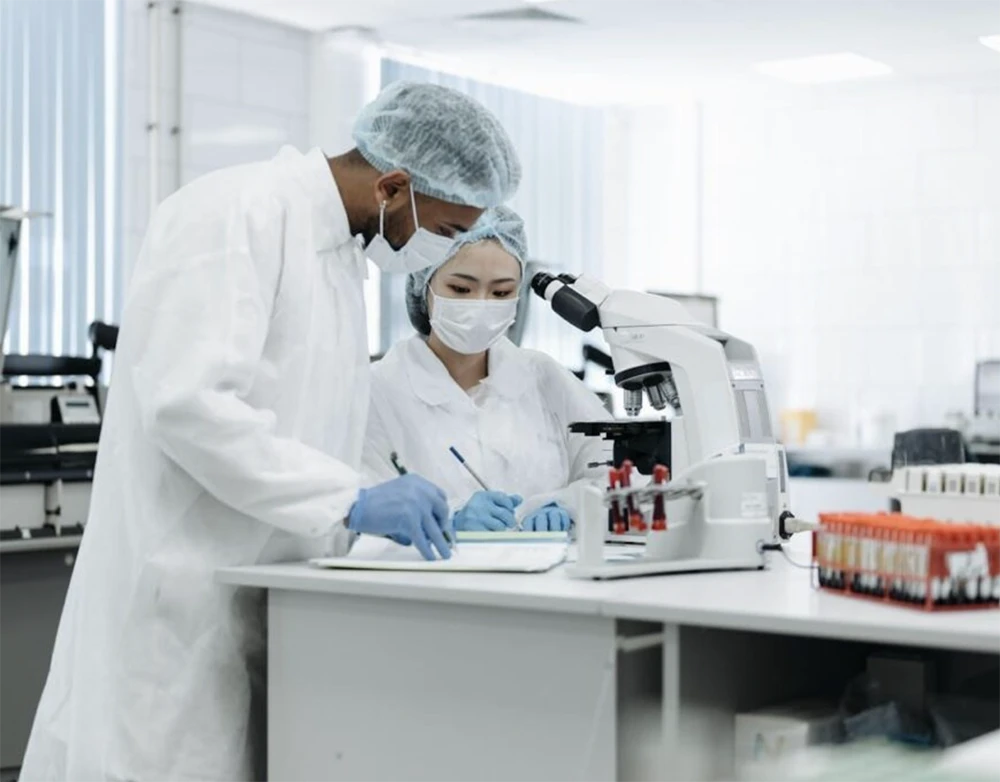
Photo by Pavel Danilyuk: https://www.pexels.com/photo/scientists-in-a-laboratory-8442111/
It is here that the discussion on laboratory automation moves from the realm of “luxury” into “necessity.” Liquid handling automation is more than the saving of thumbs; it encompasses the protection of data integrity.
In biopharma research, the end goal of reproducibility has revolutionized the field of liquid handling as technological innovation has brought a paradigm shift to how researchers approach research design. The technology provides scientists the ability to overcome the constraints of manual processing in order to keep the attention on the biology instead of the aspect of flowing a liquid from point A to point B.
The Growing Need for Automation in Biopharmaceutical Labs
The biopharma landscape is becoming denser and denser. The complexity of experiments is increasing; sample sizes are expanding to account for the need for statistics; and the need for speedy answers has never been so acute. In this context, the classic manual benchtop approach to analysis is becoming a bottleneck operation.
We must deal with the reproducibility problem. Much of the variation in experiments can usually be explained by human fallibility. Even very competent lab personnel have off days. When lab personnel are tired, inconsistencies are more likely, which means wasted resources and ambiguous results.
Moreover, since laboratories are being asked to accelerate capacity without proportionally increasing headcount, manual processes just can’t scale. You can’t just add more hands to the bench when addressing an efficiency issue related to throughput.
The demand for solutions that provide scalability and accuracy beyond what biological hands can provide, even when highly steady over an eight-hour period, has arisen from this industry. Automation fills the gap between current biological complexity and current biological capacity.
Key Advantages of Using Liquid Handlers in Research
When we consider moving from pipetting by hand to automation systems, it’s not just line speeds that matter. We are actually transforming the nature of the results. Typically, the improvements relate to three very important areas: accuracy, speed, and resource utilization.
Improved Accuracy and Reproducibility
Data reliability is the key motivating factor for automation. An automated system will not get fatigued, distracted, or experience repetitive strain injury. It will exactly dispense the predefined volume at the predefined angle and speed each and every time. This is particularly important for sensitive analyses such as qPCR and NGS library preparation, for which small variations in volume will result in the failure of the procedure.
Enhanced Throughput and Productivity
Speed is of the essence. The automated system has the capacity to analyze many samples in many plates at the same time or run in the night unsupervised. Through this, the labs are able to analyze thousands of compounds or hundreds of patient samples in a short time compared to the manual system. The system changes from serial processing to parallel processing.
Cost Efficiency and Resource Optimisation
Although there is an initial investment, the cost savings in the long run cannot be argued. It reduces the use of expensive reagents (as a result of reduced dead volumes and increased accuracy) and eliminates, to a great extent, the cost of repeating experiments because of pipetting errors.
The implementation of a modern liquid handler in your lab will not only provide you with greater precision and accuracy, but productivity will also be greatly enhanced. You will be able to unburden qualified scientific personnel to perform what they are best at: data analysis and designing another groundbreaking experiment.
Innovations Shaping the Future of Biopharmaceutical Research
We are seeing a move away from “dumb” robots that simply follow a coordinate grid toward intelligent systems that adapt to the experiment. The integration of AI and machine learning is a massive leap forward. Imagine systems that can verify liquid levels using pressure sensing before aspirating, or cameras that auto-calibrate the deck layout to prevent crashes before they happen.
One of the most exciting developments is smart scheduling software. Modern platforms can now multitask, managing incubation times and plate movements dynamically to ensure the most efficient path for the samples. It’s no longer just about filling plates; it’s about orchestrating an entire workflow.
Recent case studies have shown that labs adopting these intelligent systems aren’t just working faster; they are asking more complex questions. For example, complex normalization protocols that would take a human hours of calculation and pipetting can be executed by a robot in minutes. This capability is enabling high-complexity design-of-experiment (DoE) studies that were previously deemed too labour-intensive to attempt manually.
Overcoming Challenges in Adopting Laboratory Automation
Let’s face it. It is not a switch-to-automate process. It is also full of obstacles. The most visible of these is, of course, financial investment. It is no easy task to persuade people to commit to expensive automating equipment. ROI is where this calculation is done.
Then comes the concept of the “fear factor” in relation to user comfort. Originally, the process of programming a simple procedure in the typical liquid handler involved having to have an in-house programming specialist. However, the industry caught on to this problem. Modern instruments focus on user friendliness with the intent that a biologist may perform a procedure with no coding necessary.
Existing workflows will also need integration planning for successful adoption of the robot. There is a need for integration of operation not just for acquiring the robot but also for designing the SOP to suit an environment that is computer-driven and automated. Ideally, successful laboratories should begin the adoption of the automation system on a small scale.
The Future Outlook for Liquid Handling in Biopharma
Where’s all this headed? The future for the lab is both modular and linked. We’re moving to those “island of automation” concepts where the liquid handler is the central hub, sometimes physically, sometimes digitally, linking in plate readers and incubators and storage units.
Cloud integration is also becoming the norm. It’s already possible to design a protocol on the laptop at home and push into the liquid handler in the lab for execution. This remote capability, combined with real-time monitoring, allows lab managers to monitor operations without being tied to the bench.
For the long term, this shift will send the rates of drug discovery and diagnostic testing through the roof. As these systems become more available and affordable, there is liable to be a democratization of high-throughput screening, whereby even smaller academic or startup labs can leverage the type of power that’s previously been reserved for big pharma.
Conclusion
The integration of modern liquid handling is no longer a function of science fiction; it has become a present-day imperative for a biopharmaceutical research organization hoping to remain competitive. These solutions are a force multiplier because they suppress the effects of human error and liberate intellectual capital.
Members of laboratory decision-making teams should instead recognize the automated system as an enabling tool, not a substitute for personnel. If your laboratory is among those that continue to depend solely on manual pipetting for the preparation of complex and large-scale assays, the time is ripe for exploring how an automated system could unblock your research flow and ensure the reproducibility of your results.
- About the Author
- Latest Posts

Our Editorial Team are writers and experts in their field. Their views and opinions may not always be the views of Wellbeing Magazine. If you are under the direction of medical supervision please speak to your doctor or therapist before following the advice and recommendations in these articles.