







What’s Driving the Popularity of Ketamine Therapy for Mental Health in the United States
-
- February 4, 2026

The United States has undergone a transformation in the landscape of mental health treatment in the last decade, shaped in large part by the emergence and rapid growth of ketamine therapy. Once considered primarily as an anesthetic in the 1970s, and, infamously, as a recreational drug, ketamine has reinvented its clinical identity as a fast-acting and versatile intervention for a range of psychiatric and pain conditions.
This renaissance in ketamine’s reputation is mirrored by the explosive expansion of the U.S. ketamine clinics market; a sector that has rapidly grown to become a multi-billion-dollar industry, attracting healthcare providers, investors, and, most importantly, patients seeking alternatives to conventional mental health care. Below, we explore the complex interplay of clinical, market, and societal forces that have positioned ketamine therapy as one of the most popular and promising modalities in contemporary mental health and chronic pain treatment in America.
The Clinical Revolution: Understanding Ketamine’s Appeal
Rapid and Robust Response for Mood Disorders
One of the foundational drivers of ketamine therapy’s popularity is its remarkable efficacy in addressing mood disorders that have proven resistant to traditional treatments. For decades, frontline antidepressants and psychotherapies have suffered from notable limitations: delayed onset of action, incomplete symptom relief, and a substantial population of patients who fail to respond altogether. Major depressive disorder (MDD), treatment-resistant depression (TRD), post-traumatic stress disorder (PTSD), and severe anxiety have been stubbornly prevalent, resulting in widespread unmet needs.
Ketamine therapy’s breakthrough lies in its mechanism of action, which is distinct from that of traditional antidepressants. Instead of modulating monoamine neurotransmitters like serotonin and norepinephrine, ketamine works rapidly by antagonizing the NMDA receptor, a glutamatergic pathway, stimulating synaptic growth and neuroplasticity. Clinical studies have shown that a single infusion can yield a rapid, sometimes dramatic, reduction in depressive symptoms and suicidal ideation, often within hours, compared to the weeks or even months frequently required by selective serotonin reuptake inhibitors (SSRIs) or other traditional medications.
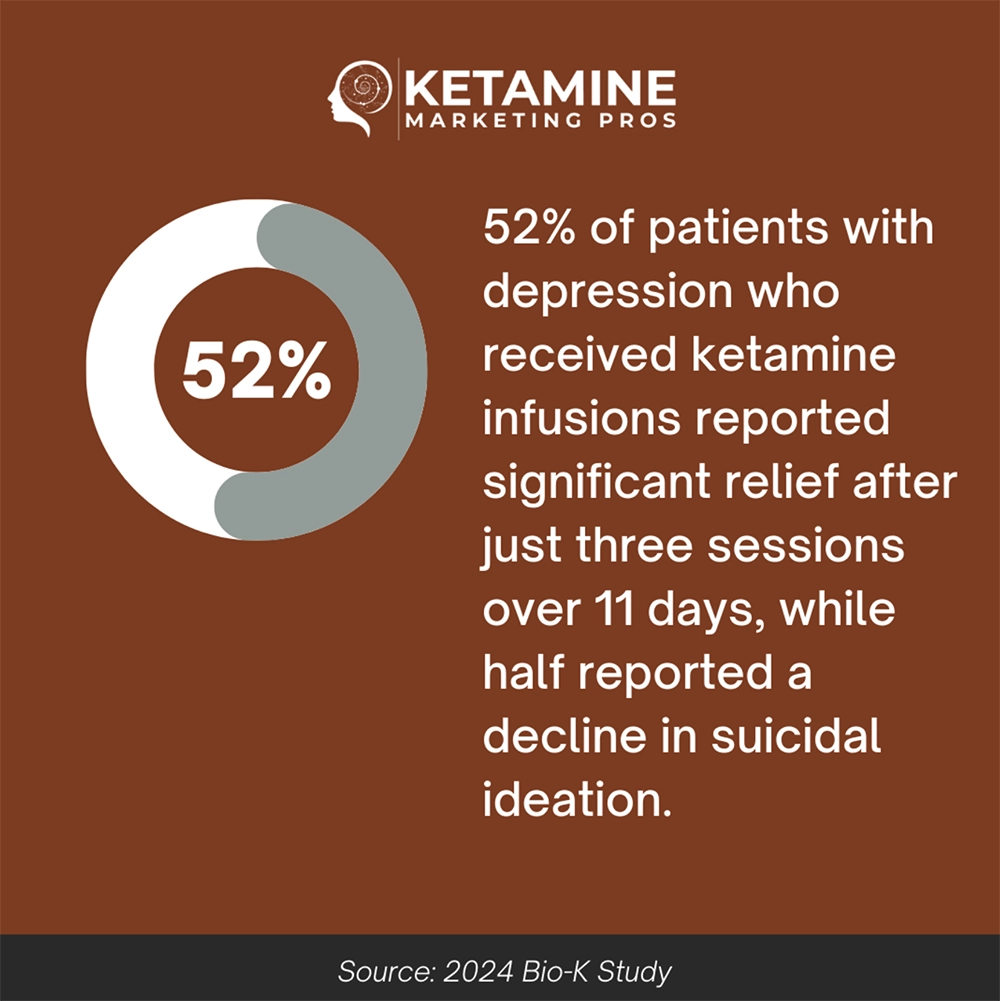
Recent data support these observations. In the 2024 Bio-K study, 52% of patients with depression who received ketamine infusions reported significant relief after just three sessions over 11 days, while half reported a decline in suicidal ideation. These findings hold profound significance for patients in acute distress and for clinicians striving to reduce the risk of self-harm and prolonged suffering.
Expanding Indications: From Depression to Chronic Pain and Beyond
While much of the attention around ketamine therapy has focused on depression and suicidality, the drug has found renewed application in a broader array of indications. Clinicians now deploy ketamine for anxiety disorders, PTSD, obsessive-compulsive disorder, and a variety of chronic pain conditions, including neuropathic pain and fibromyalgia, where other treatments have failed or caused intolerable side effects.
Furthermore, ongoing research is exploring new frontiers, including the use of ketamine in neurodegenerative disorders such as amyotrophic lateral sclerosis (ALS). This continuous expansion of clinical indications broadens the eligible patient pool and deepens ketamine’s integration into clinical practice.
Safety and Monitoring: The Role of Controlled Administration
The shift from recreational to medical use has been facilitated by the supervised environment provided by professional ketamine clinics. Here, doses are carefully tailored and patients monitored by medical staff, sharply reducing the risks of misuse or severe side effects. Onsite therapy remains the dominant modality, with clinics emphasizing controlled, individualized care, safety monitoring, and structured support. This clinical professionalism not only reassures patients but also wins over skeptical healthcare providers and regulators.
Societal Trends and Unmet Needs: Why the Market is Flourishing
Rising Prevalence of Mental Health Disorders
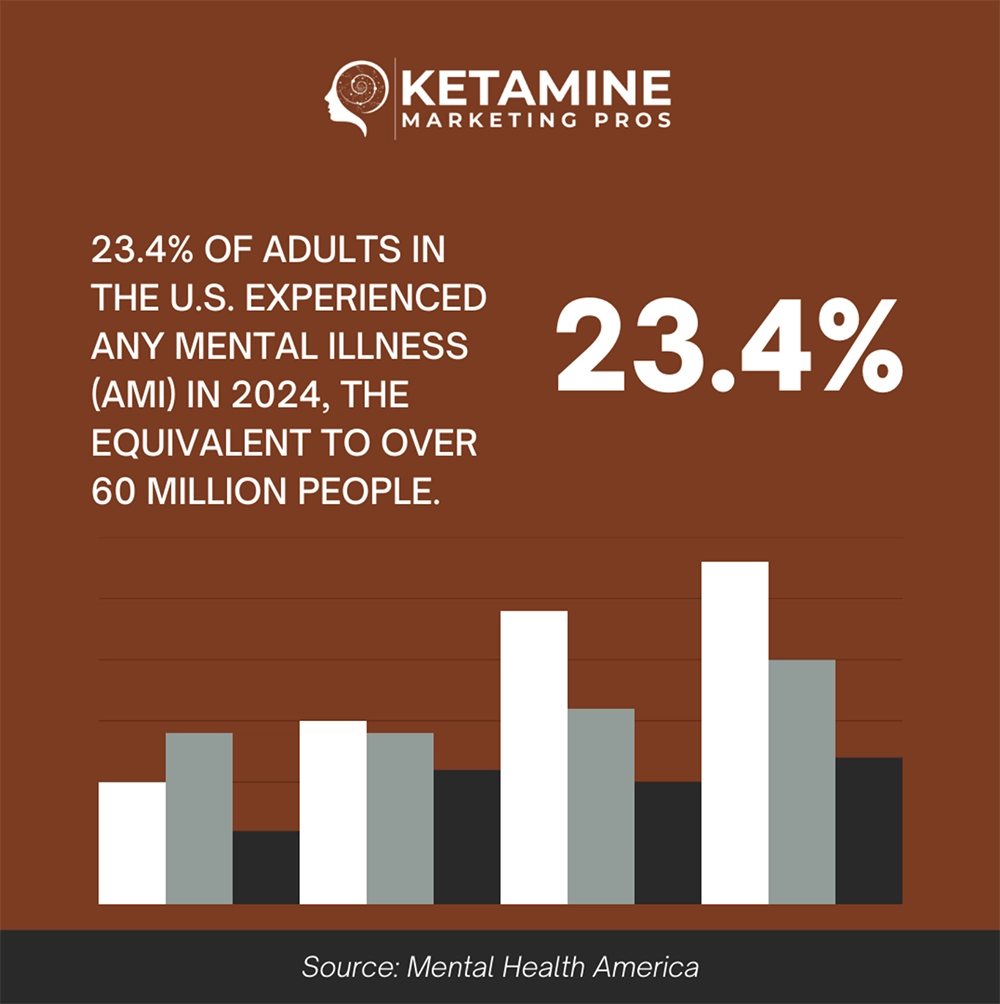
A surge in mental health disorders, exacerbated by the COVID-19 pandemic, economic uncertainty, and shifting societal dynamics, has led to an unprecedented demand for innovative treatments. According to Mental Health America, in 2024:
- 23.40% of adults in the U.S. experienced any mental illness (AMI), the equivalent to over 60 million people.
- 5.60% of adults had a serious mental illness.
- The estimated number of adults with suicidal ideation in the U.S. was over 14 million.
- 11.30% of youth (ages 12-17) in the U.S. experienced a major depressive episode (MDE) with severe impairment.
Treatment-Resistant Populations and Patient Advocacy
For many, the failure of conventional pharmacotherapy and psychotherapy has led to disillusionment, frustration, and advocacy for access to emerging therapies. Patients and clinicians alike are seeking modalities that can provide hope where years of medical intervention have failed. Ketamine therapy stands out for such patients, creating organic, word-of-mouth-driven demand, professional recommendations, and expert ketamine clinic marketing strategies from top ketamine therapy marketing agencies.
Changing Perceptions and Destigmatization
The stigma surrounding both mental illness and psychedelic treatments is gradually eroding, thanks in part to successful outcomes, media coverage, and advocacy from healthcare professionals, patients, and public figures. High-profile use of ketamine therapy in major metropolitan areas has furthered its reputation as not just an experimental intervention but a mainstream, evidence-based option for mental wellness. As the conversation around mental health becomes more open and the line between alternative and established treatments blurs, more patients are willing to explore new avenues, further fueling demand.
Convenience and Accessibility: Online Therapy and Telehealth Models
The COVID-19 pandemic didn’t just increase demand for mental health services, it accelerated innovation in care delivery. With telemedicine and remote health services on the rise, online ketamine therapy (including at-home oral lozenge and integration therapy programs) is growing faster than any other therapy segment in the market. Companies such as Mindbloom, Nue Life Health, Field Trip Health, and Innerwell have pioneered HIPAA-compliant remote ketamine therapy, making treatment accessible to broader swathes of the population, especially those who are homebound, in rural settings, or hesitant to visit clinics in person.
U.S. Ketamine Market Dynamics: Investment, Regulation, and Innovation
Market Size, Growth, and Investment
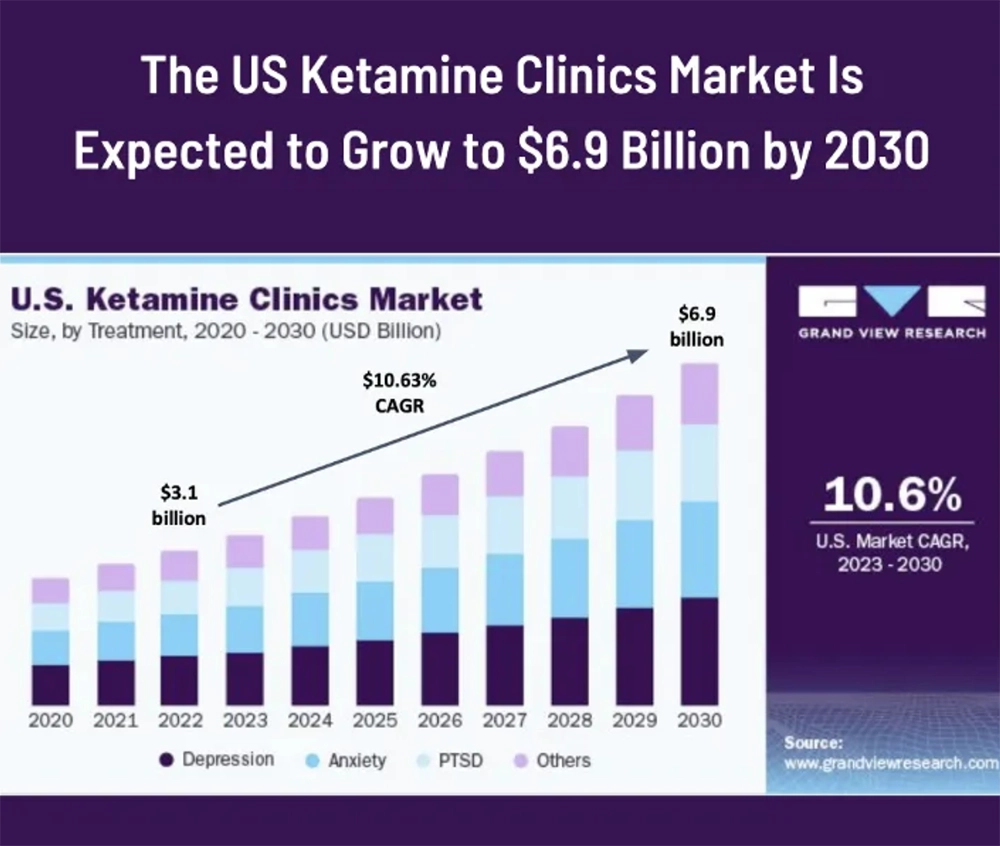
The U.S. ketamine clinics market was valued at $3.41 billion in 2023 and is projected to reach nearly $7 billion by 2030, growing at a compound annual growth rate (CAGR) of 10.6%. This rapid expansion is driven by increased patient demand, market entry by multiple new providers, and robust external investment. Venture capital and institutional investors have recognized both the clinical promise and market potential of ketamine therapy, fueling the proliferation of clinics, research partnerships, and new service offerings.
Several key factors underpin this growth:
- Expanding Clinic Networks: There are now hundreds of ketamine clinics across the country, with numbers growing annually to meet demand for both onsite and online therapy.
- Industry Innovation: Market competition has driven service innovation, increasing patient choice, and enhancing treatment modalities, integration practices, and post-treatment support.
- Partnerships and Collaborations: Prominent providers such as Mindbloom and others frequently partner with tech firms, general psychiatry companies, and even employers to expand access and uptake.
- Insurance and Regulatory Developments: Efforts to secure in-network insurance coverage, seen in companies like Innerwell, are helping reduce cost barriers and further legitimize ketamine treatment in mainstream healthcare.
Fragmentation and Barriers to Entry
While demand continues to soar, the market remains highly fragmented, with a mix of major national providers and smaller, independent clinics. Regulatory complexity, particularly the Corporate Practice of Medicine (CPOM) doctrine (which restricts non-physicians from owning or operating medical practices in some states), presents challenges for new entrants, necessitating careful navigation of federal and state laws. Still, this fragmentation creates opportunities for nimble startups and innovative care models that can address local regulations and tailor clinical services to specific population needs.
Marketing, Patient Acquisition, and Reputation Management
The competitive nature of the rapidly growing market has led to the emergence of specialized marketing services such as those provided by top ketamine clinic marketing agencies. These agencies help clinics and providers navigate online advertising regulations, educate the public, and differentiate their services via digital content, patient engagement, and brand positioning. In a sensitive and highly scrutinized industry, clear communication, transparency, compliance, and patient safety messaging are essential. Strategic marketing has helped reputable clinics reach underserved populations, educate both patients and referring providers, and move the conversation beyond stigma toward hope and clinical partnership.
The U.S. Ketamine Clinics Market: Segment Analysis & Key Players
Market Segments: Depression, Anxiety, PTSD, and Chronic Pain
While the depression segment dominates the market, anxiety and PTSD are fast-growing segments, buoyed by heightened societal awareness, expanded insurance coverage, and robust clinical outcomes. Chronic pain management, crucially, with a non-opioid modality, further diversifies clinic offerings and deepens ketamine’s market entrenchment.
Key Players and Strategic Partnerships
A vibrant ecosystem of providers is shaping the national landscape, including Mindbloom, Innerwell, Stella MSO LLC (formerly Field Trip Health), Nue Life Health, Better U, and others. These companies leverage partnerships, service expansion, and mergers to increase reach, improve service quality, and secure a foothold in an increasingly crowded and competitive environment.
Recent strategic initiatives include:
- Insurance Expansion: Innerwell’s partnerships with major insurers in California and New York aim to lower out-of-pocket costs and broaden access.
- Service Innovation: Mindbloom’s Mastermind Series and Field Trip’s mutual referral arrangements with general psychiatry platforms exemplify service differentiation and market synergy.
- Geographic and Online Growth: Clinic networks are opening new centers in underserved regions and offering online therapy, maximizing both convenience and reach.
Challenges, Risks, and the Path Forward
Safety, Diversion, and Responsible Use
While ketamine therapy offers immense promise, it also brings risks of diversion, misuse, and adverse effects (especially outside clinical supervision). Clinics must adhere to high standards for patient selection, education, administration, and follow-up, ensuring that benefits outweigh risks and that abuse is minimized.
Regulatory Change and Industry Oversight
As ketamine therapy continues to expand, ongoing attention from regulators, professional associations, and payers is anticipated. Standardization of care protocols, continued research, and proactive compliance efforts will shape both public perception and the longevity of the market. Providers with robust compliance, data reporting, outcome monitoring, and community engagement will be best positioned to thrive as the industry matures and oversight evolves.
As the market matures, ongoing research, responsible marketing, patient safety, and regulatory support will be essential to ensuring that the promise of ketamine therapy is fully realized for all Americans in need. The therapy’s popularity and market momentum are not transient phenomena, they reflect a deeper, paradigm-shifting movement toward more effective, compassionate, and individualized care for mental health and pain, with ketamine at the vanguard of that revolution.
Andre Bourque, Founder, Ketamine Marketing Pros
Andre’s passion for mental health led him to found Ketamine Marketing Pros, a digital marketing agency serving ketamine clinics. His work has been published in Forbes, Entrepreneur, CIO.com, Computerworld, and other prestigious outlets. He can be contacted on LinkedIn.
- About the Author
- Latest Posts

Our Editorial Team are writers and experts in their field. Their views and opinions may not always be the views of Wellbeing Magazine. If you are under the direction of medical supervision please speak to your doctor or therapist before following the advice and recommendations in these articles.