Finding the right balance between privacy and airflow can be tricky when you’re trying to improve your outdoor or indoor space. Nobody wants to feel exposed to neighbors or passersby, but cutting off that refreshing breeze defeats the purpose of being connected to the outdoors. How do I incorporate privacy walls or screens without blocking natural ventilation?
The key is choosing designs with strategic gaps or perforations—like slatted screens, louvered panels, or lattice work—that allow air to pass through while still obscuring sight lines. Studies show that screens with 30-50% openness can maintain effective airflow while providing visual privacy.
But not all privacy solutions work equally well in every situation, and factors like wind direction, screen placement, and material choice can make a huge difference in how well your space breathes while staying private.
Understanding Airflow Patterns And Privacy Needs
Before selecting any privacy solution, think about where the air actually flows in your space. Prevailing winds typically come from a consistent direction depending on your location and season, so positioning screens perpendicular to these winds rather than directly blocking them helps maintain circulation. A simple ribbon or flag placed in your yard over several days will show you the dominant wind directions.
The height and distance of your privacy screen from seating areas also matter. Placing screens slightly offset from the main living space creates a buffer zone where air can circulate the barrier before reaching you. This approach gives you privacy from specific sight lines without creating a solid wall that stops airflow completely.
Best Materials For Breathable Privacy Screens
Slatted wood panels are among the most popular choices because they offer adjustable spacing between boards. Horizontal or vertical slats spaced 1-3 inches apart typically provide good privacy when viewed straight-on while allowing significant airflow. Cedar and redwood naturally resist weather damage and look great over time.
Metal screens with perforated patterns combine durability with style. Laser-cut aluminum or steel panels come in countless decorative designs with varying degrees of openness. These materials won’t warp or rot, and powder-coated finishes can last decades with minimal maintenance. In humid or coastal environments, marine-grade stainless steel and powder-coated aluminum resist salt air and moisture without deteriorating.
Living privacy walls using climbing plants on wire or trellis frameworks provide excellent airflow since foliage is naturally porous. Jasmine, clematis, or passionflower create dense coverage while allowing breezes to filter through. Fast-growing vines can cover a screen in 1-2 seasons, and you can control density by pruning for maximum privacy or better airflow.
Design Strategies That Maximize Both Privacy And Airflow
Layering different screening elements at staggered distances creates depth that blocks sight lines without forming a solid barrier. For example, placing a 40% open screen closest to neighbors, then adding potted plants or a second lighter screen closer to your seating area, means someone would need a direct line through multiple layers to see in—but air moves around these obstacles easily.
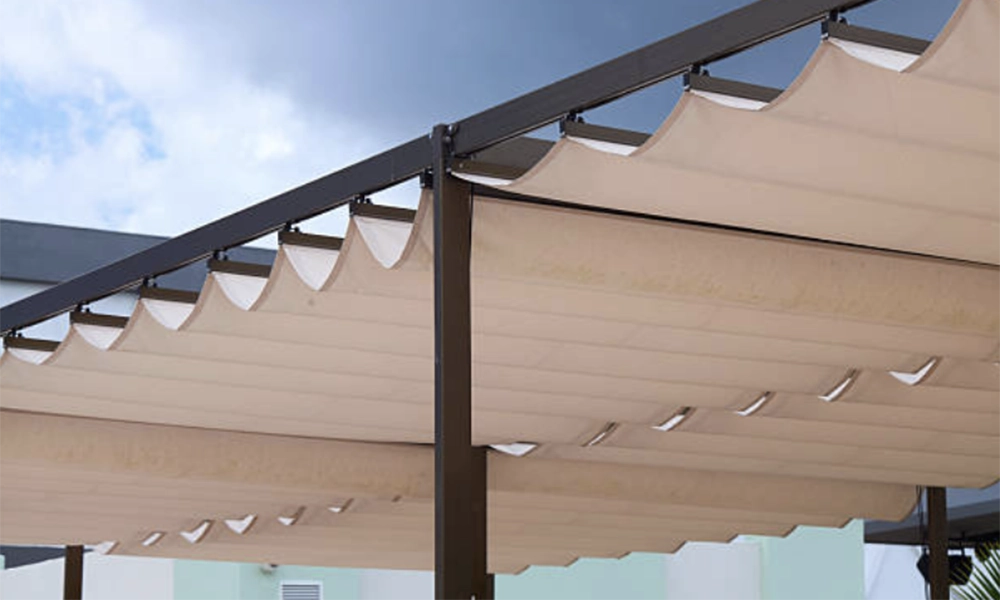
Angled or overlapping panels work similarly to how horizontal blinds function. When slats are angled at 30-45 degrees, they block direct views while channeling air through the gaps. Some modern screen systems feature adjustable louvers that you can reposition based on sun angle or wind direction. For maximum flexibility, retractable privacy screens offer the best of both worlds—deploy them when you need privacy during gatherings or when neighbors are outside, then retract them completely to restore full airflow and open views during quieter times. These systems are particularly effective for patios and decks where privacy needs fluctuate throughout the day. Horizontal slat patterns are particularly effective because they naturally align with typical sight lines while creating channels for horizontal airflow.
Creating privacy at eye level only is another smart approach. A screen that’s 4-6 feet tall blocks views when people are seated or standing at a distance but leaves the upper area open for airflow and light. This partial-height solution works especially well for deck and patio railings.
Strategic placement of screens in an L-shape or U-shape configuration rather than a straight wall creates protected zones while allowing air to enter from multiple directions. For yards with cross-breezes from multiple directions, consider creating a funnel effect where screens on opposite sides of your space are positioned to channel airflow through your main seating area.
Calculating The Right Balance Of Openness
The percentage of open space in your screening material directly impacts both privacy and ventilation. Screens with 20-30% openness provide maximum privacy but significantly reduce airflow—best for areas where you need privacy from close neighbors but air circulation is less critical.
Materials with 40-50% openness offer the sweet spot for most situations. At this ratio, you’ll block casual sight lines from 10+ feet away while maintaining about 70-80% of natural airflow compared to no screen at all.
Screens with 60-70% openness prioritize ventilation and work well when you’re mainly screening from distant views or just want to define space boundaries. These won’t provide privacy from anyone nearby or looking deliberately, but they soften sight lines while barely impacting air movement.
Testing this in practice means standing at the typical viewing distance (where neighbors or passersby would be) and checking whether you can make out clear details through your proposed screening. If faces and activities are obscured but you feel air movement, you’ve found the right balance.
Specific Solutions For Different Spaces
For balconies and small patios, vertical cable or rod systems with climbing plants offer privacy that improves over time. Stainless steel cables spaced 4-6 inches apart support vine growth without creating a wind-blocking wall.
Pool and spa areas need privacy screening that can handle humidity. Powder-coated aluminum louvers or composite materials resist corrosion while their slatted design lets steam and moisture dissipate. Louvers tilted at 45 degrees hide views while letting heat and humidity escape upward.
Rooftop terraces face unique wind challenges where screens need to temper strong gusts while maintaining ventilation. Perforated metal panels or tempered glass with ventilation gaps at top and bottom reduce wind speed without creating dangerous turbulence.
Enhancing Ventilation While Maintaining Privacy
Adding gaps at the top and bottom of privacy screens while keeping the middle section at eye level more closed creates a chimney effect. Warm air rises and escapes through the top gap while cooler air is drawn in from below, maintaining constant circulation even on still days.
Combining solid and ventilated sections strategically gives you enclosed private zones with protected openings that catch breezes. For instance, placing solid panels on the side facing prevailing winds but using perforated screens on the downwind side creates a sheltered area with draw-through ventilation.
Incorporating reflective or light-colored materials helps prevent screens from absorbing heat and creating hot zones that disrupt natural air patterns. Dark, solid screens can heat up in direct sun and actually create convection currents that fight against prevailing breezes.
Using different materials at different heights can optimize both functions—perhaps a more solid planter wall at ground level for maximum privacy where people look most often, with airier lattice or cable-and-plant systems above where sight lines matter less but airflow matters more.
Retrofitting Existing Walls And Using Landscaping
Transforming a solid fence into a ventilated privacy screen is often more cost-effective than starting from scratch. Add a decorative top section above your existing fence—lattice panels or horizontal slat toppers that add 1-2 feet of height with 50-70% openness allow air to flow while increasing privacy. Cutting horizontal slot vents at varying heights creates cross-ventilation without opening sight lines at eye level.
Strategic planting works with screens to create layers that improve both airflow and visual blocking. Tall, narrow evergreens planted 3-4 feet in front of a ventilated screen create a living first layer that blocks views while the gap between plants and screen becomes a ventilation corridor.
Ornamental grasses are particularly effective because they’re naturally permeable to air while obscuring sight lines. Varieties like maiden grass grow 4-8 feet tall in clumps that sway with breezes rather than blocking them. Plant these in staggered rows for a living screen that moves air while providing privacy.
Common Mistakes To Avoid
Installing screens too close to walls or in corners creates dead air zones where circulation stops completely. Leave at least 12-18 inches between solid structures and ventilated screens to allow air to move around all sides of the barrier.
Choosing decorative patterns without considering the viewing angle is another frequent oversight. A pattern that looks beautiful might have open sight lines when viewed from certain angles, especially from elevated positions like second-story windows. Always check privacy from all potential viewing locations, including above.
Forgetting about seasonal vegetation changes means a vine-covered screen that’s perfectly private in summer might be bare and transparent in winter. Plan for year-round privacy by combining evergreen plants with deciduous ones, or use living screens as just one layer in a multi-element approach.
Create Your Perfect Outdoor Haven
Understanding how privacy and ventilation work together is just the beginning—the real magic happens when you step outside and actually study your space. Spend some time observing wind patterns at different hours, identify exactly where neighbors have clear views, and note which spots feel most exposed. These observations will guide you toward the perfect screen design, material choice, and placement strategy that delivers both seclusion and fresh air circulation. With the right approach, you won’t have to choose between feeling private and enjoying natural breezes—you can have both in the outdoor sanctuary you’ve been imagining.
- About the Author
- Latest Posts

Our Editorial Team are writers and experts in their field. Their views and opinions may not always be the views of Wellbeing Magazine. If you are under the direction of medical supervision please speak to your doctor or therapist before following the advice and recommendations in these articles.