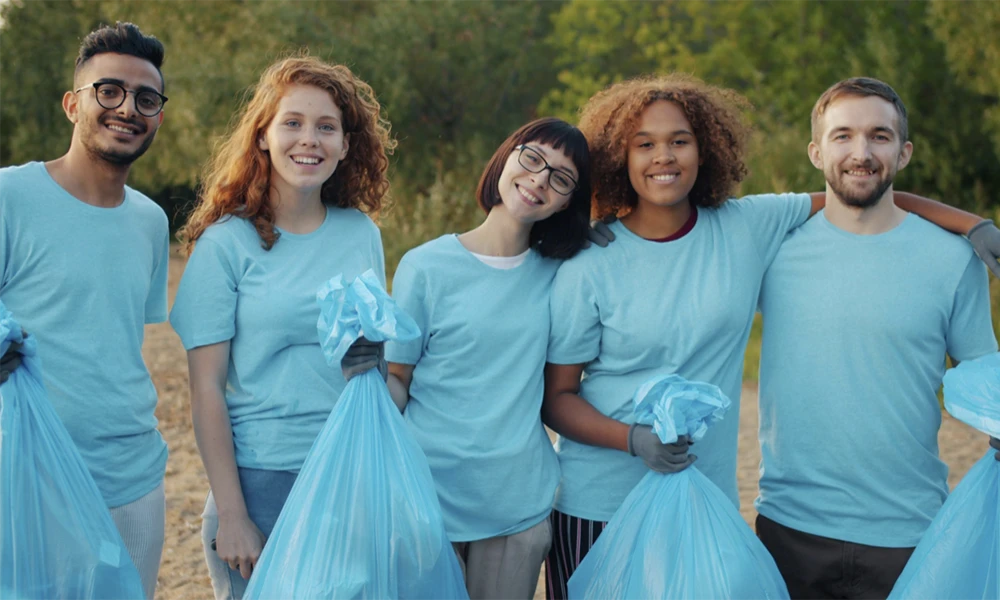
Picture a group of complete strangers showing up to a community garden on a Saturday morning. By noon, they’re laughing over shared snacks and swapping life stories nobody planned to tell. By month’s end, they’re texting each other about weekend plans. That’s what group volunteering quietly does: it doesn’t just serve communities. It forges real, lasting friendships that genuinely surprise the people forming them.
And this isn’t some niche phenomenon. According to the University of Nevada, nearly 59.3% of youth volunteer an average of 3.5 hours per week. This is already happening at scale, across cities, campuses, and communities worldwide.
Why Group Volunteering Hits Differently for Young Adults
Young adulthood is a peculiar, fascinating season of life. You’re simultaneously figuring out your identity, your values, and the kind of people you want surrounding you. Group volunteering, almost uniquely, addresses all three of those needs at once.
Identity and Belonging Are Deeply Connected
Peer connection at this life stage isn’t optional; it feels urgent, foundational. When it comes to travel groups for young adults, especially those built around service, participants aren’t simply clocking volunteer hours.
Young adult group travel is stepping into environments where shared values become the foundation for real relationships. They’re not just helping a cause. They’re finding their people, and that distinction matters enormously.
Shared missions create belonging in ways casual socializing rarely achieves. Something about working toward a collective goal strips away the awkwardness of early-stage friendship and accelerates genuine connection faster than almost any social setting can.
Purpose Has a Gravity of Its Own
Here’s what social media can’t replicate: the feeling of doing something meaningful alongside another human being. Whether a group is rebuilding a hiking trail, teaching literacy, or constructing community infrastructure, doing real work together creates memories that stick in a way that passively scrolling together never could.
Young adult travel groups leave these experiences saying more than “we hung out.” They say, “We actually built something. We actually helped someone.” That distinction shapes lasting bonds.
Understanding why group volunteering resonates so powerfully is the foundation, but understanding the specific benefits is where things get genuinely useful.
The Real Social Benefits of Group Volunteering
The social payoff of volunteering alongside peers goes well beyond surface-level friendships. These are concrete, lasting outcomes worth paying attention to.
Shared Goals Create Collective Identity
Working toward a collective mission produces something social scientists call shared identity, and it’s powerful. For a group travel for young adults, working side by side, whether planting trees or mentoring kids, strangers become teammates remarkably fast. Teammates become close friends faster still.
Traditional social settings rarely accelerate relationships at this pace. Shared purposeful action does.
Repeated Collaboration Deepens Trust
Trust isn’t proclaimed. It’s demonstrated, repeatedly, in small moments, showing up when you said you would, following through under pressure, staying patient when things get hard. Group volunteering creates exactly those conditions, consistently.
Every session where someone reliably shows up adds another layer of trust to the relationship. Over time, those layers become something solid.
Cross-Cultural Exposure Builds Genuine Empathy
When young adults engage in service-oriented group experiences, they frequently encounter communities and circumstances far outside their personal frame of reference. Nobody lectures them about empathy; they simply live through situations that naturally widen their perspective.
That broadened worldview doesn’t just help communities being served. It strengthens the emotional depth of bonds within the volunteer group itself. People who’ve seen the world differently together tend to understand each other more generously.
Trends Reshaping How Young Adults Volunteer in Groups
The volunteering landscape isn’t static. Several meaningful shifts are making group experiences more immersive, better organized, and more emotionally resonant than those experienced by earlier generations.
Service-Travel Combinations Are Growing Fast
One of the most significant developments is the merging of service with meaningful travel. As travel groups for young adults increasingly take the shape of two-week international programs, participants spend their days building community infrastructure and their evenings exploring local culture together.
That combination compounds bonding significantly. Navigating unfamiliar cities, eating unexpected food, adapting together to unpredictable situations, all of that adds closeness beyond what the service work alone would produce.
Technology Is Reducing Friction
Some technical platforms improve how volunteer groups coordinate schedules, divide responsibilities, and stay connected between sessions. Less logistical friction means more available energy for the thing that actually matters: real human connection.
Recognition Keeps Groups Engaged
Publicly acknowledging milestones, celebrating a participant’s hundredth volunteer hour, and recognizing a team’s completed project does more than feel nice. It sustains motivation, reinforces group identity, and keeps people showing up. Feeling seen matters deeply, at every age.
Practical Strategies That Actually Strengthen Group Bonds
These approaches are grounded in what genuinely works, not abstract theory, but real patterns observed across group volunteering contexts.
Establish a Consistent, Shared Schedule
Routine is genuinely underrated. Regular sessions, weekly, biweekly, or monthly, create rhythm, continuity, and a reliable reason to see the same people again. Friendships thrive on that pattern. Consistency also builds accountability, which quietly deepens trust over time.
Build in Reflection After Each Session
A short debrief following a volunteer session, even informal, even just ten minutes, helps participants process the experience collectively. Shared reflection transforms individual moments into group memory. It doesn’t require formality. A simple “what hit you most today?” question is enough.
Mark Milestones Together
Finishing a project, completing a trip, and hitting a volunteer hour target are accomplishments that deserve recognition. Small celebrations create emotional anchors that reinforce the group’s shared narrative and make everyone feel part of something worth continuing.
Where Young Adults Can Find Group Volunteer Opportunities
Group volunteer opportunities for young adults span everything from local weekend projects to multi-week international programs. The range is genuinely wide.
Platforms Worth Knowing
Several platforms provide flexible, locally driven volunteering opportunities across a wide range of causes and skill sets, making it easy for individuals to find roles that match their interests and availability. Others focus on connecting participants with nonprofit-led programs globally, offering meaningful ways to contribute to communities in need.
For those seeking immersive, travel-integrated experiences, some programs stand out for their consistent recognition, including annual awards for excellence in volunteer abroad initiatives and acknowledgment by international bodies for their commitment to sustainable community impact.
Consider Organizing Your Own Group Experience
Launching a grassroots group experience is more achievable than most people assume. Start with shared goal-setting, distribute logistics across group members, and anchor everything around a cause that genuinely matters to everyone involved. University clubs and civic organizations frequently have existing frameworks ready to support exactly this kind of initiative.
Frequently Asked Questions
Do group volunteer trips cost more than going solo?
Not necessarily. Many volunteering programs include all-inclusive packages covering housing, meals, and transportation, making costs far more predictable than they initially appear.
Can introverts genuinely benefit from group volunteering?
Absolutely. Because interaction is structured around a clear shared purpose, the social pressure is actually lower than in unstructured settings. Introverts frequently find it far easier to connect through collaborative tasks than through forced conversation.
How frequently should a group volunteer together to build real bonds?
Research from the University of Maryland suggests that volunteering in the prior year increases the likelihood of joining community groups by 24.4 percentage points (spp.umd.edu). Even monthly sessions create the kind of continuity that meaningfully deepens social ties over time.
One Final Thought
Group volunteering is genuinely one of the most underappreciated paths to authentic friendship that exists for young adults today. It combines shared purpose, meaningful experience, and reliable human connection in a way almost nothing else manages to replicate.
Whether you’re exploring a local weekend project or committing to an international service trip, the bonds formed through collective action tend to run deep and stay long after the work itself is finished. Find, or build, a group volunteer experience that actually means something to you. Few investments of your time will pay back more generously.
- About the Author
- Latest Posts

Our Editorial Team are writers and experts in their field. Their views and opinions may not always be the views of Wellbeing Magazine. If you are under the direction of medical supervision please speak to your doctor or therapist before following the advice and recommendations in these articles.