Losing a tooth changes more than your smile; it affects how you chew, speak, and how your jawbone holds its shape over time. Dentures slip. Bridges need healthy teeth on either side shaved down as anchors. That’s exactly why dental implants in Mumbai have become the gold standard in modern dentistry: a titanium root that fuses with your jawbone and supports a crown that looks, feels, and functions like a natural tooth. If you’ve been putting off a decision about a missing or failing tooth, here’s everything you need to know before you choose a path forward.
What Exactly Are Dental Implants?
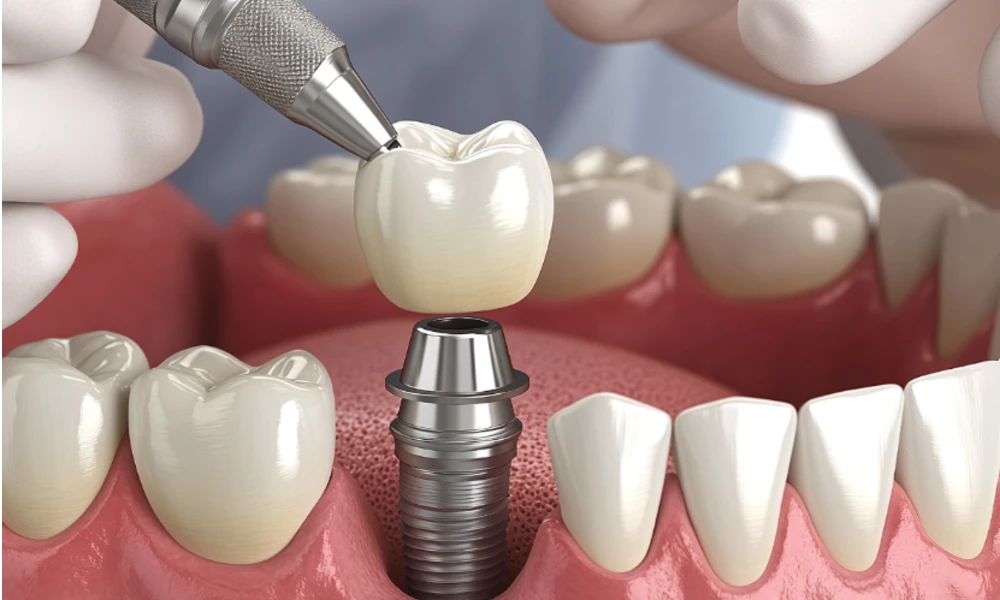
Dental implants are small titanium (or zirconia) posts that are surgically placed into the jawbone, where they act as an artificial tooth root. Over a few months, they fuse with the bone through a biological process called osseointegration. Once stable, a custom crown is fixed on top, giving you a replacement tooth that’s built to last decades, not years. Unlike removable options, they become a permanent part of your bite, so you can eat, speak, and smile without ever thinking twice about them slipping or shifting.
Implants vs Bridges vs Dentures
On paper, all three options replace a missing tooth. In practice, they behave very differently from bridges and dentures over the years that follow treatment.
- They don’t touch your neighbouring healthy teeth; bridges do, since they need to be shaved down to anchor the replacement.
- They stop jawbone loss because they stimulate the bone like a real root; dentures and bridges can’t.
- They’re a one-time investment with proper care; dentures typically need replacement or relining every 5-7 years.
- They restore close to 100% chewing efficiency; dentures typically restore only 20-30%.
Step-by-Step: How Implants Are Actually Placed
Most patients overestimate how complicated or painful getting dental implants will be. In reality, it’s a structured, well-mapped sequence:
- Consultation & 3D Scan — digital imaging maps your jawbone density and nerve position to plan the treatment precisely before anything is touched.
- Implant Placement — the titanium post is placed under local anaesthesia in a short procedure; most patients describe the surgery as far less uncomfortable than a tooth extraction.
- Healing Phase — usually 3-6 months, during which the implant gradually fuses with the surrounding bone to become rock-solid.
- Crown Placement — once healed, a custom-shaded crown is fitted on top, matched precisely to your natural teeth.

How Much Do Dental Implants Cost?
The cost depends on several factors: the number of teeth being replaced, the implant brand used, whether bone grafting is required beforehand, and the city you’re treated in. As a general guide, dental implants in Mumbai typically cost a fraction of the price you’d pay in the US, UK, or UAE for a comparable procedure using the same internationally recognised systems. This price gap is also exactly why many NRIs and international patients now combine this treatment with a planned trip to Mumbai.
Are You a Good Candidate?
Most healthy adults with adequate jawbone density qualify for dental implants, regardless of age. Patients with low bone volume aren’t ruled out either; a straightforward bone grafting procedure beforehand can build up the site so the implant still succeeds with excellent long-term stability. Smokers, diabetics, and patients with gum disease can often still be candidates once those underlying conditions are managed alongside the treatment plan. The only reliable way to know for certain is a 3D scan and a proper consultation with an experienced implantologist.
What Happens If You Delay Treatment?
Many patients wait months or years before addressing a missing tooth, often because the gap isn’t visible when they smile. The problem is that the jaw bone underneath an empty socket begins resorbing almost immediately, and neighbouring teeth can slowly drift into the gap. The earlier treatment is planned, the simpler and more predictable it usually is, which is one more reason a consultation now, even before you’ve fully decided, is worth the half-hour it takes.
Looking After Your Implant Long-Term
An implant itself can’t decay like a natural tooth, but the gum and bone around it still need the same care as any other tooth in your mouth. Brushing twice a day, flossing or using interdental brushes around the site, and keeping up with routine cleanings prevents a condition called peri-implantitis, which is essentially gum inflammation around the implant. With this basic upkeep, a well-placed implant can comfortably outlast every other tooth-replacement option available today.
Why Choose an MDS-Qualified Implant Team in Mumbai
Success is almost entirely dependent on precision-accurate bone assessment, correct depth and angulation, and the quality of materials used. Dent Heal’s MDS-qualified clinical team has delivered 25,000+ smiles across 15+ years using advanced 3D imaging and digital surgical planning, with full mouth rehabilitation, bone grafting, and implant placement all handled in-house across its Bandra, Juhu, Prabhadevi, and Oshiwara centres. Every case begins with a transparent treatment plan and cost estimate, so there are no surprises between your first scan and your final crown.
Frequently Asked Questions About Dental Implants
Patients often ask how long they actually last with good oral hygiene and regular check-ups; dental implants in Mumbai can easily last 15-20 years or longer, often for life. Another common question is whether getting them hurts; the placement itself is done under local anaesthesia, and most patients report only mild soreness afterward, far less than they expected going in.
Don’t let a missing tooth limit your smile any longer. Book a dental implants in Mumbai consultation with Dent Heal’s MDS-qualified specialists in Mumbai today and get a personalised treatment plan with transparent pricing.
- About the Author
- Latest Posts

Our Editorial Team are writers and experts in their field. Their views and opinions may not always be the views of Wellbeing Magazine. If you are under the direction of medical supervision please speak to your doctor or therapist before following the advice and recommendations in these articles.