Most of us focus on the medicine when we take a pet to the vet. Will the diagnosis be simple? Is the treatment safe? Yet the room itself does a lot of quiet work too. A bright, echoing lobby full of unfamiliar animals can raise a pet’s fear, anxiety, and stress before anyone puts a stethoscope near them. A calmer space can do the opposite.

(Source)
Veterinary bodies and animal-friendly programs have been moving in this direction for years, favoring quieter waiting areas, species-sensitive layouts, and check-in models with little or no lobby time. The idea is consistent: thoughtful design helps animals settle and helps owners feel less on edge.
This guide walks through low-stress veterinary clinic design in practice, so you can recognize useful features and understand why they matter.
What Low-Stress Looks Like the Moment You Walk In
The first clue is the entrance and waiting area. Guidance from feline-focused groups such as the American Association of Feline Practitioners (AAFP) and the International Society of Feline Medicine (ISFM) recommends calm, quiet waiting rooms with enough space, gentle sound, and physical barriers to reduce contact between patients.
You may also notice separate zones or clear visual dividers for dogs and cats. Small seating clusters can create fewer face-to-face encounters and more comfortable conversations with staff.
Some clinics skip the lobby almost entirely by asking clients to text on arrival and then taking them straight to an exam suite. For an anxious pet, fewer surprises usually means a quicker settle.
Flow and Privacy Behind the Scenes
Good clinics think about how animals and people move through the building. A direct-to-room approach reduces time in shared spaces. Quiet corridors, separate paths, and private rooms take space, so fitout drawings need to account for circulation, storage, and partitions.
Wider corridors reduce tight passes between nervous animals, and private consultation or comfort rooms give worried owners a calmer place to talk. If a practice is briefing a fitout partner such as SoulMED about its veterinary fitouts, this is the stage to discuss room adjacency, separate paths, and privacy before finishes are chosen.
Sound and Scent Control
Noise is one of the most underrated stressors in a clinic. Studies of veterinary settings have recorded operating-room averages around 72 dB(A), peaks above 90 dB(A), and kennel peaks over 100 dB(A). Exact levels vary, but sudden, sharp noise is a real stressor.
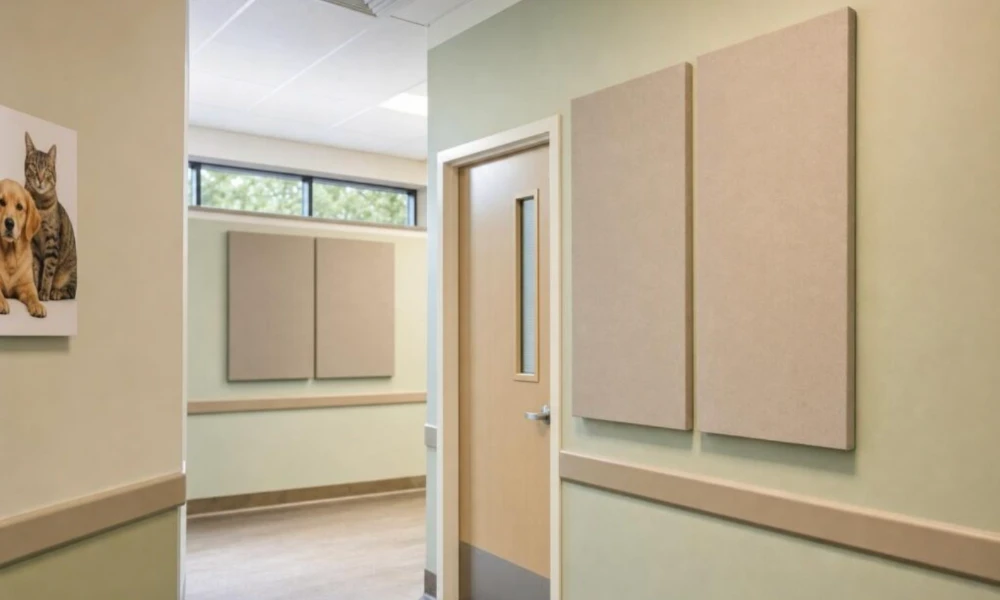
Design responses include acoustic wall panels, sound-dampening materials, and keeping noisy equipment such as laundry machines and centrifuges away from patient areas. Calming music or gentle background sound can also help. Quieter rooms benefit people too, since it is easier to hear your vet. Strong cleaning or chemical smells can unsettle animals with sensitive noses, while pheromone diffusers show attention to scent.
Cat-Specific Comforts You Can Spot
Cats often find vet visits hard because they can feel exposed in open rooms and threatened by nearby dogs, so dedicated routes, rooms, and resting places matter.
AAFP and ISFM guidance recommends establishing a cat-only exam room where possible and designing routes that bypass dog areas and busy reception. Fear Free practice standards add practical touches: elevated carrier platforms, visual blocking, pheromones, sound-dampening, and alternate entrances for highly anxious patients.
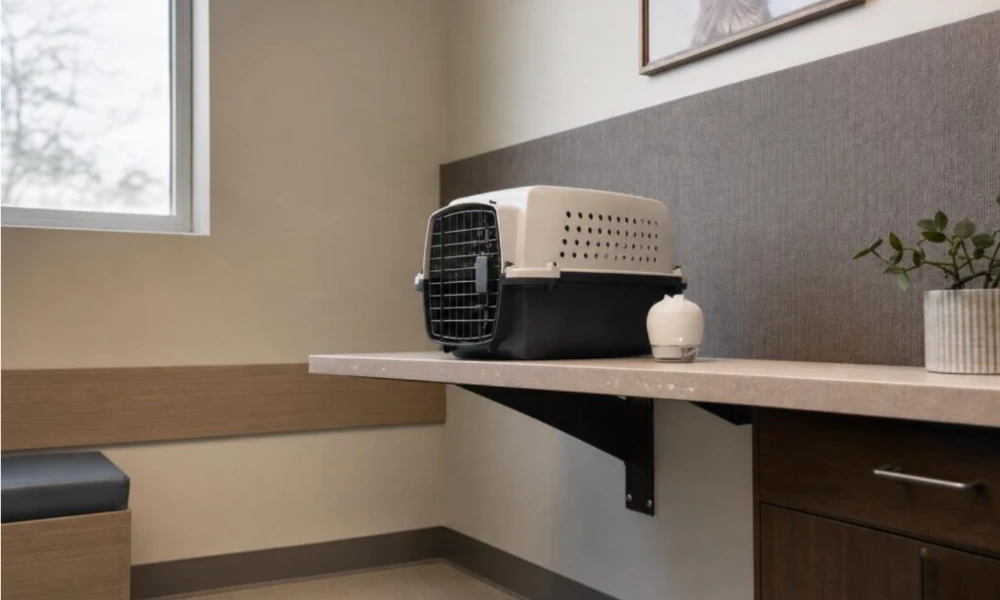
As an owner, you might notice a cat-only room label, elevated shelves or perches, hiding options, non-slip surfaces, and a litter box available.
Dog-Friendly Design Cues
Dogs benefit from thoughtful layout too. Non-slip flooring at reception and in exam rooms helps anxious or elderly dogs feel steady rather than scrambling on slick tile. Easy access to an outdoor relief route reduces accidents and tension.
Owner Calm Is Part of Patient Care
Design does not only serve the animals. AAHA’s One Health guidance takes a family-centered view and recognizes that a supportive system can help reduce pressure on clients and health professionals. Clear signage, easy wayfinding, less crowding, and private comfort rooms all lower tension for owners, and calmer owners tend to have calmer pets.
A Quick Checklist for Your Next Visit
When you walk into a clinic, look for these signs of low-stress design:
- Separate dog and cat zones, or clear visual barriers
- A quiet, uncrowded lobby with enough space
- Elevated shelves for cat carriers
- No strong cleaning or chemical odors
- Clear signage and easy wayfinding
- An option to text on arrival or wait outside
- Non-slip floors at reception and in exam rooms
- A cat-only exam room or scheduled cat-only hours
- Staff using calm handling and treats
Planning a Refurb or New Build?
If you help run a practice, start with patient flow, species-sensitive layouts, quieter materials, and direct-to-room workflows, then build permits and approvals into the timeline. Because rules differ by area, confirm local requirements before you commit to a plan.
In Melbourne, SoulMED is one provider that handles clinic fitouts from design and planning through construction, installation, and compliance support. The useful question for any provider, including SoulMED, is not only how the clinic will look, but how the layout will reduce waiting, noise, scent build-up, and close contact between animals.
Many projects fall in the six-to-ten-week range, although timing depends on scope, site condition, approvals, and local requirements. Whatever team you choose, keep the priorities clear: calmer spaces for animals and clearer visits for people.
Small Changes, Noticeable Results
You do not have to accept a stressful visit as normal. Many low-stress features are simple, and clinics are often glad to hear that owners value them. Ask about cat-only hours, direct-to-room check-in, or a quieter corner of the waiting area.
The best veterinary clinic design works so smoothly you barely notice it. The room feels calm, the noise stays low, and your pet settles faster. That comfort is not a luxury. It is part of good care, and it is worth looking for.How Veterinary Fitouts Can Reduce Stress for Pets and Owners
- About the Author
- Latest Posts

Our Editorial Team are writers and experts in their field. Their views and opinions may not always be the views of Wellbeing Magazine. If you are under the direction of medical supervision please speak to your doctor or therapist before following the advice and recommendations in these articles.