Why Is It So Hard to Receive?
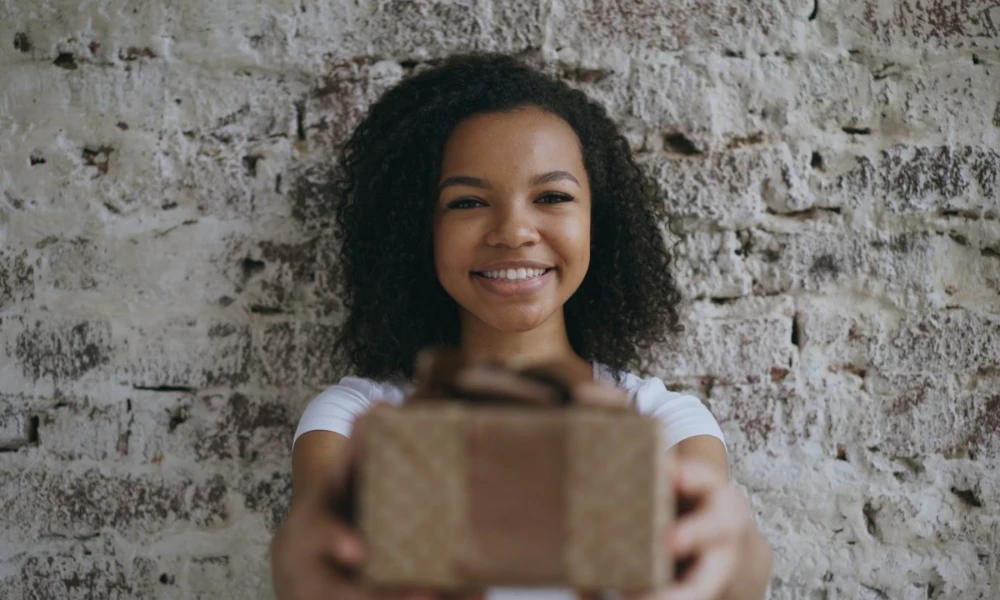
Receiving has never been very easy for me. She definitely called me out. “It makes me uncomfortable that giving you something has to be so hard. You are a giving person, and not being able to give back takes something away from not only you, but me too.” That is exactly what my dear friend Gail said to me a few years ago after I tried to return the Whole Foods gift card she gave me for Christmas.
I’ve actually returned gifts and other items many times before, but no one had the guts to point out how uncomfortable it actually made her. I never really thought about it beyond my own habit around struggling to receive.
Have you ever tried to return gifts or other things people have given you?
After years of processing the art of receiving, I finally concluded that receiving is just as important as giving.
I am a natural giver and feel very comfortable in that role. As a nurturer and provider. Caring for others… I don’t receive.
But the truth is that when you give more than you receive, when you make a big deal out of others showing love or care for you, you take something very important away. You steal from them exactly what you get from giving in the first place.
Think about that for a moment.
Giving and receiving are two sides of the same coin. When you do one without the other, you create imbalance.
Why Receiving Can Feel So Uncomfortable
So, if they are two sides of the same coin, why is receiving so much harder than giving?
Giving is within your control. For one thing, you know exactly what to expect from it. You decide, orchestrate, create. It feels really good inside to give to others.
Giving induces worthiness and importance. It can make you feel needed and even virtuous. On the other hand, receiving can be much more difficult. It may actually feel out of your control.
It says you need something, you’re falling short, or you’re not able to manage on your own. Similarly, asking for help can imply that you don’t have your own act together. It leaves room for judgment or for someone to form an opinion about you… There may be strings attached, or it is conditional to some extent.
For example, receiving can make some people feel weak, vulnerable, or like they just can’t cut it. It can give others ammunition against you or give them something they can hold above you.
Ultimately, to receive, you have to let people in behind the scenes to a certain point.
You also have to be connected enough with yourself to know what you need in the first place or exactly how you feel about something.
Maybe you can relate…
The Vulnerability Hangover
As someone struggling with chronic illness, the hardest question I get is, “How are you feeling?”
This should be easy, but it is not. Why can it be so difficult to tell someone you aren’t fine without, five minutes later, pondering, “Why on earth did I just tell them that?”
This is something I call a vulnerability hangover, and it is very real. It’s that embarrassment or shame you can feel when you let someone into your darker spaces. Into your real truth. Happy mask on the outside, mental torture on the inside.
What is actually living underneath this?
And yet, we can feel desperate to be seen, supported, cared for, and held while simultaneously making it nearly impossible for anyone to really do these things for us.
Maybe it is the dashed expectations from the past where you have been let down, didn’t get the support you needed, or were shamed for asking in the first place. Made to feel less, or a failure because you couldn’t hold the space all by yourself.
The Other Half of Giving
The reality is that if you want to move forward in your own life—in a variety of ways—receiving must be a fundamental element of that.
Receiving with grace is part of the back-and-forth and give-and-take of true reciprocity.
It doesn’t work to give but not receive and expect that exchange to remain in balance.
After all, you cannot experience the full cycle of giving if you are unwilling to be part of the other side of it.
Both sides of the coin have to be honored.
In fact, research is showing just how important this exchange really is. Current studies are now connecting the act of giving and receiving support to health and physiological responses to stress.
The Art of Receiving in Practice
Receiving is like a muscle. You can exercise it, strengthen it, and practice it to get better and better at it. It is about building small habits that build self-worth and confidence in the moment.
At first, this can feel foreign and even ‘wrong,’ but if you stick with it, it can make a really big difference in the way you see yourself and interact with others in general.
For example, start by becoming conscious of how you feel inside your body when someone gives you something. Does it create an uncomfortable sensation you want to hide away from?
Keep in mind that discomfort doesn’t necessarily mean something is wrong; sometimes it simply means something is just unfamiliar.
“I am willing to be gracious in receiving”
You can start small.
- Pause and check in. Stop for a moment and take a deep breath before you answer or feel distress.
- Start with a genuine thank you. Even if that feels weird or off, it will set a new type of energy in motion.
Over time, being an active participant in receiving will make a noticeable difference for you in social situations. It will also help you feel more connected to the whole give-and-take process.
Ultimately, receiving isn’t only about us and our feelings in the moment. When you are willing to receive graciously, you then provide other people with the opportunity to experience the full circle of the process too.
Maybe you would like to practice receiving now. If you feel a resonance with this, I invite you to receive my free Letters of Embodied Light. These are gentle weekly reflections designed to help you reconnect with yourself and listen more deeply within.
- About the Author
- Latest Posts

Cece James BS, HHP, CAWK, Clinical EFT Certified Practitioner , Certified Toxicity & Detox Specialist
Cece James is the founder of the Institute for Healing and Holistic Living. She has been in the field of health and wellness for almost 3 decades. She is passionate about her mission to bring healing strategies to others and create a loving culture of self-care.
Cece supports individuals and families facing chronic illness or other health challenges as well as empowers those who are interested in learning to navigate the terrain of whole foods, holistic lifestyle, supplements and the use of various natural remedies.
She truly believes that everyone has what they need to heal inside them right now. Through experience and conversation, she explores the various ways in which a holistic lifestyle can enrich and integrate into any current view of health and thus optimize ones true balance and vitality.