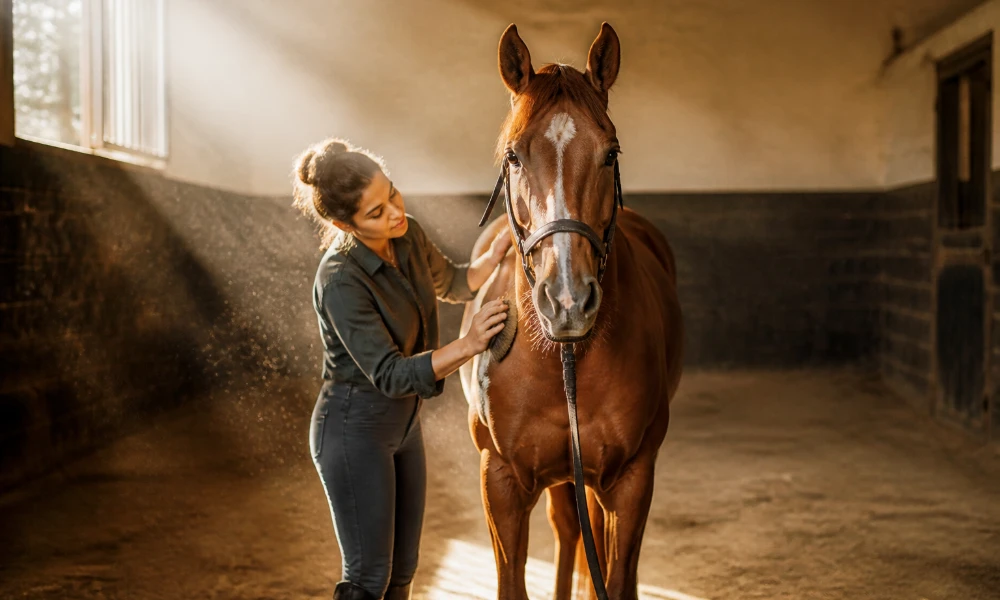
There’s a particular kind of stillness that settles over a stable yard in the early morning, with steam rising off warm horses in the cold air, the rhythmic sound of hooves on sand, nothing demanding your attention except the animal in front of you. It’s not something most people associate with horse racing, an industry usually pictured through the lens of noise, crowds, and prize money. But talk to anyone who’s actually spent time around racehorses regularly, and a different story tends to emerge one about what that time does for a person’s state of mind, not just their bank balance.
Why Being Around Horses Affects People the Way It Does
There’s genuine substance behind the idea that time spent with horses is good for a person’s wellbeing, not just a nice sentiment attached to the sport. Horses are large, sensitive, and entirely present-tense animals; they don’t respond to distraction, and being around them tends to pull people out of their own heads in a way that’s hard to replicate elsewhere. Trackwork mornings, in particular, offer something increasingly rare: a slow, unhurried block of time with no phone notifications competing for attention, just the physical rhythm of a horse moving and the simple task of watching closely.
For people whose working lives are otherwise dominated by screens and deadlines, that kind of unstructured, sensory time has a restorative quality that’s easy to underestimate until you’ve actually experienced it.
Ownership as Community, Not Just Investment
One of the more overlooked wellbeing benefits of racehorse ownership is the social connection that comes with it. Shared ownership structures, in particular, bring together small groups of people around a common source of excitement and, just as often, shared disappointment,t which tends to build a kind of camaraderie that’s hard to manufacture in most other hobbies. Racedays become genuine social occasions rather than solitary spectating, and the WhatsApp group that inevitably forms among co-owners becomes its own small, low-stakes source of connection between races.
This matters more than it might seem for people who’ve drifted away from regular social hobbies as life gets busier. A shared stake in a horse gives people a recurring, built-in reason to catch up, celebrate small wins together, and commiserate over the inevitable slower stretches the kind of ongoing, low-pressure social rhythm that a lot of adult life doesn’t naturally provide anymore.
Patience as an Unexpected Wellbeing Practice
Racehorse ownership also quietly teaches patience, whether or not anyone signs up for that lesson intentionally. Horses develop on their own timeline;ne a promising yearling might take a year or more before its first race start, and even then, success rarely arrives in a straight line. Owners who go in expecting instant results tend to find the experience stressful. Those who settle into the slower rhythm of the sport, treating each small milestone as worth appreciating on its own, tend to report a much healthier, more enjoyable relationship with the whole process.
That reframing, from outcome-focused to process-focused, is a genuinely useful mental shift that a lot of people find carries over into other parts of life once it’s been practised around something as unpredictable as a young racehorse.
Choosing a Stable That Supports This Side of Ownership
Not every training operation puts equal weight on the wellbeing side of ownership, and it’s worth paying attention to which ones do. Stables that prioritise transparent communication, regular trackwork invitations, and genuine owner involvement rather than treating owners purely as a funding source tend to produce a far more fulfilling experience, regardless of how the horse performs on race day. The same goes for equine welfare: operations that visibly prioritise a horse’s wellbeing, not just its racing output, tend to attract owners who care about the same things, creating a healthier overall culture around the stable.
Anyone weighing up whether this kind of ownership might genuinely add something to their life is usually better served spending time at a yard before committing, watching a trackwork morning, talking to existing owners, and getting a feel for whether the day-to-day rhythm actually suits them, rather than deciding based on a horse’s pedigree alone. For those exploring where to start, browsing the horses available through an established stable offers a useful sense of what that ongoing relationship might actually look like in practice.
A Different Kind of Return
The financial side of racehorse ownership gets most of the attention, understandably, but for a lot of long-term owners, it’s not actually the reason they stay involved. The early mornings, the shared excitement with fellow racehorse owners, the slow satisfaction of watching a horse develop over months and years these tend to matter more over time than any single result on a racecard. That’s not a consolation prize for the sport’s unpredictability. For plenty of people, it’s the entire point.