The future of aging well isn’t built in clinics — it’s built in kitchens, hallways, and bathrooms, one thoughtful adaptation at a time.
For generations, growing older or living with a chronic condition meant an inevitable journey from home to care facility. That assumption is being quietly dismantled — not by a single medical breakthrough, but by a shift in how we think about the spaces we inhabit.
Modern medicine has extended lifespans significantly. But longevity without quality of life is a hollow victory. The real question for millions of people — and their families — is not how long they can live, but where. Increasingly, the answer is: at home, on their own terms.
Medication manages symptoms. Therapy rebuilds strength. But neither does much good if a person cannot safely navigate their own bathroom, or if every trip to the toilet carries the quiet anxiety of a fall waiting to happen. The missing piece has always been the environment itself — and a new generation of home medical equipment is finally addressing that gap.
The bathroom: defusing the most dangerous room in the house
Ask any occupational therapist where falls are most likely to happen, and the answer is almost always the same. Not on stairs. Not in the garden. In the bathroom — where wet surfaces, awkward postures, and the physical effort of sitting and standing converge into a perfect storm of risk.
~80% of household falls among older adults occur in the bathroom — more than any other room in the home.
The physical mechanics are straightforward: lowering onto and rising from a toilet or shower seat requires a significant range of motion, balance, and lower-body strength. For someone recovering from surgery, living with arthritis, or managing neurological conditions, these are precisely the capacities that have been compromised. The result is not laziness or carelessness — it is physics working against a body that needs support.
Rethinking toilet and shower aids — from stigma to strategy
There is a persistent cultural narrative around bathroom aids: that they are clinical, ugly, and signal decline. That narrative is both outdated and actively harmful. Modern toilet seat risers and shower assistance systems are precision-engineered tools for autonomy — not concessions to weakness.
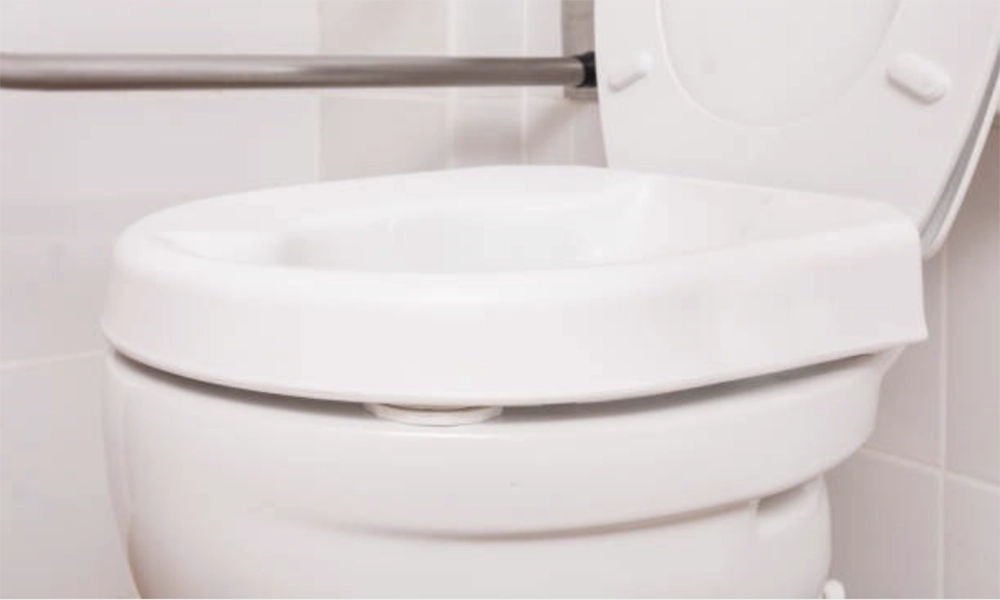
A raised toilet seat, for example, reduces the angle the hip and knee must flex during the sit-to-stand transition. For someone post-hip replacement or with Parkinson’s disease, this seemingly small change can be the difference between managing daily hygiene independently and requiring a caregiver for every bathroom visit. Similarly, shower chairs and grab bar configurations are designed to distribute load, reduce orthostatic dizziness on standing, and provide a stable reference point in an inherently unstable environment.
The best modern aids are adjustable, discreet, and designed to integrate into a home aesthetic rather than fight it. They represent a fundamental reframing: instead of asking patients to adapt to medical environments, we are finally adapting environments to patients.
The role of certified specialist suppliers
Choosing the right home medical equipment is not a decision that should be made based on price alone, or by scrolling through generic online retailers. The stakes are too high, and the variables too individual. A device that works perfectly for one person — given their weight, mobility limitations, home layout, and daily routine — may be entirely wrong for another.
When sourcing life-changing equipment, it is crucial to rely on certified experts who understand the balance between medical necessity and home comfort. Leading European providers like Medisanshop have specialized in bridging this gap, offering everything from advanced respiratory solutions to ergonomic bathroom aids — combining clinical-grade reliability with the kind of thoughtful design that makes living at home not just possible, but genuinely comfortable.
What distinguishes a quality specialist supplier is not just product range, but knowledge architecture — the ability to map a person’s specific clinical picture onto the right combination of equipment, and to provide ongoing support as needs evolve. This consultative dimension is what separates a medical equipment provider from a warehouse.
Independence is infrastructure
There is a tendency to frame home medical equipment as a last resort — something deployed when all else has failed. That framing gets the logic exactly backwards. These tools are preventive infrastructure. A grab bar installed before a fall is worth infinitely more than one installed after a fracture, a hospitalization, and six weeks of rehabilitation.
The broader shift happening in healthcare recognizes this. Aging-in-place is not a passive process — it requires deliberate investment in the home environment, just as it requires investment in physical therapy, nutrition, and medical monitoring. The home is a clinical setting. It simply needs to be treated like one.
For individuals, families, and the healthcare systems supporting them, the message is clear: the hospital does not have to be the endpoint. With the right equipment, the right expertise, and the right environment, home can be — and for many, should be — where care continues, and where life goes on.
- About the Author
- Latest Posts

Our Editorial Team are writers and experts in their field. Their views and opinions may not always be the views of Wellbeing Magazine. If you are under the direction of medical supervision please speak to your doctor or therapist before following the advice and recommendations in these articles.