How does Right Relationship Connect with Health?
Over the years, both through my own healing journey and through supporting clients as a naturopath and Family Constellations facilitator, I have found…
 By Camilla Brinkworth, Naturopath & Nutritionist (BHSc Naturopathy, GradCert Human Nutrition)· 17 Jul 2026 · 10 min read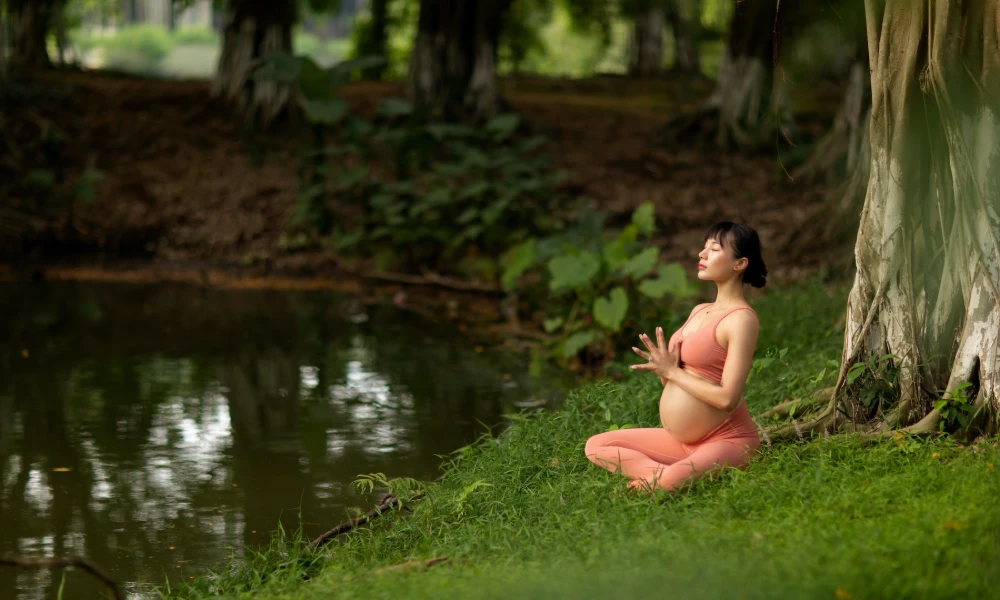
For much of modern history, we've been encouraged to think about health as something that happens almost exclusively inside the body. When symptoms appear, we search for the faulty mechanism. Which hormone is out of balance? Which nutrient are we lacking? Which gene, chemical or diagnosis explains what is happening? Modern medicine has given us extraordinary tools for answering these questions, and many lives have been transformed because of them.
Yet for all our scientific progress, many of the conditions that dominate today's health landscape refuse to fit neatly within this model. Chronic stress, anxiety, burnout, autoimmune disease, persistent digestive issues, chronic pain and many inflammatory conditions are rarely explained by one cause alone. They emerge from an intricate web of biology, psychology, environment, relationships and lived experience. Increasingly, science itself is recognising what many ancient traditions have understood for thousands of years: health is not merely a biological state. It is relational.
Right Relationship
Over the years, both through my own healing journey and through supporting clients as a naturopath and Family Constellations facilitator, I have found myself returning to one idea again and again. Beneath almost every symptom, every recurring pattern and every moment of transformation lies the question of relationship. Not simply our relationships with other people, but our relationship with our own body, with food, with nature, with our family system, with animals, with meaning and with whatever we understand as sacred.
This is what I have come to think of as right relationship. It is not a new concept, nor does it belong to any one philosophy or spiritual tradition. Rather, it is a thread that quietly weaves its way through many of humanity's oldest ways of understanding what it means to live well.
Health Is Inherently Relational
The phrase right relationship has become more widely used in recent years, particularly within Indigenous teachings, ecological movements and spiritual communities. Yet the underlying principle appears across many philosophical traditions.
Indigenous cultures around the world have long spoken of living in respectful relationship with the Earth, recognising that human beings are participants within nature rather than separate from it. Taoism encourages us to live in harmony with the Tao, moving with the natural currents of life instead of constantly struggling against them. Buddhism's Noble Eightfold Path speaks of Right View, Right Intention and Right Action, suggesting that wellbeing arises through the quality of our participation in life as much as through our external circumstances. The Jewish philosopher Martin Buber distinguished between treating another person as an object to be used, what he called an "I-It" relationship, and encountering them as a unique, living being in an "I-Thou" relationship. Although these traditions differ enormously, they all arrive at a remarkably similar conclusion: life flourishes when our relationships are characterised by respect, reciprocity and belonging.
Modern science is increasingly pointing in the same direction. Psychoneuroimmunology has demonstrated that our immune, endocrine and nervous systems are in constant conversation. Attachment theory has shown that the quality of our earliest relationships shapes the development of our nervous system and influences how we respond to stress throughout adulthood. Research has repeatedly linked chronic loneliness with poorer physical health and increased mortality, while environmental science reminds us daily that human health cannot be separated from the health of the ecosystems upon which we depend.
None of these disciplines uses the language of right relationship, yet together they reveal something profound. We are not isolated organisms navigating life alone. We are living systems, constantly interacting with other living systems. Health emerges from those interactions.
Listening to the Wisdom of the Body
Perhaps the most intimate relationship any of us will ever have is the one we have with our own body, yet it is often the relationship we neglect the most.
Many people experience their body almost as an adversary. Symptoms are viewed as betrayals. Fatigue is something to override. Pain is something to silence. We criticise our appearance, ignore exhaustion and push ourselves long beyond our limits, believing that productivity somehow represents success.
I understand this instinct because I lived it myself.
Like many practitioners working in health today, I arrived here through my own experience of illness. My journey included severe anxiety, depression, panic disorder, autoimmune disease, PMDD and deeply ingrained relationship patterns that continually led me away from myself. At the time, I believed my body was failing me. Looking back, I see something very different. My body was doing exactly what it had evolved to do. It was responding intelligently to circumstances that no longer allowed it to feel safe.
That realisation fundamentally changed the way I understand healing.
Instead of asking how I could force my body back into submission, I became curious about what it had been trying to communicate all along.
This perspective does not suggest that every illness has an emotional cause, nor does it diminish the importance of medical care, nutrition or evidence based treatment. Biology matters. Hormones matter. Genetics matter. Infection, trauma and environmental exposures all matter. Yet when we approach the body with curiosity instead of hostility, something shifts. Symptoms stop being viewed solely as enemies to eliminate and begin to be understood as messengers asking us to pay attention.
The same is true of our relationship with food. Nutrition certainly matters. Every meal influences inflammation, hormones, gut health and countless physiological processes. Yet food is also deeply relational. It carries memories, culture, celebration and identity. For many people, eating has become dominated by guilt, fear or relentless self improvement.
Healing our relationship with food means moving beyond simply asking whether something is healthy and beginning to ask whether the way we eat reflects self respect, gratitude and care. Nourishment is about more than nutrients. It is also about the relationship we cultivate with ourselves each time we sit down to eat.
We Do Not Heal in Isolation
No one begins life as a blank slate. Each of us enters an existing family system carrying its own history of love, resilience, sacrifice, grief and survival. Long before we develop our own beliefs about the world, we are shaped by patterns that often began generations before we were born.
This understanding sits at the heart of Family Constellations, a modality that continues to fascinate me because it views families as living systems rather than collections of separate individuals. It asks us to consider whether some of the struggles we experience may be influenced not only by our own experiences but also by the unresolved dynamics of the wider system to which we belong.
This does not mean every illness is inherited or that we blame previous generations for present difficulties. Rather, it recognises that families, like ecosystems, naturally seek balance. Sometimes grief remains unspoken. Sometimes excluded family members continue to influence the system precisely because they have been forgotten. Sometimes children unconsciously carry responsibilities that never belonged to them.
Again, the theme is relationship.
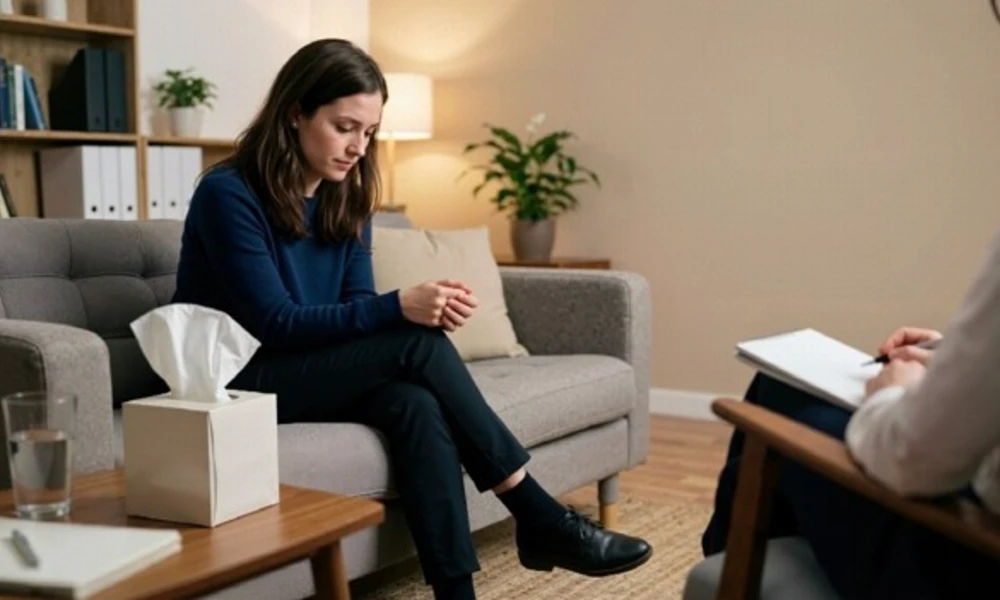
Healing often occurs not because the past has changed, but because our relationship with the past has changed. We no longer need to carry what is not ours. We are able to take our own place within the family, honour what came before us and move forward without remaining entangled in it.
The same principle extends into our present day relationships. Many of the ways we relate to others began as intelligent adaptations. People pleasing, emotional withdrawal, perfectionism or hyper independence may once have protected us. Yet what once ensured survival can later prevent intimacy, trust and genuine connection.
Neuroscience increasingly supports what therapists have observed for decades. Human nervous systems regulate one another. Safety is experienced relationally. Healing often takes place not in isolation, but through healthy connection with others.
How do we Return to Nature?
One of the greatest paradoxes of modern life is that although we are undeniably part of nature, we increasingly live as though we exist apart from it.
We spend our days indoors beneath artificial lighting, disconnected from the rhythms that shaped human biology for hundreds of thousands of years. We override tiredness, ignore seasons and often relate to the natural world primarily as something to consume rather than something to which we belong.
Naturopathy has always recognised that health depends upon creating the conditions in which the body can thrive. Good nutrition, movement, restorative sleep, sunlight, fresh air and meaningful rest are not alternative ideas. They are biological necessities.
For me, living in right relationship with nature extends beyond our own physiology. It also asks us to consider how our choices affect the wider living world.
My own journey towards veganism was never simply about nutrition. It became an expression of living more consistently with my values. Whether someone ultimately chooses a vegan lifestyle or simply begins reflecting more deeply on where their food comes from is entirely personal. Yet recognising animals as sentient beings inevitably changes the nature of our relationship with them. Compassion ceases to become an abstract ideal and instead becomes something we practise through ordinary daily decisions.
When we begin seeing ourselves as participants within nature rather than separate from it, our understanding of health becomes both broader and more compassionate.
The Search for Meaning
There is one relationship that is often absent from conversations about health, yet it may be among the most important of all: our relationship with meaning.
The psychiatrist Viktor Frankl, drawing on his experiences in Nazi concentration camps, observed that those who could find meaning were often able to endure extraordinary suffering. Meaning could not remove pain, but it profoundly influenced people's capacity to live through it.
This resonates deeply.
Throughout history, every culture has developed practices that help people connect with something larger than themselves. For some, this is found through prayer. For others, meditation, nature, creativity, service or contemplative practice become ways of touching something that cannot easily be explained.
Personally, I have become less interested in certainty and more interested in cultivating wonder. The sacred does not require rigid beliefs. It asks only that we remain open to mystery, humility and awe.
Perhaps this too is part of right relationship. Not having all the answers, but recognising that we belong to something infinitely larger than ourselves.
One Philosophy, Many Doorways
People occasionally ask why my work appears to span naturopathy, nutrition, Family Constellations, meditation and spirituality. To me, they have never felt like separate disciplines.
They are simply different expressions of the same underlying philosophy.
Naturopathy restores our relationship with the body. Nutrition restores our relationship with nourishment. Family Constellations explores our relationship with the systems from which we come. Meditation restores our relationship with ourselves. Spiritual practice invites us into relationship with meaning, purpose and mystery.
Although the methods differ, they are all asking the same question: where has relationship become disconnected, and what becomes possible when it is gently restored?
I no longer think of health as merely the absence of disease. Nor do I believe it is something we eventually achieve once every symptom has disappeared.
Health is a way of participating in life.
It is found in listening to the body rather than fighting it. In eating from a place of nourishment rather than punishment. In recognising that our family history shapes us without defining us. In caring for the natural world because we understand that its wellbeing and our own are inseparable. In extending compassion to animals, to one another and, perhaps most importantly, to ourselves.
Right relationship is not about becoming perfect. It is about continually returning to alignment whenever life pulls us away from it.
Healing, then, is not simply the process of fixing what is broken.
It is the lifelong practice of remembering where we belong.
Filed underGrief & loss, Women's health & hormones, Meditation & mindfulness, Nature, Connection
About the author
Camilla BrinkworthNaturopath & Nutritionist (BHSc Naturopathy, GradCert Human Nutrition)
Camilla Brinkworth is a naturopath, nutritionist (BHSc Naturopathy, GradCert Human Nutrition) and Family Constellations facilitator with 15 years of experience in the wellness industry. She specialises in plant-based nutrition, mental health and holistic natural PMDD recovery. Her approach goes beyond food and supplements—she combines lifestyle medicine and nutritional guidance with herbal medicine, nervous system support, trauma processing and ancestral healing work to address the deeper causes of disease. Originating from the UK, Camilla now lives in Ubud, Bali, offering online consultations to clients worldwide. Having personally overcome PMDD, autoimmune arthritis, anxiety, depression, and panic disorder, Camilla understands the complex relationship between the body, mind, and lived experience; her clinical work is grounded in compassion, and evidence-informed practice. As a speaker, clinician, and educator, Camilla guides people in understanding the deeper story behind their symptoms, resolving what’s held in the body, and supporting long-term transformation through highly expertised, science-backed yet holistic care.