Most ergonomic chairs are designed around an “average” body type, often better suited for mid-height users around 5’6″ to 5’10”, with an emphasis on general adjustability. While this may sound convenient, it rarely works well for petite women, who are typically closer to 4’9″ to 5’3″.
This mismatch often isn’t immediately noticeable, but shows up in small details: your head struggles to naturally rest against the headrest, or the headrest sits too high; there is always a gap between your back and the backrest, making it difficult for the lower back to find stable contact; your feet cannot rest flat on the floor, leaving your lower legs hanging and your sitting posture less stable.
Over time, these small issues can make extended sitting feel less stable and more tiring. Therefore, for petite women, understanding how a chair should fit your body is the first step toward choosing one that genuinely supports your daily routine.
Key Factors Petite Women Should Consider
Knowing what to look for makes it easier to identify a chair that genuinely fits. For petite women, this comes down to a few key factors.
- Headrest position for petite users
Headrest flexibility is essential. In an ergonomic chair for petite women, the headrest should adjust in height, angle, and depth so it actually meets your neck, rather than sitting out of reach.
- Lumbar support placement for petite frames
For petite users, lumbar support needs to align closer to the waist and tailbone area, not the mid-back.
- Adjustable seat depth
A shorter or adjustable seat depth helps keep your back in contact with the backrest while allowing your feet to stay grounded.
- Flexible recline for different use cases
A chair should support upright work as well as more relaxed positions without losing alignment.
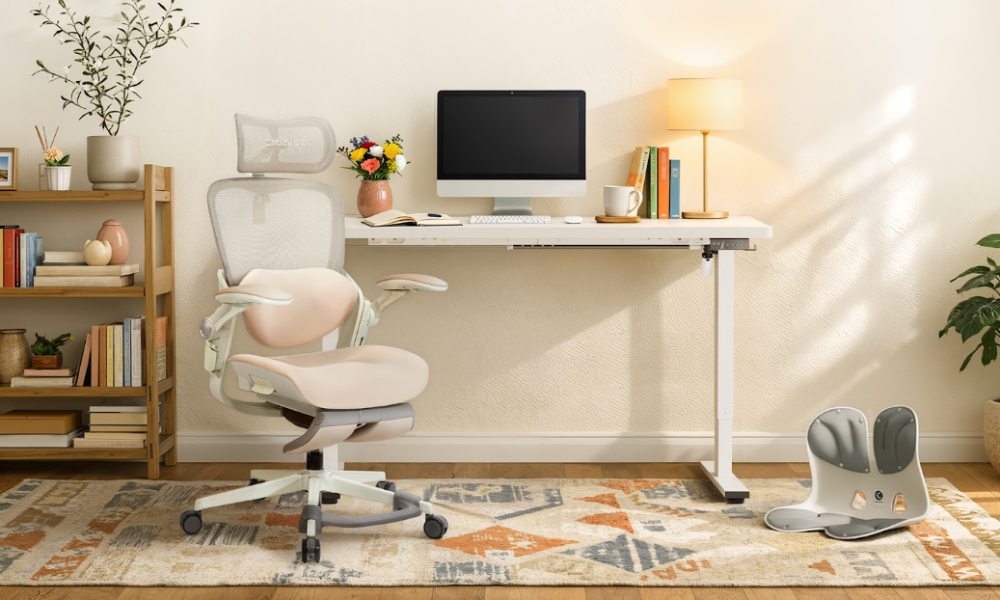
Ergonomic office chairs designed with these factors in mind, such as the CabLady S2, tend to provide a more proportionate fit for petite women.
A More Tailored Ergonomic Chair for Petite Women
Ergonomic chairs designed specifically for petite women take these factors into account from the start. Instead of relying on general adjustments alone, they focus on proportions that better match petite body frames.
The CabeVibe CabLady S2 ergonomic chair for petite women is an ergonomic chair for petite women that reflects this approach. Its 4D adjustable headrest allows height, angle, and depth adjustments, making it easier for petite users to align the headrest with the natural curve of the neck.
This level of flexibility helps maintain proper alignment whether sitting upright or leaning back.
The CabLady S2 also includes a floating lumbar support system with four adjustable height levels across a 6 cm range, designed to better align with petite waist positioning. This allows users to fine-tune how the lower back is supported.
Combined with a seat depth adjustment of up to 6 cm, it helps petite users maintain proper back contact with the chair, improving overall fit for smaller frames.
Adjustability That Fits Petite Frames
An ergonomic chair for petite women should not only fit properly at first but also adapt to different activities throughout the day. Small adjustments can make a noticeable difference, especially during long working hours.
The CabeVibe ergonomic chair design for petite women includes flip-up 3D armrests that can be adjusted in height and lateral position. This helps petite users align their arms with the desk while allowing the chair to be stored neatly in compact spaces when needed.
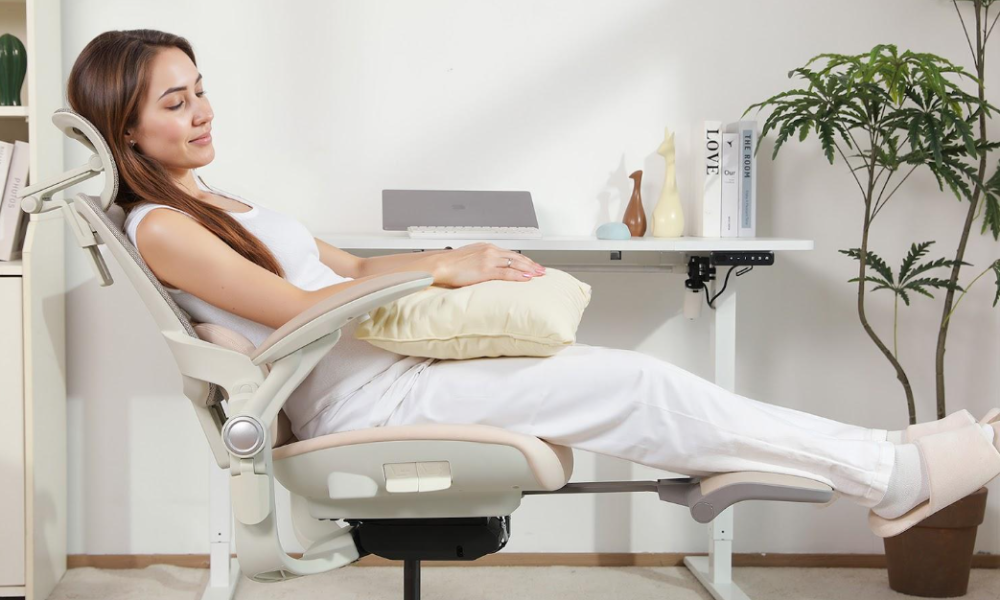
Recline functionality adds another layer of flexibility. With four reclining angles reaching up to 136 degrees, the chair supports different sitting positions such as focused work, reading, or short breaks.
This allows petite users to change positions more easily instead of staying in one fixed posture for long periods.
An integrated footrest further improves stability. Designed with petite users in mind, it allows the feet to rest comfortably rather than hanging unsupported. This helps maintain a more balanced sitting posture and reduces the need for constant repositioning.
Comfort That Supports Petite Sitting
Comfort over long periods of sitting depends not only on structure but also on how materials interact with the body.
An 8 cm high-resilience cushion provides a balance between softness and stability, which is especially important for petite users who may feel pressure more quickly. It contours to the hips and distributes pressure more evenly, helping reduce discomfort during longer sitting sessions.
A mesh backrest and headrest allow air to circulate, helping prevent heat buildup during long sessions. At the same time, the material adapts to the shape of the back and neck, providing flexible contact without feeling rigid.
Built for Long-Term Use
A chair that fits well should also maintain its performance over time, keeping the sitting experience consistent with regular use.
The CabeVibe CabLady S2 petite ergonomic chair for home office is designed to support up to 330 lb and meets BIFMA testing standards. These factors indicate that the chair is built with stability and long-term use in mind, providing reassurance for everyday reliability.
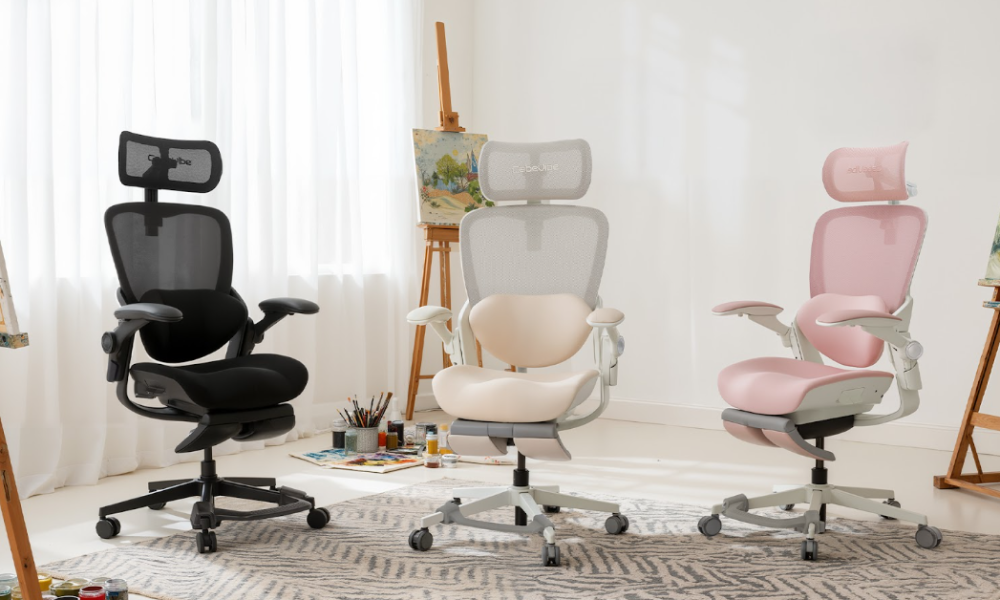
A well-constructed chair does not require constant readjustment to stay stable. Instead, it maintains a consistent sitting experience day after day, making it a reliable choice for everyday use.
Recognizing the Right Fit
When an ergonomic chair truly fits, the difference is noticeable without needing constant adjustments. Your back remains supported, your feet feel stable, and your arms rest naturally without strain.
You should be able to sit comfortably in different positions without feeling the need to compensate for the chair’s dimensions. The chair should respond to your movements, whether you are working, reading, or taking a short break.
For petite women, this often comes down to proportion. Headrest height, lumbar placement, seat depth, and foot support need to align with a smaller frame, not just offer adjustment in theory.
A chair that meets these conditions creates a more stable and consistent sitting experience, making it easier to stay comfortable throughout the day.