Lavender Sleep Spray Guide: How Scent, Ritual, and Calm Help You Wind Down
Lavender sleep sprays can make bedtime feel calmer and more intentional by using scent, flower essences, and simple rituals to help the body wind down.
Sleep rarely begins the moment your head touches the pillow. For most people, rest starts much earlier, in the small choices that tell the body and mind the day is ending.
That might mean dimming the lights, putting the phone away, making herbal tea, taking a warm shower, journaling, stretching, or using a calming scent in the bedroom. These simple sleep rituals matter because the nervous system often needs time to shift out of alertness and into rest.
This is why lavender sleep sprays have become such a popular part of modern bedtime routines. They are easy to use, gentle, and sensory.
A few sprays on a pillow, around the room, or near the body can help create a familiar cue that it is time to slow down.
A lavender sleep spray will not solve every sleep concern, and it should not be seen as a replacement for medical support when sleep issues are ongoing.
But as part of a calming evening routine, scent can be a useful tool. It gives the mind something soft to associate with rest.
What is a Lavender Sleep Spray?
A lavender sleep spray is a mist designed to be used before bed, often on pillows, bedding, the body, or in the room.
Most include lavender as the key aromatic note, sometimes blended with other botanicals, essential oils, flower essences, or grounding scents.
The goal is not simply to make the room smell nice.
A good sleep spray helps create a repeated bedtime signal.
Over time, that signal can become part of the body’s sleep rhythm.
Lavender is widely used in bedtime products because its scent is associated with calm, comfort, and relaxation. Many people find it soft enough for evening use, especially when it is balanced with deeper or warmer notes instead of smelling overly sweet or perfume-like.
Why Scent Matters in a Bedtime Routine
Scent is closely tied to memory and emotion. A familiar aroma can remind us of a place, a person, a season, or a feeling almost instantly. That is what makes scent so useful in a bedtime ritual.
When the same calming scent is used repeatedly at night, it can become associated with winding down.
The body begins to recognize the pattern: lights lower, screens go away, the pillow is misted, breathing slows, and sleep becomes the next natural step.
The ritual does not need to be elaborate. In fact, the simpler it is, the easier it is to repeat.
A basic wind-down routine might look like this:
- Turn down bright lights
- Stop checking emails or social media
- Spray the pillow or room lightly
- Take a few slow breaths
- Stretch the neck, shoulders, or back
- Read a few pages or write in a journal
- Let the scent mark the transition into rest
The consistency is more important than the complexity.
Why Lavender Is So Often Used for Sleep
Lavender has become one of the most familiar scents in sleep and relaxation products. It is used in pillow sprays, bath oils, balms, candles, body oils, and room mists because it carries a soft, calming quality that many people connect with rest.
A recent systematic review on lavender essential oil and sleep quality found promising results, while also noting that more high-quality research is still needed.
Part of lavender’s appeal is that it feels both floral and herbal. It is soothing without being too heavy.
It can work well on its own, but it also blends beautifully with notes such as chamomile, vetiver, cedarwood, geranium, rose, clary sage, or citrus.
For bedtime, the best lavender blends usually avoid feeling too sharp or artificial. They should feel gentle enough to use close to the pillow and subtle enough not to overwhelm the room.
Note: Anyone using lavender regularly should also understand lavender use and safety, especially if they are pregnant, sensitive to fragrance, or using other complementary health products.
Where Flower Essences Fit In
Some lavender sleep sprays go beyond aromatherapy by including flower essences.
Flower essences are often used in emotional wellbeing rituals and are different from essential oils. While essential oils are aromatic and scent-based, flower essences are typically used more for their subtle, energetic, or emotional associations.
LOTUSWEI brings that flower essence tradition into a modern bedtime ritual.
Founded by Katie Hess, the brand works with flower essences, aromatherapy, and botanical practices designed to support emotional shifts in everyday life.
Hess has explained the emotional language of flowers in a simple, memorable way: ““Flowers have the highest concentration of chi and life force of a plant.”
That quote captures why flower-based rituals remain so appealing. People are not only looking for fragrance. They are looking for small practices that help them feel more settled, more present, and more able to soften at the end of the day.

Why LOTUSWEI’s Lavender Sleep Spray is a Must Try
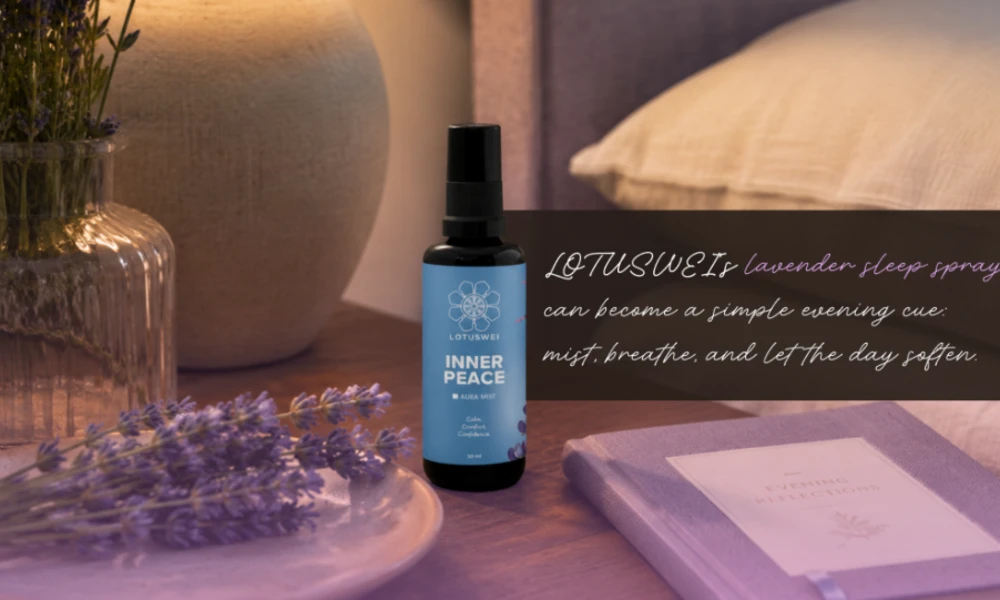
LOTUSWEI’s lavender sleep spray fits into this wider conversation around scent, ritual, and emotional calm. It is not positioned as just a pillow spray, but as part of a more intentional bedtime practice.
For those building a softer evening ritual, Lotuswei’s lavender sleep spray can be used as a calming scent cue before bed. It pairs lavender aromatherapy with flower essences, creating a mist that feels especially suited to people who want their nighttime routine to feel grounded rather than purely functional.
That distinction matters.
Many sleep sprays smell pleasant, but the most useful ones become part of a pattern. They help create a repeated moment: pause, mist, breathe, settle.
LOTUSWEI’s approach is especially relevant for people whose sleep is affected by stress, overthinking, emotional overload, or a sense of being unable to switch off.
The mist does not force sleep.
Instead, it supports the environment around sleep.
How to Use a Lavender Sleep Spray
A lavender sleep spray works best when used consistently and lightly. More is not always better, especially if you are sensitive to scent. Scent can become part of the sleep environment, and research-backed sleep resources explain how scent can affect sleep through memory, relaxation, and bedtime association.
Try using it in one of these ways:
1. On your pillow
Spray lightly from a distance and allow the mist to settle before lying down. This creates a soft scent close to where you sleep.
2. Around the room
Mist the air near the bed before beginning your evening routine. This can help shift the room from a daytime space into a sleep space.
3. On a blanket or eye pillow
A familiar scent on a blanket, scarf, or eye pillow can be especially comforting if you travel often or struggle to sleep away from home.
4. Before breathwork or meditation
Use the spray before a few minutes of slow breathing. This helps connect the scent with the feeling of calming down.
5. As part of a screen-free ritual
Spray the room after putting your phone away. Over time, the scent can become a boundary between stimulation and rest.
What to Look for Before Buying One
A good lavender sleep spray should feel calming, not overpowering. Before choosing one, consider:
- Does the scent feel natural and gentle?
- Is lavender the main note, or is it balanced with other botanicals?
- Can it be used around linens or personal space?
- Is the brand transparent about its ingredients?
- Does the bottle size fit your routine or travel needs?
- Does the scent feel calming to you personally?
Scent is personal. A spray that relaxes one person may not suit another. If possible, test the product before committing to regular use.
When a Sleep Spray Is Most Helpful
A lavender sleep spray can be especially useful when your body needs a clearer transition from day to night.
It may help during:
- Busy workweeks
- Periods of stress
- Travel
- Hotel stays
- Evening overthinking
- Seasonal routine changes
- Post-screen overstimulation
- A new bedtime routine
It is also useful for people who like rituals but do not want anything complicated. A spray is easy to use, quick to repeat, and simple to keep beside the bed.
What a Lavender Sleep Spray Cannot Do
It is important to be realistic.
A lavender sleep spray is not a cure for insomnia, anxiety, chronic stress, or medical sleep disorders. If sleep problems are frequent, severe, or affecting daily life, it is worth speaking with a qualified health professional.
A sleep spray is best understood as a supportive ritual tool. It can help create a calmer environment, but it works best alongside healthy sleep habits such as regular sleep timing, reduced evening screen exposure, a comfortable room temperature, and good stress management.
A Simple Evening Ritual to Try
If you are new to lavender sleep sprays, start with a short routine:
- Lower the lights 30 minutes before bed.
- Put your phone away or set it to night mode.
- Spray your pillow or the air around your bed.
- Take five slow breaths.
- Stretch your shoulders and jaw.
- Read, journal, or sit quietly for a few minutes.
- Let the scent become your signal to rest.
This kind of ritual works because it is repeatable. It does not ask for perfection. It simply gives the body a familiar path toward calm.
Final Thoughts
A lavender sleep spray is a small product, but it can play a meaningful role in a bedtime routine. Its value is not only in the scent, but in the pause it creates.
In a world where many people move from work, screens, messages, and responsibilities directly into bed, a calming ritual can help create a healthier transition. Lavender offers softness. The spray offers the cue. The repetition helps the body understand what comes next.
For anyone looking to make bedtime feel calmer and more intentional, LOTUSWEI’s lavender sleep spray is a thoughtful option because it brings together aromatherapy, flower essences, and a deeper ritual-based approach to rest.
Better sleep often begins with small signals. A quieter room. A slower breath. A familiar scent. A moment that tells the body it is safe to let the day go.
Filed underInsomnia & sleep problems, Herbal medicine, Rest & rejuvenation, Sleep, Calm