When most people hear “anabolic steroids,” they think of bodybuilders, athletes, and controversial performance enhancement.
But that is only half the story.
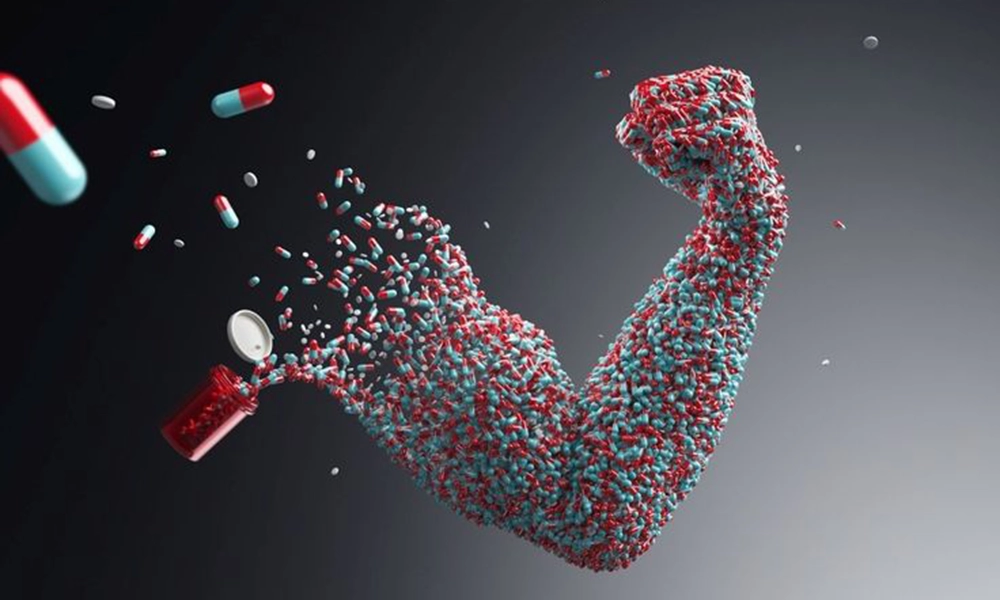
These compounds were not developed for gyms. They were developed for hospitals. And today, despite their reputation, anabolic steroids remain essential tools in modern medicine for treating specific, often devastating conditions.
Selective Androgen Receptor Modulators (SARMs) have recently gained attention for their tissue-specific approach, but traditional anabolic steroids have a long, well-documented history of legitimate medical use. Understanding how they work in the body—and when doctors actually prescribe them—provides a clearer picture of their role beyond the fitness industry.
What Are Anabolic Steroids and How Do They Work Medically?
Anabolic steroids are synthetic derivatives of testosterone, the primary male sex hormone. They are designed to mimic testosterone’s tissue-building (anabolic) effects while attempting to minimize its masculinizing (androgenic) effects—though no compound achieves perfect separation.
Their core medical function: They bind to androgen receptors throughout the body, triggering a cascade of cellular responses that include:
- Increased protein synthesis (building new tissue)
- Enhanced nitrogen retention in muscles
- Stimulation of red blood cell production
- Accelerated recovery from injury or illness
When doctors prescribe anabolic steroids, they are not trying to build superhuman physiques. They are trying to reverse or slow down processes that are destroying the body—cancer cachexia, muscle wasting from HIV, severe burns, or hormonal failure.
The key difference between medical use and athletic use isdose and duration. Medical protocols use the minimum effective dose for the shortest necessary time. Athletic use often pushes far beyond these boundaries.
Primary Medical Applications of Anabolic Steroids
- Treating Muscle Wasting (Cachexia)
Cachexia is not simply “losing weight.” It is a complex metabolic syndrome where the body actively breaks down muscle tissue, even when caloric intake is adequate. It occurs most commonly in:
- Advanced cancer patients
- People with HIV/AIDS (before effective antiretroviral therapy)
- Chronic heart failure patients
- Those with severe chronic obstructive pulmonary disease
How steroids help: Anabolic agents like oxandrolone (Anavar) and nandrolone (Deca-Durabolin) counteract the catabolic processes driving muscle breakdown. They improve nitrogen balance and help patients preserve functional mass during aggressive treatment.
The goal is not to build muscle. The goal is to prevent patients from becoming too weak to walk, eat, or respond to other treatments.
- Hormone Replacement Therapy (Male Hypogonadism)
Testosterone replacement therapy is the most common medical use of anabolic steroids. It is prescribed for men whose bodies do not produce enough testosterone naturally—a condition called hypogonadism.
Symptoms of hypogonadism include:
- Persistent fatigue
- Low libido and erectile dysfunction
- Depression or irritability
- Loss of muscle mass and bone density
- Anemia
The treatment: Testosterone esters (enanthate, cypionate, or undecanoate) are administered via injection, gel, or pellet to restore levels to the normal physiological range.
Important distinction: This is replacement, not enhancement. The goal is to bring patients from deficient to normal—not from normal to supraphysiological.
- Delayed Puberty in Boys
Some adolescent males experience significant delays in pubertal development. When this causes psychological distress or impacts bone density, low-dose testosterone may be prescribed to initiate and maintain development.
The approach: Short courses of testosterone enanthate or cypionate, gradually increasing over months, can stimulate secondary sexual characteristics and growth without causing premature closure of growth plates.
- Osteoporosis and Bone Density
Androgen receptors are present in bone tissue. When activated, they stimulate osteoblasts—the cells responsible for bone formation.
For elderly patients with severe osteoporosis who cannot tolerate standard treatments, anabolic steroids like nandrolone have been used to increase bone mineral density and reduce fracture risk. This application has declined with the development of safer bone-specific drugs but remains a valid option in resistant cases.
- Severe Burns and Trauma
Patients with massive burns enter a hypermetabolic state. Their bodies consume calories at extraordinary rates, breaking down muscle for energy. Without intervention, they can lose functional capacity permanently.
Anabolic agents help these patients preserve lean mass during the critical recovery period, improving outcomes and reducing hospital stays.
- Hereditary Angioedema
Danazol, a synthetic steroid with weak androgenic activity, is used to prevent attacks in hereditary angioedema—a condition causing severe swelling in tissues. This application exploits the compound’s ability to increase levels of specific proteins that regulate inflammation.
How Medical Use Differs from Athletic Use
| Medical Use | Athletic Use |
|---|---|
| Low to moderate doses | High to supraphysiological doses |
| Short duration (or carefully monitored long-term) | Extended cycles, often back-to-back |
| Goal: restore function | Goal: exceed natural limits |
| Monitored by bloodwork and physician oversight | Self-monitored (or not monitored) |
| Risk-benefit analysis by medical professional | Risk-benefit analysis by individual |
| Continuity of care guaranteed | Source reliability variable |
The overlap: Some compounds appear in both columns. Testosterone, nandrolone, and oxandrolone are used both medically and athletically. The difference is not the molecule—it is the intent, the dose, and the oversight.
Why Pharmaceutical Grade Matters in Medical Contexts
In a hospital setting, there is no debate about source quality. Medications come from regulated pharmaceutical manufacturers with:
✔ Batch numbers and complete traceability
✔ Third-party potency testing
✔ Sterility guarantees
✔ Consistent dosing, vial to vial
✔ Expiry dating and proper storage protocols
When patients seek treatment for hypogonadism or buy steroids for medical reasons, the same standards should apply.
Unfortunately, the underground market sells products that meet none of these criteria. Underdosed vials leave patients suppressed without therapeutic benefit. Contaminated products introduce infection risk. Mislabeled compounds create unpredictable effects.
Muscle Gear has supplied pharmaceutical-grade anabolics to Canadian customers since 2012.As an approved distributor of Apoxar, Novo-Pharm, and NeoSARMS, the focus has always been on consistency and safety—the same principles that guide medical use.
FAQ: Medical Applications of Steroids
Q: Can anabolic steroids cure muscle wasting diseases?
A: They do not cure the underlying disease, but they can slow or reverse muscle loss, improving quality of life and functional capacity during treatment.
Q: Are steroids prescribed for anti-aging?
A: Testosterone replacement is prescribed for diagnosed hypogonadism, not for general anti-aging. Off-label use for age-related decline is controversial and requires careful monitoring.
Q: Do women ever receive anabolic steroids medically?
A: Yes, in specific cases—low-dose testosterone for post-menopausal libido issues, oxandrolone for cachexia, and occasionally for bone health. Doses are much lower than male protocols.
Q: How long does medical steroid treatment last?
A: It varies. Hypogonadism requires lifelong replacement. Burn patients may need only weeks. Cancer cachexia treatment continues as long as benefits outweigh risks.
Q: Is medical steroid use safer than athletic use?
A: Yes, because doses are lower, duration is controlled, and patients are monitored with regular bloodwork. The compounds themselves are the same; the context creates the safety difference.
The Role of Lifestyle in Medical Outcomes
Even with pharmaceutical intervention, lifestyle factors determine success.
For hypogonadism patients on testosterone therapy:
✔ Resistance training amplifies muscle response
✔ Adequate protein intake (1.6-2.2g/kg) supports nitrogen balance
✔ Sleep consistency improves hormonal feedback
✔ Stress management reduces cortisol interference
For cachexia patients:
✔ Nutritional support must accompany anabolic therapy
✔ Physical therapy maintains functional capacity
✔ Hydration supports renal function during treatment
The principle is universal: Steroids enable; lifestyle executes. Medical supervision provides the tool; the patient provides the consistent effort.
The Future: Selective Androgen Receptor Modulators
SARMs represent an attempt to improve upon traditional steroids. By targeting androgen receptors more selectively in muscle and bone, researchers hope to achieve therapeutic effects with fewer androgenic side effects.
Current medical research on SARMs includes:
- Preventing muscle loss in elderly patients (sarcopenia)
- Treating cancer cachexia
- Accelerating recovery from orthopedic surgery
- Managing osteoporosis
The limitation: No SARM has yet achieved FDA approval for any indication. Traditional anabolic steroids remain the only proven, approved androgen therapies.
The Takeaway
Anabolic steroids are not inherently “good” or “bad.” They are potent pharmacological tools with legitimate medical applications and significant risks when misused.
Their medical value is clear:
- Preserving function in wasting diseases
- Restoring hormone balance in deficient men
- Supporting recovery from severe trauma
- Maintaining bone density in osteoporosis
Their risks are equally clear:
- Cardiovascular strain at high doses
- HPTA suppression requiring management
- Hepatotoxicity with oral compounds
- Androgenic side effects in susceptible individuals
The difference between medicine and abuse is not the molecule. It is intent, dose, monitoring, and source quality.
Muscle Gear has served Canadians seeking pharmaceutical-grade anabolics since 2012—whether for medical restoration under physician guidance or for informed athletic use. The commitment has always been to consistency, safety, and education.
Because whether in a hospital or a gym, the compound is only as good as the preparation behind it.