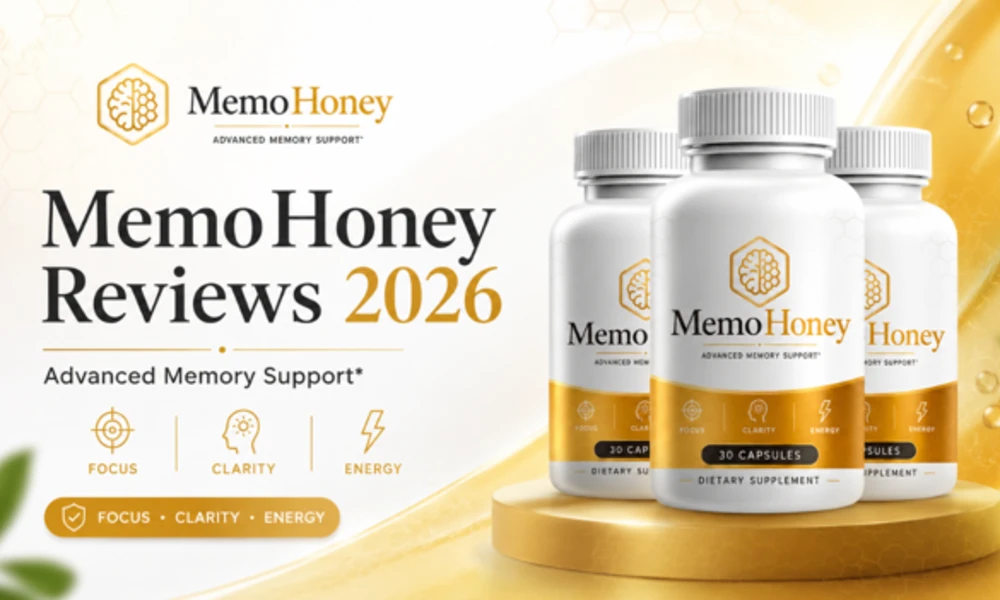
Memo Honey Reviews 2026 - Legit Memory Support Supplement or Overhyped Claim? (Scam Warning)
Memo Honey is a daily capsule supplement marketed for memory support, mental clarity, and focus, aimed at adults who notice a gradual cognitive slowdown…
Affiliate Disclosure: This article contains affiliate links; a commission may be earned on qualifying purchases at no extra cost to you. Medical Notice: This content is for educational purposes only and does not constitute medical advice. These statements have not been evaluated by the FDA. Memo Honey dietary supplement is not intended to diagnose, treat, cure, or prevent any disease. Always consult a healthcare professional before starting any supplement. Disclosure provided per FTC 16 CFR Part 255.
MemoHoney Reviews & Complaints 2026 - Scam Warning Explained for the Brain Fog Supplement Everyone's Comparing
You've probably already spotted the pattern: a supplement ad promising sharper memory and clearer focus, a landing page full of confident claims, and not much you can independently check before handing over your card details. That's a reasonable thing to be suspicious of, and it's the exact question this article answers.
Is Memo Honey legitimate, or is it another supplement riding on marketing language that outpaces what it can actually prove? This isn't a Memo Honey pitch dressed up as a review. It's an independent evaluation built on what's verifiable: the ingredients, the pricing, the guarantee terms, the manufacturing claims, and what's missing from the evidence. By the end, you'll have a clear answer, not a hedge.
What Is Memo Honey and Who Is It For
Memo Honey is a daily capsule supplement marketed for memory support, mental clarity, and focus, aimed at adults who notice a gradual cognitive slowdown rather than at anyone managing a diagnosed neurological condition. It's built around six disclosed ingredients: four amino acids tied to nitric oxide production, a B-vitamin, and an antioxidant-supporting compound, taken once daily.
It's sold directly through the brand's own website in three package sizes, positioned as a one-time purchase, and backed by a 60-day money-back guarantee. There's no stimulant in the formula, which distinguishes it from caffeine-based focus products.
Who this fits: someone dealing with everyday forgetfulness, afternoon brain fog, or a general sense that their mental sharpness has slipped, who wants a non-stimulant option and is willing to evaluate it on a realistic timeline rather than expecting an immediate effect. That framing matters, because it shapes almost every legitimacy question that follows.
See current Memo Honey pricing and package options
Why People Question Whether Memo Honey Is Legit
The skepticism is fair, and it's worth naming exactly where it comes from rather than waving it away.
Online-only availability: Memo Honey isn't sold on store shelves or through a major retailer with an established return desk. That's common for direct-to-consumer supplements, but it does mean you're trusting a single company's website and support channel rather than a third-party retailer's oversight.
The supplement industry's reputation: Dietary supplements as a category have a well-documented history of overclaiming, vague "clinically studied" language, and inflated before-and-after pricing. That history doesn't indict any single brand, but it's a reasonable reason to read every claim carefully rather than at face value.
Bold marketing language: Memo Honey's own sales page uses confident, benefit-forward phrasing about targeting "the real causes" of memory loss. That kind of language is standard in the category, but it's stronger than what a finished-product clinical trial would typically support.
Unverifiable testimonials: The named customer testimonials on the site are brand-published, not sourced from an independent review platform. That doesn't make them false, but it means they can't be checked.
Each of these concerns gets addressed with evidence in the sections below, rather than dismissed here.
How the Formula Is Built: Ingredients Grouped by Function
Memo Honey's six active ingredients fall into three functional roles. Assessing them by function, rather than as an isolated list, makes it easier to judge whether the formula's internal logic actually holds together.
Circulation Support
L-Arginine, L-Arginine AKG (2:1 extract), L-Citrulline HCL, and L-Citrulline Malate form the core of the formula. All four sit on the same biochemical pathway: the body converts arginine into nitric oxide, which relaxes blood vessels, and citrulline recycles back into arginine, sustaining that process rather than letting it drop off quickly. The AKG-bound form is designed to extend absorption, and the malate-bound form adds a role in cellular energy production. This is legitimate, well-established biochemistry. What it isn't is proof that better peripheral circulation reliably translates into measurably sharper memory in a finished capsule. That's a physiological hypothesis, a reasonable one, but a hypothesis nonetheless.
Cellular Energy Support
Niacin (Vitamin B3) is included for its role in NAD+ production, a molecule involved in how cells generate usable energy, and for a secondary claim around supporting microcirculation. Niacin's biochemical role here is accurate and not in dispute. The open question is dosage and whether the amount included is enough to meaningfully move the needle, information that isn't disclosed on the brand's marketing pages.
Antioxidant and Neuron Protection
Beta-Alanine is included to raise carnosine levels, an antioxidant compound most studied in muscular endurance research. Its use here extends that mechanism to neuron protection against oxidative stress. The ingredient-level science is real; its specific brain-protective effect at whatever dose Memo Honey uses hasn't been independently tested.
Taken together, the formula's internal logic is coherent and grounded in real biochemistry. That's a legitimacy point in its favor. But coherent logic and a proven outcome are two different things, and treating them as the same is exactly the kind of overclaiming this category is known for.
Review the available Memo Honey ingredient information
How Memo Honey Is Meant to Work in the Body
The mechanism runs in sequence. The nitric-oxide-precursor amino acids are meant to widen blood vessels, including the small vessels supplying the brain, which theoretically increases oxygen and nutrient delivery to neurons. Niacin is positioned to support the cellular energy conversion that makes use of those nutrients once they arrive, and Beta-Alanine is layered in as a longer-term antioxidant measure against neuron wear.
This is a plausible, biochemically grounded chain of events, not an invented mechanism. That distinction matters for the legitimacy question: a product built on a fabricated or pseudoscientific mechanism is a different kind of concern than one built on real biochemistry that simply hasn't been tested as a finished formula.
What the brand cannot claim, and does not appear to explicitly claim in its FAQ language, is that this mechanism has been clinically confirmed to improve memory or focus in people who take Memo Honey specifically. The gap between "the ingredients do this in general" and "this product does this for you" is the single most important distinction a skeptical buyer should hold onto through the rest of this evaluation.
What Realistic Results Look Like, Week by Week
There's no published data on the finished Memo Honey formula, so this timeline reflects a reasonable, ingredient-informed expectation, not a confirmed outcome, and it includes what a lack of results might honestly look like.
Week 1 to 2: Little to nothing noticeable for most people. Nitric-oxide precursors require sustained daily intake before any circulatory effect compounds into something perceptible.
Week 3 to 4: Where responders tend to notice subtler shifts, less afternoon fog, marginally easier recall. Some people won't notice anything by this point, and that's a meaningful data point about their individual response, not evidence the product doesn't work in general.
30-day mark: The brand's own suggested checkpoint before judging results. If nothing at all has shifted here, that's a fair, honest signal this formula isn't working for your body specifically, not a sign the product is fraudulent.
60-day mark: For responders, cumulative circulatory and metabolic support tends to compound into more consistent effects rather than occasional good days.
Honest expectation: a meaningful share of buyers may notice little to no effect, which is true of most general-wellness supplements and doesn't by itself indicate deception. What would indicate a problem is a company refusing to honor its guarantee for buyers in that position, which is addressed later in this article.
View current Memo Honey package options
Green Flags and Red Flags: What the Evidence Actually Shows
Green Flags
- Ingredients are disclosed by name on the sales page, not hidden behind a proprietary blend
- The ingredients used have real, documented biochemical functions relevant to the claimed mechanism
- No synthetic stimulants, reducing the risk of dependency or crash-related side effects
- Manufacturing is stated to occur in an FDA-registered US facility
- A 60-day money-back guarantee provides a real, time-bound financial safeguard
- Dosing instructions are specific and simple: one capsule daily, with clear timing guidance
- The brand discloses that purchases are one-time, with no automatic subscription by default
- Contact information, including a working email and phone number, is published and reachable
- Safety guidance for pregnant, nursing, underage, and medicated users is stated clearly
- The mechanism described is grounded in real physiology, not a fabricated or pseudoscientific claim
Red Flags or Honest Limitations
- No published clinical trial on the finished Memo Honey formula, only ingredient-level research
- Customer testimonials are brand-published only, with no independent review platform data available
- Exact ingredient dosages aren't disclosed on the marketing pages themselves
- Reference "you save" pricing and urgency messaging ("while supplies last") are standard promotional tactics that can't be independently verified
- No single-bottle trial option, meaning the lowest-cost way to test it still requires a 60-day supply
Neither list should be read in isolation. A supplement with strong green flags and zero red flags essentially doesn't exist in this category; the question is whether the red flags amount to genuine deception or simply the normal limitations of an unstudied, direct-to-consumer product. Here, they read as the latter.
How to Take It and What Consistent Use Actually Requires
The instructions are simple: one capsule daily, taken with water, preferably in the morning before a meal. Taking it before eating is intended to support absorption without competing with a full meal, and morning timing is meant to align circulatory support with the hours you're actually using your focus.
The honest requirement here isn't complicated, but it is a commitment: daily consistency for a minimum of 30 days, ideally a full 60, before drawing any conclusion. Because the mechanism depends on sustained nitric-oxide production rather than an immediate stimulant effect, sporadic use (a few capsules here and there over two weeks) isn't a fair test of what the formula is designed to do, and judging it on that basis would produce a misleading result in either direction.
See Memo Honey's dosing instructions and package sizes
Safety, Manufacturing Standards, and Who Should Check with a Doctor First
Memo Honey is manufactured in the United States in a facility the brand states is FDA-registered, using vegetable (hypromellose) capsules without artificial stimulants. FDA registration applies to the manufacturing facility's compliance with production standards, not to approval of the product itself. No dietary supplement is FDA-approved, in this category or any other, and that's a structural fact about how supplements are regulated in the US, not a red flag specific to this brand.
The brand also displays Non-GMO and "natural" positioning on its site. These are brand-stated claims rather than third-party-audited certifications as presented, and buyers who want independent certification should look for a recognized third-party seal rather than relying on the badge alone.
The brand states no significant side effects have been reported by users. Treat that as a brand-reported claim, not an independently monitored safety record. The ingredients themselves are generally well-tolerated at typical supplement doses, but nitric-oxide-precursor amino acids affect blood vessel dilation, which means they can interact with blood pressure medication, blood thinners, and vasodilators.
If you're pregnant, nursing, under 18, or managing a medical condition, particularly one involving those medication categories, talk to a doctor before starting. This is standard due diligence for this ingredient class, not a Memo Honey-specific concern.
Pricing and Package Options
Memo Honey is sold in three tiers directly through the official site:
- 2 bottles (60-day supply): $79 per bottle, $158 total, plus shipping
- 3 bottles (90-day supply): $69 per bottle, $207 total, free US shipping
- 6 bottles (180-day supply): $49 per bottle, $294 total, free US shipping
The per-bottle cost drops as package size increases, and the 3- and 6-bottle tiers include five digital bonus guides not offered with the 2-bottle package. There's no single-bottle trial size.
Given the 30-to-60-day window needed to fairly judge results, the pricing structure effectively nudges buyers toward committing to enough supply to actually see the timeline through, which is a reasonable design choice rather than a manipulative one, provided the guarantee genuinely backs it up.
See current Memo Honey package options and pricing
The Money-Back Guarantee: What It Covers and What to Watch For
Memo Honey offers a 60-day money-back guarantee from the date of purchase. The brand's stated process asks buyers to use the product for at least 30 days before requesting a refund if unsatisfied, which lines up with the realistic results timeline covered earlier rather than contradicting it.
What to watch for: the guarantee is structured around a minimum use period, not an instant, day-one refund. If you're expecting to change your mind in the first week and get a no-questions refund, that's not how this is set up. Buyers should confirm the exact refund request process, and any required documentation, directly on the official site before ordering, and should keep their order confirmation and purchase date on hand, since return windows are typically calculated from that date.
A time-bound, purchase-based guarantee with a stated minimum use period is a legitimate structure, not an unusual or suspicious one. It's a meaningfully different thing from vague guarantee language that companies quietly decline to honor, and nothing in the available materials suggests that's happening here.
Where to Buy It and How to Avoid Counterfeit Risk
The only verified, brand-controlled sales channel is Memo Honey's official website. Buying there guarantees you're getting current pricing, the current formula, and a guarantee the brand itself stands behind, along with direct access to its published support channels if something goes wrong.
Memo Honey doesn't appear to be sold through major retail marketplaces as a confirmed, authorized listing. If you find it listed on a third-party marketplace or reseller site, treat that with caution. Unauthorized listings can involve expired stock, incorrect storage, or in worse cases, counterfeit product, and any guarantee the brand offers likely won't extend to a purchase made outside its own channel.
If in doubt, contact Memo Honey directly through its published email or phone number to confirm whether a listing you've found elsewhere is authorized before buying through it.
Verdict: Scam, Overhyped, or Genuinely Useful?
Memo Honey is not a scam. That's a direct answer, not a hedge: it's a real, shippable product from a company with disclosed ingredients, a working guarantee process, and verified contact channels, none of which is true of a fraudulent operation designed to take money and vanish.
It is, however, overhyped in its marketing. Countdown timers, unverifiable percentage claims, and confident cause-and-effect language ("targets the real causes of memory loss") oversell what an unproven, ingredient-level physiological hypothesis can honestly promise. That's a marketing problem, not a fraud problem, and the two shouldn't be conflated even though they produce similar discomfort in a skeptical reader.
The honest middle ground: this is a legitimately manufactured, reasonably formulated supplement, sold with the kind of inflated confidence that's common across the entire category, backed by a real guarantee that gives you a genuine way to test it without full financial risk. If you go in with evidence-based expectations rather than sales-page expectations, there's nothing here that should read as a scam.
Review Memo Honey's current guarantee terms before ordering
Things to Verify Before You Order
A skeptical buyer should confirm the following directly before checkout, since none of it is unreasonable to ask and all of it takes only a few minutes:
- Current pricing and any active promotions, since the tiers above reflect pricing at the time of this evaluation and direct-to-consumer offers can shift.
- The exact guarantee wording, including how the refund request process works and what, if anything, is required to initiate one.
- Shipping costs and estimated delivery time, particularly on the 2-bottle package, which isn't listed with free shipping.
- Whether the five digital bonuses are still included with the 3- and 6-bottle packages at the time you order.
- Any medication interactions specific to your situation, confirmed with a doctor or pharmacist, especially if you take blood pressure medication, blood thinners, or vasodilators.
- Your order confirmation and exact purchase date, saved for reference, since the guarantee window is calculated from that date.
None of these items are red flags in themselves. They're the kind of detail a careful buyer checks regardless of the brand, and confirming them upfront removes any ambiguity later if you decide to request a refund.
The Bottom Line
The honest answer to the question this article opened with: Memo Honey is legitimate, not a scam. It's a real company selling a real, ingredient-disclosed product, backed by a genuine guarantee and reachable support channels. What it isn't is clinically proven at the finished-product level, and its marketing language sometimes reaches further than the evidence currently supports, a pattern common across the supplement industry rather than unique to this brand.
If you're looking for a scientifically confirmed memory treatment, this isn't that, and no honest evaluation should claim otherwise. If you're looking for a plausible, transparently formulated supplement worth a real 60-day trial with a financial safety net behind it, Memo Honey clears that bar. The next step is simple: read the guarantee terms yourself, set a genuine 30-to-60-day trial window, and judge the results against your own experience rather than the marketing copy.
View current Memo Honey pricing and package information
Frequently Asked Questions
Is Memo Honey a scam?
No. It's a legitimate, purchasable supplement with disclosed ingredients, a working guarantee, and verified contact channels. Its marketing is more confident than the evidence supports, which is a common industry issue, not evidence of fraud.
Why are there no independent reviews of Memo Honey?
It's sold direct-to-consumer through its own website rather than a major retailer with an aggregated review system. The only testimonials available are brand-published, which is a genuine limitation worth factoring into your decision, addressed directly earlier in this article.
Is Memo Honey FDA approved?
No, and no dietary supplement is. Memo Honey is made in an FDA-registered facility, which is a manufacturing standard, not product approval. This applies to the entire supplement industry, not just this brand.
Can I get a refund if Memo Honey doesn't work for me?
Yes, through a stated 60-day guarantee from your purchase date, with a suggested 30-day minimum trial first. Read the full terms on the official site and keep your order confirmation.
Does Memo Honey contain stimulants?
No. The formula is built around nitric-oxide-related amino acids, a B-vitamin, and an antioxidant compound, with no caffeine or synthetic stimulants listed.
Why is Memo Honey only sold online?
It's a direct-to-consumer supplement, a common and legitimate distribution model that lets the brand control pricing and freshness without retail markup. It does mean you're relying on the brand's own support channel rather than a retailer's return desk.
Memo Honey Customer Support Information
- Email: contact@customercs.com
- Phone: +1 (507) 448-8190
- Returns address: PO Box 12730, Ogden, UT 84412 (return shipping costs are not covered by the company)
FDA & Health Disclaimer: These statements have not been evaluated by the Food and Drug Administration. Memo Honey is not intended to diagnose, treat, cure, or prevent any disease. Results referenced in this article are not typical, and individual results will vary. Always consult a qualified healthcare provider regarding medical conditions, potential drug interactions, or before making any healthcare decisions.
Safety & Drug Interaction Warning: Memo Honey contains L-Arginine, L-Arginine AKG, L-Citrulline HCL, L-Citrulline Malate, and Niacin (Vitamin B3), which support nitric oxide production, blood vessel dilation, and cellular energy metabolism. Consult a physician before use if you take nitrate-class medications (e.g., nitroglycerin), PDE5 inhibitors (e.g., sildenafil, tadalafil), blood pressure medications, blood thinners, other vasodilators, or statins, or if you are pregnant, nursing, under 18, or managing a medical condition. Niacin may cause flushing at higher intakes.
Testimonials & Brand Claims Notice: Customer ratings, reviews, and marketing claims (such as "supports memory, focus, and mental clarity") referenced in this article are brand-reported and originating from official manufacturer materials. They have not been independently audited or verified in a laboratory by this publication.
Filed underHeart health, Fertility & pregnancy, Dementia & memory