The pursuit of a healthier and more balanced lifestyle invariably begins at home. Most of us see our homes as our sanctuaries, but there are certain junctures in our lives where they can become a source of stress.
Visual clutter. Disjointed design. Busy aesthetics. Mismatched furniture and ornaments. We may not notice it immediately, but if our senses get overwhelmed, it’s probably because there’s too much going on in our peripheral vision and sightlines.
Modern minimalism, however, offers a healthy and tranquil remedy, and we’re not talking about the removal of possessions. Instead, this involves looking at the underlying structure of a room to create a sense of internal quiet.
Understanding the philosophy of even sightlines and structural clarity, we can turn our homes into harmonious spaces that contribute positively to our mental wellbeing, rather than create visual unrest everywhere we look.
The Philosophy of Visual Quiet
At its heart, minimalism is about being intentional with your choices. It’s the process of ensuring that every element inside a room serves a purpose, be it practical or aesthetic.
However, before you begin clearing out your entire house, it’s important to respect the quintessential character and architectural bones of your home. Achieving a minimalist aesthetic isn’t about stripping away the very essence that makes a house a home, but rather about helping it achieve its natural flow.
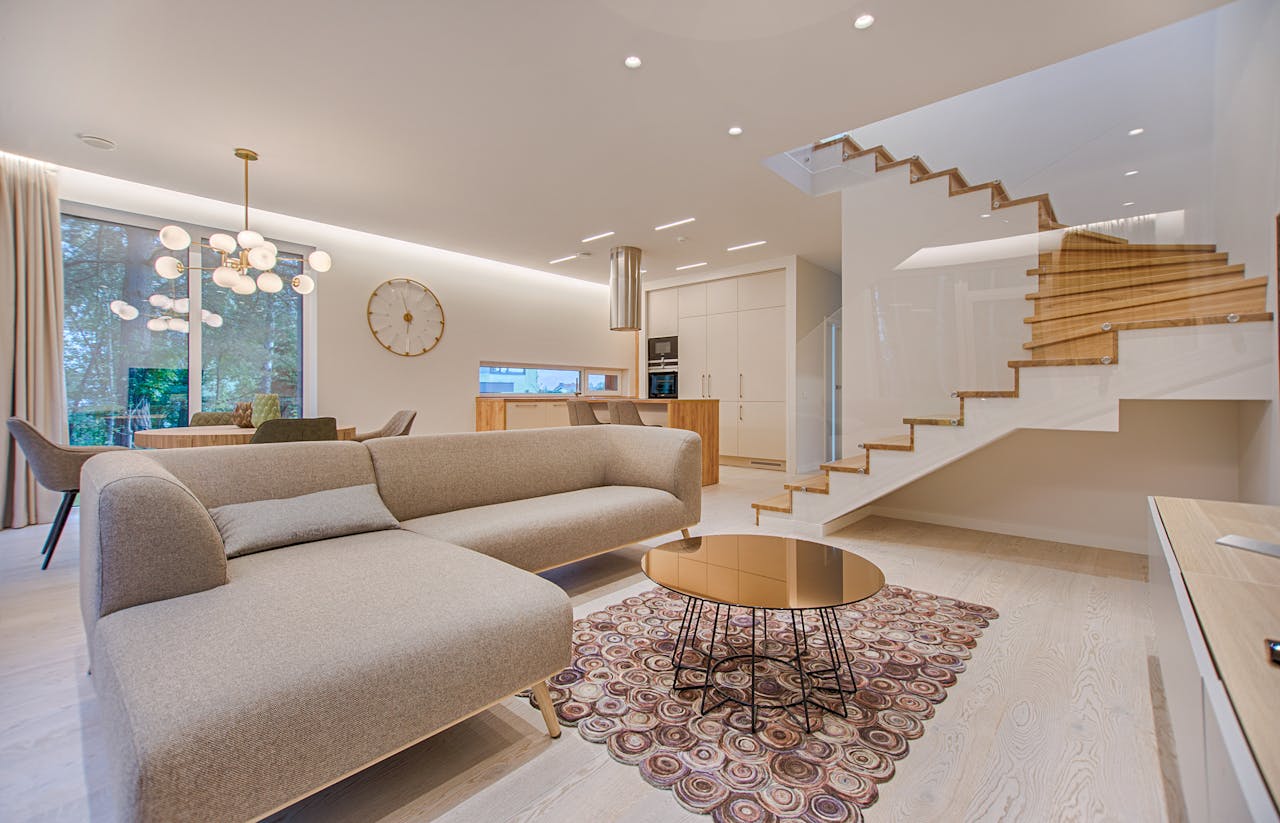
This begins by looking at sightlines, i.e., the unobstructed views from one point of a room to another, or even between different rooms.
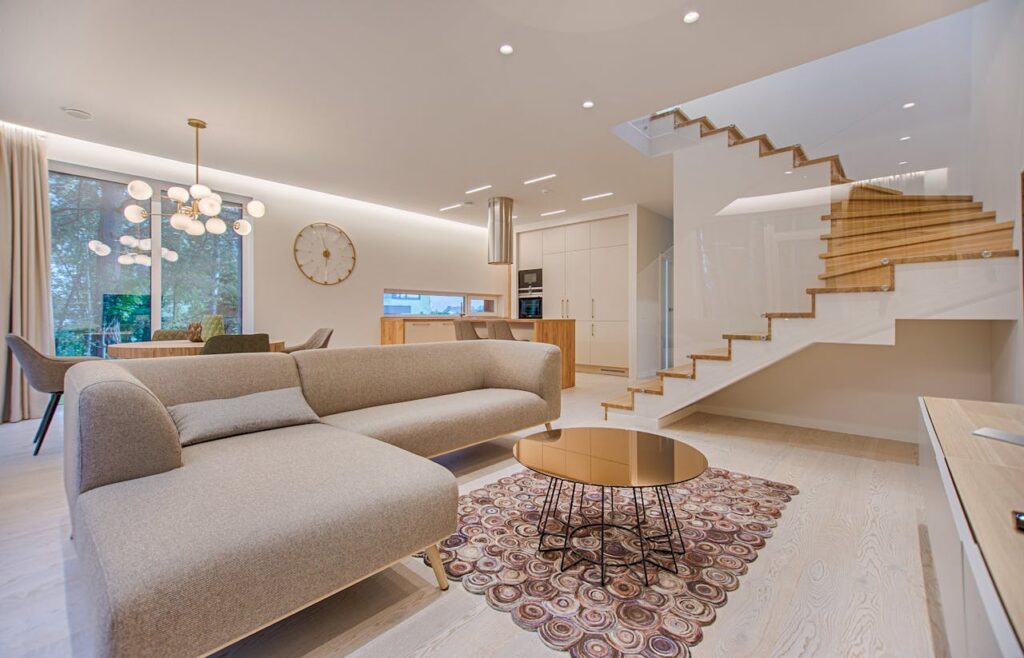
The salient point is that when sightlines are uniform, even and clear, the eye moves through the space free from friction. This has a measurable effect on our ability to feel calm and focused in our spaces.
The Foundations for Sightline Evenness
Before we can invite the outside in, we must ensure our sanctuary is held by a secure foundation. The first step in any intentional design project is to pause and assess the structural stability of your home. Can your planned transitions realistically take shape within your current walls? If you are considering removing a partition to clear a visual path or opening a doorway to welcome more natural light, professional oversight provides the quiet confidence you need to proceed.
Understanding the structural narrative of your home is vital; this Level 3 Survey resource by Andrew Goodwin & Associates explains how to identify potential issues, detailing the depth of inspection required to truly uncover a building’s condition. This thorough process looks beneath the surface, at walls, roofs, and foundations, to ensure your path to a clearer environment isn’t disrupted by underlying stresses like subsidence or dampness. When the “bones” of your home are validated, the move toward an open, light-filled space becomes a restorative process rather than a source of further overwhelm.
How to Balance and Align Sightlines
Once you understand the structural possibilities of your home, you can begin to apply the principles of minimalism and even sightlines. This involves several processes to ultimately create a sense of consistency, rhythm and harmony:
- Align your furniture with larger pieces parallel to walls or along the room’s natural axis. This avoids creating ‘visual roadblocks’ which can make spaces feel fragmented.
- Aim for consistency in the height of your furniture, whereby the tops of wardrobes, bookshelves, and window treatments all align, creating a pseudo-”datum line” that the eye follows effortlessly.
- Stand in the entrance of a room and notice what your eye hits first through the doorway.
- Keep the view through doorways clear and place a focal point at the end of a corridor, such as a statement art piece or a well-placed plant. This helps you guide your eyes purposefully throughout your home.
Refining the Minimalist Aesthetic
Transitioning from your current aesthetic to a more contemporary minimalist one is easiest when supported by helpful guidance and insights to ensure your design stays cohesive. For instance, when selecting a colour palette that fosters continuity between rooms, looking to proven design expertise can be vital. Using muted tones and natural textures can be a straightforward way to create a uniform interior and balance both light and space, as explained in the design guide provided by Climadoor, a well-renowned design firm.
Similarly, the quality of your finishing touches will influence how well your sightlines perform. Minimalist design relies on surface perfection, where any blemishes or unevenness becomes amplified in sparse environments. Ensuring your walls and woodwork contribute to the visual harmony is also important, as explained by House & Garden.
Fundamentally, modern minimalism is a journey towards clarity, where the experience of our space is organised by both structural integrity and visual rhythm. When our homes are physically aligned and aesthetically cohesive, our minds often follow suit. By investing time in understanding your home’s foundations and making informed design choices, you can bring every sightline into balance, creating a space that truly nourishes your wellbeing.
- About the Author
- Latest Posts

Annie Button is a freelance writer specialising in well-being and sustainable lifestyles, empowering readers to make impactful changes, one step at a time. She provides practical insights and solutions for achieving a balanced, sustainable lifestyle amid fast-paced contemporary living.