Red Light Therapy Explained: A Wellness Guide for Dog Owners
Pet wellness has come a long way. Owners today are more informed, more proactive, and more willing to explore options that go beyond conventional veterinary treatment when it comes to supporting their dog’s health.
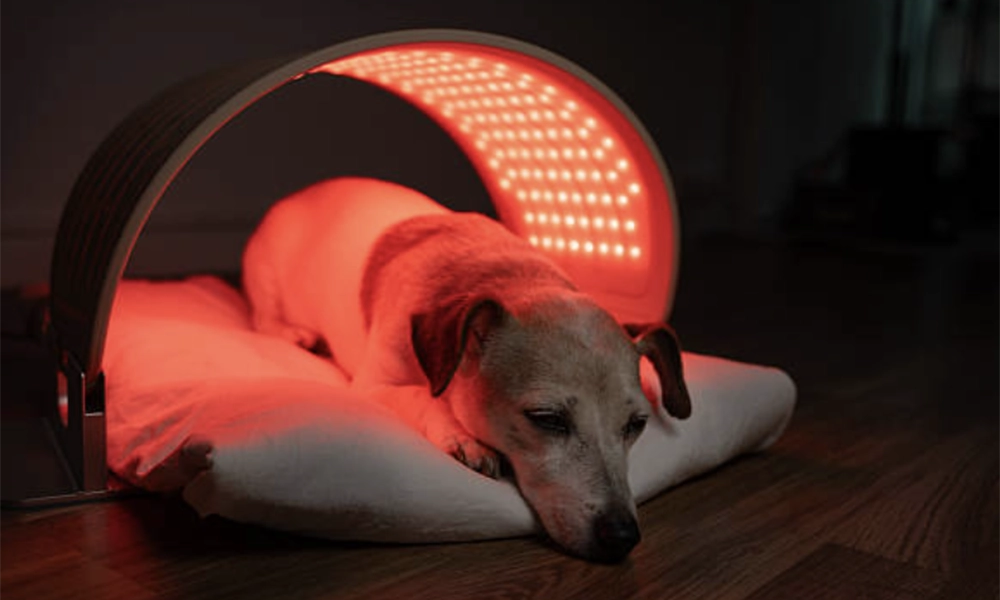
Red light therapy is one of those options, and while it might sound like something from a futuristic spa, the science behind it is genuine, and the applications for dogs are practical and well-documented. Whether your dog is recovering from an injury, managing a chronic condition, or simply getting older and slowing down, red light therapy is worth understanding.
A 2023 systematic literature review published on PubMed, covering laser therapy across 50 musculoskeletal studies in dogs and horses, found consistent evidence supporting its use for pain relief, inflammation reduction, and tissue healing. For dog owners considering this therapy, that combination of documented effectiveness and strong safety record is an important baseline to understand before getting started.
This guide covers what it is, how it works, and what dog owners should know before exploring it for their pet.
What Is Red Light Therapy?
Red light therapy, also called photobiomodulation or low-level laser therapy, uses specific wavelengths of red and near-infrared light to penetrate the skin and stimulate cellular activity. It’s non-invasive, painless, and doesn’t generate heat in the way that other light-based treatments do.
The therapy works at the cellular level. When the right wavelengths of light reach cells, they stimulate the mitochondria, the energy-producing part of the cell, to function more efficiently. This increased cellular energy drives a range of biological processes: tissue repair, inflammation reduction, circulation improvement, and pain relief.
It’s not a new concept. Red light therapy has been studied in human medicine for decades and is used in physiotherapy, wound care, and pain management. Its application in veterinary medicine, and specifically in dogs, has grown significantly as the body of supporting research has expanded.
How It Helps Dogs Specifically
Dogs experience many of the same physical conditions that red light therapy addresses in humans, and the mechanisms work the same way. Improved cellular function, reduced inflammation, better circulation, and faster tissue repair all apply equally to canine biology.
The most common applications include:
- Joint pain and arthritis — reduces inflammation and improves mobility in older or arthritic dogs
- Wound healing — stimulates faster tissue repair after surgery or injury
- Muscle recovery — eases soreness and speeds healing after physical exertion
- Skin conditions — chronic inflammatory skin issues often respond well to consistent treatment
- Nerve conditions — emerging evidence supports its use in dogs with neurological issues
The range of applications is precisely why veterinary interest in this therapy has grown so consistently over the past decade.
Understanding the full picture of Red Light Therapy for Dogs through MedcoVet is a useful starting point for owners who want to explore both the science and the practical options before making a decision. Their resource covers wavelengths, application guidance, and what to look for in a device.
Is It Safe for Dogs?
When used correctly, with appropriate wavelengths, appropriate duration, and proper technique, red light therapy is considered very safe for dogs. It doesn’t involve medication, needles, or any invasive procedure. Most dogs tolerate it well and show no distress during sessions.
A few practical safety considerations are worth noting. The eyes should be protected during treatment, both the dog’s and the handler’s. Treatment duration and frequency should follow the guidelines provided with the device or by a veterinary professional. And for dogs with active cancer, red light therapy should be discussed with a vet before use, as the stimulation of cellular activity is a relevant consideration in that context.
Starting with shorter sessions and monitoring how the dog responds is the sensible approach for first-time use.
At-Home Devices vs Professional Treatment
Red light therapy is available in two main forms: professional treatment administered by a veterinary physiotherapist or rehabilitation specialist, and at-home devices designed for pet owners to use independently.
Professional treatment offers the advantage of proper assessment, calibrated equipment, and expert oversight. It’s the right starting point for dogs with significant or complex conditions where professional guidance is genuinely important.
At-home devices have improved considerably and are a practical option for ongoing maintenance, mild conditions, or post-professional-treatment continuation. The key is choosing a device that delivers the right wavelengths, typically 630 to 660 nanometres for red light, and 810 to 850 nanometres for near-infrared, at sufficient power to actually penetrate the tissue effectively.
What to Expect During a Session
Red light therapy sessions for dogs are typically calm and straightforward. The device is held close to the skin, either directly or with light contact, and moved slowly over the treatment area. Most sessions last between five and twenty minutes, depending on the area being treated and the device being used.
There’s no heat, no noise, and no discomfort involved. Some dogs become noticeably calmer during treatment. For anxious dogs, starting with very brief sessions in a comfortable, familiar environment helps them adjust to the process.
Results are rarely immediate after a single session. Most owners notice meaningful improvement after a series of treatments, typically over one to three weeks of consistent use.
When to Talk to Your Vet First
Red light therapy is generally safe and low-risk, but there are situations where speaking with a vet before starting is the right approach:
- Dogs with a current cancer diagnosis
- Dogs who are pregnant
- Dogs with undiagnosed conditions where the underlying cause of symptoms isn’t yet known
- Dogs who are on medications that increase light sensitivity
For most healthy dogs using red light therapy for general wellness, joint support, or minor recovery, veterinary consultation isn’t strictly necessary. But when there’s any uncertainty about whether the therapy is appropriate for a specific condition, a quick conversation with a vet is always worthwhile.
Final Thoughts
Red light therapy isn’t a miracle cure, and it’s worth being clear about that. But for dogs dealing with joint pain, recovering from injury, managing inflammation, or simply ageing and needing extra support, it’s a well-researched, non-invasive, and genuinely useful tool.
The evidence base is solid, the safety profile is strong, and the practical barrier to entry is lower than most owners expect. For dog owners looking for ways to support their pet’s wellbeing beyond conventional treatment alone, it’s one of the more worthwhile options worth exploring.
- About the Author
- Latest Posts

Our Editorial Team are writers and experts in their field. Their views and opinions may not always be the views of Wellbeing Magazine. If you are under the direction of medical supervision please speak to your doctor or therapist before following the advice and recommendations in these articles.